


Winter in Europe isn’t just a pause between autumn and spring—it’s a season that asks to be explored. The crowds have thinned, the air has that crisp bite, and even the most familiar cities suddenly feel like they’re wrapped in a quiet, festive glow. Historic squares fill with the warm light of Christmas markets, mountain villages turn into snow-dusted postcards, and the options for travel are as varied as the continent itself. You can chase sunshine along Spain’s southern coast, stand beneath the swirling green and purple of the Northern Lights, or soak in a thermal bath while snowflakes drift past. There are ski slopes for adrenaline seekers, forest trails for slow wanderers, and museums for those who’d rather spend a cold afternoon indoors. Europe in winter is not a season to simply endure; it’s an invitation to see the continent in a softer, more magical light. Whether you have a long weekend or a couple of weeks, these ten destinations capture the best of what winter has to offer—each with its own character, its own rituals, and its own reason to make you fall in love with the cold. From the snow-capped Alps to the mild Atlantic island of Madeira, the continent is dotted with places that turn the shorter days into something to celebrate.
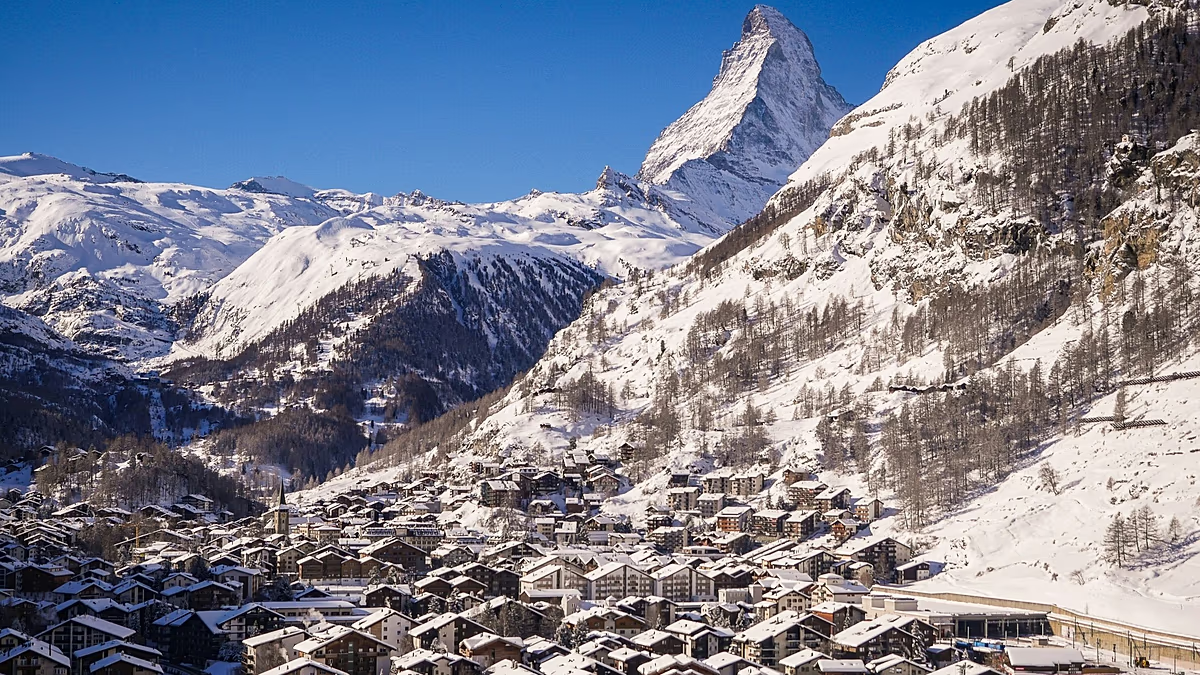
For those who measure winter by the quality of the snow and the grandeur of the mountains, Zermatt in Switzerland is hard to beat. It topped Trip.com’s ranking of Europe’s best ski resorts this year, and it’s easy to see why. Tucked into the German-speaking part of the Canton of Valais, this car-free village is a skier’s paradise, with up to 360 kilometres of pistes that stretch across the Swiss-Italian border. The ski lifts carry you up to the Klein Matterhorn peak at 3,883 metres, where the views of the Alps are nothing short of breathtaking, and where skiing is possible even in summer. Getting there is part of the adventure, too. The Glacier Express, sometimes called the “slowest express train in the world,” connects St. Moritz to Zermatt over an eight-hour, 291-kilometre journey that winds through valleys, over viaducts, and past picture-perfect villages. It’s the kind of train ride you take not to get somewhere, but to be somewhere. If you prefer your winter landscapes on foot, the Seefeld region in Austria’s Tyrol is a lovely alternative. Just 25 kilometres northwest of Innsbruck, it offers 142 kilometres of groomed winter hiking trails that lead through forests, across broad plateaus, and past cozy mountain huts serving warm drinks. In the evenings, the “100,000 Lights Path” is a magical 1.8-kilometre stroll past glowing installations and the illuminated Seekirchl chapel. And for the truly adventurous, the Seefeld High Plateau Winter Multi-day Hike covers about 65 kilometres over five days, connecting five villages with stages that take in frozen lakes, woodland, and mountain views. Best of all, you can return to the same bed each night and use public transport to reach each day’s starting point—a perfect balance of adventure and comfort.
If Christmas magic is what you’re after, few places do it better than Strasbourg in France. The city’s historic centre is a UNESCO World Heritage site, and every winter it transforms into the self-proclaimed “Capital of Christmas.” A festive market has been held here since 1570, making it one of the oldest in Europe, and its hundreds of colourful stalls spill through the streets and squares of the Grande Île. Twinkling lights reflect on the River Ill and the narrow canals that glide past half-timbered houses built over 400 years ago. At Place Kléber, a giant Christmas tree towers over the crowds, while the smell of vin chaud—warm wine mulled with fruit—and bredeles, traditional Alsatian biscuits, fills the air. It’s the kind of place that makes you feel like a child again, even as an adult. Not far away, Bruges in Belgium offers a quieter but equally romantic version of winter charm. The city’s medieval canals, arched footbridges, and tall, thin buildings are beautiful all year, but in winter they take on a fairy-tale quality. Christmas markets pop up in the squares, and the city’s obsession with chocolate becomes even more indulgent. You can stock up on handmade treats at The Old Chocolate House, Olivier’s Chocolate Shop, or Chocolates & Happiness—and honestly, no one will judge you for eating dessert first. For a dose of history, visit the Basilica of the Holy Blood, which claims to house a relic of Christ’s blood. Then there’s Vienna, where winter is not just a season but a cultural event. No city is more synonymous with classical music, and the coldest months are packed with performances at the State Opera House and other historic venues. Museums dedicated to Mozart, Beethoven, and Schubert offer refuge on frosty days, while ball season brings the city to life with swirling waltzes and glittering gowns. In Vienna, winter isn’t a time to hide away; it’s a time to dress up, listen, and dance.
Of course, not everyone wants to spend winter in the snow. If your idea of a winter getaway involves sunshine and blue skies, Andalucía in southern Spain is a wonderful choice. With more than 300 days of sunshine a year, the region’s Mediterranean coastline is perfect for escaping the gloom. Winter is also the smartest time to visit its most famous landmarks. Granada’s Alhambra, the stunning 13th-century Moorish palace, is far less crowded than in summer, so you can wander through its courtyards and arches without feeling rushed. Seville, where summer temperatures can soar to 40C, becomes actually pleasant in winter. You can explore the Palacio de las Dueñas with its beautiful colonnades, or simply sit at an outdoor café with a glass of sangria and soak up the gentle warmth. Over the Christmas season, towns across Andalucía glow with festive lights, and while you won’t see snow on the Costa del Sol, the Sierra Nevada National Park is just a short drive from Granada, with white-capped peaks and winter sports for those who want both. For a completely different kind of winter escape, Madeira offers lush green landscapes and mild temperatures. This Portuguese island in the Atlantic is home to the UNESCO-listed Laurissilva forest, where ancient trees cover steep valleys and mist hangs over the hills. The best way to explore is on foot, following the island’s levadas—traditional water channels that wind through the interior. The Levada das 25 Fontes leads to a beautiful lagoon fed by cascading springs, while the Levada do Rei takes you through dense vegetation to the peaceful forest sanctuary of Ribeiro Bonito. Just be sure to pack waterproofs, sturdy shoes, and to book your trail slot in advance, because Madeira takes its hiking seriously.
Some winter memories happen after dark, under the stars, and few places are as magical as Abisko in Swedish Lapland. Tucked between mountains and a frozen lake, far above the Arctic Circle, Abisko sits right in the middle of the auroral zone—one of the best spots on Earth to see the Northern Lights. On a clear winter night, the sky can explode into ethereal greens, blues, pinks, and purples. You can join a tour into Abisko National Park, where there’s no light pollution to spoil the show, or take a chairlift up to the Aurora Sky Station, a mountaintop observation point that puts you right in the middle of the celestial display. But Abisko is more than just the lights. You can go husky-dog sledding through snowy forests, ride a snowmobile across frozen lakes, or learn about traditional Sámi culture and reindeer herding from the people who have lived there for centuries. It’s a wild, humbling, and utterly unforgettable experience. If you’d rather spend your evenings in warm water than in the Arctic cold, Budapest offers a different kind of winter magic. Hungary’s capital is known for its romantic architecture, and when snow dusts the rooftops and lights twinkle along the Danube, it becomes even more enchanting. The Christmas markets are among the best in Europe, especially at Vörösmarty Square, where you can warm up with lángos, a deep-fried flatbread, and kürtőskalács, a sweet pastry coated in sugar. Then, of course, there are the thermal baths. The neo-Baroque Széchenyi Baths are a city institution, with steaming outdoor pools, saunas, and spa rooms that feel especially wonderful when the air is cold. After a long soak, you can lace up your skates and glide around Városligeti Műjégpálya, one of the oldest outdoor ice rinks in Europe. It’s the perfect mix of indulgence and tradition.
Finally, for a winter trip that’s more about history and less about snow, Athens is a surprisingly wonderful choice. The Greek capital is famous for its ancient monuments, but in summer it can be overwhelming, with heat and crowds making it hard to enjoy. In winter, the city breathes. You can stroll almost peacefully through the Acropolis, the walled complex that includes the Parthenon and other grand Ancient Greek structures. The weather can be mild, though rain and cold spells are possible, so it’s wise to carry an umbrella. On wet days, you can escape into world-class museums like the National Archaeological Museum or the Acropolis Museum, where the treasures of antiquity are displayed with space and light. And in between landmarks, you can wander through the modern centre and discover vibrant street art around every corner. Athens in winter is a city that lets you take your time—no rush, no jostling, just the ancient stones and the quiet hum of daily life. Taken together, these ten destinations show how wonderfully varied a European winter can be. You can ski down Alpine slopes, hike through misty forests, dance a waltz in Vienna, sip sangria in Seville, chase the Northern Lights in Sweden, or soak in a Budapest bath. There’s no single way to do it right. The only requirement is a willingness to embrace the season—to step outside, breathe in the cold air, and let the winter landscape work its charm. After all, the best trips often happen when you least expect them, and winter in Europe is full of those moments.