


Solo travel has been steadily growing in popularity for years, and yet making the decision to take that first trip entirely alone is still a profound leap of faith. There is always a moment—maybe as you sit at the airport, maybe as you check into a hotel room designed for two—when you feel the weight of your solitude. But there is also a thrill in knowing that every choice, every turn, every meal is entirely yours. Once you get past the initial fear, the next big obstacle appears: choosing a destination. Not every city opens its arms to a traveler without a companion. Some places are naturally more welcoming to solo guests, offering affordable prices, safe streets, and plenty of opportunities to meet people. Others, though beautiful, can feel isolating or financially punishing when you’re not sharing costs with someone else. To help navigate this, Radical Storage released its newly compiled Solo Travel Index, a detailed analysis of the 48 most visited cities in Europe. The index evaluated each city against 11 different factors, including average daily spend, Numbeo safety scores, and the number of hostels—those essential hubs of solo adventure. Every factor was rated on a scale of one to ten based on how a city compared with all the others, and the scores were averaged to produce a final ranking. The result is a clear, if somewhat surprising, picture of the best and worst places in Europe for those traveling alone, and it offers a useful starting point for anyone unsure where to begin.
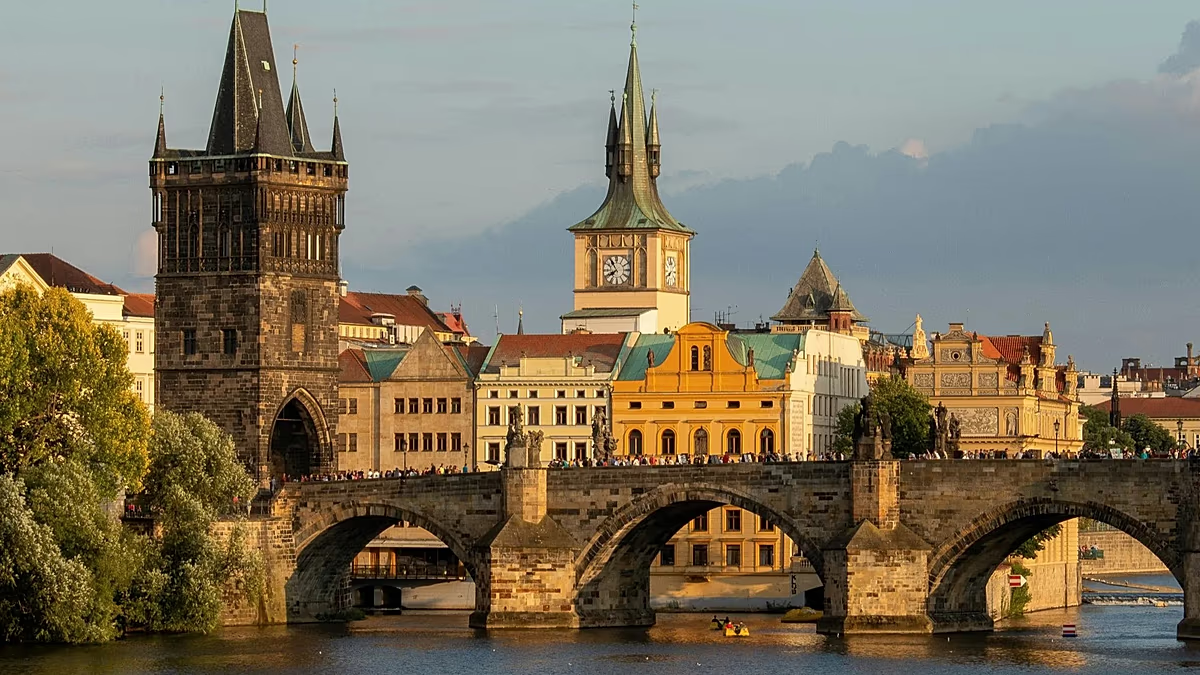
Topping the list was Prague, the capital of the Czech Republic, and it is easy to see why. The city feels like a fairy tale come to life, with its spires, cobblestone alleys, and dramatic castle overlooking the Vltava River. But its appeal for solo travelers goes beyond its beauty. The study found that a full day in Prague costs an average of €134.33, which covers accommodation, food, transport, and entertainment. That is not exactly cheap, but it is reasonable for a European capital, and the city also boasted the eighth-highest safety score among all the cities analyzed. For a solo traveler, safety is everything; it gives you the confidence to wander after sunset, to linger at a café, to strike up a conversation with a stranger without feeling on edge. Kraków in Poland took second place, and it was also the second-cheapest city on the entire list. Kraków has a haunting history and a vibrant present, with its beautiful main square, Jewish quarter, and university atmosphere. It’s the kind of city where you can spend a week and still feel there is more to see, but it is small enough that you quickly become familiar with its rhythm. Istanbul ranked third, largely thanks to having the lowest hostel dormitory prices of any city examined. There is an undeniable magic to Istanbul—the call to prayer echoing across the skyline, the smell of spices in the Grand Bazaar, the ferries crossing the Bosphorus—and for solo travelers, it offers a sense of adventure that few other cities can match. The rest of the top ten included Lisbon in fourth, Gdansk in fifth, Berlin in sixth, Porto in seventh, Seville in eighth, Barcelona in ninth, and Riga in tenth. It’s noticeable that Poland, Portugal, and Spain each had two entries in the top ten, suggesting that Southern and Central Europe have a particular talent for making solo visitors feel at home.
On the other end of the spectrum, the worst city for solo travel was Zürich, Switzerland, and the reason is painfully simple: money. Accommodation in Zürich cost €168.13 per day, the highest in the entire study. Its food costs were the second-highest, and its transport costs the third-highest. For someone traveling alone, there is no one to share a hotel room, no one to split a taxi, no one to order multiple dishes with at dinner. Every expense falls entirely on you, and in a city as expensive as Zürich, that adds up quickly. Reykjavík, Iceland, came second from last, and Venice, Italy, followed closely in third. Both are remarkable places—Reykjavík with its otherworldly landscapes and cozy coffeehouse culture, and Venice with its impossible beauty and labyrinthine canals—but both are also notoriously costly, and both can feel surprisingly lonely when the crowds thin out. Venice, for example, empties of day-trippers by evening, and the narrow alleys can feel eerie rather than romantic when you’re walking through them alone. The rest of the bottom ten included Aarhus, Cologne, Geneva, Frankfurt, Nice, Marseille, and Dublin. What is striking is that several of these are highly iconic, beloved destinations, proof that a place can be wonderful to visit and yet still not ideal for solo travelers, at least not without a hefty budget. The study also highlighted a wider gap: a day in the bottom ten cities cost an average of €252, while a day in the top ten cost only about €153. That is nearly €100 more for every single day of your trip, which can easily make the difference between a long, leisurely journey and a short, stressful one.
But the list is about more than just saving money. It reveals something deeper about what solo travelers really need. Safety, of course, is essential, but so is accessibility and social connection. The best cities for solo travel tend to be those where you can easily walk from one major site to another, where public transport is intuitive, and where hostels are abundant and well-run. Hostels are the great equalizers of solo travel; they are places where you can meet people from all over the world, share stories, cook dinner together, and suddenly realize you are not alone at all. The top-ranked cities like Prague, Kraków, and Lisbon are filled with these social spaces, and they also have thriving cultures of walking tours, food tours, and group activities that make it easy to approach strangers and make friends. This matters because solo travel does not mean you have to be solitary. It means you have the freedom to choose. Some days you might want to explore entirely by yourself, sitting quietly in a park with a book; other days you might want to join a pub crawl or a cooking class or simply sit at a shared table in a buzzing restaurant. A city that supports this kind of flexibility is worth its weight in gold. The index, in its own numerical way, captures this. A high number of hostels means opportunities for connection. A good safety score means you can relax. A reasonable daily cost means you can stay longer without your wallet begging for mercy. When all these things align, the city becomes not just a place to see but a place to be.
For someone planning a first solo trip, the practical advice is clear. If you are nervous or on a budget, start with a city like Prague, Kraków, or Lisbon. These are forgiving destinations. English is widely spoken, the tourist infrastructure is excellent, and there are countless ways to meet other travelers. You can book a bed in a hostel, join a free walking tour on your first morning, and by the evening you will likely have exchanged phone numbers with someone from another continent. It is also worth considering what kind of atmosphere you crave. If you want history and romance, Seville and Gdansk offer beautiful, manageable city centers. If you want art and edge, Berlin is endlessly rich and surprisingly affordable for a German capital. If you want sunshine and energy, Barcelona and Lisbon deliver. And if you want a truly immersive cultural experience, Istanbul is unlike anywhere else in Europe. You can even combine several top-ranked cities in one trip, moving between Gdansk and Kraków by train, or hopping from Barcelona to Seville, or Lisbon to Porto. The flexibility of solo travel means you can follow your mood. The index simply helps you avoid spending your entire trip worrying about your bank account or your safety. And even if you decide to visit a city on the bottom ten list, you can do it smartly—go for just a few days, stay in a hostel with a kitchen, splurge on one unforgettable meal, and otherwise keep your costs low. The list is not a set of rules but a resource, a way to make the choices easier.
In the end, though, the Solo Travel Index can only take you so far. Numbers and scores cannot capture the particular magic of a city or the way you will feel when you first arrive. Maybe you will find that Zürich’s calm, orderly beauty is exactly what you need for a few days of reflection. Maybe you will fall in love with Venice’s quiet alleys at sunrise, before the crowds arrive. Maybe you will discover that Reykjavík’s small, friendly community makes you feel more connected than any busy capital ever could. The data gives you a map, but you are the one who has to walk the streets, taste the food, and let the city change you. Solo travel is unpredictable, and that is precisely its power. You will make mistakes, take wrong turns, spend too much on a meal, and stand in a square wondering where everyone has gone. But you will also learn to trust yourself, to make decisions quickly, to enjoy your own company, and to open yourself up to the world in a way that is rare in ordinary life. Every seasoned solo traveler was once a beginner. They all stood in an airport or train station, heart thumping, doubting whether they had made the right choice. And then they walked forward anyway. The best city in Europe for solo travel is not necessarily the one at the top of some index—it is the one that calls to you, the one that feels right when you picture yourself walking through it alone, smiling, free, and ready for whatever comes next. The world is waiting, and it is far more welcoming to those who arrive alone than you might think.