


Paragraph 1: The Electric Debut and Instant Fortunes
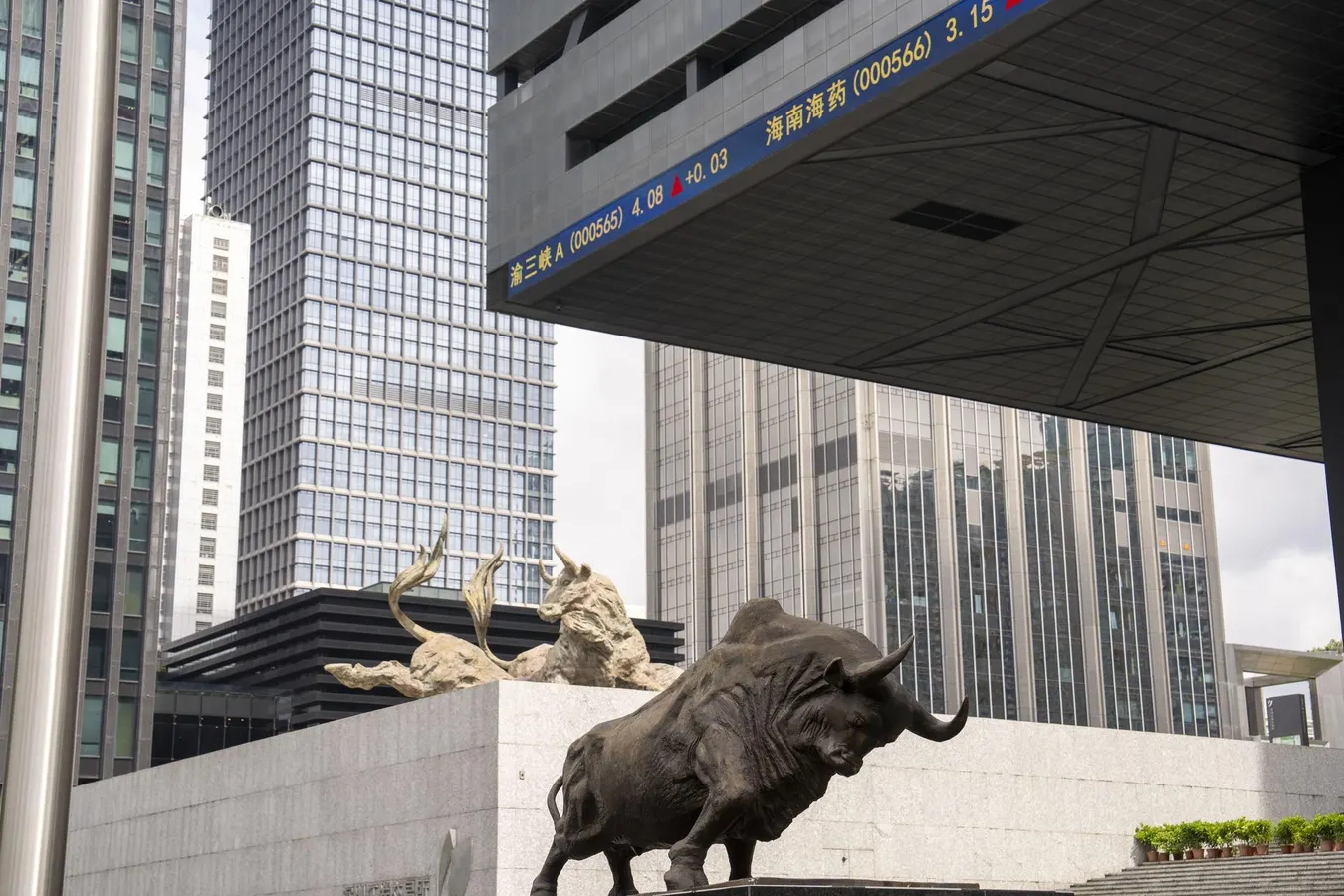
The trading floor of the Shenzhen Stock Exchange experienced a seismic shock of red-hot capital on Tuesday as Crown New Materials Technology made its highly anticipated public debut. The atmosphere was electric, almost frantic, as shares of the obscure tape manufacturer surged with the ferocity of a rocket launch, prompting the exchange to slam on the brakes not once, but twice, halting trading during the morning session to cool the speculative fever. Amidst this frenzied ticker tape, a quiet, seismic shift occurred in the personal fortunes of two individuals. Mai Michael, a 62-year-old former elementary school teacher who now holds Australian citizenship and permanent residency in Hong Kong, saw his stake in the company balloon to an estimated $2.5 billion, according to Forbes. His sister, Mai Huixia, 64, a Chinese citizen serving as the company’s vice chairman, witnessed her own shareholdings surge to a staggering $2 billion. For a man who once spent his days teaching children their ABCs in a modest Zhongshan classroom, the transition to paper billionaire in a single morning was nothing short of surreal, a testament to the volatile, intoxicating, and often irrational exuberance that defines Mainland China’s retail-driven equity markets.
Paragraph 2: The Invisible Glue of the Modern World
To truly appreciate this windfall, one must look beneath the surface of the stock ticker to understand what Crown New Materials actually produces. Based in the bustling manufacturing hub of Zhongshan in Guangdong province, the company is a specialist in adhesive materials and protective films—products that are far more sophisticated than the everyday scotch tape one might find in a desk drawer. In late October, the company successfully raised 956 million yuan ($144 million) by issuing 56.3 million shares at a conservative 16.98 yuan apiece, earmarking the proceeds to expand production lines and construct a cutting-edge research center back home. Their products serve as the invisible structural glue of the modern technological world: high-performance tapes that hold together the intricate wiring, batteries, and displays in automobiles, laptops, and smartphones. Even more critically, they manufacture protective films essential for semiconductor fabrication, meticulously shielding fragile silicon wafers from the microscopic dust particles that could ruin a chip worth thousands of dollars. In this rarefied industrial arena, Crown New Materials competes fiercely on a global stage, pitting its engineering against American multinational 3M and Japan’s Nitto Denko, while holding its own against domestic rivals like Jiangsu Sidike and Smith Adhesive New Material in a relentless battle for market share.
Paragraph 3: The Mechanics of Market Mania
Why does a company issuing relatively mundane industrial tape incite such a riotous stock market debut? The answer lies deep within the unique psychology and structural mechanics of China’s A-share market. “Chinese investors have a well-known fondness for newly listed shares,” explains Shen Meng, managing director of the boutique investment bank Chanson & Co. in Beijing. Unlike mature Western markets, where IPOs are often priced at fair value to reflect underlying fundamentals, mainland underwriters almost deliberately underprice new listings. This conservative pricing strategy guarantees a post-listing surge, creating the illusion of guaranteed profits for those lucky or fast enough to secure initial allocations. The result is a self-fulfilling prophecy, driving relentless demand for anything stamped ‘IPO.’ However, the company itself seems acutely aware of the danger inherent in this speculative heat. In a separate filing on Tuesday, Crown New Materials issued a stark, almost paternal caution to investors, urging them to remain rational and vigilant. It’s a bizarre paradox: a CEO watching his net worth climb by hundreds of millions of dollars in real-time while simultaneously begging the public to calm down, recognizing that the froth could easily pop, leaving unwary retail investors holding the bag.
Paragraph 4: From Chalkboard to Factory Floor
The story of Mai Michael’s journey is a quintessential, gritty Chinese tale of reinvention and relentless ambition. In 1984, he made a leap of faith that would define his entire family’s future, resigning from his comfortable, respected position as an elementary school teacher in Zhongshan. The orderly realm of lesson plans and recess gave way to the deafening noise, chemical fumes, and pragmatic hustle of industrial manufacturing. Starting in 1985, Mai spent the better part of two decades as a wage earner in various local factories, learning the complex alchemy of resins, adhesives, and backing materials. He managed production lines, negotiated supply contracts, and dealt with finicky machinery, eventually rising to oversee an adhesive tape manufacturer. These were unglamorous years, filled with sweaty labor and incremental progress, a far cry from the glossy boardrooms and billion-dollar valuations he enjoys today. In 2000, armed with exhaustive technical knowledge and an unshakeable work ethic, Mai teamed up with his sister, Mai Huixia, to found Crown New Materials. What started as a humble workshop has since blossomed into a formidable global supplier, weathering economic storms and technological shifts to become a crucial link in the world’s most intricate supply chains.
Paragraph 5: The Squeeze Beneath the Hype
Yet, beneath the soaring stock price lies a more grounded, human economic reality. In the first nine months of the company’s latest financial reporting period, Crown New Materials reported a 12% year-on-year increase in revenue, reaching an impressive 2.8 billion yuan. However, the bottom line told a more sobering story: net profit actually contracted by 7.9%, falling to 225 million yuan. This squeeze is a familiar affliction for manufacturers across the globe—rising raw material costs, particularly for petrochemical-based inputs, have eaten directly into margins. Additionally, the persistent fog of global trade tensions has injected profound uncertainty into export orders and supply chain planning. This juxtaposition perfectly encapsulates the disconnect between Mainland China’s speculative stock market and its hard-nosed industrial sector. Investors are betting on future glory, while the company’s management is diligently navigating the mundane, difficult realities of international tariffs, currency fluctuations, and material shortages. The fresh capital from the IPO is being strategically deployed on a new research center, aimed at developing next-generation films for more advanced semiconductors, a clear move to secure moorings against the unpredictable tides of geopolitics.
Paragraph 6: A Family Legacy in Flux
At its heart, Crown New Materials remains a tightly-knit family enterprise. Mai Michael’s daughter, Mai Christal—who, like her father, is an Australian citizen and permanent resident of Hong Kong—sits on the board of directors, representing the next generation. The intricate ownership structure extends further, with his spouse, his other daughters, and his sister’s daughter all holding indirect stakes in the business, weaving a complex web of family capital that spans the domestic mainland and the global diaspora. This arrangement embodies the enduring spirit of Chinese family capitalism: fiercely independent, ambitious, and intently focused on dynastic continuity. For Mai Michael, the journey from a modest teaching salary to a net worth that rivals small nations is a spectacular rags-to-riches narrative. However, it is a double-edged sword. The $2.5 billion fortune is, for now, elusive paper wealth, tied entirely to the capricious whims of an unforgiving exchange. The true, lasting legacy will not be measured in stock ticks but in the enduring strength of the factories in Zhongshan, where massive rollers continue to churn out the tapes and films that hold together a digitized world. As the initial euphoria inevitably fades, the former schoolteacher faces his ultimate test—one of corporate governance, sustained innovation, and strategic patience. The teacher’s final lesson, learned amidst the chaos of the capital markets, might well be that true wealth is built not on fleeting speculation, but on the unglamorous, steady grind of real industry.