


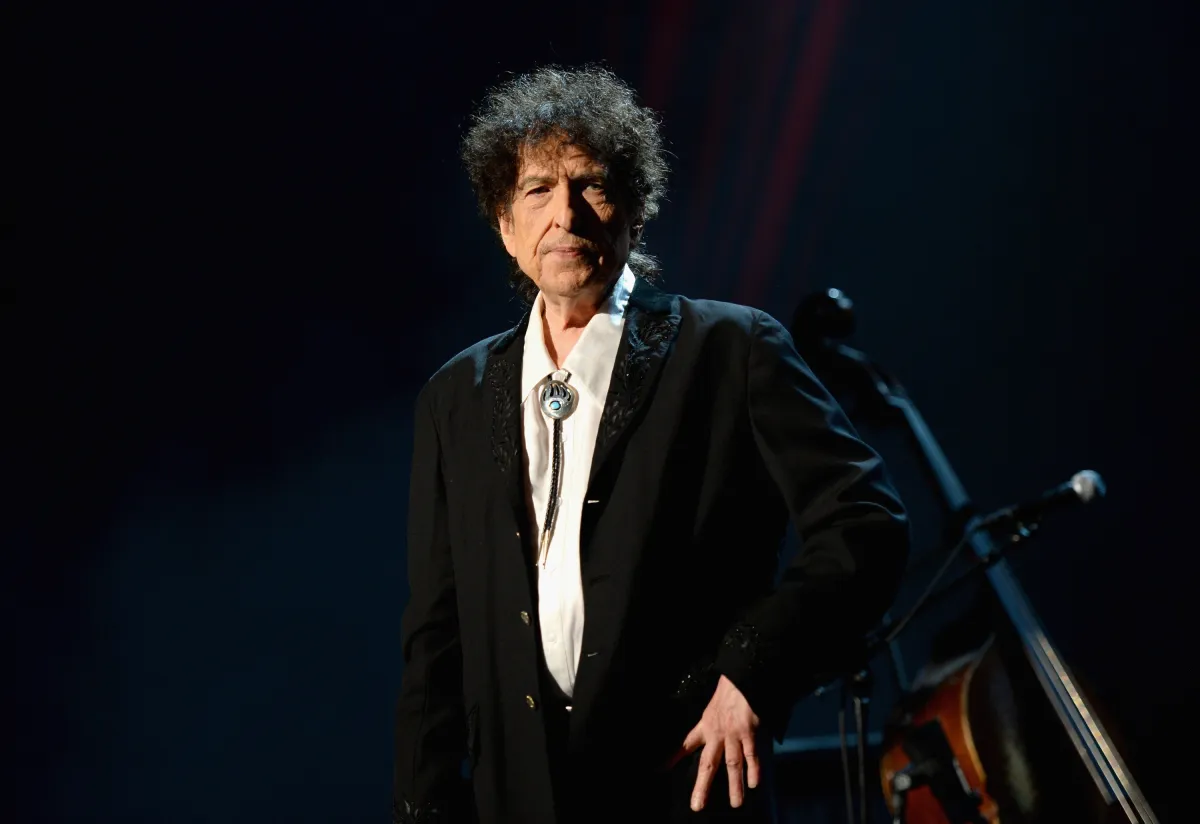
When the legendary singer-songwriter Bob Dylan quietly marked his eighty-fifth spring, the milestone did not merely celebrate another birthday for a musical titan; instead, it served as a profound moment of reflection for a global audience that has watched him shape the course of modern culture for more than sixty years. In a deeply evocative and surprisingly intimate feature written for The New York Times, the notoriously reclusive Nobel laureate stepped out of his guarded privacy to offer a rare, beautifully humanized glimpse into the quiet corridors of his mind as he navigates the landscape of his eighties. Dylan has spent his life as a master of reinvention, moving effortlessly from the fiery protest singer of the 1960s to the enigmatic rock star, the gospel preacher, and the weathered roots-music troubadour. Yet, in this reflective phase of his life, his focus has shifted away from the sociopolitical commentary and complex mythmaking of his youth toward the universal, deeply personal realities of aging, mortality, and the passage of time. The interview reads less like a standard promotional article and more like a collection of modern-day proverbs, detailing what happens when a counterculture icon transitions into a mythic elder statesman. He approaches the subject of his own aging not with the clinical detachment of a scientist or the sentimental self-pity often found in the twilight memoirs of celebrities, but with the sharp-eyed, poetic grit of a man who has looked life squarely in the face and found a strange, unexpected peace within its inevitable limits. Through his reflections, Dylan humanizes the terrifying prospect of growing old, turning a universal human anxiety into an artistic landscape filled with quiet liberation, stoic acceptance, and a profound, stripped-back truth that speaks to the very core of our shared human experience.
At the core of Dylan’s late-life philosophy is a radical, almost comforting reassessment of how we measure our days, weeks, and years on this earth, offering a perspective that is desperately needed in our fast-paced modern world. When asked about his absolute favorite aspect of living in his eighties, the songwriter offered an answer that is as brilliantly poetic as any lyric he penned during his creative youth, observing that the greatest joy of this decade is that you finally manage to outlive the very clocks that have been chasing you your entire life. For Dylan, this stage of life is characterized by a glorious, hard-won freedom from the pervasive, exhausting lie that anything in this chaotic universe was ever truly under our control. Throughout our youth and middle age, we are driven by the unrelenting ticks of the cultural metronome, desperately trying to manage our careers, secure our legacies, nurture our relationships, and curate our public identities under the false pretense that we are the absolute masters of our destinies. To reach your eighties, in Dylan’s estimation, is to see that fragile illusion shattered in the most liberating way imaginable. The constant pressure to build, to manage, and to orchestrate the chaotic variables of existence simply evaporates, leaving behind a tranquil clarity. This is a deeply humanizing perspective for anyone struggling with the modern epidemics of anxiety and burnout; it suggests that the ultimate reward of a long, well-lived life is not the accumulation of more prizes or power, but the quiet surrender to the flow of time, realizing at long last that the frantic race we thought we were running was entirely of our own making.
This sense of liberation from societal expectations and systemic pressures manifests in how Dylan views his relationship with the contemporary world around him, highlighting a sharp contrast between his sovereign lifestyle and the modern celebrity machine. He beautifully describes this era of his life by stating that you no longer feel any desire to chase the parade, but instead find yourself living as an old king from some vanished, forgotten country who has become increasingly difficult, if not totally impossible, to program. In a modern entertainment landscape where artists are expected to remain endlessly visible, hyper-connected, and perfectly curated for algorithmic consumption—as seen in the wider music news where contemporaries like Billy Idol and Steve Stevens are being inducted into the Hollywood Rockwalk, or where pop icons like Madonna continue to chase the contemporary cultural zeitgeist by headlining flashy videos featuring younger starlets like Sabrina Carpenter—Dylan quietly chooses a path of absolute independence. He is not rushing to become anything new, nor is he haunted by the ghosts of what he did half a century ago. This stubborn refusal to be “programmed” by the demands of the modern cultural economy is perhaps his final and most authentic act of rebellion. He has transcended the exhausting cultural rat race, choosing instead to inhabit a quiet, sovereign mental state where public opinion, industry trends, and the pressures of performance hold no sway over his spirit. By comparing himself to a ruler of a vanished land, Dylan acknowledges with peace that the era he once defined has slipped into history, and rather than fighting to stay relevant in a strange new world, he embraces his exile with a dignified, quiet majesty.
However, Dylan is far too much of a realist to present the twilight years as an easy, painless journey, and he candidly shares the heavier, more melancholic truths that come with advanced age. He notes with a touch of characteristic bittersweetness that being eighty is not all fun and games, admitting that one is often haunted not by the ghosts of past misdeeds, but by the quiet, devastating realization of how incredibly little of it really mattered in the way we passionately believed it would when we were young. There is a profound, universal tragedy in this level of perspective—a sobering acknowledgement that the grand ambitions, the bitter rivalries, and the intense worries of our youth often amount to nothing more than dissolving smoke when viewed from the mountain peak of old age. This emotional landscape is further complicated by the natural, physical betrayals of the human body, creating a disconnect between the mind and the physical form. Dylan explains that while the old, untamed fire in your heart still actively commands you to do this and that, your physical body simply sighs and reminds you that you have already done it. Furthermore, he speaks of running entirely out of illusions and reaching a state where absolutely nothing has the power to surprise you anymore. While having no illusions might sound like a supreme luxury to a younger generation seeking absolute clarity, Dylan warns that it is actually a cold and lonely reality. To live without illusion is to see the human condition in its barest, most unvarnished state, stripped of the romantic coloring that makes the early struggles of life bearable, forcing him to find meaning in a world devoid of youthful fantasy.
Perhaps the most intellectually dazzling and emotionally piercing observation Dylan shares about his current decade centers on the bittersweet timing of late-life wisdom and our fundamental misunderstanding of time itself. He laments that in your eighties, you finally obtain a profound, crystal-clear understanding of things that could have completely altered the trajectory of your past, had that wisdom only arrived at a time when things could still be altered. It is a classic human paradox that touches every life: we spend our entire youth searching desperately for the keys to the castle, only to find them when the castle itself has turned to dust and the doors have vanished. Dylan further reframes our entire relationship with chronology by explaining that when we are young, we are under the false impression that time is actively moving forward, carrying us along with its unstoppable current. At eighty, however, the illusion of linear progression fades entirely, and you realize with absolute certainty that time does not move at all; it stands perfectly still, and we are the ones who move through it. This shift in perspective turns history on its head, painting human beings not as masters of time, but as brief, flickering travelers passing through an eternal, unchanging landscape of existence. It is a comforting yet ghostly realization that places our fleeting human lives in perspective against the vast, quiet backdrop of eternity, suggesting that our frantic scrambles for progress are merely a brief dance across a stage that remains forever motionless.
Despite this profound awareness of physical limitations and the stillness of time, Bob Dylan has not allowed his philosophical realizations to paralyze him into inactivity or quiet retirement. Instead, he continues to channel his remaining fire into the one thing that has anchored his entire existence: the stage. Rather than retreating into quiet isolation to wait out his remaining days, Dylan is utilizing his time in his eighties wisely by continuing to perform live for audiences across the globe, actively embarking on a rigorous tour schedule throughout North America. With his next highly anticipated concert scheduled for Wednesday, June 17, and up-to-date tour details readily accessible on his official website, he proves that he is still very much a living, breathing part of the fabric of American music. His ongoing tour is not an act of desperation or a pursuit of faded glory, but rather the natural, human extension of his belief that we are the ones who must keep moving through the stillness of time. By stepping onto the stage night after night, wrapping his gravelly voice around the songs that defined generations, Dylan lives out his philosophy in real-time, showing his audience that while the physical body may weary and the illusions of youth may fade, the act of creation remains an essential, life-sustaining force. In the end, Dylan’s reflections teach us that aging is not merely a process of biological decay, but a spiritual homecoming—a journey toward a quiet, unshakeable freedom where the clocks can no longer catch us, and where we are finally free to sing our songs simply for the sake of the music itself.