



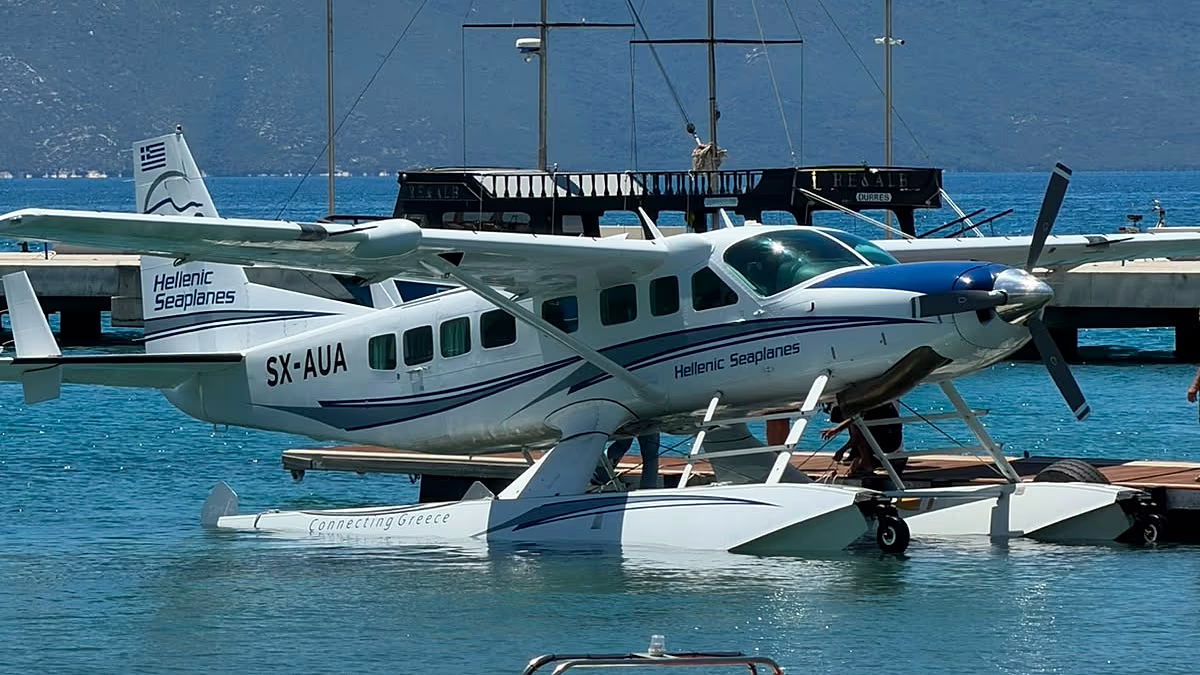
Imagine soaring gracefully above the emerald, mist-shrouded waters of Lake Ioannina, where the ancient, history-rich stone architecture of Greece’s Epirus region gently fades into a beautiful miniature tapestry far below as the rhythmic, reassuring hum of a state-of-the-art twin-engine turboprop engine fills the aircraft cabin. For the passengers who stepped aboard this landmark inaugural flight operated by Hellenic Seaplanes, this was far more than just a routine transit; it was a deeply poetic, transformative leap into an exciting new era of Mediterranean travel and regional cooperation. Gliding effortlessly through the clear blue sky before executing a gentle, feather-light splashdown onto the sparkling, sun-kissed coastal waters of Vlorë, Albania, this flight officially marked the very first international air link between these two close Southeast European neighbors using a seaplane. Passengers looking out the windows were treated to breathtaking, uninterrupted views of rugged mountain ridges, hidden sandy coves, and pristine coastlines that have historically isolated these regions from one another, now seamlessly united by a flight path that feels both thrillingly futuristic and romantically nostalgic. This milestone is not merely a technical triumph of aviation engineering or regulatory persistence; it is, at its heart, a deeply human story of reconnection, reminding us of a time when travel was an enchanting journey rather than a stressful chore, all while establishing a pioneering framework for future travel. By transforming the natural element of water into a welcoming runway, Hellenic Seaplanes has tapped into the ancient Mediterranean heritage of maritime exploration, turning what was once a grueling, multi-hour road journey across treacherous mountain passes into a swift, scenic, and unforgettable aerial voyage that brings communities closer together.
Beneath the surface of this historic flight lies a rich narrative of profound diplomatic coordination, strategic vision, and cooperative progress between the nations of Greece and Albania. Responding enthusiastically to an official, warmth-filled invitation from Albanian governing authorities, the initiative constitutes the first practical step of a much broader, highly collaborative framework focused on dismantling the geographical barriers that have historically hindered social and economic exchange in this part of the Balkan peninsula. For generations, traveling between the mountainous, landlocked interior of northwestern Greece and the rapidly developing coastal cities of the Albanian Riviera demanded long hours of navigating winding, congested roads or waiting at crowded border checkpoints. By establishing this active cross-border maritime air corridor, both countries are demonstrating an admirable commitment to eco-friendly, agile infrastructure that prioritizes the seamless movement of people, culture, and trade without the astronomical financial costs and severe ecological damage associated with building traditional concrete airports. Hellenic Seaplanes’ pioneering effort stands as a shining testament to what can be accomplished when neighboring governments look at their shared natural resources—specifically, the sprawling, azure waters of the Adriatic and Ionian Seas—not as dividing lines or national borders, but as natural, open highways waiting to be responsibly enjoyed. This collaborative achievement establishes a brilliant precedent for international diplomacy, proving that shared sustainable tourism goals and mutual trust can yield highly innovative transport systems that directly empower local vendors, small businesses, and vibrant coastal communities.
From the perspective of the everyday traveler, the busy remote professional, and the curious global adventurer, this newly forged maritime air service is nothing short of a profound lifestyle shift. Consider the business owners, cultural diplomats, and local families who are no longer forced to forfeit entire days to the friction of traditional international transit, but can now plan sudden weekend reunions or attend vital business summits in Vlorë, returning to Ioannina in time for dinner. This deeply humanized approach to skyward mobility breathes fresh life into regional tourism, empowering travelers to effortlessly craft multi-destination excursions that seamlessly blend the ancient Byzantine history of mainland Greece with the vibrant, sun-drenched beach culture of Albania’s spectacular coastlines. By offering an alternative that is both remarkably efficient and rich with sensory wonder, Hellenic Seaplanes is turning transit back into an inspiring, joyful highlight of the vacation itself, rather than an exhausting obstacle to endure. Travelers are no longer treated as passive cargo funneled through sterile, concrete terminals; instead, they are active participants in a scenic, low-altitude odyssey, flying close enough to watch the whitecaps break upon the ocean and landing directly alongside bustling coastal piers. This intimate physical connection to the topography below fosters a nurturing appreciation for the delicate Mediterranean biosphere, encouraging a healthier, slower style of tourism that values depth over speed.
One of the most compelling and urgent chapters of this aviation breakthrough is its incredibly light environmental footprint, a design priority that Hellenic Seaplanes has placed squarely at the center of its operational philosophy. Unlike conventional commercial airlines, which require hundreds of acres of cleared land, massive asphalt runways, and heavy, energy-intensive terminal infrastructure, seaplanes use the natural dynamics of open water as their landing pads. The state-of-the-art water aerodromes, or waterports, developed extensively by Hellenic Seaplanes throughout Greece’s islands and coastlines, serve as models of low-impact, sustainable maritime engineering, easily integrating with existing harbors and keeping environmental disruption to an absolute minimum. By utilizing the water as a natural runway, this network bypasses the immense carbon debt, habitat fragmentation, and soil erosion associated with classical airport construction, providing an elegant, green alternative for regional mobility. Greece has already nurtured a robust, sophisticated network of these licensed water aerodromes, establishing itself as a global intellectual hub and operational pioneer in the realm of water-based aviation. By exporting this innovative operational methodology to Albania and beyond, the company is demonstrating how maritime nations can sustainably unlock their geographic potential, protecting pristine environments while keeping remote human populations thoroughly connected.
The breakthrough route from Ioannina to Vlorë is merely the opening sequence of an ambitious, far-reaching strategic vision aimed at weaving a comprehensive web of connectivity across the entire Mediterranean and beyond. Very soon, the breathtaking, historical waters of Lake Ohrid, situated beside the scenic city of Pogradec, will welcome the splash of these highly versatile aircraft, bringing Albania’s inland natural treasures into this rapidly growing transportation ecosystem. The company’s visionary strategic plan stretches leagues beyond bilateral routes, actively designing a future where Greece serves as the beating heart of an expansive, interconnected network of waterports spanning the Adriatic, the Ionian, the Eastern Mediterranean, and the majestic coastlines of North Africa. This grand design seeks to bring coastal towns, remote island communities, and world-renowned tourist hubs in countries like Italy, Croatia, Cyprus, and Egypt into a highly accessible, integrated economic and cultural community. By establishing direct pathways to isolated villages and historical sites that have previously languished due to poor road connectivity or lack of airport infrastructure, this expansive network plays a vital role in democratizing travel, ensuring that the economic opportunities brought by sustainable tourism are distributed equitably to those who live on the edges of the Mediterranean.
As we look toward a global future shaped by the urgent need for eco-conscious innovation and the timeless human longing for physical connection, the maritime pathway cleared by Hellenic Seaplanes shines as an inspiring symbol of progress. This historic journey from the tranquil waters of Ioannina to the vibrant shores of Vlorë proves that progress does not require reshaping the Earth with massive concrete structures; instead, it invites us to utilize our natural surroundings with creativity, respect, and collaborative spirit. By harmonizing the open sky with the natural pathways of the sea, this pioneering model of transport honors the ancient sea-faring heritage of the Mediterranean while showing how modern technology can serve the greater human and environmental good. As more water aerodromes open up to receive these elegant vessels, the geopolitical borders that once felt so rigid will continue to soften, replaced by gentle wakes on the water and warm handshakes on the docks. This is a beautiful story of regional rejuvenation, transforming the endless blue of the Mediterranean into a shared, sustainable canvas where every takeoff is a promise of adventure, and every soft splashdown is a warm homecoming bringing neighbors closer together in a cleaner, brighter world.