



There is a growing weariness among global travelers, born from the suffocating press of congested capital cities, escalating tourist taxes, and the dispiriting sight of endless queues snake-lining around iconic landmarks. For many, the dream of a relaxing European getaway is increasingly overshadowed by the stressful reality of commercialized hotspots, prompting a significant shift in how we choose to explore. Rather than flocking to the usual, hyper-popular capitals, thoughtful wanderers are turning their attention toward what have come to be known as “second cities.” These are the often-overlooked urban centers, regions, or hidden pockets that sit just outside a nation’s primary spotlight. Far from being second-best, these destinations offer an authentic, slow-paced window into local life, rich heritage, and vibrant culinary traditions without the exhausting crowds. By swapping chain restaurants for cozy, family-run bistros and swapping packed tourist plazas for quiet neighborhoods, travelers are finding that these alternative cities are not only far gentler on the wallet but also infinitely more rewarding. They provide an opportunity to travel with curiosity and connection, turning a standard holiday into a deeply personal journey of discovery.
For those drawn to the sea, Europe’s second cities present spectacular maritime histories paired with relaxed coastal lifestyles. In Split, Croatia, the heartbeat of the city reverberates through the ancient stone walls of Diocletian’s Palace, a remarkably preserved Roman ruin where local life still thrives amidst two millennia of history. Visitors can wander through labyrinthine alleys that open up to sun-drenched waterfront promenades, climb the historic bell tower of the Cathedral of Saint Domnius for panoramic views of the red-tiled roofs, or unwind along the coast with a mix of cycling paths, tranquil beaches, and wellness spas. Moving north to Germany, the bustling port city of Hamburg offers a completely different but equally captivating waterfront experience. Known for its rich maritime legacy and a fierce spirit of independence, Hamburg’s gritty yet creative soul is on full display in the colorful street art murals of the St. Pauli and Schanzenviertel neighborhoods. Here, instead of traditional German pretzels, the local culinary crown belongs to the humble, freshly prepared fish sandwich—whether filled with herring, mackerel, or crab—enjoyed while watching the massive container ships glide along the Elbe River.
Further west, the green hills of Ireland and the historic plains of northern France harbor second cities brimming with cozy, community-centered warmth. Cork, nestled in southwest Ireland, is a compact, highly walkable city with a massive personality and a legendary culinary scene. At its heart lies the historic English Market, an indoor treasure trove operating since 1788, where the air is thick with the scent of artisanal chocolates, freshly baked breads, and local seafood. A leisurely stroll from the market leads past Saint Patrick’s Street to the peaceful greenery of Fitzgerald’s Park, while the city itself serves as the perfect launching pad to explore the dramatic, wind-swept Atlantic cliffs of Ireland’s southern coast. Meanwhile, across the English Channel, the French city of Lille enchants visitors with its unique Flemish identity, which is beautifully reflected in both its architecture and its hearty cuisine. Wandering through the cobbled, picturesque streets of Vieux-Lille reveals elegant townhouses and vibrant squares, eventually guiding travelers to the quiet waters of the Quai du Wault, an idyllic spot where locals gather with cheese and wine to watch the sun go down over the water.
Deep in Central Europe, the cities of Graz and Brno prove that stepping off the beaten path can reveal unparalleled architectural wonders and hidden mysteries. Graz, Austria’s second city, is a fascinating intersection of styles where Renaissance courtyards sit alongside futuristic design. Visitors can hop aboard the historic Schloßbergbahn funicular, which has climbed the city’s central hill since 1894, to enjoy breathtaking views of the Old Town, or step onto the Murinsel, an ultra-modern, floating steel-and-glass island on the Mur River that houses a cozy café and an amphitheater. In Czechia, the historic city of Brno quietly rivals the beauty of Prague without any of the overwhelming crowds. Towering over the city is Špilberk Castle, a medieval fortress that now hosts vibrant cultural festivals and theatrical performances, while beneath the cobblestone streets lies an entirely different world of exploration. Adventurous souls can descend into Brno’s historical underground reservoirs, particularly the stunning Žlutý Kopec Water Tanks, where beautifully preserved subterranean brick architectures offer a quiet, almost spiritual journey through centuries of engineering history.
For travelers seeking intellectual inspiration and quiet reflection, the historic sanctuaries of Cambridge, England, and Ypres, Belgium, offer deeply moving experiences. Cambridge is far more than just an easy day trip from the chaos of London; it is a serene oasis of green meadows, independent bookshops, and stunning Gothic architecture. The most authentic way to experience the city is by punting down the tranquil River Cam, gliding past the famous university “Backs” and watching the weeping willows dip into the water, before spending a Saturday afternoon browsing the handmade jewelry and pottery at the All Saints Garden market. In contrast, the Belgian town of Ypres, located in the Dutch-speaking region of Flanders, provides a profound look into the resilience of human history. Having been meticulously rebuilt after the devastation of the First World War, the town now serves as a peaceful monument to remembrance, where the interactive Yper Museum explores eleven centuries of local history and folk traditions. Surrounding the town is a gentle, scenic countryside of rolling green fields, now laced with an extensive network of cycling and hiking paths that trace old trenches and memorials, offering a quiet space for memory and nature to coexist.
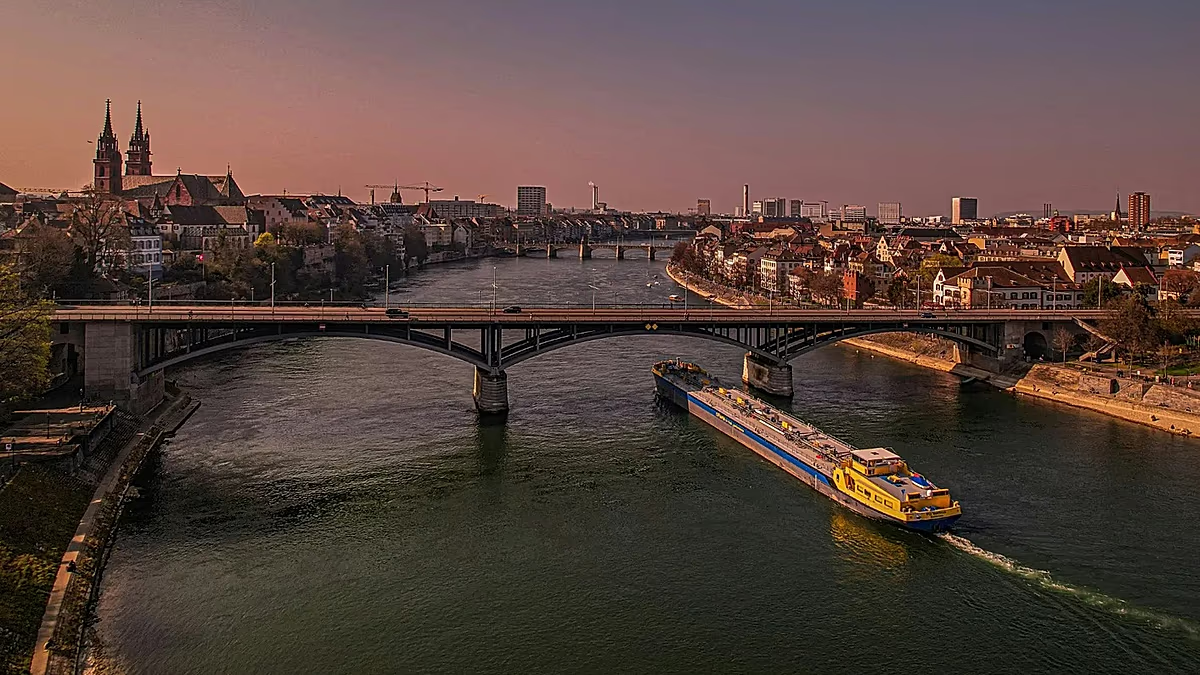
Finally, the cultural tapestry of Europe is beautifully rounded out by the artistic tri-border hub of Basel, Switzerland, and the ancient, sun-washed streets of Thessaloniki, Greece. Basel sits uniquely at the point where Switzerland, France, and Germany meet, cultivating a cosmopolitan atmosphere and one of the finest art scenes on the continent. Home to the legendary Art Basel fair and the historic Kunstmuseum—which houses the world’s oldest public art collection dating back to 1661—Basel allows art lovers to immerse themselves in world-class creativity before taking a relaxing dip or stroll along the scenic banks of the Rhine. Farther south, Thessaloniki captures the warm, slow-paced essence of the Mediterranean with its picturesque waterfront, ancient Roman ruins, and stunning Byzantine churches. The city’s history is written in its landmarks, from the imposing White Tower to the bustling Aristotelous Square, but its true magic lies in its culinary soul. To truly experience Thessaloniki is to wander its streets with a sesame-crusted koulouri bread ring in hand, or to sit at a sunlit café enjoying a sweet, cream-filled trigona pastry, realizing that the best travel memories are often found not in the grand capitals, but in the quiet, delicious corners of the world’s second cities.