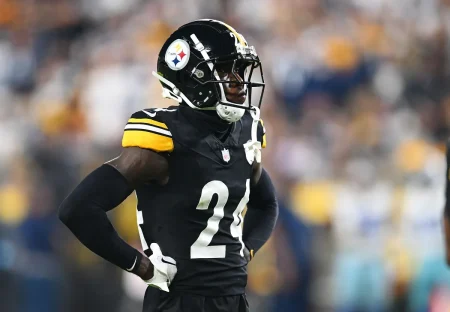






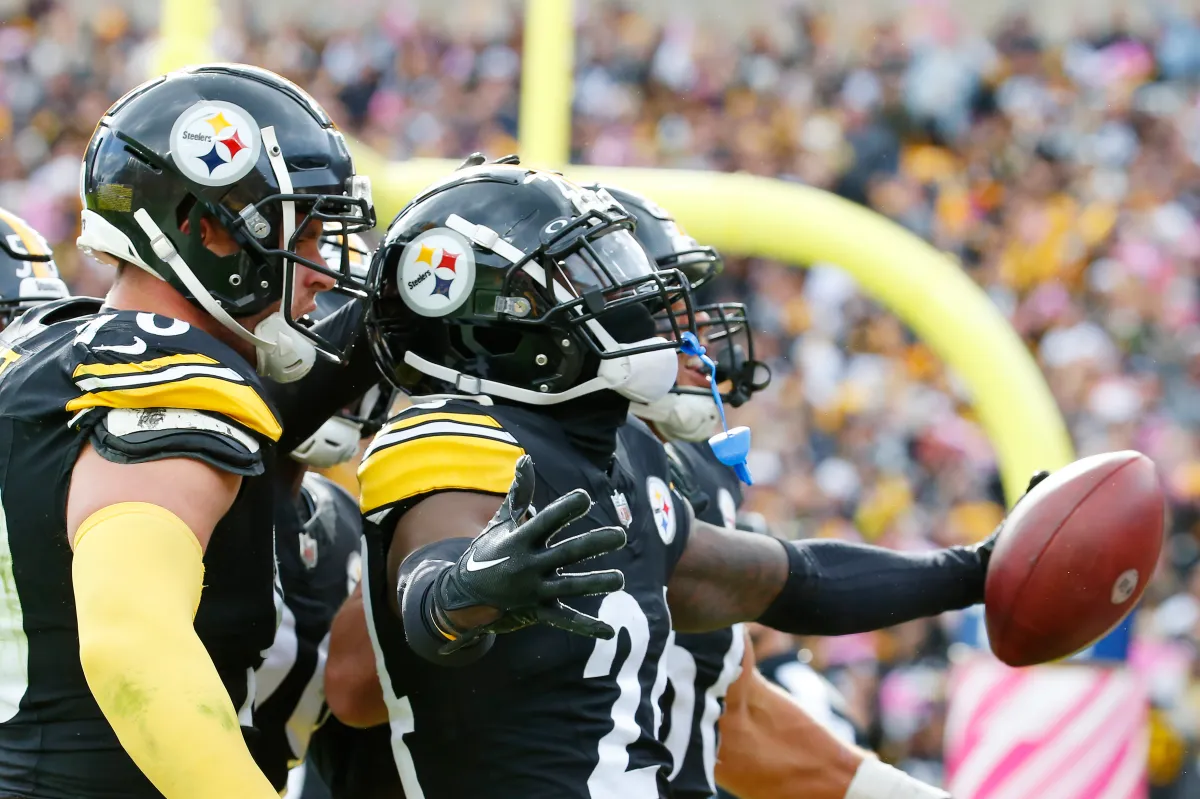
Sometimes an NFL trade lands with a simple transaction note, but for the Dallas Cowboys, the acquisition of cornerback Joey Porter Jr. from the Pittsburgh Steelers felt far more personal. The move, finalized earlier this week, sent a clear signal that Dallas wanted to fortify its secondary early in the 2026 season. Porter Jr., now a fourth-year cornerback, brings the kind of physical, press-man coverage skills that can change the entire temperament of a defense. For a Cowboys team that has often been criticized for being talented on paper yet vulnerable where it matters most, this was a statement: they are not waiting around to see how things unfold. The front office, led by owner Jerry Jones, clearly felt an urgency to make a splash rather than sit idly at the trade deadline. The deal gave the Cowboys a young, proven defensive back who still has room to grow, and it gave the locker room a jolt of energy—a reminder that the organization believes in this window of contention. Fans who have grown accustomed to Dallas making headlines for the wrong reasons finally had a reason to feel hopeful about the team’s direction. There is a particular kind of joy that comes from adding a player with bloodlines like Porter Jr., whose father, Joey Porter Sr., was a fearsome NFL linebacker. But this is not just nostalgia; the younger Porter has carved out his own identity as a tough, aggressive defender who makes quarterbacks hesitate before throwing his way. For the Cowboys, the arrival of Porter Jr. was about more than just depth—it was about adding a mindset. And as the team prepared for its Week 4 showdown against the Houston Texans, the weight of that acquisition could be felt across the fanbase. It was a move that said, “We are serious.” It was a move that suggested Dallas’s aspirations go beyond simply competing in the NFC East. And it was a move that reminded everyone that in the NFL, fortunes can change in a matter of days, especially when a proud franchise decides to be bold.
But while the Cowboys celebrated their new piece, another team was left to wonder what might have been. On Friday, Detroit Lions head coach Dan Campbell confirmed what many had suspected all along: his team had been “very much in on” pursuing Porter Jr. before the Steelers shipped him to Dallas. Campbell’s candid admission was a reminder of just how competitive the NFL’s trade market can be. For a coach like Campbell, who has built his reputation on raw emotion, grit, and authenticity, losing out on a player he wanted does not sit quietly in the background. He spoke to reporters with that familiar mix of honesty and disappointment, acknowledging that general manager Brad Holmes had worked on the deal for a while. “Everything’s gotta align,” Campbell said, offering a phrase that sounds simple but carries a world of meaning in the front-office world. It means contract figures have to make sense. It means cap space has to be available. It means the asking price has to fit the team’s long-term vision. And it means, sometimes, another franchise simply has more to offer. For the Lions, this near-miss felt especially painful given their secondary’s current state. They had been proactive, with Holmes doing the homework, making calls, and exploring every avenue. But the football gods, or perhaps the trade value charts, did not smile on Detroit this time. Campbell’s words were not bitter—they were the words of a coach who respects the process but also understands that in this league, timing and opportunity are everything. The fact that he openly acknowledged the pursuit was also a signal to his own players and fans: the organization sees the problem, is working to fix it, and will not settle for mediocrity. But for now, the Lions had to move forward without Porter Jr., and the sting of that missed opportunity would likely linger, at least until Sunday’s kickoff.
The Lions’ interest in Porter Jr. made perfect sense, because the secondary in Detroit has been patched together with tape and hope since before the season even began. The Lions released starting cornerback Terrion Arnold before the start of the 2026 season, a move that surprised many around the league and left a noticeable hole in the defensive backfield. To make matters worse, cornerback D.J. Reed has been dealing with a ribs injury and was listed as questionable for the team’s Week 4 matchup against the Carolina Panthers. Injuries to players like Reed create a ripple effect: backups are forced into bigger roles, safeties have to cover for cornerbacks’ missteps, and defensive coordinators have to simplify their game plans. But the true gut punch came from the fact that starting safeties Brian Branch and Kerby Joseph both began the year on the physically unable to perform list. Branch and Joseph are not just starters—they are the pulse of the Lions’ secondary, the kind of ball-hawking, tone-setting players who make everyone around them better. Without them, Detroit’s defense has struggled to generate the same kind of chaos and confidence that defined its recent identity. Toss in the departure of Arnold, and you have a unit in crisis mode. This is precisely why Campbell and Holmes were so aggressive in pursuing Porter Jr. They needed a stabilizing presence, a veteran who could walk into the locker room and immediately command respect. They needed someone who could run with opposing wide receivers and tackle with authority. They needed a player who could turn a fragile, banged-up group into a functional, even fearsome, operation. Instead, they were left with the reality of Sunday night’s game against Carolina, where the Lions would have to make do with what they had. For Campbell, a football purist who values toughness above all else, having to field a severely compromised secondary is a deeply frustrating position—not because he lacks belief in his guys, but because he knows how much this game demands. The margin between winning and losing is razor-thin, and when key defensive pieces are missing, that margin disappears entirely. That is why the Porter Jr. sweepstakes mattered so much, and why being on the losing end of that pursuit was such a bitter pill for Detroit to swallow.
For the Cowboys, however, the trade was a moment of triumph, and Jerry Jones did not hide his excitement. The compensation—a 2027 sixth-round pick and a 2028 second-round pick—was a price Dallas was willing to pay for immediate help. Jones, never one to shy away from the spotlight, framed the move in grand terms when he spoke to reporters. “It’s important to think big, and this is over in that big thought area about what we can do to help our defense,” he said. Those words were classic Jones: bold, slightly theatrical, and deeply invested in the narrative of the franchise. But beneath the rhetoric, there was a genuine strategic logic. The Cowboys were adding a player who could not only start immediately but also grow with the defense over the next several seasons. The 2028 second-round pick is a significant price—that is a future asset that could have been used on a young, cost-controlled player—but Jones and his front office clearly believe that the championship window is now. They are willing to mortgage a little bit of tomorrow for a better chance at winning today. And for a defense that has often been exposed in big moments, Porter Jr. represents a physical, psychological upgrade. His arrival also sends a message to the rest of the roster: the front office is willing to make bold moves in pursuit of a title. It is the kind of move that can galvanize a locker room, energize a coaching staff, and give fans a reason to raise their expectations. Of course, trading draft capital is always a gamble. There is no guarantee that Porter Jr. will perfectly adapt to the Cowboys’ defensive scheme or that his chemistry with his new teammates will develop overnight. But in the NFL, standing still is often worse than taking a risk, and Jones has never been afraid of the spotlight that comes with a big swing. With the Texans on deck, the Cowboys had no time to ease their new acquisition into the mix. The pressure was immediate, the stakes enormous, and the stage set for Porter Jr. to prove why Dallas invested so heavily in his future.
The Week 4 matchups could not have been more perfectly scripted for drama. The Cowboys were scheduled to face the Houston Texans, an in-state rivalry that always carries an extra jolt of electricity. For Dallas, the game was an opportunity to show that the Porter Jr. trade was not just a paper move, but a genuine turning point. For Houston, meanwhile, the game was a chance to spoil the Cowboys’ newfound optimism. The Texans have their own aspirations, and taking down a storied franchise in front of a national audience would be a statement. Every route by the Texans’ receivers, every deep ball thrown down the sideline, would be a test for the Cowboys’ revamped secondary. Porter Jr.’s ability to lock down his side of the field, to press at the line of scrimmage and disrupt timing, could be the difference between a tight, anxious afternoon and a comfortable Cowboys victory. But the Cowboys were not the only team facing a defining moment on Sunday. The Lions were scheduled to take on the Carolina Panthers in prime time, with a kickoff at 8:20 p.m. ET. That stage, in front of a national audience, would offer no mercy for Detroit’s banged-up and depleted secondary. Dan Campbell’s team would have to rely on intensity, scheme, and pure will to overcome the loss of key players and the sting of missing out on Porter Jr. It was the kind of game that reveals a team’s character—not just in victory, but in how they respond to adversity. For Campbell, this was personal. He is a coach who pours every ounce of his soul into his players, and he wants to win for them as much as for himself. So, even as the Lions were short-handed, there was an expectation that they would fight with everything they had. The Panthers, of course, had nothing to lose. They could play freely, while the Lions carried the weight of their injuries and their near-miss trade. In the end, Sunday’s games were not just about X’s and O’s. They were about identity, resilience, and the human spirit that makes football so compelling. The Cowboys wanted to prove they were contenders. The Lions wanted to prove they were survivors. And at the center of it all was the ripple effect of one trade, sending shockwaves through two franchises and their fanbases.
When we step back and look at the bigger picture, this entire episode is a reminder of how deeply human professional football really is. Trades are not simply transactions on a spreadsheet; they are stories of hope, longing, and sometimes heartbreak. For the Cowboys, the arrival of Joey Porter Jr. was a victory—a moment of optimism that captured the imagination of a fanbase hungry for greatness. For the Lions, the failure to land him was a reminder of how much can go wrong in a league where every detail matters. Dan Campbell’s candid admission that his team was “very much in on” the pursuit humanized the entire process. It showed that behind the suits and press conferences, real people are making decisions that carry real emotional weight. Brad Holmes, the general manager, spent days trying to make a deal happen, and when it fell through, there was likely a quiet sense of frustration that no amount of professionalism could fully hide. The players, too, are deeply affected by these moments. A new teammate can change the mood of a locker room, and a missed opportunity can leave unanswered questions. But that is the beauty of football—every week offers a chance for redemption. The Cowboys can celebrate their acquisition, but they still have to go out and prove it on the field. The Lions can lament their injuries, but they still have to compete on Sunday night. In the end, the trade saga involving Porter Jr. was not just about cornerbacks or draft picks. It was about the relentless pursuit of a better tomorrow, the willingness to try even when the odds are stacked against you, and the understanding that in the world of professional sports, everything can change in an instant. Jerry Jones thinks big, and Dan Campbell fights hard, and both coaches understand that the true heart of football lies not in the final score, but in the journey to get there. Whether the Cowboys’ bold move pays off or the Lions’ resilience shines through, the 2026 season is already unfolding as a deeply human story—one made up of dreams, disappointments, and the unshakable belief that the next game, the next trade, or the next opportunity could change everything.