




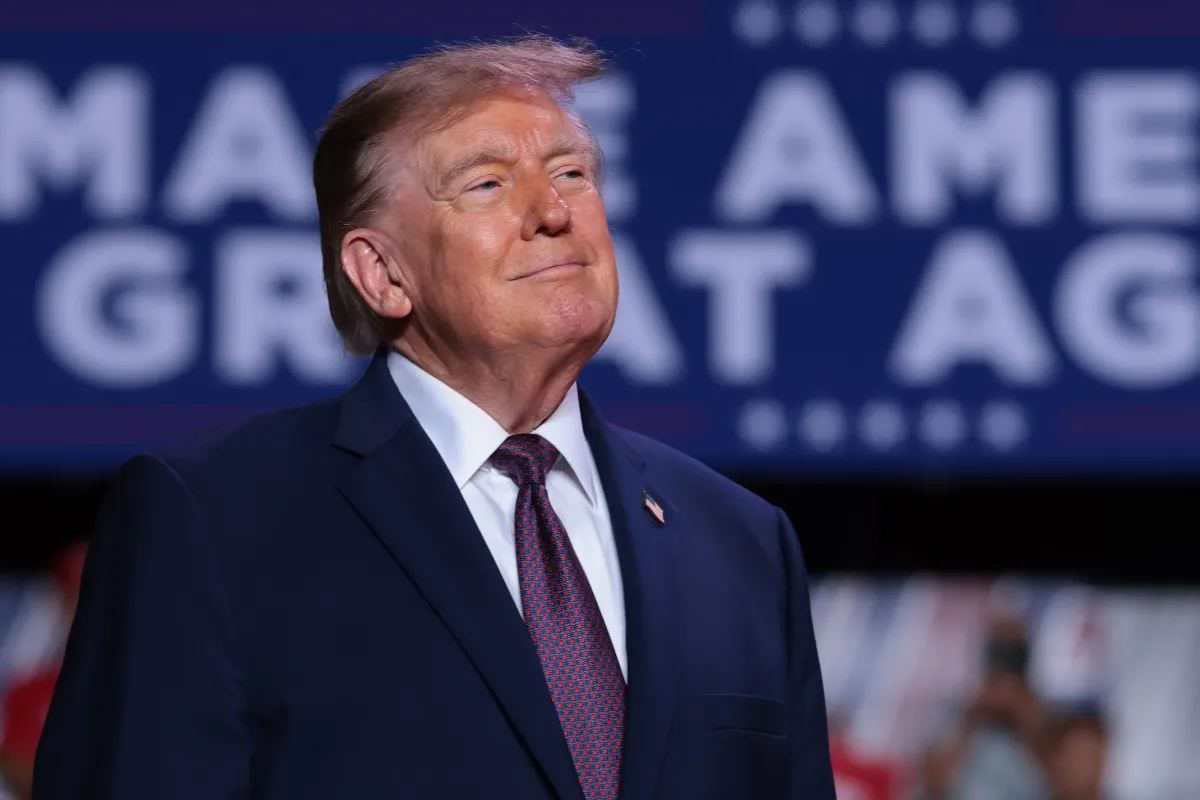
Late Friday night, President Donald Trump stepped into the national spotlight with an announcement that landed with particular force among older Americans: his administration would begin sending out $100 checks immediately to more than 20 million seniors. The stated purpose was straightforward—to help those seniors cover their Medicare Part B premiums, the monthly cost that helps pay for doctor visits, outpatient care, and other essential medical services. For many retirees, that premium is automatically deducted from their Social Security checks, so even a modest $100 boost can feel like a meaningful bit of breathing room in a tight monthly budget. Trump framed the move as a direct fulfillment of a promise he made to protect and preserve Medicare and Social Security, two programs he claimed were on the verge of ruin under the previous administration. He also took a swipe at Democrats, saying the money would come from the Medicare Improvement Fund, which he dismissed as a pointless “slush fund” that Democrats had been using for their own purposes. The timing of the announcement was notable, coming late on a Friday night when news cycles are often quieter, but the message was unmistakably aimed at a key voting bloc: seniors who are watching their costs rise and are looking for signs that the government is paying attention to their struggles.
The announcement did not happen in a vacuum. Trump has been floating the idea of Americans receiving dividend checks for some time, and he returned to that theme recently during the Republican National Committee’s Midterm Convention. There, he suggested that if Republicans secured majorities in the midterm elections, Americans could benefit from a wave of economic prosperity that would make dividend-style payments possible. The midterms are widely understood as a test of the political environment facing the party in power, and history has not been kind to presidents in these elections; the president’s party has typically lost seats in Congress during midterm cycles. That makes every promise, every policy proposal, and every check announcement feel loaded with political significance. Trump’s latest move can be seen as an attempt to energize his base, reassure older voters, and give Republicans something concrete to point to as they campaign across the country. By tying the $100 senior checks to a larger vision of economic renewal, he is trying to paint a picture of a government that is actively working for everyday Americans, rather than one that is mired in partisan battles. Whether the checks will actually arrive in time to influence the election remains an open question, but the political message is already loud and clear.
Beyond the senior checks, Trump also floated an idea that caught the attention of people living near data centers. While speaking with reporters this week, he said that Americans living in a community with a data center could receive a “dividend,” adding that residents would benefit “greatly” from the centers. Data centers have become a major part of the modern economy, housing the servers and computing power that keep the internet running, powering everything from streaming services to cloud storage to artificial intelligence. But they also bring concerns about energy use, water consumption, and local infrastructure strain. Trump’s suggestion appeared to be an attempt to reframe the conversation around data centers, arguing that the economic benefits should be shared directly with the people who live in those communities. It fits neatly into his broader “Trump Dividend” concept, which he has described as a way to return the fruits of economic growth to ordinary Americans. The details of how such a dividend would work, who would qualify, and how much money would be involved were not explained, but the idea itself is part of a pattern: Trump wants voters to see him as a president who puts money back into their pockets, whether through tax cuts, rebates, or direct checks. For supporters, it is a compelling vision of prosperity shared broadly; for critics, it is a vague promise that may never materialize.
In his Friday night post, Trump went further, offering a fuller explanation of his thinking. He wrote, in part, “I pledged to protect and preserve Medicare and Social Security, which were on the verge of RUIN by Joe Biden, who foolishly and maliciously let tens of millions of Illegal Aliens into our Country, and we are doing just that for America’s Seniors.” He also emphasized that the $100 senior checks were separate from the equally substantial refund checks his administration was sending to one million Americans who were overcharged for their Affordable Care Act plans under the Biden administration. That reference to ACA refunds is part of a larger narrative Trump has been pushing: that the previous administration mismanaged health care programs, overcharged consumers, and created chaos in the system, and that his administration is now cleaning up the mess. By invoking the image of seniors being rescued from the brink of ruin, Trump is speaking directly to a demographic that tends to vote in high numbers and is particularly sensitive to any perceived threats to Medicare and Social Security. The language is dramatic, and the accusations are sharp, but that is consistent with the way Trump has approached political communication throughout his career. He is not offering a dry policy paper; he is offering a story of rescue, betrayal, and redemption, with seniors cast as the heroes who deserve better and himself as the champion who will deliver it.
The biggest promise, however, is the one that remains the most mysterious: the $5,000 “Trump Dividend.” Trump said that because he is already delivering on the $100 checks, Americans should believe that the larger dividend would come if the GOP wins the midterms. That is a significant escalation from his earlier hints, and it raises a host of questions. How would the dividend be funded? Who would receive it? Would it be a one-time payment or an annual check? Would it be means-tested, or would every American get $5,000? None of these questions were answered in the announcement, and at the time of publication, it remained unclear how or when the dividend would be delivered. That lack of detail has not stopped supporters from embracing the idea, but it has also invited skepticism from critics who see the promise as an election-year gimmick rather than a serious policy proposal. The history of such promises is mixed; politicians have often floated big checks during campaigns, only to see those plans stall in Congress or get scaled back once the reality of budgeting sets in. Trump, however, is betting that the sheer simplicity of the promise—$5,000 for every American—will resonate with voters more than the fine print. In a political environment where many families are feeling the pinch of inflation and rising costs, the idea of a large, direct payment is undeniably appealing. Whether it is realistic is another matter entirely.
For now, the story remains very much in development. Newsweek reported that the details of both the senior checks and the larger dividend were still unclear, and the article itself was produced with the assistance of Martyn, Newsweek’s AI assistant, a fact the publication noted in its coverage. That disclosure is part of a broader trend in journalism, where newsrooms are increasingly using artificial intelligence to help draft, summarize, and refine stories, while still relying on human editors and reporters to verify facts and provide context. For readers, the emergence of AI-assisted journalism raises its own questions about transparency, accuracy, and trust, but it also reflects the changing reality of how news is made in the digital age. As the story continues to unfold, seniors and other Americans will be watching closely to see whether the promised checks actually arrive, whether the dividend becomes more than a talking point, and whether the political calculations behind these announcements pay off at the ballot box. In the meantime, the announcement has already achieved one thing: it has put the focus squarely on the economy, on the cost of health care, and on the question of whether the government can deliver tangible benefits to the people it serves. Whether that focus will translate into votes remains to be seen, but for millions of seniors, the hope is that a $100 check is just the beginning of something larger—a sign that their needs are being heard, and that the promises made on the campaign trail are more than just words.