




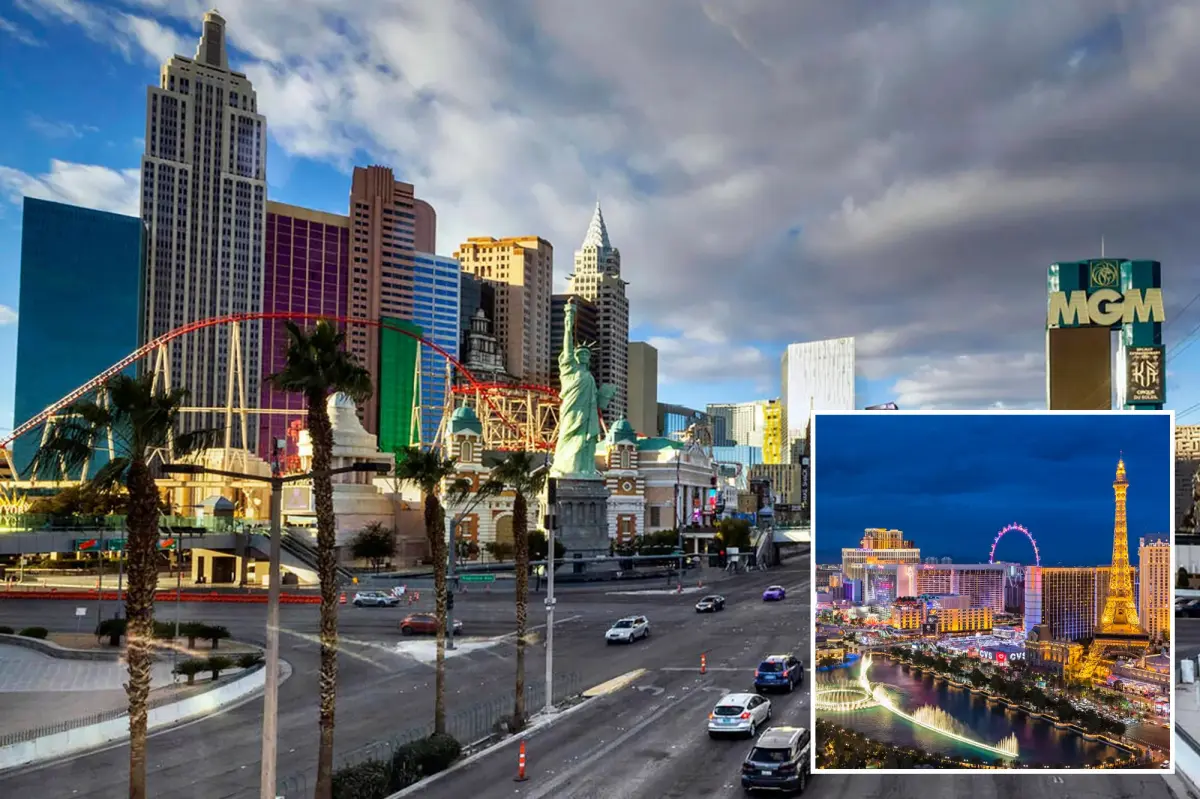
Las Vegas has always built its reputation on defying gravity—a place where fortunes flip in an instant and the party never stops. Yet for the past few years, the city has been fighting a different kind of battle, one that no jackpot can instantly solve. Sin City is still stuck in its years-long post-pandemic tourism slump, and the latest numbers are a sobering reminder that the rebound is far from complete. In August, the number of visitors fell to 3.03 million, a 4.3 percent drop from the same month last year and 136,700 fewer than in July. The city’s airport, normally a river of arriving tourists, saw passenger counts sink by 9 percent compared with the previous year. What makes this even more discouraging is that August was not supposed to be a weak month. It sits in the middle of the summer travel season, when families squeeze in last vacations and people flee the heat elsewhere—though in Las Vegas, heat is part of the deal. But the crowds did not come. Cheaper hotel rooms were supposed to be the great equalizer, the irresistible offer that would pull people back to the Strip. Yet a discount on a room cannot fix the high cost of getting there, nor can it erase the lingering caution that many travelers still feel. The empty seats on flights and the quiet stretches of casino carpet are visible reminders that Las Vegas, for all its sparkle, is not immune to the economic and emotional aftershocks of a global crisis. The city is still glowing, still advertising, still hoping. But behind the neon, the numbers tell a more fragile story.
The hotel industry is where the struggle becomes most tangible. The average daily rate for a Las Vegas hotel room fell to $150.32 in August, about $7 less than July. For travelers, that can feel like a win—a chance to stay somewhere nicer for less. But for the tourism economy, falling rates are less a gift than a warning sign. They indicate that demand is soft enough that hotels have to lower prices to fill beds. Even so, the beds are not filling. Occupancy rates landed at 74.1 percent, down 3.4 percentage points from the previous year. The weekends tell a familiar story: roughly 85 percent of rooms were full, as locals and drive-in visitors kept the party alive. But during the week, the number sank to 69 percent, a figure that reveals a missing pillar of Las Vegas tourism: business travel and conventions. Weekday occupancy is the engine that keeps hotels profitable, restaurants staffed, and taxi stands busy. Without it, the city feels like a weekend-only destination, a place that flashes to life on Saturday night and then sinks into quiet by Wednesday afternoon. Revenue per available room, a key health metric for the industry, fell to just over $111, down from July. Behind those acronyms and percentages are real people. Housekeepers have fewer rooms to clean, bartenders work shorter shifts, and cocktail waitresses see thinner tips. The cheaper room rate might attract a few budget-conscious visitors, but it is not enough to sustain the vast ecosystem of workers who rely on a steady flow of tourists. Las Vegas is a service city, and when the guests do not show up, every echo in the lobby is a sound of lost wages.
Steve Hill, chief executive of the Las Vegas Convention and Visitors Authority, has become the public defender of the city’s value. As complaints about expensive food and hotels grew louder, Hill pushed back with a simple argument: Las Vegas is not overpriced, and the people who say it is are not looking at the full picture. “The idea that generally Las Vegas is not a value, that it is overpriced, I don’t think our customers are doing math when they are concerned about a specific issue,” Hill said. “They’re expressing concern about that specific topic, that tends to then move into a narrative around Las Vegas is expensive or Las Vegas is not a value, but if you actually do the math on that, that’s not accurate.” There is some truth to his point. A hotel room on the Strip can cost less than a night in a midrange hotel in New York or San Francisco. A traveler can eat well in Vegas without draining a savings account, especially compared with other major tourist destinations. There are free attractions, cheap buffets, and, of course, the elemental gamble of a slot machine. Yet value is a slippery thing. It is not just about average rates and cost comparisons; it is about how people feel when they are asked to pay $18 for a cocktail or face a pile of added fees after a night out. One disappointing experience can become the story travelers tell, and those stories eventually create a narrative louder than any marketing campaign. Hill also blamed broader economic factors for the sagging numbers, especially rising jet fuel and gasoline prices. When it costs more to fly or drive to Vegas, the trip starts with a smaller wallet. The value of a discount room evaporates if the airfare eats up the savings. The city is caught between being perceived as too expensive and actually being too expensive for many families. That tension is hard to resolve with a single message, no matter how many speeches are given.
One of the most significant and least discussed pieces of the puzzle is Canada. Las Vegas has long relied on Canadian visitors as its largest source of international tourism. They come from Vancouver, Toronto, Calgary, Montreal, and everywhere in between, drawn by the warm desert sun, the shows, the shopping, and the sense of escape. But those visitors have disappeared in alarming numbers. According to Hill, Canadian visitation has dropped 30 percent since 2019. “It is a big portion of what’s missing in Las Vegas here right now,” he said. The decline has no single cause. Earlier in the pandemic, border closures made cross-border travel impossible. When the border reopened, the flow did not fully return. The Canadian dollar lost ground against the U.S. dollar, making every meal, hotel night, and show more expensive. Flight availability changed, with some routes suspended and never fully restored. There is also a cultural and political dimension; some Canadians have felt less welcome in the United States in recent years, or simply prefer to spend their vacation dollars closer to home. Whatever the reason, the loss is deeply felt in Las Vegas. Canadian travelers tend to stay longer than some domestic visitors, travel in groups, and spend steadily across the city. They are not just gamblers; they are diners, shoppers, spa-goers, and theater audiences. Their absence leaves a gap that is not easily filled by other international markets. A 30 percent decline is not just a statistic. It is a row of empty seats at a Cirque du Soleil show, a table for two in a restaurant that used to serve parties of eight, and a parking lot that should be fuller. The city can market to the rest of the world, but it cannot force the geopolitical and economic winds to change. It can only wait and hope that the maple leaf flags return.
Amid all the gloomy numbers, however, there are flickers of hope that Las Vegas might be closer to a comeback than the headline figures suggest. According to new data released by travel provider Priceline, Las Vegas topped the list of most searched destinations year over year last month. That is a crucial sign because searches happen before bookings; they indicate interest, desire, and planning. People are still dreaming about Las Vegas, still sharing links with friends, still imagining themselves at the craps table or the pool. That emotional connection has not been broken. The gambling industry offers even stronger evidence that the city’s core attraction remains intact. Nevada casinos won about $1.27 billion in August, a 3.1 percent improvement over the previous year. More impressively, the win was 32.8 percent higher than August 2019, the last pre-pandemic benchmark. Shelley Newell, senior economic analyst for the Gaming Control Board, put it in context: “Nevada continued to record gaming win amounts in excess of pre-pandemic levels this month. Statewide total win was 32.8%, or $312.4 million over August 2019.” She noted that the latest month represented the 66th consecutive month that the state has recorded at least $1 billion in monthly gaming win. In other words, people are still coming to Las Vegas and leaving their money at the tables, even if the overall number of visitors is down. This suggests that the crowds that do come are spending more, or that the casino floor is more efficient, or simply that the lure of a jackpot remains timeless. The visitor slump and the strong gaming revenue can coexist because they measure different things. The casino numbers speak to the depth of the city’s enduring appeal. The visitor and hotel numbers speak to the obstacles—cost, distance, uncertainty—that stand between desire and arrival. When those obstacles ease, even slightly, the search traffic suggests the floodgates could open again.
Taken together, the picture is neither a story of collapse nor a triumphant return. It is a story of a city in wait. Las Vegas is used to reinventing itself, to turning bad luck into a new bet. It survived the Great Recession, the shift to legal sports betting, and the unprecedented shutdown of March 2020. It has always found a way to sell the next version of the dream. This current moment is no different, but it is more complicated. Lower hotel prices are a welcome relief for those who can afford to travel, but they are also a measure of the distance still to travel. The absence of Canadian visitors, the lingering fear of high costs, and the stubborn weight of fuel prices are not problems the city can solve alone. They are external forces, as unpredictable as a roll of the dice. Yet Las Vegas has something that many other places do not: an almost mystical pull. It remains the destination people type into their search bars, the place they mention when asked about a getaway. It still offers the chance to be someone else for a few days, to watch a fountain dance, to cheer a slot machine, to see a show that leaves you breathless. That desire is not counted in occupancy rates or airport passenger numbers, but it is real. It is what brought the city back after every downturn, and it is what will bring it back again. The neon is still lit, the tables are still open, and the welcome mat is still out. Las Vegas is waiting, as it always does, for the next roll of the dice—and for the visitors who will make the city whole again.