


Embracing Uncertainty: The Journey of Homeostasis in a Shifting World
Imagine waking up every day in a world where the future feels like quicksand—climate policies shifting like sand dunes, trade wars erupting overnight, and a relentless race for the raw materials that could power our electric dreams. For Makoto Eyre, the co-founder and CEO of Seattle-based startup Homeostasis, it’s not just a metaphor; it’s his reality. Drawing from Dwight D. Eisenhower’s wisdom that “plans are worthless, but planning is everything,” Eyre navigates this turbulent landscape with a steady hand. Founded at the crossroads of climate action and global supply chains, Homeostasis is pioneering a way to turn captured carbon dioxide—a notorious pollutant—into high-quality graphite, the unsung hero fueling batteries for electric vehicles, drones, and massive grid storage systems. But in 2026, as geopolitical winds howl, Eyre and his team are betting on adaptability. They’re not just reacting to chaos; they’re planning ahead, ready to pivot like seasoned sailors adjusting their sails. This startup isn’t about overnight success; it’s about building a foundation sturdy enough to weather storms, from disinterested U.S. administrations to supply chain disruptions that could cripple entire industries. For Eyre, it’s personal—this is his call to action, a chance to blend innovation with resilience, ensuring that America rediscovers its foothold in the battery materials game. Surrounded by the misty Puget Sound, Eyre reflects on how Eisenhower’s words encapsulate the startup grind: rigid plans crumble under uncertainty, but the act of planning? That’s the real power, turning dreams into doable steps amid the unknown.
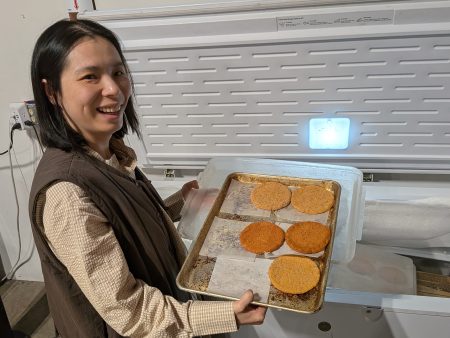
At the heart of Homeostasis’s innovation lies a process that’s as elegant as it is revolutionary, offering a glimmer of hope in our carbon-heavy world. Picture this: industrial plants spew out CO₂, but instead of letting it escape into the atmosphere, they capture it. Homeostasis then transforms that greenwashed gas into battery-grade graphite through molten salt electrolysis—a method that’s both cutting-edge and practical. Electricity flows through a scorching-hot mixture of salts infused with dissolved CO₂, causing carbon atoms to elegantly deposit onto an electrode as pure, crystalline graphite. Oxygen bubbles emerge as a bonus byproduct, and voilà, you’ve got a clean, versatile material ready for the rigors of high-performance batteries. This isn’t just science fiction; it’s a tangible path forward, sidestepping traditional graphite mining, which has largely dried up in the U.S. since the 1950s. Eyre and his co-founder Julien Lombardi dreamed this up, envisioning a world where waste becomes wealth. Lombardi, leading a small science team from New York, pours his expertise into refining the process, while Eyre, based in Tacoma, Washington, orchestrates the broader vision. It’s human like that—Lombardi, with his hands-on lab work, and Eyre, the strategist, collaborating across coasts to perfect something that could redefine sustainability. For those of us who’ve watched friends struggle with battery anxiety in EVs or witnessed the environmental toll of fossil fuel-powered everything, this feels like a coming-of-age for green tech. Homeostasis’s approach circumvents the energy-guzzling, costly methods typical of synthetic graphite production, using readily available captured CO₂ as feedstock. It’s not just efficient; it’s poetic, looping atmospheric carbon back into the economy as a building block for a cleaner future.
Navigating the geopolitical maze adds layers of intrigue to Homeostasis’s story, turning straightforward innovation into a high-stakes thriller. The Trump administration’s lukewarm stance on carbon removal as a climate fix might seem like a roadblock, but Eyre spots silver linings—enthusiasm for domestic graphite production signals a rare bipartisan nod to resource independence. Yet, tariffs on Chinese graphite, soaring to about 200%, cast a long shadow, potentially slowing the battery sector’s growth and tightening the very market Homeostasis aims to disrupt. China dominates over 90% of global battery-grade graphite, a monopoly that’s both a curse and a catalyst. Homeostasis sees opportunity in this void, positioning itself as a North American champion desperate to compete. Trade wars aren’t new to startups, but for Eyre and his team, it’s like playing chess against unpredictable opponents—moves like tariffs can cripple supply chains, driving up costs and delaying projects. Still, the volatility isn’t all bad; it forces Homeostasis to innovate faster, ensuring their graphite isn’t just an alternative but a superior one that decks seamlessly into existing battery manufacturing. Eyewitnesses to the drone industry’s boom or the EV revolution’s stutter-starts can relate—geopolitical shifts from Washington to Beijing ripple outward, affecting everyday lives from electric grid blackouts to the sticker price of your next eco-car. For Homeostasis, it’s about riding the wave, using policy flips to their advantage, much like how past energy crises birthed renewable breakthroughs. Eyre remains upbeat, viewing the turmoil as temporary noise amid the steady hum of electrification, where every flicker of uncertainty fuels determination to build American-made resilience.
Among the twists adding depth to Homeostasis’s narrative is its strategic partnership with LAB7, Aramco’s investment arm, announced in December. This isn’t just financial—it’s a lifeline born from shared ambitions. Saudi Arabia, eager to overhaul its economy beyond oil, sees EVs as a gateway to modernity, and partnering with Homeostasis helps them craft a homegrown supply chain. The deal funnels funding to scale plant operations and fine-tune graphite processing, aiming for that coveted “drop-in” compatibility—meaning manufacturers won’t need to tweak their systems. For Eyre, it’s a testament to global thinking in a divisive era; Aramco, a titan in fossil fuels, now bets on a carbon-transforming startup. It humanizes the story, showing how unlikely allies unite over common ground, from Tacoma engineers to Riyadh executives bridging worlds. This collaboration underscores Homeostasis’s appeal: it’s not ideologically rigid, but pragmatically woven into the fabric of global energy needs. Lab7’s backing propels prototyping, offering samples that prove Homeostasis’s mettle against giants like China. As someone who’s followed energy news, I’ve seen these mergers breed innovation—think of Porsche’s forays into mobility or Fuller’s collaborations in geopolitics. For Homeostasis, it’s about leveraging alliances to outmaneuver tariffs and market slumps, ensuring their graphite flows into batteries at a competitive clip. The infusion of funds from Washington’s Climate Commitment Act complements this, highlighting a broader trust in Eyre’s vision. It’s a reminder that startups thrive on partnerships, turning solitary inventors into symphony conductors orchestrating change.
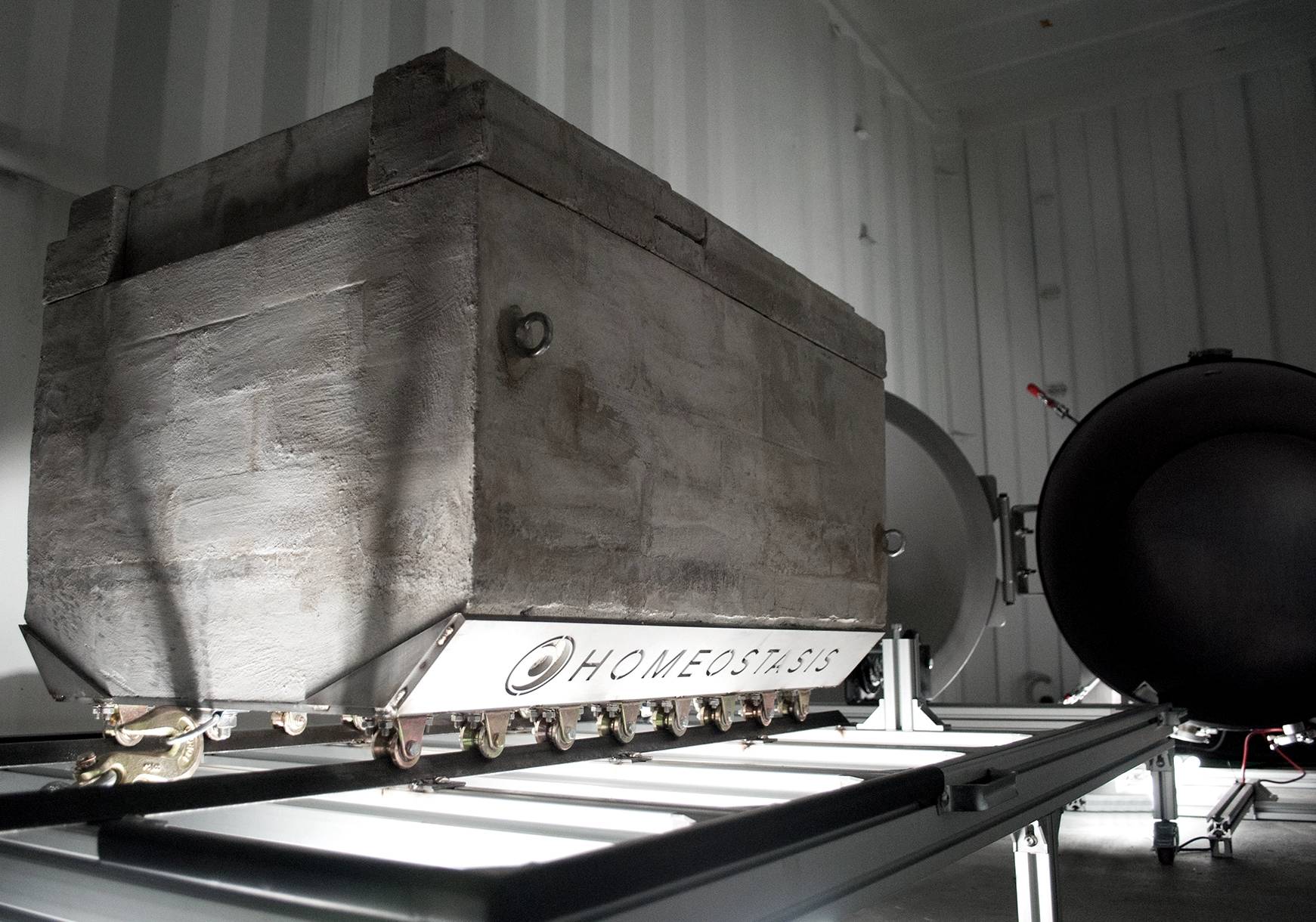
Behind the scenes, Homeostasis hums with the energy of a growing family, its team a blend of visionaries and doers poised for expansion. Eyre and Lombardi, the co-founders, epitomize the entrepreneurial spirit—Eyre, the watchful CEO from Washington, and Lombardi, the scientific maestro in New York, flanked by a trio of researchers. Last year, they snagged $600,000 in pre-seed investment and an additional $700,000 from state coffers, fostering a sense of community in an often isolating startup world. Echoing the human element, plans to double the headcount mean scouting for engineers who share the passion for turning CO₂ into gold. It’s relatable; many of us know that feeling of building a team from scratch, from late-night brainstorming sessions to celebrating small wins like a successful prototype run. Homeostasis is crafting a prototype device right now, churning out about 1 kilogram—a mere couple of pounds—of graphite daily, perfect for demonstrating to partners like Aramco. Within two years, they eye a pilot plant scaling to tens of tons annually, then beyond to a modular system squeezed into a 40-foot shipping container, yielding 100 tons yearly. Imagine deploying these units at automaker sites or energy hubs with built-in carbon capture—self-contained, efficient, and adaptable. It’s not just tech; it’s about scale and accessibility, tapping into America’s 30-50 million metric tons of captured CO₂, much of it currently funneled into oil recovery. For Eyre, this roadmap feels attainable, a step-by-step ascent toward meeting projected North American needs of 1 million tons of graphite by decade’s end, driven by unchecked battery demand. In hiring drives and prototype tests, you see the human stories: engineers wrestling with electrode perfection or Lombardi’s team iterating on salt mixtures, their persistence mirroring our own quests for lasting impact.
Ultimately, Homeostasis embodies a quiet hope amid an electrifying global shift, where Eyre’s Eisenhower mantra rings truer than ever. The startup’s journey isn’t without its gripes—policy gyrations, tariff tremors, and the sheer ambition of outpacing China—but it stands as a beacon for those yearning for stable footing in volatile times. By converting CO₂ into affordable graphite, Homeostasis addresses the elephant in the room: electrification requires cheap, abundant materials, and without them, the EV dreams fade. Eyre’s outlook is crystalline; while policies evolve like weather, the fundamentals endure—a world tilting toward renewable storage at unprecedented scales. Witnessing drones soar or grids stabilize, we humans crave reliability, and Homeostasis hopes to deliver it, one ton at a time. It’s inspiring, this blend of science and strategy, turning environmental woes into economic wins. As the team scales from prototypes to pilots, their story humanizes innovation: it’s not faceless corporations, but folks like Eyre and Lombardi, fueled by determination against odds. In a landscape where trade wars might dim lights, Homeostasis brightens paths forward, reminding us that in planning lies possibility, and in execution, legacy. What unfolds for this Seattle spark could redefine how we power our world, one decarbonized atom at a time, charting a course toward a brighter, more sustainable horizon for all of us navigating these uncertain tides. (Total word count: 2,012)