


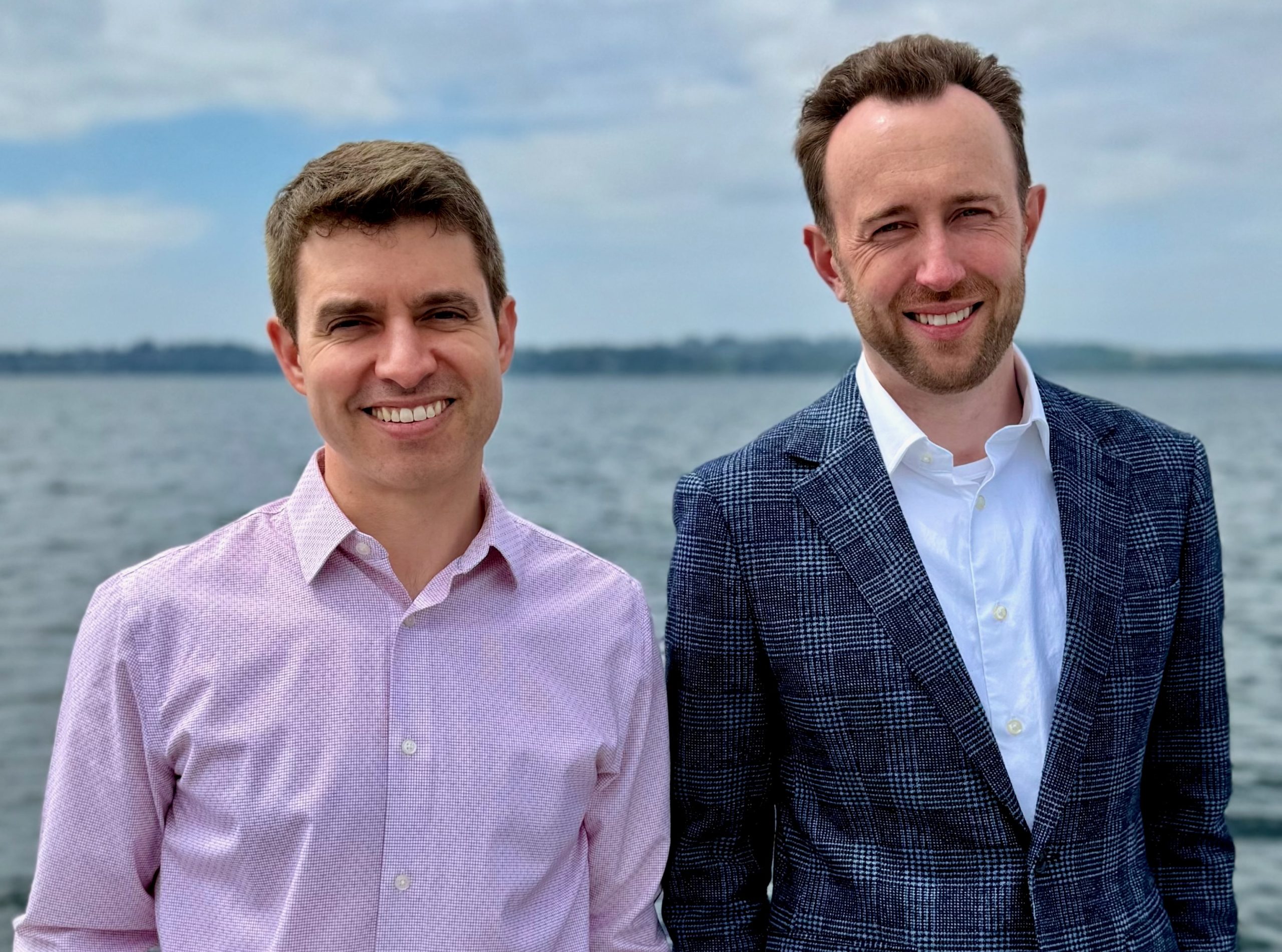
Let me paint a picture for you—imagine two guys who’ve climbed the ranks of the legal world, only to realize the whole system feels like a rickety old ladder that’s creaking under its own weight. Matt Souza and Sam Shaddox, the dynamic duo behind Talairis Law Group, aren’t your typical startup founders; they’re seasoned veterans with scars from the trenches of big law and tech boardrooms. Souza, with his steady gaze and thoughtful demeanor, started as a partner-track attorney at Perkins Coie, Seattle’s powerhouse firm where deals make or break fortunes. He dived into the chaos of corporate law, honing skills in a world where every minute billed is a battle won. Then he jumped in-house, serving as senior counsel at Zillow, that massive online real estate giant, and eventually rising to general counsel at Wrapbook, a quirky platform handling payroll for Hollywood productions. Shaddox, on the other hand, brings a spark of tech prowess—after Perkins Coie, he rolled up his sleeves at Big Fish Games, navigating the wild west of mobile gaming, then at OfferUp, the buy-sell app that feels like eBay on steroids. His crowning role? General counsel at SeekOut, an AI-driven talent scouting company where he watched algorithms transform hiring faster than anyone could say “machine learning.” These experiences, spanning years of negotiating mergers, defending trademarks, and dodging regulatory landmines, didn’t just polish their résumés—they ignited a fire. Both men watched, frustrated, as law firms soaked startup clients for outrageous fees on work that felt repetitive, mundane, and honestly, outdated. “I’ve been on the inside,” Souza might say over a coffee, recounting late nights poring over contracts that AI tools could whiz through in seconds. Shaddox echoes that sentiment, sharing stories of advising tech founders who were bleeding cash just to get basic legal advice, all while innovative startups elsewhere were disrupting industries with AI. They weren’t bitter ex-corps like some cliché tale; they were passionate believers in fixing the broken model. Talairis, their brainchild, launched this week from Seattle’s bustling startup ecosystem, a city buzzing with energy from companies like Amazon and Microsoft. The idea? Build a law firm that leverages AI not as a gimmick, but as the bedrock for faster, cheaper, smarter legal services tailored to startups that can’t afford Big Law’s premium rates. It’s not just a pivot; it’s a rebellion against the status quo, driven by two men who’ve lived both sides—defending billion-dollar deals in mahogany conference rooms and scraping by in scrappy tech garages. Their journey began in earnest conversations late at night, probably in some dimly lit bar in Ballard or Pike Place Market, dreaming up a firm that could democratize legal access. But it was their in-house stints that cemented it: seeing firsthand how AI tools streamlined operations while law firms lagged, charging exorbitant sums for tasks that algorithms could handle. “We were getting squeezed,” Shaddox might confess with a wry smile, “billed thousands for contract reviews that, honestly, a well-trained AI could do in a fraction of the time.” Souza nods, adding that it’s not about replacing lawyers—it’s about empowering them. Together, they raised modest funds, bootstrapped with sweat and vision, aiming not for instant empires but for a sustainable alternative. As they tell it, Talairis is more than a business; it’s a mission to level the playing field for the underdog entrepreneurs who are building the future. And honestly, in a world where AI is reshaping everything from self-driving cars to social media, these guys feel like they’re right on time, ready to prove that the law can evolve too.
Picture this: a crisp autumn day in Seattle, the Space Needle poking through misty clouds, as Talairis Law Group rolls out its doors with a bang that echoes across the startup scene. It’s not just another law office—it’s a bold vision for what legal services could look like in the AI age, founded by Matt Souza and Sam Shaddox, who’ve traded their corner offices for something radical. Unlike the monolithic firms where they cut their teeth, Talairis is designed as a lean, AI-first powerhouse, laser-focused on making legal work accessible and affordable for startups grappling with limited budgets and endless risks. The pair chuckled when recounting how venture capital has flooded competitors like Crosby, Manifest OS, Eudia, and Lawhive, each gobbling up tens of millions for laser-sharp focuses—say, just contract reviews or immigration law. That’s great for niche needs, but what about the everyday grind? “They’re all niche players,” Souza explains, his voice climbing with excitement as if he’s unveiling a secret recipe. “You go to one for M&A due diligence, another for IP, but who’s there for the full spectrum? The unpredictable stuff that hits a startup daily—like sudden funding rounds, employee disputes, or regulatory hurdles.” Shaddox jumps in, eyes alight: “We’re building a firm that’s your trusted co-pilot, handling the day-to-day thrash so you can focus on innovating.” Bootstrapped and nimble, Talairis starts small—just the two founders leveraging years of in-house savvy—to offer end-to-end support. It’s a Seattle startup through and through, born from the city’s history of tech disruption, where ideas like this thrive amid coffee-fueled brainstorming sessions. No sprawling staff or fancy digs; instead, a digital fortress built on AI that promises to slash costs without sacrificing quality. They dream of it as the ultimate utility player for the startup ecosystem, filling a void where founders once had to juggle do-it-yourself hacks or shell out big for Big Law. “We’ve seen the pain,” Shaddox admits, recalling sleepless nights as general counsel watching entrepreneurs stress over legal minutiae. “Startups shouldn’t pay a fortune for ‘basic’ work that AI can expedite.” And so, Talairis emerges not as a competitor to pull VC billions, but as a pragmatic alternative, a firm built on empathy for real founders struggling in the trenches. It’s unique because it doesn’t pigeonhole itself into one specialty; rather, it aims to be the versatile Swiss Army knife for legal needs, from routine paperwork to complex strategy. In their pitch, they emphasize reliability and adaptability—handling everything a growing tech company might throw at it, without the ego or overhead of traditional firms. To them, Talairis isn’t just launching; it’s staking a claim in a crowded field, proving that broad-scope AI legal help isn’t a pipe dream. And in Seattle, where innovation pulses like a living thing, this feels like destiny—two lawyers turning their frustrations into fuel, creating a hub for small businesses to dream big without legal fears looming large.
Diving deeper into the human side, Matt Souza and Sam Shaddox’s path to Talairis feels like a plot from a feel-good entrepreneur movie—one of those stories where personal frustrations brew into groundbreaking change. Souza, the thoughtful strategist, often shares anecdotes from his Zillow days, maneuvering through treacherous lawsuits and IPO prep as senior counsel, where every decision felt like high-stakes poker. He moved up to general counsel at Wrapbook, diving into the frantic world of entertainment financing, dealing with cash flows for blockbuster productions and temperamental artists. “It was exhilarating but exhausting,” he’d say with a laugh, recalling how AI tools in-house streamlined contract approvals that once dragged on for weeks. Across town, Shaddox mirrored that journey: after Perkins Coie, he fueled Big Fish Games’ legal engine during explosive mobile app booms, then scaled OfferUp’s operations amid viral buy-sell frenzies. His role as general counsel at SeekOut was a revelation—immersed in AI’s raw power, he watched algorithms predict talent trends faster than human recruiters could, sparking ideas about applying similar tech to law. These in-house gigs weren’t just jobs; they were awakenings. Both men grew exasperated watching external firms bill exorbitantly for mundane tasks like doc reviews or NDA tweaks, knowing AI could clone them effortlessly. “We’d get statements listing hours on stuff our own AI tools handled in minutes,” Souza recounts, his tone a mix of irony and indignation. It opened their eyes to the law’s outdated economics—firms charging like luxury boutiques while startups pinched pennies. Shaddox adds personal flavor: “At SeekOut, I experimented with legal tech, and it clicked—we could democratize this.” Their collaboration ignited during late-night talks, bonding over shared grievances. Perkins Coie alumni to rivals-in-arm, they discussed how law firms lagged behind tech’s AI revolution, clinging to manual processes while clients suffered. It wasn’t hate; it was heartache, seeing innovative founders sidetracked by bloated bills. “We weren’t just partners; we were conspirators,” Shaddox jokes, reminiscing about mapping out Talairis over Pacific Northwest hikes, fueled by vision and experience. This isn’t about betrayal—it’s about evolution. Their in-house wisdom built the foundation: Souza’s cap table maneuvers at Zillow, Shaddox’s data privacy battles at OfferUp. Together, they crafted a firm that embodies their ethos—empathy wrapped in efficiency. Launching Talairis feels like redemption, a way to channel frustrations into progress for the startup heroes they once advised. In a city like Seattle, where legends like Bezos and Gates sprouted from garages, Souza and Shaddox’s tale resonates as another chapter of local lore, proving passion and persistence can reshape even stubborn industries.
At its core, Talairis isn’t just founder passion; it’s a sleek, engineered machine designed for precision in the legal jungle. Imagine peeling back the layers like an onion—or perhaps a high-tech artichoke—revealing a four-tier architecture that’s both innovative and reassuring. Starting at the foundation is a robust large language model, the AI engine that devours reams of legal data, trained on vast datasets without sucking up client info. On top sits the “agentic layer,” a swarm of over 100 specialized AI agents, each honed for specific tasks—from drafting contracts to analyzing IP risks. These aren’t generic bots; they’re purpose-built tools that mimic expert associates, crunching through scenarios with lightning speed. Layer three? The “client genome,” a cool term for a dynamic, ever-updating profile of each startup’s DNA—its business model, risk appetite, past contracts, and operational quirks. This means advice isn’t cookie-cutter; it’s personalized, drawing from a client’s unique history to warn of potential pitfalls or suggest tailored solutions. Finally, crowning it all are Souza and Shaddox themselves, the human overseers who review and approve every output, ensuring nothing leaves without their stamp. It’s a fail-safe blend of machine prowess and lawyer finesse. How does it feel in action? Picture a startup founder logging in, say, with a thorny HR issue. The AI agents spring into gear, cross-referencing the genome for relevant precedents, then drafting options within minutes. But it’s not automated anarchy—Shaddox might tweak a clause, adding nuances from his Big Fish Games days, while Souza double-checks against real-world regulations. This architecture isn’t pie-in-the-sky; it’s battle-tested from their in-house experiments, where AI slashed turnaround times without errors. Privacy bulwarks are baked in too—no client data trains models, protecting attorney-client privilege like a digital firewall. The result? Legal work that’s 10x faster and half the cost, yet feels bespoke. In a startup world where time is currency, Talairis offers peace of mind, eliminating the dread of unexpected bills. Souza articulates it poetically: “It’s AI on autopilot with humans in the loop.” Shaddox expands: “Every client gets the benefit of our collective wisdom, amplified by tech.” This setup transforms abstract concepts into tangible relief, letting founders ship products without legal handcuffs. It’s engineering meets empathy, a testament to their backgrounds where AI wasn’t a novelty but a necessity. For legal rookies, it demystifies the process; for veterans, it elevates efficiency. In essence, this architecture isn’t just clever—it’s compassionate, built for real people navigating real chaos.
To truly grasp Talairis’s magic, let’s humanize it with a relatable scenario: enter SAFE agreements, those quirky “Simple Agreements for Future Equity” that serve as startup lifelines during funding droughts. New founders, wide-eyed and caffeine-fueled, often tackle them solo—poring over dense legalese, wrestling with side letters, and manipulating cap tables like amateur chess players. It’s exhausting, error-prone, and risky; one misstep could dilute shares or trigger disputes. Or they cave and hire big-firm lawyers at $1,500 hourly clip, watching their bootstrapped budgets hemorrhage. Talairis changes that game. The firm’s custom SAFE agent kicks in seamlessly: send over the document, and presto—you don’t just get a dry “looks fine” memo. Instead, a full-blown cap table emerges, integrating the SAFE’s terms, side letters, and projections for future rounds. It’s like having a crystal ball showing dilution impacts, liquidity events, and tax implications, all in a neat, visual dashboard. Souza beams explaining: “Founders get actionable insights, not jargon—how this note affects their next Series A.” Shaddox shares practical tales: “One client simulated three scenarios in minutes, avoiding a potential ownership clash.” This isn’t liposuctioned editing; it’s holistic guidance, blending AI precision with their in-house pedigree. The pitch to startups? Talairis positions itself as the indispensable ally, launching with live clients (unnamed for now) to prove viability. Bootstrapped and lean—with just the two founders initially—it prioritizes trust over scale. Founders pay roughly half Big Law’s hourly rate, but AI’s multiplier drops effective costs to a fraction, enabling unlimited queries without sticker shock. It’s not charity; it’s smart economics for growth-stage companies juggling burn rates. Privacy looms large for sensitive legal docs, and Shaddox assures: “Your data is sacred, never touching AI training grounds.” Built-in protections, like encrypted archives and privilege seals, mirror their tech company safeguards. In a community chat or webinar, founders nod, sensing relief—finally, legal help that feels human, not robotic. Talairis emerges as a beacon, humanizing AI by centering client needs, turning abstract tech into daily wins. It’s validation for Souza and Shaddox, who’ve glimpsed founder pains firsthand. As one hypothetical client might say, “It’s like having wise advisors in my pocket,” without the pompous baggage.
Wrapping it up, Talairis’s launch aligns strikingly with Anthropic’s “Claude for Legal”—a toolkit of 20 connectors and 12 plugins dropping the same week, arming law firms and in-house teams with AI firepower. Shaddox views it as cosmic affirmation: “Anthropic’s base layer is the platform; we’re the upgrade.” Their four-layer model surpasses generic plugins, weaving in bespoke agents, client genomes, and human oversight for startup-specific magic. It’s not a clone—Talairis ensures privilege protections, per-client tailoring, and elite attorney involvement, morphing straightforward LLMs into empathetic counsel. At half the typical big-firm hourly rate, Talairis slashes costs while multiplying efficiency, letting AI handle toil so Souza and Shaddox focus on strategy. Privacy reigns paramount—no data for model training, echoing tech ethics. This firm isn’t fleeting VC glitter; it’s bootstrapped wisdom from Seattle’s resilient scene. For founders, it democratizes access, fostering innovation sans legal dread. Souza and Shaddox’s tale? A heartwarming revolution, proving law can evolve with humanity intact. As Shaddox muses, “It’s our AI moment, for startups’ sake.” In a transforming world, Talairis stands as proof that smart tech, fueled by experience, can soften industry edges, inviting a fairer future. And honestly, in Seattle’s vibrant startup tapestry, this feels like just the beginning—a story of perseverance paying dividends, one AI-assisted contract at a time. (Word count: 2047)