


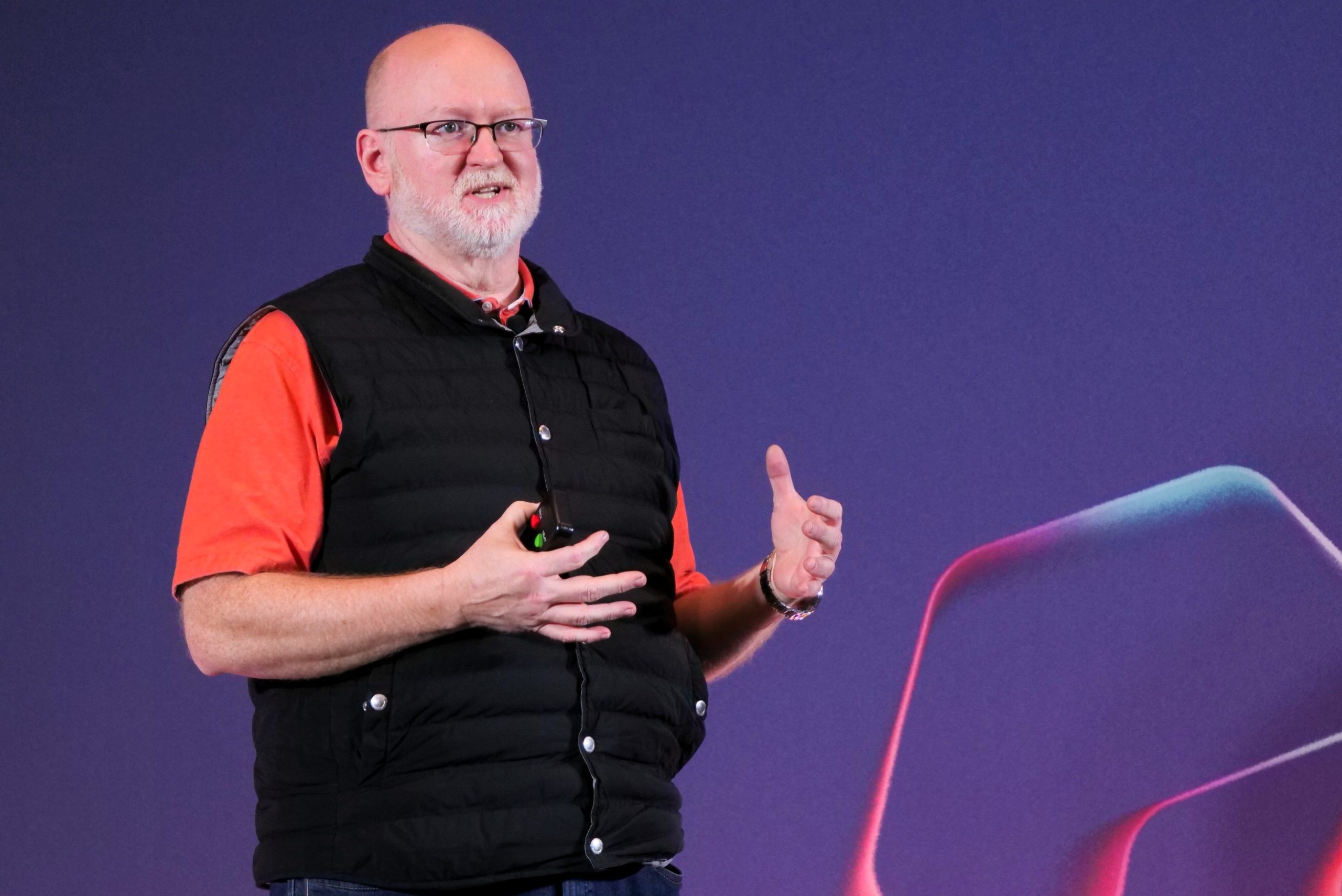
In the bustling courtroom of federal court in Oakland, where the air hummed with the weight of high-stakes tech drama, Kevin Scott, Microsoft’s Chief Technology Officer, stepped onto the witness stand on a brisk Wednesday in what felt like the grand finale of a saga that had been brewing for years. It was May 2025, and Scott, a man whose career had been defined by pushing the boundaries of innovation at Redmond, was about to shed light on a pivotal internal email from March 2018 that had become a cornerstone of Elon Musk’s legal battle against OpenAI and billionaire Sam Altman. Imagine Scott, not just as a tech executive but as a curious mind navigating the treacherous waters of corporate alliances, reflecting on how a simple message he dashed off could spark such chaos. The email, leaked and scrutinized, questioned whether OpenAI’s big donors—like fellow tech visionary Reid Hoffman, Scott’s friend and board member—were aware of plans to shift from a nonprofit mission to a for-profit empire. Musk, the enigmatic Tesla founder who’s always played the long game, alleged that Scott and Microsoft knew OpenAI was straying from its origins, using charity funds to build a goldmine that enriched insiders while pretending to democratize AI. From Musk’s perspective, it was a betrayal of the very idealism that spurred his massive donations to create an open AI lab, a dream that now seemed tainted by greed and opportunism. Scott, with his earnest demeanor, had to defend not just Microsoft’s actions but his own intentions, painting a picture of a company scrambling to catch up in AI, where delays could mean falling behind giants like Google. As he testified, one could almost hear the echo of bustling Redmond offices, where engineers and executives grappled with the future, turning Scott’s words into a human story of ambition, doubt, and the relentless pursuit of progress in a world racing toward artificial intelligence supremacy.
Diving deeper into Scott’s testimony, he clarified the email wasn’t a grand indictment but a pragmatic check on OpenAI’s readiness for big leaps. Picture Scott in his office, surrounded by screens displaying complex algorithms, wondering aloud if donors were clued in, his ideological compass ticking as he fretted over machine learning talent pooling under a banner that might go closed-source. He admitted his focus was narrower: Could OpenAI even pitch commercial plans without losing its nonprofit standing? As a backdrop, both Microsoft and OpenAI lagged behind Google’s AI prowess, and the sting of OpenAI switching from Azure to Google felt like a personal setback, a “big distraction” in an already tense race. Scott redirected attention from Musk to Hoffman, whom he saw as the key philanthropist, not the flamboyant Automaker baron. But the real revelation came over a cozy dinner at Flea Street Cafe in Menlo Park, where casual conversations unfolded like a plot twist. Joined by Sam Altman and retired Microsoft exec Craig Mundie, Scott learned jaw-dropping details: Hoffman wasn’t just a donor but was investing in OpenAI’s new for-profit arm and joining its board. Conversations flowed over plates of gourmet food, revealing a $500 million funding round, Altman’s full-time leap from Y Combinator, and a novelty—a “capped profit” structure that promised big rewards without endless greed. Scott called it “surprising and interesting,” a fresh twist in corporate financing he’d never encountered, blending philanthropy with profit in a way that excited and unsettled him, much like the thrill of building a groundbreaking AI system. It humanized the players: Altman, the visionary hustler; Hoffman, the networked benefactor; Mundie, the seasoned advisor—all weaving fortunes in Silicon Valley’s upper echelons, where money talks and missions evolve amid whispered deals.
Yet, the path to Microsoft’s landmark deal wasn’t a rush; it was a methodical climb through due diligence that tested the waters of trust and innovation. With Musk’s shadow looming in the background—picturing the entrepreneur as the discarded co-founder, now a lawsuit-wielding icon—Scott detailed the hurdles: technical vetting to ensure AI models could scale, financial audits to align with Microsoft’s billions, legal checks to avoid pitfalls, and governance reviews to safeguard shared visions. By June 2019, the urgency crystallized in a confidential memo to Microsoft’s board, co-authored with CFO Amy Hood, proposing a $1 billion investment. Scott’s voice rang with urgency, warning that Google’s proprietary infrastructure was yanking it ahead, forcing Redmond to “scramble” for replicable results. Without OpenAI’s success, Microsoft faced talent gaps that would make in-house development a risky gamble—delays costing not just money but market dominance. A crucial strategic angle emerged: Microsoft craved a “frontier AI workload” on its Azure platform, a bold customer to stress-test and build infrastructure far beyond ordinary needs. Google had that edge; Microsoft didn’t, and the board’s approval felt like a leap of faith in a partnership that promised brilliance. The July 2019 announcement marked the start of a multi-year commitment totaling $13 billion, transforming a tentative dinner chat into a tech titan alliance. It portrayed the executives—Amy Hood as the numbers whiz, Scott as the tech visionary—as partners in a high-wire act, balancing innovation with the human fear of falling behind in an AI arms race where every dollar and line of code mattered.
Within months, the fruits of this alliance blossomed, turning ambition into reality with breathtaking speed. Scott beamed on the stand, calling the partnership a “success” that left him “very proud” of Microsoft’s infrastructure feats, enabling OpenAI to soar. They crafted their first AI supercomputer together, a beast of computation that powered GPT-3, the language model that wowed the world with its eerily human-like responses, sparking debates on creativity, ethics, and job displacement. Imagine the exhilaration in the data centers—lights humming, servers whirring as engineers high-fived breakthroughs that bridged chatbots to potential AGI. Scott’s pride shone through, not as corporate boasting but as a fatherly glow over achievements that redefined human-machine interaction. He spoke of enabling OpenAI’s wild ideas, like those sci-fi dreams of neural networks mimicking thought, reflecting a sense of shared destiny where Microsoft provided the scaffolding for OpenAI’s skyscrapers. In this narrative, Altman emerged as the charismatic conductor, Musk as the eccentric provocateur who funded the orchestra but now claimed to hear dissonance, and Scott as the pragmatic builder ensuring the symphony played on. It was a tale of collaboration amidst competition, where products like Azure evolved from mere cloud services to AI backbones, generating billions in revenue while bridging dreams into digital realities. Scott’s testimony painted a vivid picture of human ingenuity: late-night debugging sessions, ecstatic aha moments, and the thrill of witnessing AI chat so fluid it blurred lines between machine and muse.
But not everyone sang praises; Musk’s legal eagles unleashed a pointed cross-examination that probed Scott’s narrative, revealing cracks in the facade of seamless partnership. Scott had claimed ignorance about OpenAI’s open-source intentions, yet emails surfaced showing Microsoft’s chief scientist, Eric Horvitz, affirming OpenAI’s commitment to sharing work “per their basic tenet.” Confronted with this, Scott acknowledged the message, his face a mask of reflection as lawyers grilled him on nonprofit compliance due diligence. He shifted blame, admitting he didn’t handle the legal nitty-gritty, a deflection that underscored team dynamics where CTOs dream big while lawyers parse fine print. Wetter, Microsoft’s corporate development lead, took the stand next, unveiling staggering scale: Microsoft’s OpenAI spending—”upwards of $100 billion”—included investments, Azure costs, and hosting, yielding about $9.5 billion in direct revenue through March 2025. Reports pegged total OpenAI-related earnings over $30 billion from Azure, Copilot, and revenue shares, painting a picture of lucrative symbiosis. With a 27% stake under the latest deal, and an eye-popping $250 billion Azure commitment from OpenAI (later renegotiated to non-exclusive terms), Microsoft held veto power over major decisions—98% capital control at one point—yet never exercised it, per Wetter. Cross-examination highlighted this influence, which Musk’s team argued amounted to control, enabling the nonprofit-to-profit flip. Wetter conceded, but emphasized due diligence found no “conditions related to Elon Musk,” framing Microsoft as a bystander relying on contractual assurances. In this courtroom drama, characters came to life: Musk as the righteous outsider, donors like Hoffman as chess players in charity’s game, and corporates like Scott and Wetter navigating moral mazes where profits danced with promises.
As testimony wrapped around 1 p.m., the courtroom buzzed with anticipation for closing arguments Thursday and jury deliberations Monday, capping a trial drenched in financial intrigue and ideological battles. Musk, the world’s richest human—a blend of visionary inventor, meme-lord billionaire, and now plaintiff—sought up to $134 billion, pledging proceeds to charity if victorious, though Judge Yvonne Gonzalez Rogers eyed the claims skeptically. The jury’s verdict hinged on whether OpenAI breached charitable trust or unjustly enriched leaders like Altman, with Judge Rogers to quantify damages. Microsoft’s defensethe painted them as unwitting partners, not puppeteers, but Musk’s narrative portrayed them as enablers in a scheme that perverted philanthropy into personal fortune. Beneath it all lay human drama: Musk’s wounded idealism, Altman’s entrepreneurial zeal, and Microsoft’s calculated gambles in an AI era where code could echo human flaws. Scott’s email, born from curiosity, morphed into courtroom exhibit, symbolizing how digital missives could unravel empires. As the audio livestream carried voices of argument and reflection, it reminded us of tech’s fragility—that billion-dollar bets on AI weren’t just business, but blueprints for humanity’s future, shaped by fallible dreams and relentless hunger. In a world of scalable models, the “frontier AI workload” represented not just tech milestones but mirrors to our evolving selves, questioning if collaboration birthed progress or paved paths to inequality. GPS reports captured these proceedings like a live feed of history, where judges, jurors, and witnesses waded through receipts and recollections, deciding if OpenAI’s pivot was betrayal or evolution. For Scott, stepping down from the stand might have felt like closing a chapter, but the echoes of that 2018 email promised ripples far beyond Oakland, into a future where AI’s ethics demanded accountability from its creators. (Word count: 2024)