




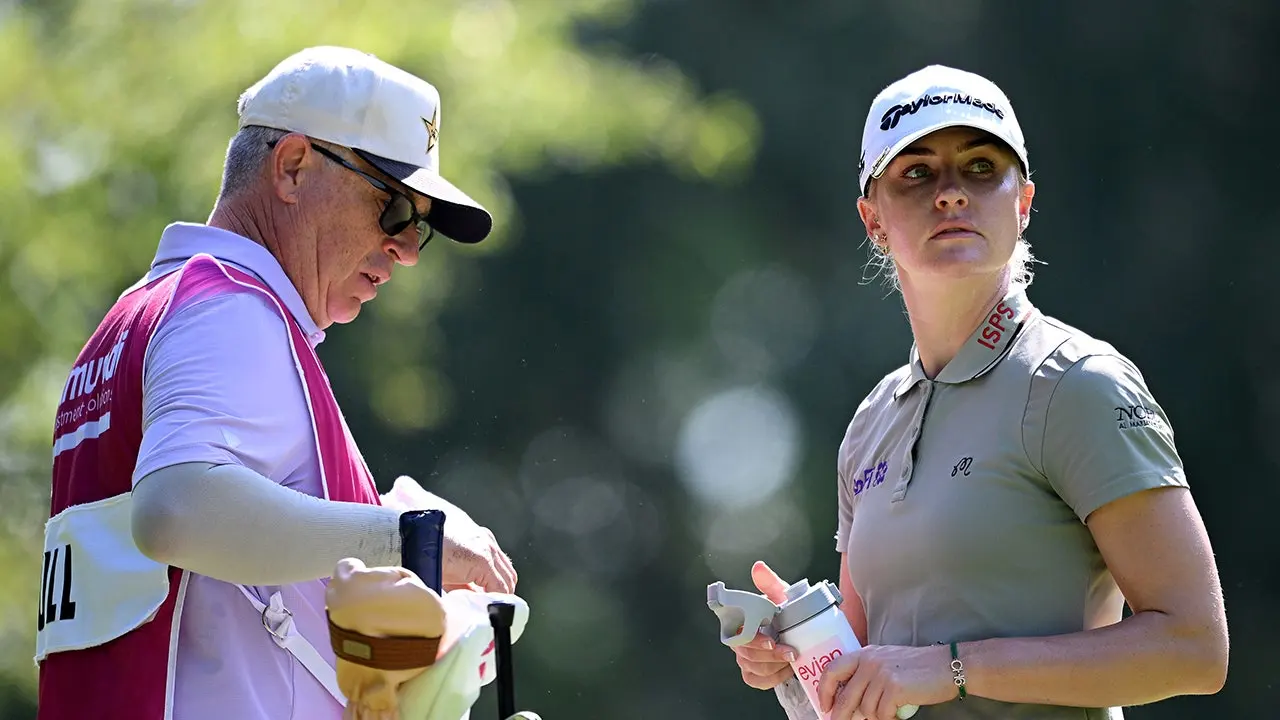
In the highly pressurized, often stoic world of professional golf, where every single stroke can mean the difference between a career-defining triumph and devastating heartbreak, English golf star Charley Hull has always stood out as a breath of fresh air. Known for her magnetic charisma, unfiltered honesty, and a refreshingly down-to-earth approach to the sport, the 30-year-old athlete brought an unexpected dose of high-stakes drama—and absolute hilarity—to the prestigious Royal Lytham & St Annes Golf Club during the buildup to the Women’s British Open. Golf is a game historically bound by rigid traditions, quiet whispers, and strict etiquette, making it a rare stage for the kind of locker-room mischief that belongs in a classic sitcom. Yet, before the first tee-off of one of the biggest tournaments of the year, Hull decided to inject some lighthearted chaos into her team’s routine. Her target was none other than her trusted companion on the fairway: her longtime caddie, Adam Woodward. What started as a simple, mischievous impulse during a quiet Monday afternoon in town quickly snowballed into a viral sensation, showcasing the deep, humorous bond that exists between a golfer and the person carrying her bag, while simultaneously triggering a wave of passionate debate across the sports world.
The premise of the prank was as classic as it was brutal, designed to test the emotional fortitude of anyone receiving it. While walking through town on Monday, Hull spotted a novelty shop and purchased a fake scratch-off lottery ticket, designed to look entirely authentic while guaranteed to reveal a massive “winning” prize of $100,000. The following day, with the quiet tension of the upcoming Major tournament lingering in the air, she casually handed the ticket to Woodward, who unsuspectingly began to scratch away the silver coating. Within seconds, the atmosphere in the players’ lounge shifted from quiet concentration to absolute pandemonium. Woodward stared at the ticket in utter disbelief, convinced he had just secured a life-altering fortune. In an instant, his professional composure vanished; overwhelmed by a rush of adrenaline, he tore off his hat, yanked off his sunglasses, and began running around the room in a state of sheer, unadulterated ecstasy, loudly proclaiming to anyone who would listen that he was taking the rest of the day off. According to Hull, the poor man was visibly trembling, sweating from the sheer shock of his sudden wealth, and riding an unimaginable emotional high—making it all the more devastating when she finally had to break the news that the ticket was a worthless piece of cardboard, prompting a laugh-out-loud moment where Woodward, in good humor, jokingly threatened to quit on the spot.
However, as is so often the case in the hyper-connected era of social media, what was meant as an intimate, lighthearted joke between two close friends quickly became public fodder and divided the internet. When Hull candidly shared the hilarious anecdote with reporters during her pre-tournament press conference, the story spread like wildfire across platforms like X (formerly Twitter), drawing a mixed bag of reactions from golf enthusiasts and casual observers alike. On various social media networks, online critics quickly lined up to condemn the 30-year-old golfer, labeling the prank as “cruel,” “insensitive,” and “savage.” Critics argued that playing with someone’s financial dreams, particularly a working caddie whose livelihood is tied directly to the performance of their player, was crossing a line. To these vocal detractors, dangling a life-changing sum of money over a working-class assistant’s head only to snatch it away was a form of unnecessary psychological mischief rather than harmless fun, transforming a moment of genuine locker-room camaraderie into a debated topic on privilege and respect within the professional sports hierarchy.
True to her authentic and unbothered nature, Charley Hull did not back down or issue a carefully worded, corporate public relations apology when questioned about the online outrage. Instead, when reporters asked if she harbored any regrets about the viral stunt, she offered a blunt, refreshing, and quintessentially British response: “No, and people that have complaints about it, I’d say loosen up.” Hull made it abundantly clear that she has no time for the manufactured outrage of online spectators who do not understand the inner workings of her team or her personality. With a wave of her hand, she dismissed the critics by declaring that if people didn’t like her sense of humor, they could “lump it,” using the classic British idiom meaning they would just have to deal with it. She emphasized that Woodward, far from being offended or humiliated, took the entire episode like an absolute champion and found the joke incredibly funny once the initial shock wore off. By refusing to let outside commentators dictate the terms of her personal relationships, Hull defended the right of athletes and their support staff to maintain a sense of humanity, joy, and levity in an industry that often takes itself far too seriously.
To truly understand the dynamic at play, one must look at the unique, pressure-cooker environment of professional golf, where players and caddies spend countless hours traveling, practicing, and strategizing together under intense psychological strain. A caddie is far more than just someone who carries clubs and calculates yardages; they are a confidant, a sports psychologist, a strategist, and a pillar of support on the course. The bond between Hull and Woodward is built on years of mutual trust, shared struggles, and a shared sense of humor that helps alleviate the immense pressure of competing at the highest level of women’s golf. Acknowledging that she did feel a tiny bit of guilt for making him sweat, Hull lightheartedly promised to make things right by buying Woodward 100 real scratch cards at the end of the tournament week, hoping lightning might actually strike twice. More importantly, she expressed her hope that their synergy on the course would yield an even greater reward, noting that if they played well and stayed focused, Woodward could easily earn far more than the fictional $100,000 prize through a legitimate, hard-earned share of the tournament’s massive purse.
Ultimately, the proof of their successful partnership and the wisdom of Hull’s tension-breaking prank was written on the leaderboard of the Women’s British Open. Far from being distracted or demoralized by the week’s off-course antics, both golfer and caddie channeled their high spirits directly into their performance at Royal Lytham & St Annes. After two grueling rounds of highly competitive play, Hull found herself firmly in contention, tied for seventh place at 2-under par and sitting just four strokes off the lead. The lighthearted laughter shared earlier in the week seemed to serve as the perfect antidote to tournament nerves, allowing them to navigate the challenging course with focus, clarity, and a relaxed, joyful mindset. As they head into the weekend with their eyes firmly set on the championship trophy, the duo has proven that a little bit of mischief can go a long way in building a winning culture. Whether or not Woodward ever strikes it rich on a real scratch-off ticket, the real gold lies in their unbreakable partnership, their mutual ability to laugh through the pressure, and their shared pursuit of athletic greatness on the grandest stage of women’s golf.