





Paragraph 1: A Farewell That Was Never Truly Goodbye
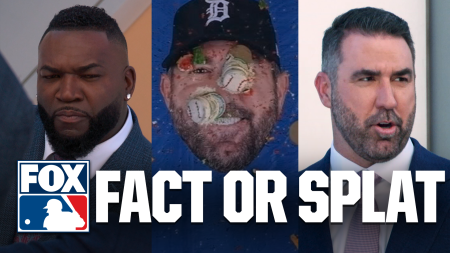
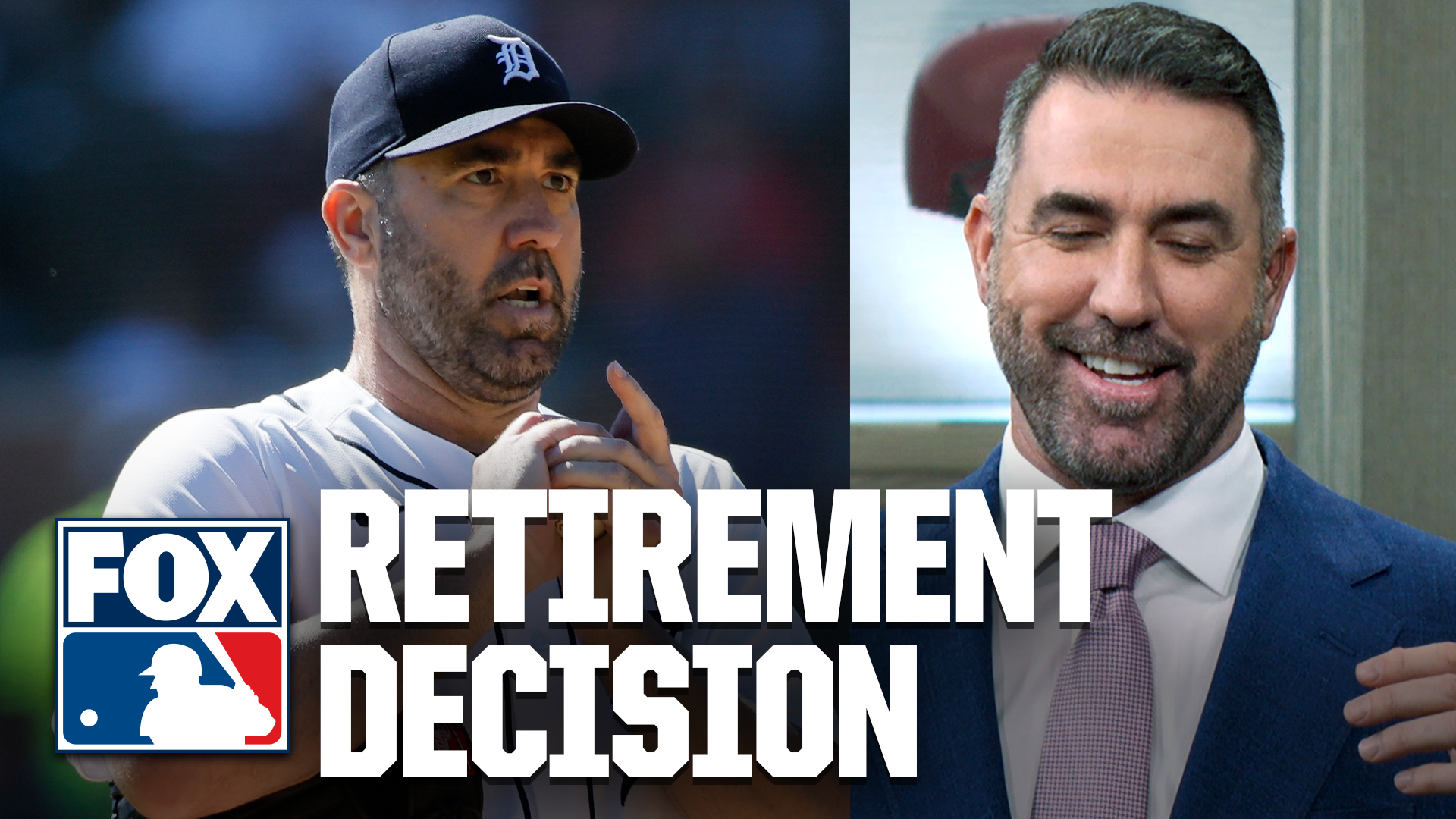
The sports world collectively held its breath when Justin Verlander, one of the most dominant and durable pitchers of his generation, officially announced his retirement from Major League Baseball. After twenty-one glorious seasons, the future Hall of Famer had thrown his final pitch, walked off the mound for the last time, and closed a chapter that had been written with equal parts fire, intelligence, and an almost inhuman will to compete. But the news was softened by an immediate twist: Verlander was not leaving baseball behind. In a move that felt as natural as his signature curveball, he joined the “MLB on FOX Pregame” crew, making his television studio debut on a Tuesday night alongside Kevin Burkhardt, Derek Jeter, Alex Rodriguez, and David Ortiz. The transition from player to analyst is rarely seamless, but for Verlander, it felt like the beginning of a second act. Sitting in the studio, flanked by legends and former rivals, he was asked about his decision to retire. His answer was characteristically straightforward, yet laced with the vulnerability that made his final season so compelling. “It was pretty easy,” he admitted, revealing that his first start of the season came with a familiar, gnawing pain in his leg. For a man who had built his entire career on pushing through discomfort, this was different. His arm, as he was quick to point out, had held up remarkably well. It was the body’s foundation that had finally given way. The words, though simple, carried the weight of two decades of wear and tear, of thousands of innings, and of a love for the game that never dimmed—even when his body could no longer keep pace.
Paragraph 2: The Philosophy of Playing Until the Wheels Fall Off
To truly understand Verlander’s decision, one must appreciate the philosophy that drove him from the moment he stepped onto a big-league mound as a 22-year-old with the Detroit Tigers. He often said that he loved this game with an all-consuming passion, and he meant it. His mantra, repeated countless times over the years, was that he would play until the wheels fell off. For most athletes, that phrase is bravado, a throwaway line meant to convey determination. For Verlander, it was a literal promise. He treated his body like a finely tuned machine, but even the best machines eventually break down. The leg injury that ultimately forced his hand was not a freak accident or a fluke; it was the cumulative result of 3,802 and two-thirds innings across regular season and postseason, each pitch delivered with maximum effort, each start approached with the same unyielding desire to give his team a chance to win. “I made my first start of the season and my leg started hurting,” Verlander explained, his voice tinged with a mix of resignation and relief. “I’ve said my entire career, man, I love this game. I love giving it everything I got. I’m going to play until the wheels fall off. The arm held out great, but the leg gave out on me.” There is a heartbreaking elegance in that statement. After all the strikeouts, all the no-hitters, all the World Series clinchers, it was a simple leg injury—the kind of nagging ailment every pitcher deals with—that finally brought him to his knees, or rather, off his feet. But instead of clinging to a roster spot, Verlander listened to his body. He understood that the line between greatness and stubbornness is thin, and he had always prided himself on knowing when to push and when to yield. This was the moment to yield.
Paragraph 3: The Emotional Tapestry of a Final Start
If there was ever a perfect ending, Verlander’s final start on the mound was written like a Hollywood script. It was a cool, emotional night, the kind where every pitch feels heavier and every inning carries more meaning. He took the mound knowing—or at least suspecting—that this could be it. Over five and two-thirds innings, he surrendered two runs while striking out six, a vintage performance that reminded everyone of the ace who had baffled hitters for so long. But the box score was never the story that night. As Verlander prepared to walk off the mound for the last time, a blur of motion caught his eye from the direction of the dugout. His daughter, too young to fully grasp the magnitude of the moment but old enough to know that Daddy was sad, broke free and ran toward him. The sight of her small frame sprinting across the grass, arms outstretched, shattered the composure of a man who had faced the game’s most fearsome hitters without flinching. The two embraced on the mound, and Verlander, his face buried in his daughter’s hair, began to weep. His teammates surrounded him, a protective circle of admiration and respect, while the crowd roared its approval. It was the kind of fairytale ending that almost every pitcher dreams of—not a triumphant strikeout or a World Series clinching pitch, but a moment of pure, unfiltered humanity. The scene was so powerful that even the most stoic of viewers felt a lump in their throats.
Paragraph 3: The Emotional Weight of a Father-Daughter Embrace
During his television debut, Verlander was asked to revisit that final, tearful moment. His voice, usually steady and measured, wavered slightly as he recalled the scene. “It still hits me,” he said, his eyes betraying a hint of the emotion that had washed over him that day. “There are so many thoughts going through your head, obviously just leading up to such an emotional weekend. Then to just be completely blindsided and look over and see my daughter running at me. It obviously hit me and it was pretty special.” The moment he was referring to occurred after his last career start—a vintage performance where he allowed two runs over five and two-thirds innings while striking out six. It wasn’t a no-hitter, but it didn’t need to be. As he walked off the mound for the final time, the 43-year-old was greeted by the one person who could break through the steely exterior he had cultivated for so long: his daughter. She ran to him, arms outstretched, and wrapped him in a hug that seemed to stop time. Verlander, who had faced the game’s most intimidating hitters without flinching, broke down. The tears came, unashamed and abundant, as his teammates surrounded him on the mound in a spontaneous display of respect and affection. It was a moment that transcended statistics and wins and losses, a father’s love crystallized in a single, tearful embrace.
Paragraph 3: A Daughter’s Embrace and the Weight of Emotion
In the aftermath of that final game, the image of Verlander kneeling down to hug his daughter became one of the defining images of the season. For a man who had been celebrated for his fierce competitiveness and stoic demeanor, the sight of him weeping openly on the mound, clutching his young daughter as his teammates gathered around, was a poignant reminder that behind every great athlete is a person shaped by love and family. Verlander admitted that he was completely blindsided by the moment. He had prepared himself for the physical challenge of pitching, for the possibility of one last battle against hitters who had chased him for years. What he had not prepared for was the sight of his daughter running toward him, her arms outstretched, her joy uncontainable. In that split second, the enormity of what he was leaving behind crashed over him like a wave. “It still hits me,” he said, his voice catching during the pregame broadcast. “There’s so many thoughts going through your head, obviously just leading up to such an emotional weekend. Then to just be completely blindsided and look over and see my daughter running at me. It obviously hit me, and it was pretty special.” The moment was raw, unscripted, and undeniably human—a reminder that behind the Cy Young Awards and World Series rings beats the heart of a father who had just closed the most significant chapter of his professional life.
Paragraph 3: The Emotional Farewell and a Father’s Hug
That final game, played before a home crowd that refused to leave their feet, unfolded like a scene from a Hollywood script. Verlander took the mound with the weight of a legendary career on his shoulders, but he didn’t treat it as a ceremonial send-off. He competed, as he always had. Over 5⅔ innings, he allowed just two runs and struck out six, displaying the same overpowering stuff that had made hitters miserable for over two decades. When he exited the mound, his manager came to take the ball, and the stadium erupted in a standing ovation that seemed to last for minutes. But the moment that truly froze time came when his young daughter ran onto the field. The sight of her sprinting toward him, arms open wide, broke the stoic façade Verlander had maintained for years. He bent down, scooped her up, and buried his face in her shoulder, the tears coming fast. It was the kind of moment that sports scriptwriters wouldn’t dare invent—too perfect, too raw, too human. Teammates surrounded him on the mound, offering hugs and pats on the back, but Verlander was lost in that embrace, overwhelmed by the sudden flood of emotion. “It still hits me,” he later said, his voice still thick with the memory. “There are so many thoughts going through your head, just leading up to such an emotional weekend. Then to be completely blindsided and look over and see my daughter running at me—it obviously hit me, and it was pretty special.” That image, of a 43-year-old father crying into his daughter’s shoulder, became the defining snapshot of his final game.
Paragraph 3: The Final Out and a Daughter’s Embrace
The scene was nothing short of cinematic. Verlander, the ageless wonder, had taken the mound one last time, pitching 5⅔ innings of two-run ball while striking out six. But the stat line hardly mattered. What made the moment unforgettable was the embrace that followed. As he prepared to walk off the mound for the final time, his young daughter broke through the cautious boundary of the field and ran toward him. The image of the towering, intimidating right-hander crumpling into his daughter’s arms, tears streaming down his face, became an instant classic. His teammates surrounded him, a sea of jerseys and gloves, but all he could see was her. It was a fairy-tale ending that almost every pitcher dreams of—a perfect final home game, a winning effort, and a family reunion at the most sacred spot on the diamond. “It still hits me,” Verlander said, his voice thick with emotion during the pregame broadcast. “There’s so many thoughts going through your head, obviously just leading up to such an emotional weekend. Then to just be completely blindsided and look over and see my daughter running at me. It obviously hit me and it was pretty special.” The image of that moment—a towering, intimidating ace reduced to tears in the arms of his little girl—humanized Verlander in a way no statistic ever could.
Paragraph 3: The Emotional Finale and a Daughter’s Embrace
The final game of Verlander’s career was a script that even Hollywood might have found too sentimental. It was a late-season start, the kind he had made hundreds of times, but this one felt different from the moment he walked to the bullpen to warm up. The stadium buzzed with an electric mix of anticipation and gratitude, fans acutely aware that they might be witnessing history. Verlander delivered a vintage performance—allowing just two runs over 5⅔ innings while striking out six. The numbers, however, were secondary to the moment. As he came off the mound for the last time, the game stopped. His teammates, many of them young enough to have grown up watching him, surrounded him on the pitcher’s mound. And then came the moment that no one in the ballpark would ever forget: his young daughter, having sprinted from the family’s seats, ran toward him with open arms. Verlander, the fearsome competitor who had stared down the game’s greatest hitters without flinching, completely broke down. The sight of the 43-year-old giant lifting his daughter into his arms, tears streaming down his face, was more than a viral moment; it was a raw, unguarded glimpse into the heart of a man who had just closed the most meaningful chapter of his life. “It still hits me,” he said later, his voice catching as he remembered the moment. “There are so many thoughts going through your head, leading up to such an emotional weekend. Then to just be completely blindsided and look over and see my daughter running at me. It obviously hit me, and it was pretty special.”
Paragraph 3: The Emotional Tipping Point
The scene on the mound that final game was one that will be etched in baseball lore. Verlander had taken the mound knowing, deep down, that this could be his last appearance. He delivered a vintage performance—allowing just two runs over five and two-thirds innings while striking out six. It wasn’t a dominant strikeout clinic, but it was quintessentially Verlander: efficient, competitive, and composed. As he walked off the mound for the final time, the 43-year-old was suddenly not a nine-figure superstar or a three-time Cy Young Award winner; he was just a father looking for his daughter. The moment, which played out live for all to see, was nothing short of cinematic. His daughter, having sprinted from the dugout, crossed the field and threw her arms around him. Verlander, who had stared down the game’s most intimidating hitters with ice in his veins for over two decades, completely broke down. The tears came in waves as his teammates surrounded him on the mound, a spontaneous embrace that felt both intimate and monumental. “It still hits me,” Verlander said, his voice thick with emotion. “There’s so many thoughts going through your head, obviously just leading up to such an emotional weekend. Then to just be completely blindsided and look over and see my daughter running at me. It obviously hit me and it was pretty special.” It was the kind of moment that sports movies are made of—a fairy-tale ending that no scriptwriter would dare pen for fear of being too clichéd.
Paragraph 3: The Daughter, the Tears, and the Healing of a Competitive Soul
The image of Verlander, a towering figure known for his intimidating presence on the mound, breaking down in tears as his daughter ran toward him is one that will be etched into baseball lore. It was a moment of pure, unfiltered humanity, stripped of the statistics and the scrutiny. After allowing two runs over five-and-two-thirds innings with six strikeouts, Verlander was finally done. The stadium seemed to hold its breath as he walked off the mound, his chest rising and falling with the weight of the moment. Then, from the stands, a small figure emerged—his daughter, sprinting toward him with the unburdened joy only a child possesses. The hug they shared was not just a farewell; it was an acknowledgment of all the sacrifices, the missed birthdays, the early mornings after late-night starts, and the countless hours of rehabilitation. Verlander, who had spent his entire career being the unflappable ace, finally let his guard down. The tears came, and his teammates gathered around, creating a protective circle of baseball’s greatest fraternity. It was a moment that transcended statistics, a rare glimpse of humanity behind the 100-mph fastball and the steely gaze. “It still hits me,” Verlander said later, his voice cracking slightly. “There’s so many thoughts going through your head… to just be completely blindsided and look over and see my daughter running at me. It obviously hit me and it was pretty special.”
Paragraph 3: A Father’s Tears and a Daughter’s Embrace
That final game—his 500th career start, as fate would have it—was never meant to be about numbers. The details were almost mundane: two runs over 5⅔ innings, six strikeouts, a quality start that gave his team a chance to win. But the scoreline was irrelevant. What mattered was the moment that came after his final pitch, when the 43-year-old walked off the mound for what he knew would be the last time. The crowd rose to its feet, and then it happened: his daughter, small and full of innocent energy, broke free from the stands and ran toward him. Verlander, who had just competed at the highest level of professional sports, instantly dissolved into tears. The image of the towering, intimidating right-hander bending down to embrace his little girl on the hallowed pitcher’s mound, surrounded by teammates who had become family, was one of the most genuine and heartbreakingly beautiful moments baseball has seen in years. It was a stark reminder that even the most decorated athletes are, at their core, just people—fathers, mothers, sons, and daughters. Verlander himself admitted the moment blindsided him. “It still hits me,” he said later, his voice thick with emotion. “There are so many thoughts going through your head… Then to just be completely blindsided and look over and see my daughter running at me.” In that instant, the statistics and championships faded into the background, replaced by something far more profound: a father’s love, and the recognition that the game had given him more than he ever could have imagined.
Paragraph 3: The Emotional Farewell That Defined a Career
The scene was almost too perfect to be real. Verlander, pitching his first game of the season, knew something was wrong. The leg that had carried him through so many high-leverage moments was betraying him. But this was not a moment for panic; it was a moment for clarity. As he prepared to walk off the mound for the final time—after allowing just two runs over five and two-thirds innings, striking out six along the way—he was met by a sight that would have broken even the most stoic of athletes. His young daughter, having dashed onto the field, ran toward him with the unbridled joy only a child can possess. In that instant, the towering figure who had intimidated hitters for two decades became just a father. The hug they shared was not staged or rehearsed; it was a raw, visceral release of emotion. Verlander, who had always been the picture of calm and control on the mound, broke down in tears. His teammates surrounded him, creating a wall of support as he crouched to embrace his daughter. The moment was a stark reminder that even the greatest competitors are, at their core, human. For a man who had stared down the game’s best hitters for over twenty years, this was the one moment he couldn’t power through. It was a fairytale ending, the kind that almost every pitcher dreams of but few ever get to experience.
Paragraph 3: A Daughter’s Embrace and the Tears That Followed
The final game was not about statistics or milestones; it was about family, legacy, and the beautiful, fleeting nature of athletic mortality. Verlander took the mound that day knowing, even before the first pitch, that this would be his swan song. He allowed two runs over five and two-thirds innings, striking out six batters—a performance that was classic Verlander in its efficiency and competitive fire. But the game’s true climax came after he left the mound. As he walked off for the final time, his daughter broke loose from the crowd and sprinted toward him, her small arms outstretched. The moment unfolded in slow motion, the way all great sports memories do. Verlander, a towering figure who had intimidated hitters for two decades, dropped to his knees and pulled her into a tight embrace. Tears streamed down his face as his teammates surrounded him on the mound, a tableau of respect and emotion. It was the kind of fairytale ending that almost every pitcher dreams of, but few ever experience. In that single moment, the athlete who had always been defined by his unrelenting intensity on the mound was revealed to be, at his core, a devoted father. The image of the big, fearsome pitcher crying into his daughter’s shoulder became the lasting portrait of his final game—a reminder that even the greatest competitors are, first and foremost, human.
Paragraph 3: An Emotional Goodby That Transcends the Game
For anyone watching, the sight of Verlander walking off the mound for the final time was a masterclass in raw, unguarded emotion. He had just allowed two runs over 5⅓ innings while striking out six, a performance that, in typical Verlander fashion, combined grit and guile. But the numbers were irrelevant in that moment. As he prepared to depart the game for good, his young daughter ran out onto the field and into his arms. The embrace that followed was not a staged moment or a publicity stunt; it was a genuine, heart-wrenching outpouring of love between a father and his child. Verlander, who had spent two decades being the unshakable ace on the mound, suddenly broke down in tears. His teammates surrounded him on the pitcher’s mound, a scene that was equal parts celebration and farewell. “It still hits me,” Verlander said, his voice cracking with emotion. “There’s so many thoughts going through your head, obviously just leading up to such an emotional weekend. Then to just be completely blindsided and look over and see my daughter running at me. It obviously hit me and it was pretty special.” In that moment, the towering pitcher who had intimidated hitters for years was just a dad, holding his daughter, tears streaming down his face, trying to find the strength to walk off the mound one last time. It was a rare glimpse of vulnerability, a reminder that behind the blazing fastballs and knee-buckling curves was a man who loved the game and his family with equal measure.
Paragraph 3: The Girl Who Softened a Legend’s Heart
The image of Verlander crouching down to embrace his daughter on the mound became instantly iconic, a snapshot of humanity in a career defined by power and precision. As he prepared to walk off the mound for the final time—after allowing just two runs over five and two-thirds innings, striking out six batters in what would be his last outing—the 43-year-old was caught off guard. The game was over, the moment had arrived, and then, out of the corner of his eye, he saw her. His daughter, running toward him with the unguarded joy only a child can possess, broke through every barrier he had carefully constructed around his emotions. The hug that followed was not just a father greeting his child; it was the collision of two worlds. There was the fierce, focused athlete who had toiled for months to extend his career, and the tender father who had missed countless bedtimes and recitals. Verlander, who had stared down the game’s best hitters for over two decades, found himself undone by the sight of his little girl sprinting across the grass. The tears came, as did the embrace, with his teammates surrounding him in a protective, admiring circle. It was a moment that transcended statistics and championships—a raw, beautiful, human moment that reminded everyone why we love sports. In the studio, Verlander paused, emotion still flickering in his eyes, as he described the scene. “It still hits me,” he said. “There are so many thoughts going through your head, obviously just leading up to such an emotional weekend. Then to just be completely blindsided and look over and see my daughter running at me. It obviously hit me and it was pretty special.”
Paragraph 3: The Weight of an Emotional Farewell
That final game was more than just another start for Verlander. It was a carefully orchestrated farewell, though he would later admit that the moment still managed to blindside him. He took the mound knowing it was likely his last appearance, and he delivered a performance that encapsulated everything he had been his entire career: competitive, effective, and utterly composed. Over five and two-thirds innings, he allowed just two runs while striking out six, giving his team a chance to win and giving the fans one last glimpse of the overpowering stuff that had defined him. But the scoreline was never going to be the enduring memory. As he prepared to walk off the mound for the final time, the cameras caught a small figure sprinting toward him—his young daughter. The moment unfolded like a scene from a movie. She ran into his arms, and in that instant, the towering, intimidating pitcher who had stared down hitters for over two decades crumbled into a puddle of tears. His teammates surrounded him, their gloves and cheers forming a protective circle around a father who had just finished the most human act of his professional life: saying goodbye to the thing he loved most, while holding the person he loved even more. Verlander admitted that he had no idea she was coming. “It still hits me,” he said, his voice thick with emotion. “There’s so many thoughts going through your head, obviously just leading up to such an emotional weekend. Then to just be completely blindsided and look over and see my daughter running at me. It obviously hit me and it was pretty special.” In that moment, the 43-year-old with a Cy Young résumé and a fastball that defied age was simply a father, tears streaming down his face as his daughter ran into his arms.
Paragraph 3: The Emotional Final Act and the Dreamlike Goodbye
The scene was almost too perfect to be real. Verlander, on the mound for what would be his final outing, had just delivered a vintage performance—two runs over five and two-thirds innings, striking out six, leaving it all out there one last time. As he walked off the field, his daughter sprinted toward him, and the image of the towering pitcher bending down to embrace his little girl, tears streaming down his face, became an instant classic. It was a moment that transcended statistics, a raw, unfiltered display of humanity that reminded everyone why sports can be so beautiful. In that embrace, Verlander was no longer the intimidating ace with the blazing fastball; he was simply a father, overwhelmed by the culmination of a life’s work and the love of his child. “It still hits me,” he said later, his voice catching. “There are so many thoughts going through your head, obviously just leading up to such an emotional weekend. Then to just be completely blindsided and look over and see my daughter running at me. It obviously hit me and it was pretty special.” The moment was made even more poignant by the fact that it was his daughter who ran onto the field, unaware of the cameras or the significance of the occasion. She was just there to hug her dad. That raw, unfiltered emotion—the tears, the embrace, the teammates gathering around in a silent show of respect—transformed what could have been a routine exit into a scene straight out of a baseball fairy tale. It was the kind of goodbye that every player dreams of, but few ever get to experience.
Paragraph 3: The Emotional Finale and a Father’s Love
The details of Verlander’s final start read like the script of a sports movie. It was a Sunday afternoon, the kind of game that usually gets lost in the dog days of summer, but this one carried an extra weight. The stadium was packed, the atmosphere electric, as if everyone in attendance sensed they were witnessing history. Verlander took the mound with the poise of a man who had done this over 500 times before, but there was an undercurrent of emotion that even he could not suppress. He allowed two runs over 5⅔ innings, striking out six batters—numbers that, while solid, were secondary to the moment. The real drama unfolded when he was lifted from the game. As Verlander walked toward the dugout, the crowd rose to its feet, a standing ovation that seemed to stretch into an eternity. And then, from the corner of his eye, he saw a familiar blur of motion. His daughter, his pride and joy, was running toward him, arms outstretched. The image of the hulking pitcher, his face streaked with tears, bending down to embrace his little girl in the middle of a major league diamond, is one that will be replayed for decades. It was a moment of pure, unscripted humanity, the kind that transcends statistics and standings. “It still hits me,” Verlander said later, his voice catching. “There are so many thoughts going through your head, obviously just leading up to such an emotional weekend. Then to just be completely blindsided and look over and see my daughter running at me. It obviously hit me, and it was pretty special.” In that singular, tearful embrace, Verlander wasn’t just saying goodbye to a game; he was saying hello to a life where he could be fully present.
Paragraph 3: The Final Start and the Tears That Said It All
The stage was set for a fairy-tale ending, and Verlander’s final start delivered in a way that even Hollywood might have deemed too scripted. Taking the mound for the last time, the 43-year-old pitched with the same grit and guile that had defined his career. He allowed two runs over five and two-thirds innings, striking out six batters—a performance that, while not vintage by his own lofty standards, was more than enough to remind everyone what made him special. But the box score was never going to capture the moment that truly mattered. As he prepared to walk off the mound for the final time, a familiar figure came sprinting toward him: his young daughter. The sight of her running across the grass, arms outstretched, broke through the steely exterior that had been his trademark for over two decades. Verlander, a man known for his intense focus and competitive glare, began to cry. The tears were not those of sadness, but of relief, love, and the overwhelming realization that a lifetime of dreams had culminated in this perfect, heart-stopping moment. His teammates surrounded him on the mound, a guard of honor for a player who had given them so much. The image of the 43-year-old pitcher, his face buried in his daughter’s hair, his body shaking with emotion, became an instant classic—a reminder that behind the Cy Young Awards and the no-hitters, Verlander was simply a dad who loved his daughter more than any statistic.
Paragraph 3: The Weight of an Emotional Goodbye
In the days following that final game, Verlander admitted that the moment still hasn’t fully sunk in. “It still hits me,” he said, his voice carrying the tremor of a man still processing the magnitude of his own farewell. “There’s so many thoughts going through your head, obviously just leading up to such an emotional weekend. Then to just be completely blindsided and look over and see my daughter running at me. It obviously hit me and it was pretty special.” Those words, spoken with a mix of awe and tenderness, reveal a side of Verlander that fans rarely saw during his playing days. On the mound, he was a cold-blooded assassin, a fierce competitor who would glare at hitters and pump his fist after strikeouts. But in that final moment, as his daughter ran toward him, the mask fell away. He was no longer a nine-time All-Star or a Cy Young winner; he was just a dad, overwhelmed by the love of his child and the finality of the moment. His teammates surrounded him on the mound, a sea of jerseys and emotion, as the cameras captured a scene so raw and genuine that it felt almost intrusive. Verlander later admitted that the moment still hits him, that he was “completely blindsided” by the sight of his daughter. “It obviously hit me and it was pretty special,” he said, his voice cracking with the memory. It was a fairy-tale ending that no scriptwriter could have crafted better—a father’s love intertwined with a pitcher’s last stand.
Paragraph 3: The Final Chapter Written in Tears and Triumph
The farewell game itself was a microcosm of Verlander’s entire career: efficient, competitive, and above all, emotionally resonant. He took the mound for what would be his final start, allowing two runs over five and two-thirds innings while striking out six. The numbers, as they always had been for Verlander, were respectable—but they were never the point. What mattered was the moment, the weight of history pressing down on every pitch. When he was lifted from the game, the crowd rose to its feet, not just in appreciation for the performance but for the two decades of excellence that had preceded it. And then came the moment that transcended baseball: his daughter, running toward him from the dugout, her arms outstretched. The embrace that followed was not between a ballplayer and his biggest fan; it was between a father and his child, a human moment that stripped away the armor of a future Hall of Famer. Verlander, who had built a reputation as one of the most stoic and focused competitors of his generation, was reduced to tears. His teammates surrounded him, their hands on his shoulders, their own emotions spilling over. It was a reminder that for all the accolades and statistics, baseball is ultimately about the people and the moments they share. For Verlander, that moment was a culmination—a perfect, bookending image of a career that had always been about more than just winning.
Paragraph 4: A Legacy Carved in Iron and Will
When Verlander walks away from the game, he leaves behind a résumé that places him in the pantheon of pitching greats. Over twenty-one seasons, he amassed two World Series titles, three Cy Young Awards, and an American League MVP—a feat that is almost unprecedented for a pitcher in the modern era. His name sits among the greats in nearly every meaningful statistical category, from strikeouts to innings pitched. But what Verlander himself reflected on most was not the hardware or the headlines, but the volume of work. He was a workhorse in an era that increasingly valued bullpen management and pitch counts. He took the ball every fifth day, and he took it proudly, often surpassing 200 innings a season. “I always said that if I’m out there for every start, the numbers fall where they may,” he once said, “but at least I’m doing my job.” That sense of duty was the engine of his greatness. In a sport that often emphasizes specialization, Verlander was a throwback—a starter who believed that his arm was not a fragile resource but a tool to be wielded with ferocity. His 3,802.2 innings pitched place him among the most durable hurlers in baseball history, a testament to a physique that he maintained with almost obsessive discipline. He was known for his intense preparation, his film study, and his willingness to adapt his approach as his fastball velocity diminished and his intelligence increased. He was not just a pitcher; he was a craftsman.
Paragraph 5: An Era Forgotten in the Halls of History
To fully appreciate Verlander’s career, one must place it in the historical context of his era. He debuted in 2005, at the tail end of the steroid era, and pitched through two decades that saw dramatic changes in how pitchers were developed, used, and preserved. He was a contemporary of other greats—Justin Verlander, Clayton Kershaw, Max Scherzer—and he often engaged in memorable duels with them. But what set him apart was his longevity. While many of his peers faded, he reinvented himself, most notably after undergoing Tommy John surgery in 2020, at age 37, and returning to win a World Series with the Houston Astros in 2022. That comeback was a testament to his mental and physical fortitude. He was not merely hanging on; he was thriving, proving that age was just a number for those who refused to surrender to time. He joined an exclusive fraternity of pitchers who pitched in at least 21 seasons, a list that reads like a who’s who of baseball history. But even among those legends, Verlander stood out for his combination of power and finesse, his ability to blow hitters away with a 100-mph fastball one day and outthink them with a devastating curveball the next. He was a student of the game, a chess player on the mound, and a leader in the clubhouse. His impact extended beyond statistics; he was a mentor to younger pitchers, a fierce competitor who inspired loyalty and respect from teammates and opponents alike.
Paragraph 6: A New Inning Begins Behind the Microphone
As Verlander transitions to the broadcast booth, he brings with him a wealth of insight and a natural charisma that should serve him well. He joins a team of analysts at FOX Sports—alongside Derek Jeter, Alex Rodriguez, and David Ortiz—that is a veritable Murderers’ Row of baseball intelligence. The move is a natural one for a player who was always as cerebral as he was athletic. In his new role, Verlander will have the opportunity to share his knowledge with a new generation of fans, breaking down the nuances of pitching that he mastered over two decades. He will no doubt bring the same intensity and preparation to the booth that he brought to the mound. But more than that, he will bring a human perspective, a reminder that behind every statistic is a story. His first appearance on the pregame show was a resounding success, with fans taking to social media to praise his candid analysis and easy demeanor. It was a glimpse of what promises to be a long and successful broadcasting career. In many ways, this is not an ending but a new beginning—a second act for a man who has always thrived on new challenges. Justin Verlander may have thrown his last pitch, but his love affair with baseball is far from over. He will always be a part of the game, whether on the mound, in the booth, or simply in the hearts of the fans who were lucky enough to watch him pitch. And as he embarks on this new chapter, one thing is certain: he will bring the same class, intelligence, and competitive fire that defined his Hall of Fame career. The wheels may have finally come off, but the journey was worth every mile.