





On a balmy Wednesday evening in Venezuela, the familiar, comforting hum of daily life was abruptly shattered by an unimaginable force of nature that brought an entire nation to its knees in a matter of seconds. In a country where baseball is not merely a sport but a secular religion—a vibrant sanctuary of community, passion, and joy—families had gathered in local stadiums to escape the worries of the week and unite in their shared love of the game. Suddenly, the festive atmosphere of cheering crowds, the scent of ballpark food, and the crack of the bat were replaced by the terrifying, low-frequency roar of the earth itself violently awakening from its slumber. As the powerful tremors tore through the heavy concrete foundations of the grandstands, the illusion of safety dissolved into a chaotic struggle for survival. Players on the diamond froze in disbelief as the grass seemed to roll and buckle beneath their cleats, while in the stands, spectators rose in a collective, instictive wave of raw panic. Videos capturing these harrowing moments quickly went viral on social media, showing a sea of humanity scrambling over plastic seats and rushing frantically toward the exit tunnels as the massive stadium structures groaned and trembled around them. Parents desperately shielded their young children with their bodies, strangers gripped one another’s arms to stay upright, and the haunting symphony of creaking metal, shattering glass, and terrified screams echoed through the night. This sudden, violent disruption of normalcy was not just a geological spectacle; it was a deeply personal crisis for thousands of everyday citizens who, in an instant, were stripped of their agency and forced to confront the absolute fragility of human architecture in the face of an angry planet.
The scientific explanation for this sudden catastrophe only emphasizes the sheer violence of the event, showcasing a rare and destructive geological double-header that left seismologists astounded. According to the United States Geological Survey, the first massive tremor struck with an initial magnitude of 7.1, a force capable of causing systemic devastation in any modern urban center. Yet, before the population could even process the shock, find their loved ones, or catch their breath, a second, even more ferocious magnitude 7.5 earthquake struck less than sixty seconds later, dealing a devastating one-two punch to the shaking region. The epicenters of these twin disasters were located near the picturesque coastal city of Morón, situated roughly 104 miles west of the sprawling, densely populated capital city of Caracas. Because both earthquakes were remarkably shallow, the seismic energy did not have the buffer of deep earth to absorb its violence before reaching the surface, allowing the shockwaves to travel outward with undiminished, catastrophic intensity. Seismologists and historians quickly noted that these dual quakes rank among the most powerful and terrifying seismic events to strike the South American nation in more than a century. For a country that has endured its share of historical, social, and economic hardships, this unprecedented natural assault seemed to test the very limits of human endurance, reminding everyone that beneath the surface of their beautiful land lies a restless, volatile giant capable of rewriting lives in the blink of an eye.
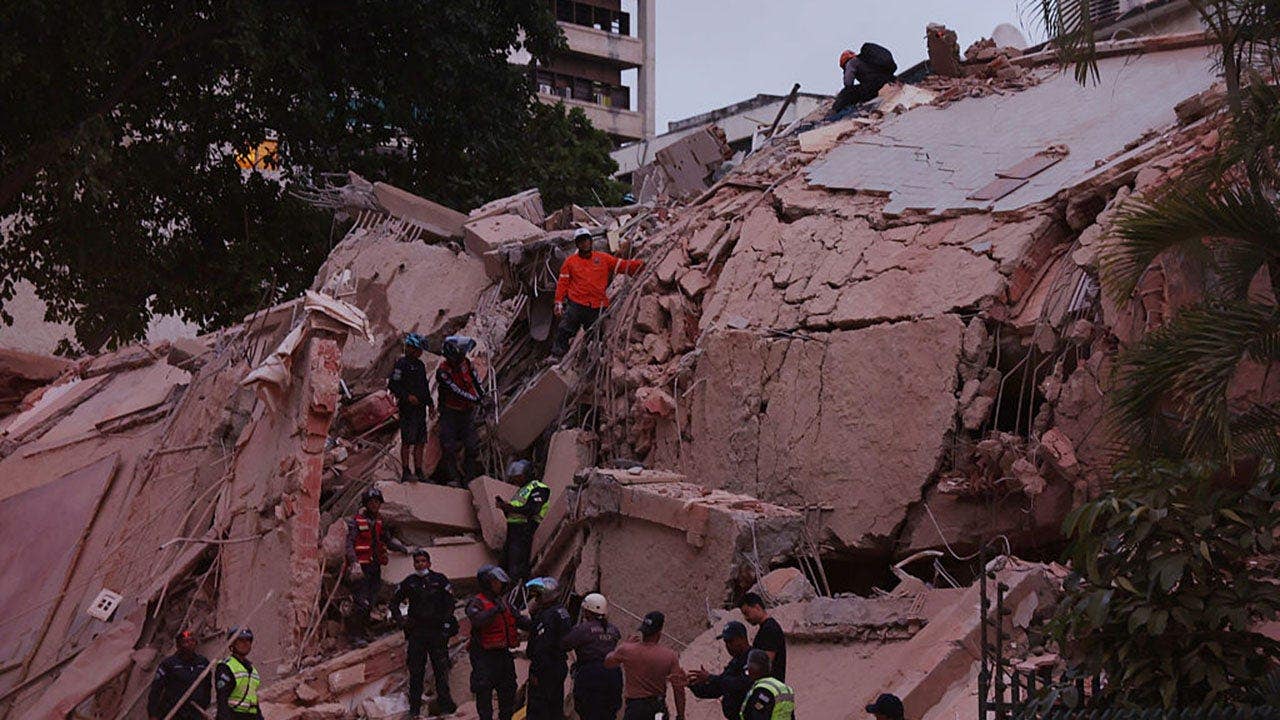
As the seismic waves rumbled eastward from the coast, the capital of Caracas bore the frightening brunt of the energy, transforming the bustling cityscape into a theater of survival. Skyscrapers and older apartment complexes swayed like fragile reeds in a windstorm, forcing thousands of terrified residents to evacuate into the darkening streets as car alarms wailed in a deafening chorus. The scene in the capital’s busiest commercial and residential neighborhoods was nothing short of apocalyptic; entire brick walls collapsed outward, spilling heavy debris onto the sidewalks and exposing the intimate, domestic worlds of families to the public eye. Pedestrians running for safety could look up and see dining tables, half-folded laundry, and family photographs still sitting on shelves inside apartments that had suddenly lost their exterior barriers. Plumes of thick, suffocating dust rose high into the air above neighborhoods where restaurants, bakeries, and businesses had been bustling with patrons only minutes prior, blotting out the setting sun with a grim, gray shroud. Even as the initial shaking subsided and night fell over the city, citizens refused to return to their homes, fearing that the structural integrity of the buildings had been hopelessly compromised by the violent oscillations. Instead, the asphalt streets became a makeshift sanctuary of communal grief and relief, where families sat on the cold pavement, illuminated only by car headlights and the soft glow of cell phones, weeping softly and hugging their pet dogs and cats tightly to their chests as they sought comfort in the unconditional warmth of their animals.
The profound human cost of this disaster is best understood through the voices of those who lived through the terrifying moments when the earth refused to stand still. For Caracas resident Hector Ricci, the experience was a slow-building nightmare that began deceitfully before escalating into total chaos. He recounted how the shaking started off so gently that one might have mistaken it for a passing heavy truck, only to watch it gradually and relentlessly grow in intensity until the walls groaned, light fixtures swung wildly, and staying inside became a life-threatening choice. In Hector’s neighborhood, the escalating violence of the quake forced entire apartment buildings to empty in unison, as neighbors who had previously only exchanged polite nods in hallways gathered together on the pavement, united by a singular, desperate instinct to survive. Another resident, Roberto Damas, described an even more chaotic struggle inside his own high-rise apartment, painting a vivid picture of a world turned completely upside down. He recalled the terrifying physical sensation of his building violently rocking from side to side with an unreal force that made walking nearly impossible, tossing him and his family around like ragdolls as they tried frantically to reach the safety of the doorway. Around them, the soundtrack of their lives was replaced by the shattering of glass, the heavy thuds of falling furniture, and the destruction of cherished household items, creating a sensory overload of terror before they finally burst out into the open air, thanking God for their miraculous escape from the swaying concrete tower.
The terrifying reach of the twin earthquakes extended far beyond the immediate vicinity of Caracas and Morón, sending shockwaves across geopolitical borders and triggering widespread panic throughout the wider Caribbean basin. Tremors were felt deeply throughout northern Venezuela and shook high-rise buildings as far away as neighboring Colombia, causing terrified residents in Bogotá and other major cities to evacuate onto the streets in solidarity and fear. Meanwhile, the ocean itself threatened to join the devastation, prompting emergency management officials to issue urgent tsunami advisories for low-lying coastal areas, including Puerto Rico and the United States Virgin Islands. For several tense hours, families living along these Caribbean coastlines watched the dark water with bated breath, packing emergency bags and searching for higher ground as they feared a massive wall of water might follow the violent shaking of the earth. Though these tsunami warnings were eventually canceled after scientific models confirmed that the deep-sea displacement would not generate a catastrophic wave, the sheer anxiety of the threat left an indelible mark on the region’s collective consciousness. This widespread panic highlighted the interconnected vulnerability of Caribbean and South American communities, demonstrating how a sudden shift in the earth’s crust can instantly unite millions of people across different islands and nations in a shared, frantic prayer for safety and mercy.
As the long, uncertain night progressed under a canopy of stars, the focus shifted from immediate survival to the daunting task of assessment, recovery, and long-term resilience. Venezuela’s Interior Minister, Diosdado Cabello, took to the airwaves to address a shaken nation, urging citizens to remain outdoors in open, safe spaces as the threat of powerful and unpredictable aftershocks loomed large over the damaged infrastructure. Emergency crews and local authorities worked tirelessly through the darkness, using flashlights and heavy machinery to navigate debris-clogged streets and inspect structurally compromised buildings for survivors. While the full scale of the structural damage and the exact human toll remained tragically unclear in the immediate aftermath, what was immediately obvious was the profound spirit of community and mutual aid that blossomed among the survivors. In the face of a collapsed physical world, the social fabric of Venezuela shone brightly as neighbors shared blankets, offered sips of water to shocked strangers, and kept watch over one another’s pets and belongings on the dark city streets. The physical scars of this historic disaster will undoubtedly take years of hard work to heal, but the resilience of the Venezuelan people, bound together by tragedy and an unyielding will to rebuild, proved to be far stronger than the earthquakes that had sought to shatter their world.