




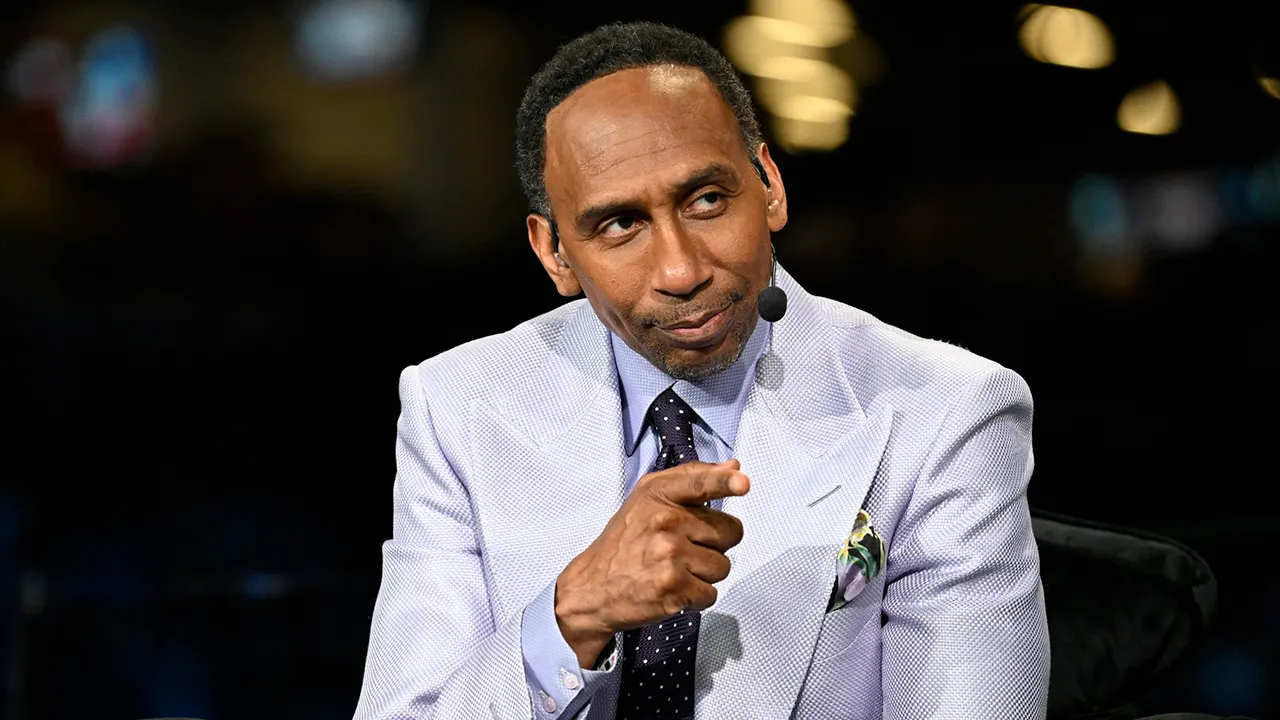
For more than half a century, the New York Knicks existed as a beautiful, agonizing tragedy in the heart of Manhattan. Generations of basketball purists, working-class dreamers, and loud-mouthed television personalities grew old waiting for the heavens to part over Madison Square Garden. When the drought finally broke, and the Knicks paraded down the Canyon of Heroes under a blizzard of ticker tape, the collective exhale of New York City could be felt across the entire tri-state area. It was an emotional release decades in the making, transforming the streets into an absolute carnival of blue and orange. Just twenty-four hours after the euphoria of that parade, the celebratory energy migrated indoors to the Infosys Theater inside Madison Square Garden, where Jalen Brunson and Josh Hart hosted a special live taping of their wildly popular “Roommates Show” podcast. Sitting on stage alongside the freshly minted NBA champions was none other than Stephen A. Smith, the bombastic ESPN anchor who has spent the better part of his professional life screaming into television cameras about the incompetence of his hometown franchise. Smith, a native son of New York, was born into this struggle. He has frequently lamented his childhood memories of the team’s last championship run in 1973, a time when he was just a four-year-old toddler running around Hollis, Queens. For fifty years, Smith’s relationship with the Knicks has been defined by a toxic mixture of desperate hope and public performative outrage, making his presence on that stage both highly anticipated and incredibly volatile. As he sat down in front of a packed, raucous crowd of die-hard New Yorkers, the air was thick with a mixture of mutual respect and playful, lingering resentment, setting the stage for a public reckoning that went far beyond typical sports talk television.
The moment Stephen A. Smith’s name was announced, the theater erupted into a symphony of boos that echoed off the high ceilings of Manhattan’s most famous arena. New York fans do not forget, and they certainly do not forgive easily, especially when it comes to a native son who made a lucrative career out of publicly roasting their pride and joy. The tension grew even thicker when Josh Hart, flashing a mischievous grin, admitted to the crowd that he had been keeping meticulous mental receipts of every single insult Smith had hurled at them over the years. Hart’s catalog of grievances was deep, but he chose to strike first at a particularly sore spot: Smith’s historical dismissal of the legendary 2016 Villanova Wildcats national championship team. Years ago, Smith had confidently proclaimed on national television that the Wildcat roster, which featured Hart, Brunson, and Mikal Bridges, lacked the foundational, high-level talent required to make any real noise in the NBA. This dismissive commentary had cut deep, serving as silent fuel for a group of young men who would eventually reunite in New York to form the grit-and-grind core of a championship roster. The criticism didn’t stop in college; when Jalen Brunson initially signed his lucrative contract with the Knicks in the summer of 2022, Smith had instantly taken to the airwaves to aggressively downplay the signing, loudly declaring to millions of viewers that the fundamentally sound guard simply “wasn’t the answer” to the franchise’s decades-long search for a savior. Now, with the ultimate validation sitting right next to them on the table, those dismissive words hung in the air like a dark cloud, demanding a direct response from the man who had uttered them with such absolute certainty.
With a dramatic flair worthy of the Garden itself, Josh Hart slowly turned his gaze toward the glittering, golden Larry O’Brien championship trophy resting proudly on a table just to Smith’s right. The trophy caught the stage lights, casting a radiant glow over the entire panel and serving as an undeniable, cold-hard physical fact that rendered years of cynical media analysis completely obsolete. Hart did not mince words, staring directly at the veteran pundit and asking him point-blank to look at the gold and finally admit to the world that he was completely, utterly wrong. It was a fascinating human moment that transcended the normal boundaries of sportscasting, representing a rare confrontation where elite, world-class athletes directly hold the modern media machine accountable face-to-face. For years, the sports media landscape has been dominated by highly dramatic, polarizing takes designed to drive social media engagement and viral clicks, often leaving the physical draft choices and human players feeling like mere pawns in a giant entertainment game. But in this specific theater, on this historic night, the talking head could not hide behind a television screen, a microphone, or a commercial break. The packed crowd watched in breathless silence to see if the notorious, fast-talking analyst would attempt to squirm out of the corner, deploy his trademark vocabulary to deflect the blame, or if he would finally succumb to the overwhelming reality of the championship victory standing right before his eyes. It was a beautiful display of athletic leverage, showing that while critics have the microphone for eighty-two games of the regular season, the players hold the ultimate power once the confetti drops. Hart’s gentle but firm prodding forced everyone in the room to confront the sheer absurdity of the doubt they had lived through, turning a casual podcast episode into a trial of public opinion where the jury had already reached a unanimous, triumphant verdict.
To his tremendous credit, Stephen A. Smith did not flinch, dodge, or try to pivot into another frantic debate. Instead, he took a deep breath, looked both Josh Hart and Jalen Brunson dead in the eye, and delivered a raw, heartfelt apology that resonated with absolute sincerity. He admitted without hesitation that he was beyond wrong, expressing his deepest apologies not just to the two stars sitting beside him, but to the entire coaching staff, the front office, and the millions of passionate fans who comprise the Knicks organization. In a touching moment of vulnerability that stripped away his typical television bravado, Smith confessed to the crowd that he had never been happier to be wrong in his entire life, noting that his harsh words came from a place of deep, agonizing love for a franchise that had repeatedly broken his heart for five decades. He reminded the audience of his roots, explaining that he came out of his mother’s womb in Brooklyn and Queens as a dedicated Knicks fan, and that the sheer, fifty-year emptiness of his favorite team’s championship cabinet had turned him into a deeply bitter, frustrated spectator. To see his childhood team finally climb back to the absolute pinnacle of the basketball world was a profound emotional experience that completely washed away any professional embarrassment he felt for missing the mark so badly on his predictions. In that moment of humble confession, Smith humanized himself to a local crowd that had booed him moments before, transforming the hostile theater into a space of shared celebration, healing, and mutual appreciation for a historic achievement. He encapsulated the feelings of millions of elderly and middle-aged fans who had begun to believe they would never live to see the day that New York basketball reigned supreme again, making his public defeat a shared victory for every doubter who secretly wanted nothing more than to be proven wrong.
However, because he is ultimately still Stephen A. Smith—the undisputed king of theatrical sports debate—the monumental apology came wrapped in a classic, endlessly entertaining caveat. With a sly smile creeping across his face, Smith leaned forward toward his microphone and boldly asserted that if his decades of relentless, aggressive, and highly vocal criticism had played even a tiny role in motivating this team to prove him wrong, then he would happily do it all over again in a heartbeat. He argued with a playful, mischievous glint in his eye that his tough love, constant public skepticism, and loudly broadcast failures might have been the exact mental fuel… these players needed to push through the grueling physical and mental demands of an NBA championship run. This philosophical twist highlighted the complicated, deeply symbiotic relationship between elite professional athletes and the media personalities who cover them; it is a chaotic dance where doubt is transformed into motivation, and where the loudest critics of top-tier talent often serve as the ultimate, albeit unwilling, co-authors of a team’s championship story. Smith made it clear that while he was perfectly happy to eat humble pie on national television, he would gladly play the pantomime villain again next season if it meant securing a back-to-back parade down Broadway, establishing a hilarious dynamic where his continued skepticism could be used as a recurring superstitious charm for the franchise’s future success. It was the ultimate display of his signature self-awareness, showing his deep understanding that in the sports world, narrative is everything, and sometimes a hero needs a loud, stubborn villain to make the journey to the top feel truly complete and satisfying.
As the live podcast progressed, the stage welcomed an impressive lineup of guests who further bridged the gap between the Knicks’ difficult past and their glorious present, including current stars Karl-Anthony Towns and Miles McBride, alongside the iconic Carmelo Anthony, whose own era of New York basketball was defined by immense individual talent but frustrating postseason exits. Seeing Carmelo smile and laugh alongside the new champions underscored the generational healing taking place inside the Garden, a beautiful reminder that this historic victory belonged not just to the current roster, but to everyone who had bled blue and orange through the darkest, leanest years of the franchise’s history. Ultimately, this memorable podcast event captured the highly human, deeply emotional core that beats beneath the highly commercialized, clinical, and stat-driven world of modern professional sports. It proved that behind the massive television contracts, the endless carousel of hot takes, the financial metrics, and the viral social media clips, sports remain a deeply communal experience capable of uniting an entire diverse metropolis in pure, unadulterated joy. In apologizing face-to-face to Brunson and Hart, Stephen A. Smith did far more than just execute a dramatic television retraction or admit his analytical mistakes; he embraced his true, vulnerable identity as a passionate, long-suffering New York fan who was finally allowed to put down his media armor, stop screaming about frustration, and celebrate a sporting miracle alongside the very heroes who made his childhood dreams a reality. This simple act of reconciliation closed a long, painful chapter of skepticism and opened an exciting new era of unity, pride, and champion-level basketball for New York City.