




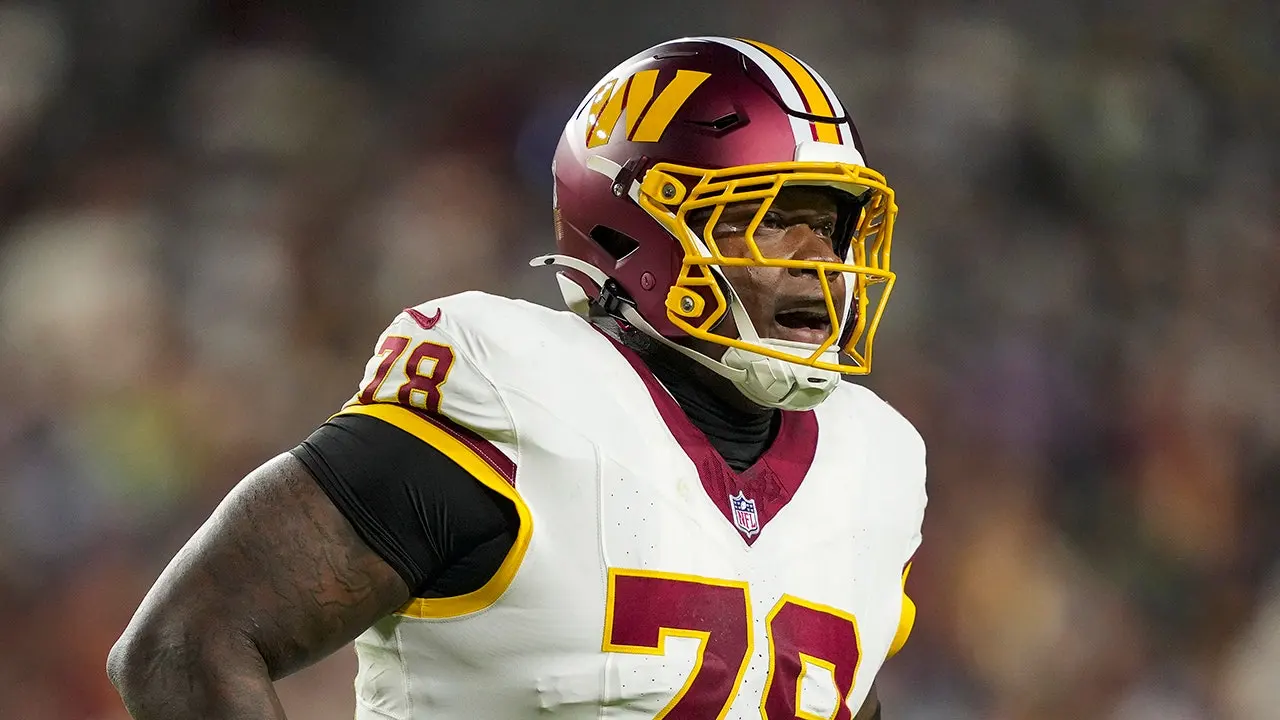
The sudden, quiet shattering of a season’s blueprint is a reality every NFL franchise fears, yet it is one that the Washington Commanders must now confront head-on. During what should have been a routine Saturday practice session, the trajectory of Washington’s offensive line took a devastating detour when franchise left tackle Laremy Tunsil suffered a severe, torn triceps during an individual drill against pass rusher Odafe Oweh. In the high-stakes, high-impact world of professional football, the line between peak athletic performance and a season-altering injury is razor-thin; for Tunsil, that line vanished the moment he went down, clutching his arm in pain before taking a solemn knee on the turf. The immediate hush that fell over the practice field spoke volumes, a collective holding of breath by teammates, coaches, and staff who understood the gravity of the situation even before the medical team ushered the star lineman into the facility. On Monday, those fears were officially realized when head coach Dan Quinn, speaking with a heavy heart but a resilient tone, confirmed that Tunsil would require surgery and is sidelined indefinitely. The cruel irony of the situation is that Tunsil was entering the season in peak physical condition, ready to anchor a rebuilt offensive line. Quinn’s emotional address emphasized that losing a player of Tunsil’s caliber is a deeply felt wound, not just for the schemes drawn up on whiteboards, but for the soul of the locker room itself. To Quinn, “LT” is far more than an elite athlete; he is the emotional anchor, an absolutely fantastic teammate whose absence on the field leaves a massive void, but whose eventual return remains a beacon of hope for a franchise striving to build a culture of excellence. The physical pain of a torn muscle is only part of the tragedy; the mental toll of having one’s season halted in an instant, after months of grueling offseason preparation, represents a profound human struggle that resonates deeply within the tight-knit brotherhood of the gridiron.
To truly comprehend the magnitude of this loss, one must look at the remarkable journey and staggering value of Laremy Tunsil. Drafted 13th overall by the Miami Dolphins, Tunsil quickly established himself as a generational talent, eventually moving to the Houston Texans where he spent six dominant seasons cementing his reputation as the premier blindside protector in the game. When the Commanders acquired him last season, it was viewed as a franchise-defining coup, a belief they solidified this past March by signing him to a historic two-year, $60.2 million contract extension. By becoming the first offensive lineman in NFL history to break the $30 million annual threshold, Tunsil didn’t just set a financial milestone; he validated the immense responsibility placed upon the shoulders of a left tackle. This historic valuation highlights the premium placed on protecting the quarterback in the modern era of professional football. In a league where multi-million-dollar quarterbacks are the crown jewels, the left tackle is the ultimate insurance policy, responsible for neutralizing elite edge rushers and giving the signal-caller those crucial, extra fractions of a second to make a play. Tunsil’s combination of brute strength, dancing-bear agility, and veteran football IQ allowed him to dominate in both the run and pass games, making him a unique force that coach Quinn described as being at the very “top of his game.” His absence means Washington is not just missing a player; they are missing a standard-setter, a five-time Pro Bowler whose mere presence on the line instilled a sense of security and confidence throughout the entire offense. The loss of such a monumental figure forces the organization to grapple with both the financial reality of having their highest-paid asset on the sideline and the emotional challenge of keeping their competitive ambitions afloat. It highlights the volatile nature of the sport, where astronomical contracts and historic achievements can be instantly overshadowed by the unpredictable physical demands of a single play, reminding everyone involved of the human vulnerability that underlies the multi-billion-dollar business of the NFL.
A torn triceps is an exceptionally cruel injury for an offensive lineman, a position that relies entirely on upper-body leverage, explosive punching power, and the ability to sustain intense physical contact on every single snap. The triceps muscle is the primary engine behind a lineman’s ability to extend his arms and keep oncoming defenders at bay; without it, the fundamental mechanics of blocking are rendered completely impossible. Surgery represents the only viable path to restoration, embarking Tunsil on a long, grueling road of rehabilitation that will test his mental fortitude just as much as his physical resilience. The process of healing from such an invasive procedure involves weeks of immobilization followed by months of painstaking physical therapy to rebuild strength, flexibility, and confidence in the joint. During this isolation, the psychological challenge of being separated from the daily grind of the team can be immense, as players often feel a sense of guilt for not being on the field with their brothers. However, the Commanders are determined to keep Tunsil integrated into the team’s fabric, recognizing that his veteran leadership and locker room presence remain invaluable assets. This holistic approach to recovery ensures that Tunsil’s impact is still felt throughout the facility. Even from the sidelines, Tunsil’s voice can serve as an extension of the coaching staff, helping to mentor younger players and guide the offensive line through the inevitable storms of the season. This transition from active superstar to supportive mentor is a testament to Tunsil’s character and the culture that Quinn is actively fostering in Washington, where every individual’s worth extends far beyond what they produce on Sundays. It underscores the profound reality that while the physical body may falter under the extreme stress of professional sports, the human spirit and the connections forged in the locker room can endure, providing a different kind of strength that helps sustain a team through its darkest hours of adversity.
In the wake of this adversity, the spotlight shifts to Brandon Coleman, the young tackle tasked with stepping into the giant footsteps left by Tunsil. In the NFL, the “next man up” mantra is often repeated, but executing it requires an extraordinary level of preparation, mental toughness, and self-belief, especially when replacing a historic player. Fortunately for Washington, Coleman is not an unproven commodity; he started 12 games at left tackle during a highly promising rookie campaign in 2024 and demonstrated the kind of poise and technical promise that made the coaching staff take notice. For Coleman, this is the moment he has prepared for his entire life. While starting three games at left tackle last year gave him a taste of the intense pressure that comes with protecting the quarterback’s blindside, this new assignment represents an entirely different level of responsibility. Coleman is no longer just a temporary fill-in or a developing prospect; he is now the guardian of the offense’s most vulnerable point, facing a trial by fire against the league’s most fearsome pass rushers week in and week out. The transition from a supporting role to the main stage demands a rapid acceleration of his development, requiring him to refine his technique, study film with obsessive detail, and build an unspoken chemistry with his fellow linemen. The pressure is undeniably immense, yet it also represents the ultimate opportunity for a young player to write his own narrative and prove that he belongs among the elite. The organization’s belief in Coleman is a crucial factor in this transition, as a young athlete’s success often depends heavily on the psychological safety net provided by his coaches and teammates, who must show unwavering trust in his abilities as he navigates the steep learning curve ahead. It is a classic sports narrative of potential meeting opportunity, where the harsh reality of an injury to a mentor opens the door for a protégé to step forward, carry the torch, and potentially define the future trajectory of his own career and the team’s destiny.
The strategic response to Tunsil’s injury reveals a great deal about the leadership philosophy of head coach Dan Quinn and general manager Adam Peters. Rather than reacting with panic and scouring the free-agent market for a quick, external fix, the front office has chosen to double down on the talent they have spent months cultivating within their own facility. Quinn’s decision to give Coleman an extended look at left tackle, while keeping veteran Andrew Wylie in his crucial role as the backup swing tackle, speaks to a deeply rooted belief in continuity, preparation, and trust. Wylie’s presence provides an invaluable safety net; as a seasoned veteran who understands the complexities of the system, his ability to step in at multiple positions ensures that the depth of the offensive line remains stable even in the face of further injuries. By choosing not to pursue outside help, Quinn and Peters are sending a powerful message to their locker room: we believe in the players we have, and we trust our development process. This approach helps to prevent the disruptive ripple effects that often occur when bringing in a new player late in the preparation cycle, allowing the team to maintain its focus and cohesion. It highlights a mature leadership style that values the long-term growth of the roster over reactionary, short-term bandages, reinforcing a culture where players know they will be given the chance to rise to the occasion when their number is called. It is a deliberate choice that fosters a sense of security and belonging within the locker room. This calculated gamble on internal growth is a testament to the meticulous planning of the front office, which designs rosters not just for best-case scenarios, but with the built-in resilience required to withstand the inevitable shocks of an NFL season. It is a philosophy that views adversity not as an excuse for failure, but as a catalyst for collective growth, challenging every member of the roster to elevate their performance and prove the depth of the team’s character.
As the Washington Commanders prepare to move forward into the grueling schedule that lies ahead, the true measure of their team will be defined by how they respond to this adversity. The journey through an NFL season is rarely a smooth path; it is a test of endurance, adaptability, and collective will, where the teams that survive are not those that avoid hardship, but those that navigate it with grace and determination. While the loss of Laremy Tunsil is a profound physical blow, it also presents an opportunity for the Commanders to forge a stronger, more resilient identity in the fires of adversity. The narrative of this season is no longer just about the brilliance of individual superstars, but about the collective strength of a group of men bound by a common goal and a shared trust in one another. Tunsil’s journey to recovery will run parallel to his team’s journey on the field, with both paths requiring patience, dedication, and an unwavering belief in the process. When he eventually returns to the line, he will hopefully join a unit that has grown stronger, more versatile, and more cohesive through the experience of playing in his absence. In the end, football is a game played by human beings who experience the highs of historic contracts and the lows of sudden injuries, but it is the human connections, the shared struggles, and the mutual support that truly define a team’s legacy. As Washington rallies around Brandon Coleman and supports Tunsil on his road to recovery, they are demonstrating the very essence of sportsmanship and team unity, proving that even when the path ahead is uncertain, their collective resolve remains unbreakable. Ultimately, the journey ahead will test their character, but it is a challenge they are ready to meet together. This situation serves as a poignant reminder that behind the statistics, the contracts, and the strategic maneuvers, the heart of the sport lies in the human stories of perseverance, brotherhood, and the relentless pursuit of greatness in the face of life’s unpredictable challenges.