




Born into a legacy of baseball royalty, Scott Spiezio’s life was mapped out long before he ever stepped onto a professional diamond. His father, Ed Spiezio, a nine-season Major League veteran and two-time World Series champion, recognized his son’s innate talent early on, famously telling him, “You’re going to be better than me.” This prophecy translated into a childhood of grueling, relentless preparation; by age three, Scott was already switch-hitting, and the family basement was converted into a training ground where every single practice session concluded with the ultimate high-pressure fantasy: a full count, bases loaded, two outs in the bottom of the ninth inning of Game 7 of the World Series. In high school, father and son would arrive at the gym at 6:00 a.m. to hit in the batting cage before Scott went to class, all with the singular, consuming intention of making it to the big leagues. In 2002, this lifetime of mental rehearsals materialized into breathtaking reality. Playing for the Anaheim Angels in Game 6 of the World Series against the San Francisco Giants, with his team facing elimination and trailing 5-0 in the seventh inning, Spiezio stepped up to the plate with the season hanging in the balance. Battling through a grueling at-bat against reliever Felix Rodriguez, Spiezio worked the count to that familiar 3-2. On the next pitch, he launched a historic three-run home run into the right-field seats, sparking a legendary comeback that secured the franchise’s first-ever world championship. In an instant, Spiezio was catapulted to the pinnacle of pop culture and athletic superstardom, flooded with late-night show invitations from Jay Leno and David Letterman, performing with his rock band for thousands of fans, and returning to his hometown of Morris, Illinois, to find billboards calling him a hero and a street named “Scott Spiezio Drive.” Yet, beneath the glittering veneer of sudden fame, a quieter, destructive force was beginning to take root—what Spiezio would later define as “ego,” a personal acronym for “edging God out.” The adulation of the public began to replace his humility, setting the stage for a tragic disconnect from his faith, his family, and himself.
The turning point came with a lucrative move to the Seattle Mariners under a three-year, nine-million-dollar contract, a transition that was quickly derailed by a catastrophic physical disaster. During a spring training game, while pursuing a pop-up over the pitcher’s mound, Spiezio tripped at full speed, severely blowing out his thoracic T6 and T7 discs. The diagnosis was terrifying: one more wrong impact could result in permanent paralysis. For an elite athlete whose identity and self-worth were entirely anchored to physical performance, the injury was a devastating emotional blow, plunging him into a deep reservoir of depression, anxiety, and resentment. Feeling abandoned by the divine and isolated in a new city without a strong support network, Spiezio, who had previously been hesitant to take simple over-the-counter pain medications, turned to alcohol to numb his psychological and physical pain. What began as an escape quickly spiraled into a fierce, consuming physical addiction that saw him spending thousands of dollars a night on lavish bottle service and escalating to recreational cocaine use. The drastic shift was staggering; Spiezio went from being a respected community leader who won the Oakland Athletics’ Dave Stewart Community Award and worked with DARE to an alcoholic who could not get through a single day without a drink. This rapid descent alienated his closest friends, fractured his marriage, and culminated in a heartbreaking, physical confrontation with his father that was witnessed by his own children. Neighbors called the police as a desperate Spiezio pushed his father away to flee the scene, leading to a long, bitter silence between the two men. He was eventually released by the Mariners, a move he welcomed as a temporary reprieve, but the internal storm continued to rage as he consumed nearly a handle of vodka every single day, completely unrecognizable to those who had loved him.
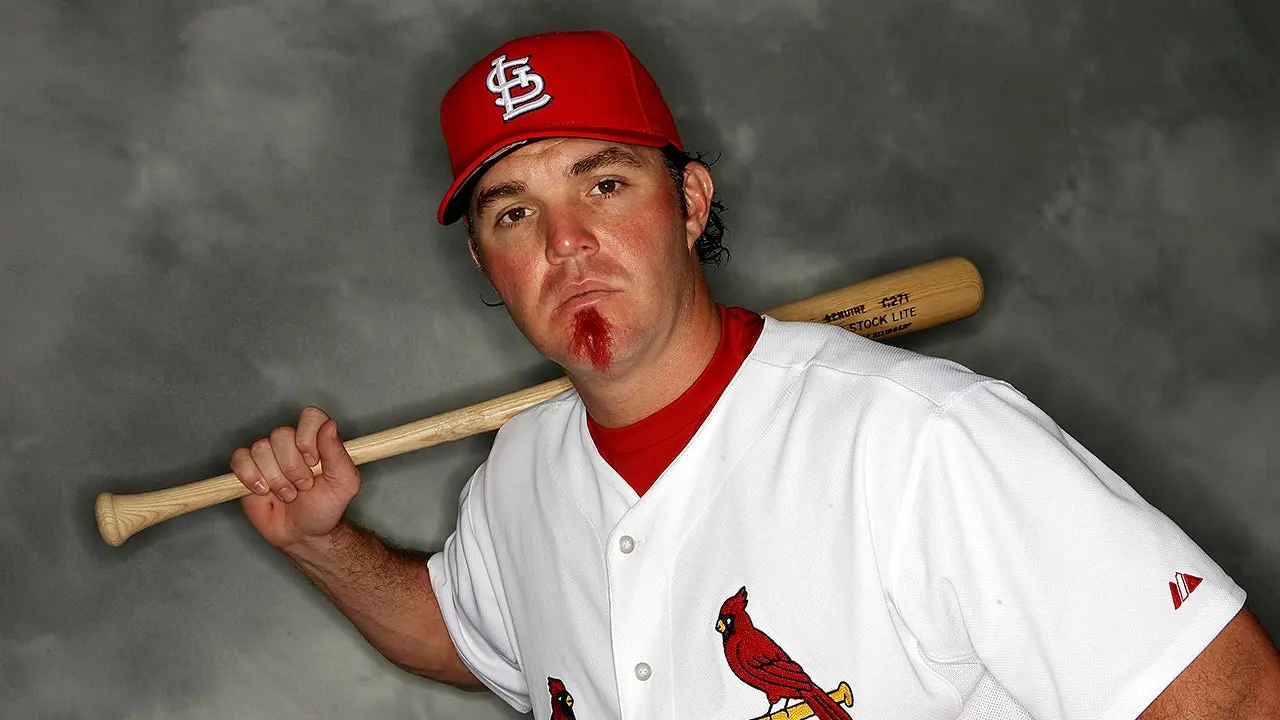
A brief glimmer of hope emerged in 2006 when the St. Louis Cardinals invited Spiezio to spring training, offering him a chance to play for the same organization his father had once championed. Donning his father’s former number, 26, Spiezio channeled his remaining athletic brilliance into a resurgent season, ultimately helping guide the Cardinals to a World Series victory. However, this second championship ring brought none of the uncorrupted joy of his first; the grand celebrations were absent, his reputation was deeply tarnished, and the profound silence between him and his father cast a heavy shadow over the triumph. The breakthrough of reconciliation finally came on Opening Day in 2007 during a ring ceremony that would make Major League history. In a surprise gesture orchestrated by the Cardinals organization, Ed Spiezio stepped onto the field to personally present his son with his World Series ring—marking the first and only time a father and son had won championships with the same franchise. As his father approached, Scott burst into tears, and the two embraced in a powerful, public display of forgiveness that Scott would later describe as his “prodigal son” moment. Though this emotional reunion mended their fractured bond and gave Scott the comforting knowledge that his father was back in his corner, the underlying disease of his addiction remained unbroken, lurking just beneath the surface of his professional recovery.
Despite the emotional reconciliation with his father, Spiezio’s dependency on substances quickly reached a horrifying, life-threatening peak. He began playing Major League games while completely intoxicated, secretly filling dugout water bottles with alcohol to stave off withdrawal tremors, while using cocaine to combat the sedative effects of the liquor. The double life was unsustainable; after collapsing in front of team trainers, he was sent to an outpatient rehabilitation facility, but the fear of public exposure in St. Louis caused him to withdraw, merely checking the box to return to the lineup without addressing the rot within. His subsequent release from the team following a hit-and-run incident and an outstanding arrest warrant marked the end of his major league career, driving him into an unrestricted downward spiral where he consumed multiple handles of vodka and thousands of dollars of cocaine weekly. Over an agonizing decade, Spiezio cycled through eleven different rehab facilities and spent countless hours in recovery meetings, eventually surrendering his remaining finances and property to his parents’ legal custody to prevent himself from spending everything into oblivion. The despair grew so heavy that he eventually developed a profound desire to die, culminating in a harrowing night when police were called to track him down as he ran into an empty field, intending to provoke officers into a fatal shooting to end his suffering. Weighed down by a mountain of shame for failing his children, his parents, and the community that had once idolized him, he felt entirely unworthy of love or recovery, trapped in a cycle of asking God for help only to immediately snatch back control of his life.
The ultimate intervention arrived in 2018 in the most unassuming of places: a routine MRI clinic where Spiezio had gone to address persistent back pain. When he emerged from the machine, his skin had turned a deep, alarming shade of yellow—a symptom of severe jaundice indicating that his liver was in total, acute failure. Doctors delivered a grim prognosis: he had a mere twenty percent chance of surviving, and he would need to remain completely sober for six months to even be considered eligible for a life-saving liver transplant, a requirement he initially despaired of ever meeting. In his absolute desperation, Spiezio cried out to God, begging for his intense physical cravings to be taken away, a prayer uttered on April 6, 2018, that would mark the definitive turning point of his life. From that very day forward, his cravings vanished entirely, replaced by a physical aversion to alcohol so strong that the mere sight of it made him ill. While undergoing grueling bi-weekly procedures to drain liters of accumulated fluid from his abdomen, Spiezio patiently surrendered to the healing process. When he returned to the hospital for his fourth follow-up, the medical staff was utterly dumbfounded; his blood work had returned to normal and his liver had completely regenerated, a medical impossibility that the doctors could only attribute to divine intervention. This miracle gave him the physical strength to begin rebuilding his life from the ground up, starting with simple chores like clearing sticks from his yard to rebuild his motor skills and find the motivation to rejoin the human race.
Today, the man who once earned over sixteen million dollars and lived surrounded by material luxury lives a modest, month-to-month existence, yet he is profoundly happier than he ever was at the height of his athletic fame. Replacing his fleet of cars and sprawling mansions with a life centered around faith, family, and service, Spiezio has dedicated his sobriety to guiding others through the dark valleys of addiction and mental illness. He operates a local baseball facility where he mentors young athletes, actively serves his church, speaks at schools about the dangers of substance abuse, and is patiently restoring his relationships with his four children, finding peace in simple moments like his eleven-year-old teaching him how to fish. The release of his documentary and his raw, deeply honest memoir, The Hardest Comeback, serve as powerful testaments to his journey, emphasizing that his battle for sobriety was infinitely more challenging than any high-stakes moment he ever faced on a baseball diamond. For Spiezio, true wealth is no longer measured in championship rings or financial security, but in the redemptive texts he receives from people whose marriages, lives, and faiths have been restored by hearing his story. He remains a living testament to the belief that no matter how low one has fallen, as long as there is life, there is hope, famously reminding those who struggle that as long as you have a pulse, you have a purpose, and it is never too late to write a beautiful ending to your story.