




There is a quiet confidence about Gavin Glasenapp that speaks to a life lived in the most demanding of circumstances. For twenty years, he wore the uniform of the United States Army, navigating twelve separate combat deployments that took him to the most volatile corners of the Earth. He is a special operations veteran, a member of an elite fraternity defined not just by physical prowess, but by an uncanny ability to process chaos, make instantaneous life-or-death decisions, and remain utterly composed when the world around him erupts into violence. Yet, from Glasenapp’s perspective, there is a stark and puzzling irony waiting for him back home. When he hangs up his uniform and becomes a civilian, he is stripped of the privileges that his training and sacrifice should naturally afford him. While a retired police officer can carry a concealed firearm across every state line in the nation without bureaucratic hurdles, a retired Green Beret, Navy SEAL, or Army Ranger—men and women who have spent their careers mastering small arms and tactical decision-making—must navigate a dizzying patchwork of state laws, reciprocity agreements, and local restrictions that change with every state border they cross. For Glasenapp, now the training operations manager at Delta Defense for the U.S. Concealed Carry Association (USCCA), this legal oversight feels almost like an insult to the very trust these warriors have already proven they deserve. “It needs to happen,” Glasenapp told Fox News Digital, his voice carrying the weight of experience and a deep-seated passion for the Second Amendment. “These are proven men and women. They’re specially selected, uniquely trained.” He believes profoundly that if America trusts these individuals to wage war on its behalf, to operate under the most ambiguous and dangerous rules of engagement in foreign lands, then trusting them to protect themselves and their fellow citizens on a domestic highway should be a simple, logical extension of that faith. The gap in the law, to him, is not just a legal technicality; it is a failure to recognize the value of a generation of warriors who continue to embody the principle of defending the innocent.
This new push to correct that oversight comes in the form of the Special Operations Forces Concealed Carry Act, a piece of legislation that has been introduced in both chambers of Congress. Last week, Senator Tim Sheehy, a Montana Republican and a former Navy SEAL himself, put forward the Senate version of the bill, following the lead of Representative Pat Harrigan, a North Carolina Republican and a former Army Green Beret, who introduced the companion bill in the House in April. The core concept is elegantly simple: extend the privileges of the Law Enforcement Officers Safety Act (LEOSA) to qualified retired special operators. LEOSA, which has been law for decades, allows retired law enforcement officers to carry a concealed firearm nationwide, regardless of state or local laws, recognizing that their training and service establish a baseline of competence and trustworthiness that should not be hindered by bureaucratic borders. The proposed act seeks to apply that exact same standard to former members of the special operations community—those who held a special warfare or special operations occupational specialty or skill designator recognized by U.S. Special Operations Command. These are individuals who went through a rigorous assessment and selection process, survived grueling qualification training, and spent their careers honing their craft. The argument is that if a retired police officer who spent his career patrolling a single city can be trusted to carry nationwide, then a retired Delta Force operator or a seasoned Special Forces soldier who has trained for years to operate in denied areas and high-risk environments should absolutely be granted that same level of trust. “These are proven men and women,” Glasenapp reiterated, emphasizing that the bill is about giving a distinct, highly qualified class of veterans the legal recognition their skill set warrants. While the two versions of the bill share the same philosophical foundation, they diverge on a crucial technical point: the Senate version, introduced by Sheehy, includes a requirement for annual certification. This would mandate that qualified operators pass a state-standard, active-duty-level firearms qualification at their own expense, in addition to completing a Justice Department-certified “Concealed Carry Use of Force in Society” course before they are allowed to carry. In contrast, the House version introduced by Harrigan simply expands the existing LEOSA standards to these veterans, requiring no separate certification of firearms training, specifically noting that their extensive military careers already serve as the highest validation of their proficiency.
Glasenapp believes this annual recertification requirement is an unnecessary layer of bureaucracy, arguably even a subtle insult to the men and women who have spent their professional lives qualifying with handguns, rifles, and a multitude of other small arms. “I don’t believe the annual recertification requirement should be required for either the proposed special operations forces concealed carry act or the current HR 218/LEOSA,” Glasenapp argued, pointing out that both communities have spent their entire professional careers training and qualifying with various handguns and other firearms. For someone who has spent two decades in the special operations community, firearms proficiency is not a once-a-year checkmark; it is a fundamental, culture-wide obsession that is drilled and reinforced continuously throughout their service. Take, for example, an infantryman or infantry officer in the Army’s 75th Ranger Regiment. They are intimately familiar with small arms, regularly shooting thousands of rounds in training, and are evaluated on their marksmanship under extreme stress. These are not civilians who took a weekend course; they are professionals whose very survival depended on their ability to accurately and responsibly employ a firearm. “There’s going to be continuing training on that,” Glasenapp said, noting that while firearms skills can deteriorate without practice, these veterans are acutely aware of that reality and maintain a standard of preparedness that far exceeds the baseline required by most state laws. Beyond raw marksmanship, Glasenapp points to a less obvious but equally important advantage that special operators possess: the ability to adapt to rapidly changing rules and environments. “These are folks that have not only dealt with changing state lines, but different rules and different regulations in different countries,” he explained. “We’re talking international travel and dealing with rules of engagement that are constantly changing depending on what theater you’re in. They can definitely adapt on the fly.” The mental dexterity required to navigate the legal gray areas of a combat zone, where a single misinterpretation of a rule can have catastrophic consequences, is the same dexterity required to navigate the complex and often contradictory concealed carry reciprocity maps that plague American gun owners today.
Addressing the inevitable critics who might fear that giving military veterans a nationwide carry permit could turn an ordinary traffic stop or a minor altercation into a dangerous, combat-honed response, Glasenapp firmly rejects that premise. He argues that there is a profound difference between operating in a warzone and carrying a concealed firearm as a civilian, and the best special operators understand this distinction better than anyone. “What you’re doing as a civilian carrying every day … is going to be different than when you’re in a combat zone,” Glasenapp said, drawing on his own experience of holding a Tennessee concealed carry permit while serving on active duty. He stresses that while his military training gave him the mechanical skills to draw and fire a weapon, it is the civilian legal landscape that dictates the moral and legal responsibility of when to do so. “Get familiar with local, state and federal law as far as what you can and can’t do,” he advises. “You’ve got to make different decisions and act in different ways.” The paranoia and hyper-vigilance of combat, while essential overseas, must be tempered in a peaceful domestic setting. Glasenapp highlighted the concept of the “OODA loop”—observe, orient, decide, and act—which was recently demonstrated by an armed bystander in Idaho. That bystander, Jordan Salinas, engaged a mass shooter who was terrorizing a crowd, forcing the gunman to flee and saving countless lives. Police later hailed Salinas for having the presence of mind to follow proper observation and decision-making protocols, a textbook example of a “good guy with a gun” stopping a bad guy. The OODA loop is a cognitive framework that is drilled into military personnel, especially special operators, making them uniquely equipped to handle active threats. “That would be the OODA loop,” Glasenapp said proudly, explaining that it is a constant state of situational awareness—observing a threat, properly orienting yourself to the reality of the situation, making a decisive choice, acting on it, and then immediately reassessing. This isn’t just about being a quick draw; it’s about being a smart, decisive protector, capable of minimizing casualties and neutralizing threats without losing one’s head.
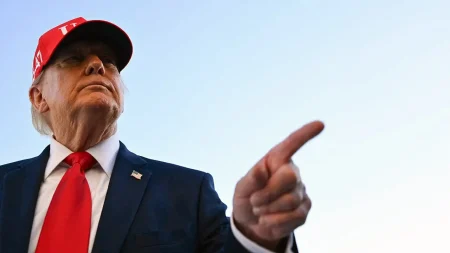
The broader political landscape surrounding this bill is charged with the ongoing struggle over gun rights in America. Second Amendment advocates have long argued that the best defense against violence is an armed, law-abiding citizenry, and this bill is a logical extension of that philosophy. The push for nationwide concealed carry reciprocity—which would allow any legal gun owner to carry in any state—has faced fierce opposition in Congress, but proponents see this special operators bill as a critical, logical baby step toward that eventual goal. The issue has gained renewed cultural traction recently, particularly with figures like President Donald Trump who often highlights the stark contrast between strict gun laws in Democrat-run cities like Chicago and the rampant violence that plagues those same cities. “Over 273 Americans have been shot since the war in Iran … in Chicago,” Trump posted, a provocative tweet that served to highlight the failure of gun control to stop criminals. The fact that law-abiding citizens remain defenseless while criminals flout the law is a driving force for gun-rights advocates. In this context, Glasenapp sees the Special Operations Forces Concealed Carry Act as an opportunity for the government to show a modicum of trust in the very individuals it asked to sacrifice so much. He believes that the level of discipline and ethical judgment imparted to special operators should be the gold standard for gun ownership in the country. “I can think of no better group of people to be equipped to defend themselves and others around them,” he stated. “In fact, that’s part of our core values here at Delta Defense. We believe every American has the inalienable right to self-defense, and I can think of no better group that to really emulate that and really show you what that looks like.” To him, this bill is not just about convenience or fulfilling a niche request from a veterans group; it is a moral statement about who America trusts with the ultimate responsibility of protecting life.
Ultimately, for Gavin Glasenapp, this legislation is about honoring a lifetime of sacrifice and proving that the nation actually trusts the people it trains to be its ultimate protectors. He views the existing legal patchwork as an unnecessary and demeaning obstacle for men and women who have already proven their competence and character under the most extreme conditions imaginable. While he supports broader compromises, such as a national reciprocity law that would benefit all responsible gun owners, he believes the special operations community is uniquely deserving of this expedited privilege. Their careers have been defined by the defense of the Constitution, and they have earned the right to exercise the rights guaranteed by that document without being treated like potential criminals just because they cross a state line. The bill, whether in its House or Senate form, represents a recognition that the training required to be a special operator is more rigorous, more realistic, and more demanding than any civilian or law enforcement firearms course in existence. “I certainly hope this passes and becomes U.S. code,” Glasenapp concluded, his voice carrying a quiet sense of urgency and hope. “I think it needs to happen.” In his mind, passing this act is a simple, straightforward matter of thanks. It says to these veterans: ‘We saw what you did, we know who you are, and we are finally going to let you continue to protect us in the way you know best—without asking for permission at every state border.’ It is a small gesture in the grand scheme of national policy, but for those who have given so much, it is a monumental recognition of their service, their skill, and their unwavering commitment to keeping America safe, whether they are in uniform or not.