





The Red Flag Revolution: How Zac Taylor’s Confession Exposed Football’s Hidden Rule-Bending
In the high-stakes world of professional football, where every second counts and split-second decisions can determine the fate of a season, there exists an unwritten code of conduct that coaches have followed for decades. The red challenge flag, that iconic crimson marker that sends officials scrambling to the replay booth, has long been considered the exclusive property of head coaches. It’s a symbol of authority, a tool of strategic warfare, and perhaps most importantly, a visible demonstration of leadership on the sideline. But as Cincinnati Bengals head coach Zac Taylor recently revealed, sometimes the most sacred traditions in sports are quietly ignored by those who are supposed to uphold them, and the results can be surprisingly effective.
The National Football League recently announced a subtle but significant modification to its challenge rules that will take effect before the 2026 season, allowing head coaches to designate another staff member to handle the responsibility of throwing the red flag. While this may seem like a minor administrative adjustment to the casual observer, it represents a fundamental shift in how teams approach the art of challenging plays. The change acknowledges what many insiders have known for years: the head coach doesn’t always have the best vantage point, the clearest perspective, or even the physical ability to get to the flag quickly enough to make a meaningful challenge. In Taylor’s case, this admission goes even deeper, as he revealed that he has technically been violating league rules for the entirety of his eight-year tenure as the Bengals’ head coach.
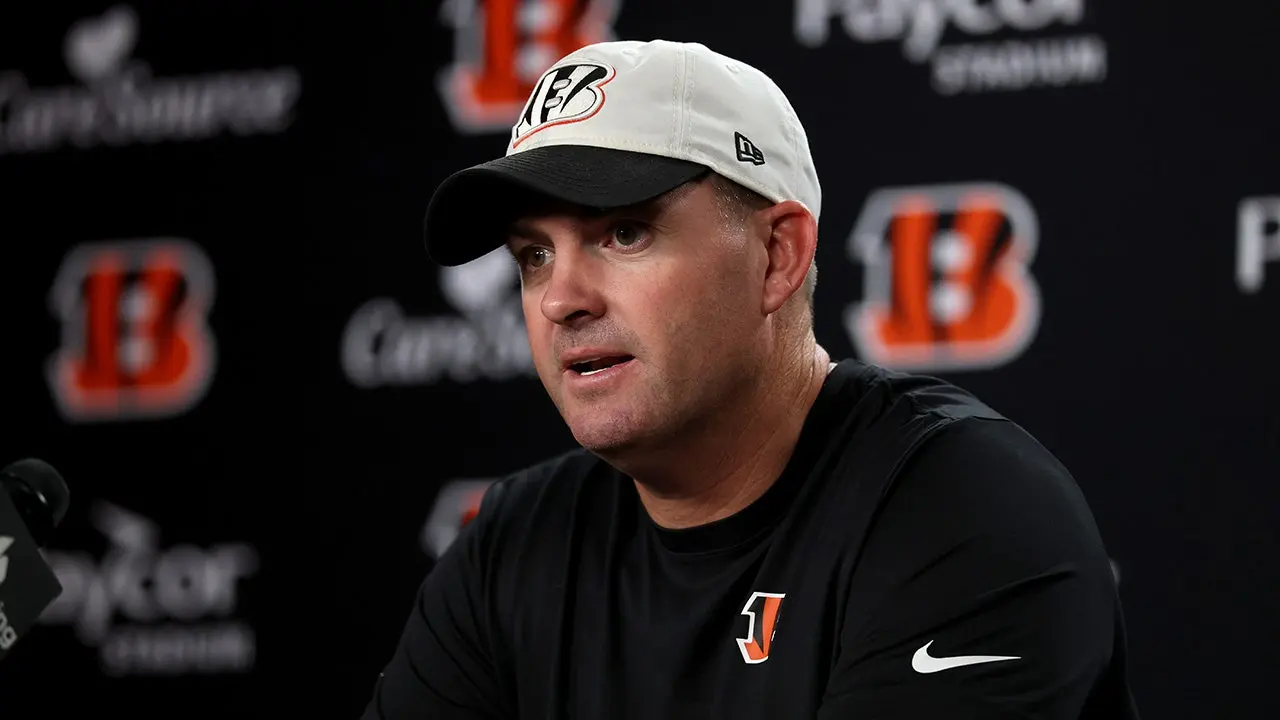
What makes Taylor’s confession particularly fascinating is not just that he was breaking the rules, but that he was doing so with the full knowledge of game officials, who apparently never raised any objection to the arrangement. The Bengals’ head coach admitted during a recent press conference that he has never once thrown a challenge flag himself, instead delegating that responsibility to Doug Rosfeld, his chief of coaching staff, who has served as the unofficial challenge coordinator for the team since 2019. Taylor’s revelation provides a fascinating glimpse into the hidden mechanics of NFL sidelines, where the reality of game management often differs dramatically from the carefully crafted public image that teams present to the world.
The history of the challenge flag in professional football is steeped in tradition and controversy. Since the system was implemented in 1999, the red flag has become one of the most iconic symbols in sports, instantly recognizable to fans worldwide. The rules have always been clear: only the head coach has the authority to challenge a play by throwing the flag onto the field before the next snap occurs. This restriction was designed to prevent chaos and ensure that someone with ultimate responsibility for the team’s performance was making these critical strategic decisions. However, the NFL’s rule change recognizes what smart coaches have understood for years: the modern game moves too fast, the technology has become too sophisticated, and the old ways no longer serve the primary goal of getting calls right.
Taylor elaborated on his unconventional approach during his press conference, explaining that the arrangement with Rosfeld has never been an issue with officials. Before each game, when referees ask which coach will be handling challenges, Taylor simply tells them that Rosfeld has that responsibility, and they proceed without complaint. This understanding, while technically a violation of the letter of the law, has never drawn a formal complaint or disciplinary action from the league. Taylor even joked about the possibility of receiving a retroactive fine now that the rule change has been announced, showing that he maintains a sense of humor about what was presumably a closely guarded secret among coaching circles.
The logistics of Taylor’s system reveal much about how the Bengals operate during games. As the team’s play-caller on offense, Taylor is heavily focused on the offensive series, often immediately turning to speak with his players after each drive concludes. This intense concentration on in-game adjustments and communication means that Taylor may not always have his eye on the replay monitors at the moment when a challengeable play occurs. Rosfeld, positioned where he can monitor the broadcast feed and consult with the team’s video assistants, has a better vantage point to determine whether a challenge is warranted. This division of labor has allowed the Bengals to be more strategic in their challenge usage, focusing their resources on plays with the greatest potential to change the outcome of the game.
The broader implications of Taylor’s confession and the NFL’s subsequent rule change extend far beyond the Bengals’ sideline. Across the league, there have always been whispers about coaches who found creative ways to circumvent the challenge flag rules. Some have painstakingly taught themselves to throw the flag with either hand, allowing them to make a challenge while still holding their play-calling sheets. Others have developed elaborate signals to communicate with assistants who were positioned closer to the officials. The new rule simply formalizes what was already happening in many stadiums on Sundays, acknowledging that the title of “head coach” encompasses so many responsibilities that expecting them to also serve as the team’s challenge specialist was perhaps unreasonable.
The traditional image of the challenge flag, particularly its use by legendary coaches like Bill Belichick who famously kept his flag tucked in his sock, has become part of NFL lore. For years, fans have watched coaches reach dramatically into their pockets or pull the flag from their socks, creating memorable television moments that have become part of the game’s cultural fabric. The rule change doesn’t eliminate these moments, of course, as coaches who prefer to keep the responsibility themselves will be allowed to do so. But it does provide flexibility for those who recognize that the old way wasn’t necessarily the best way, given the increasing complexity of modern football strategy and the importance of having fresh eyes on every officiating decision.
Taylor’s admission also speaks to a broader evolution in how NFL teams are structured and how responsibilities are delegated among coaching staffs. The modern head coach is no longer simply the on-field general that they were in previous decades; they’re now part CEO, part strategist, part personnel manager, and part public relations representative. Their attention during games is increasingly divided among a wide range of responsibilities, from managing the clock to deciding when to go for it on fourth down to coordinating with their coordinators on both sides of the ball. In this environment, it makes sense that teams would want to ensure that the challenge flag is in the hands of someone who can devote their full attention to monitoring the game for reviewable plays.
The relationship between Taylor and Rosfeld illustrates the importance of trust in building an effective coaching staff. For a head coach to delegate such an important responsibility, he must have complete confidence in his assistant’s judgment and expertise. Rosfeld, who works closely with Taylor on the day-to-day operations of the coaching staff, has earned that trust through years of preparation and attention to detail. The role requires not just knowing the rules of what is reviewable, but also understanding the game situation, the flow of the contest, and when a challenge is worth using despite the risk of losing a timeout if the call is overturned. It’s a complex calculus that requires equal parts knowledge, judgment, and composure under pressure.
As the NFL prepares to implement this new rule, it’s worth reflecting on what this change says about the state of professional football and the direction the league is heading. The NFL has always been a league steeped in tradition, where changes are often met with resistance and skepticism. However, it’s also a league that has shown a willingness to adapt when presented with compelling reasons for change, whether that’s related to player safety, competitive balance, or simply improving the quality of the product on the field. This rule modification falls into the latter category, recognizing that the primary goal of getting calls right should trump concerns about holding onto outmoded traditions.
For Zac Taylor and the Cincinnati Bengals, the rule change represents something of a validation of their approach, even as it raises some questions about what happens next. The coach has made it clear that he’s comfortable with having Rosfeld continue in his current role, noting that it’s “easier for me” not to have the flag on his person during games. This admission provides insight into Taylor’s coaching philosophy and his understanding of where he can be most effective for his team. By delegating the challenge responsibility, he’s freeing himself up to focus on the offensive play-calling and the thousand other decisions that require his attention during a fast-moving game.
The broader football community has largely embraced the rule change as a commonsense adjustment that reflects how the game is actually being played in the modern era. Teams across the league have praised the flexibility the new rule provides, even if they may not choose to take advantage of it themselves. Some coaches will likely continue to hold onto the flag themselves, viewing it as an essential part of their role and identity on the sideline. Others may follow Taylor’s example and designate a trusted assistant to handle the responsibility, allowing them to focus their attention elsewhere. The beauty of the rule is that it accommodates both approaches, leaving the decision to each team’s discretion.
As we look toward the 2026 season and beyond, it’s likely that more teams will follow the Bengals’ lead and take advantage of the flexibility provided by the rule change. The game has become too fast, the margins too narrow, and the pressure too intense for any single individual to handle all the responsibilities of a modern head coach without additional support. The challenge flag may have been a symbol of individual authority in the past, but the future of football lies in collaboration and intelligent delegation of duties. Zac Taylor may have been breaking the rules for eight years, but as it turns out, he was simply ahead of his time, and now the rules have caught up to his innovative approach to game management.