





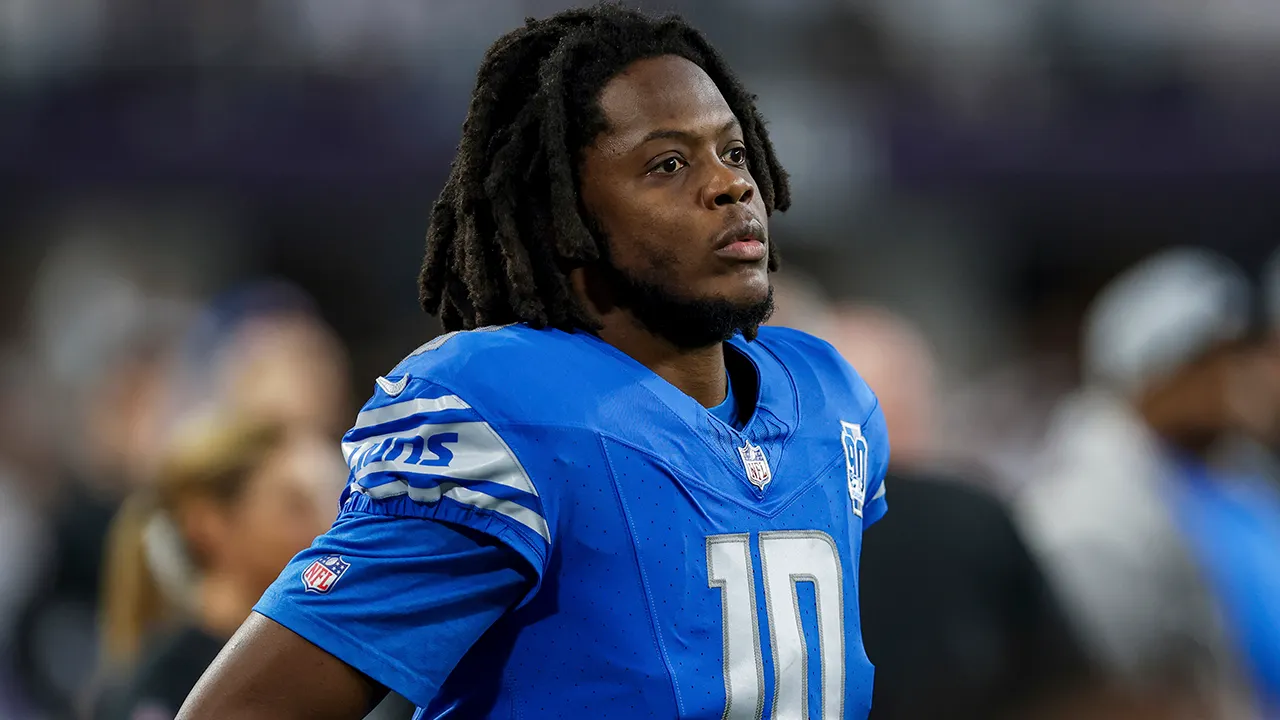
In the high-stakes, relentless world of professional American football, retirement is rarely a simple, quiet affair, yet veteran quarterback Teddy Bridgewater has always walked a path defined by quiet dignity and profound self-awareness. During the heat of the Detroit Lions’ grueling training camp, head coach Dan Campbell stood before reporters to deliver a piece of news that was as surprising as it was deeply human: Bridgewater, who had been actively competing for the crucial backup quarterback role behind starter Jared Goff, decided to step away from the game of football once and for all. This was not the first time Bridgewater had contemplated hanging up his cleats; he had initially announced his retirement following the conclusion of the 2023 NFL season, only to feel the magnetic pull of the locker room draw him back to Detroit for the 2024 campaign. However, this time, Campbell expressed a firm belief that the decision would stick, noting that the choice came from a place of deep personal reflection and honesty. What truly resonated in Campbell’s emotional address was the revelation of Bridgewater’s chief concern throughout this agonizing process: a profound, nagging worry that he was somehow letting his coaches, teammates, and the entire Lions organization down by walking away mid-camp. This selfless anxiety, Campbell remarked, epitomizes the very essence of who Bridgewater is—a man whose concern for the collective well-being of his peers always eclipsed his personal desires. By officially placing him on the reserve/retired list, the Lions did more than just adjust their active roster; they bid farewell to a locker room anchor whose influence stretched far beyond the stat sheets, proving that even in a multi-billion-dollar business, the most valuable assets are often the men who play with an abundance of heart and an unwavering commitment to those around them.
The machinery of the National Football League, however, is notoriously unsentimental, and the vacancy left by Bridgewater’s departure demanded an immediate, calculated solution to keep the Lions’ championship aspirations on track. Demonstrating the swift and transactional nature of professional sports, Detroit’s front office quickly pivoted to sign another seasoned journeyman quarterback, Josh Dobbs, securing his services with a one-year contract valued at $1.425 million, which includes a fully guaranteed $475,000. Dobbs is no stranger to the Motor City or the complex offensive schemes designed by the Lions’ coaching staff, having spent a portion of the 2022 season on Detroit’s practice squad. He also brings with him a wealth of recent, high-pressure experience, including a stint backing up the highly touted rookie Drake Maye with the New England Patriots during their AFC-winning campaign. Known affectionately across the league as “The Passtronaut” due to his degree in aerospace engineering, Dobbs represents a brilliant mental match for the intellectual demands of Campbell’s playbook. Structurally and stylistically, the acquisition of Dobbs injects an entirely different dynamic into the Lions’ quarterbacks room; whereas Jared Goff is a classic, statue-esque pocket passer who wins with surgical precision and timing, Dobbs is a certified dual-threat quarterback. He possesses the unique, improvisational ability to extend plays with his legs, escape collapsing pockets, and pick up critical first downs on the ground—a stylistic contrast that offers offensive coordinator Ben Johnson a fascinating toolbox of alternative plays. Yet, while the signing of Dobbs illustrates how quickly the league moves to patch its wounds, it also underscores the immense pressure placed on backup quarterbacks, who must be ready at a moment’s notice to step into the spotlight and shoulder the hopes of an entire city, adjusting to new terminologies under intense public scrutiny.
The desire of NFL franchises to keep Bridgewater on their rosters year after year, even as his physical starting opportunities dwindled, speaks volumes about his rare genius as a locker room mentor and teammate. Bridgewater had rejoined the Lions in March as an unrestricted free agent, fresh off a stint with the Tampa Bay Buccaneers in 2025, where he had served as the veteran sounding board for starting quarterback Baker Mayfield. Throughout his career, Bridgewater mastered an art form that many former high-draft picks struggle to accept: the role of the supportive, ego-free backup who exists to elevate the starter. In Detroit, this mentorship was highly visible in his relationship with Jared Goff during the 2023 and 2024 seasons. As Goff navigated the immense pressure of leading a revitalized, highly explosive Lions offense, Bridgewater was there in the film rooms, on the sidelines, and in the locker room, dissecting defensive coverages, offering constructive feedback, and providing a calming presence amidst the chaos. He understood that his value lay not just in the plays he made on the field, but in the confidence he instilled in others off it. It is a rare human quality to fully embrace a secondary role with absolute sincerity and dedication, transforming what could be a source of frustration into a masterclass in leadership. By pouring his energy into Goff’s development, Bridgewater played an unsung but vital role in turning the Lions into one of the most potent offenses in the NFL, demonstrating that a player’s legacy is often written in the successes of those they helped along the way, rather than just their own individual accolades. This selfless philosophy endeared him to coaches across the league, who viewed him as an essential culture-builder capable of stabilizing any franchise he touched.
To fully appreciate the emotional weight of Bridgewater’s final retirement, one must look back to the promising, glittering dawn of his career and the unimaginable adversity that reshaped it. Coming out of the University of Louisville as a highly touted prospect, Bridgewater was selected in the first round of the 2014 NFL Draft by the Minnesota Vikings, a franchise that believed they had found their quarterback of the future. He wasted little time proving them right; by his second professional season, Bridgewater was named to the Pro Bowl after guiding the Vikings to an impressive 11-5 record, throwing for 3,231 yards and 14 touchdowns, while showcasing his athleticism with 192 rushing yards and three additional scores. He was a young star on the rise, beloved by his fan base and respected by his peers for his poise, accuracy, and contagious smile. But the cruel fragility of professional sports struck with devastating force just before the start of the 2016 season. During a routine, non-contact team practice, Bridgewater suffered a horrific knee injury that sent shockwaves through the entire NFL community: a dislocated left knee accompanied by a completely torn ACL. The injury was so severe that trainers rushed to save not just his football career, but his leg itself. In an instant, the trajectory of a potential superstar was violently derailed, forcing a young man at the peak of his physical powers to confront his own athletic mortality and embark on a grueling, agonizing multi-year rehabilitation process that would forever alter his path. This catastrophic moment would have broken the spirit of lesser athletes, but for Bridgewater, it became the crucible that forged his legendary resilience, transforming him from a tragic figure into an inspiring emblem of perseverance across the sports world.
Rather than allowing the devastating injury to define the end of his football journey, Bridgewater embarked on a remarkably resilient odyssey across the league, transforming himself into one of the NFL’s most respected and reliable journeymen. His comeback began in earnest when he joined the New Orleans Saints in 2018, serving as a highly capable backup to future Hall of Famer Drew Brees and starting six critical games over two seasons, including a memorable, undefeated stretch in 2019 that proved he still possessed winning-caliber talent. This success earned him a starting opportunity with the Carolina Panthers in 2020, where he shouldered a heavy workload, starting fifteen games and throwing for 3,733 yards despite a challenging 4-11 team record. Undeterred by the team’s struggles, he moved on to the Denver Broncos the following year, posting a solid 7-7 record as a starter and once again demonstrating his trademark efficiency and steady hand under center. A brief, sentimental stint with his hometown Miami Dolphins followed in 2022, allowing him to play in front of the community that raised him, before his final backup duties in Tampa Bay and Detroit. Each stop on this nomadic journey required Bridgewater to learn new playbooks, build relationships with new teammates, and adapt to different coaching philosophies, all while managing the permanent physical toll of his reconstructed knee. Through it all, he never complained, never sought excuses, and never lost the quiet grace that defined his character, earning the unconditional respect of every locker room he entered. His ability to navigate the constant instability of the journeyman lifestyle with such poise served as a daily inspiration to younger players, proving that a career’s worth is measured not by staying in one place, but by the positive mark left on every community you visit.
If this is indeed the final chapter of Bridgewater’s journey on an NFL gridiron, he leaves behind a career that is mathematically impressive but humanly extraordinary. Over 83 career games across eleven grueling seasons, he compiled a highly respectable 33-32 record as a starting quarterback, throwing for 15,182 yards and 75 touchdowns, while etching his name into the hearts of teammates across six different franchises. Yet, as Dan Campbell so eloquently expressed in his final tribute, Bridgewater’s true legacy cannot be captured by statistics or win-loss records. Campbell’s eyes reflected the deep admiration of a coach who has seen the absolute best and worst of the NFL, describing Bridgewater as an “unbelievable human being” who approached the game with a massive heart, meticulous preparation, and an unmatched intellect. In a league that often treats players as chess pieces, Bridgewater stood out as a beacon of genuine humanity, a teammate who celebrated others’ successes more than his own and who chose to step away because he feared letting down the people he cared about. As he transitions into life after football—perhaps to fulfill his long-held dream of coaching high school football and mentoring the next generation of youth in his native South Florida—the NFL loses more than just a talented quarterback; it loses a piece of its soul. Bridgewater’s journey serves as a powerful reminder that while the physical battles on the field are temporary, the kindness, resilience, and integrity a player exhibits leave an indelible mark that will be missed long after the cheers have faded. His departure leaves a void in the Lions’ locker room that no contract can truly fill, but the lessons of his selflessness will undoubtedly linger in the minds of those fortunate enough to have shared a huddle with him.