






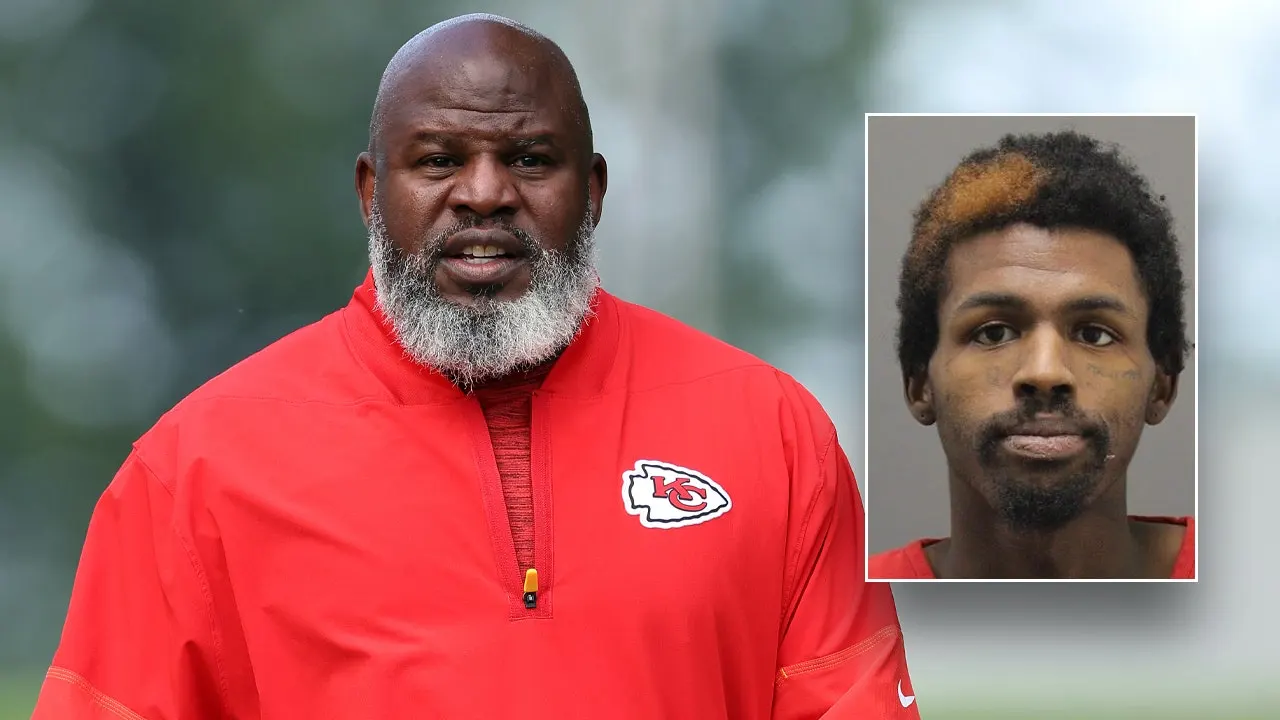
Amidst the relentless, fast-paced world of professional sports, where victories are measured in touchdowns and strategy is meticulously plotted on clipboards, a quiet and profoundly devastating human tragedy has unfolded behind the scenes of the NFL. Elijah Bieniemy, the twenty-seven-year-old son of the highly celebrated Kansas City Chiefs offensive coordinator Eric Bieniemy, recently found himself at the epicenter of a deeply distressing crisis that has temporarily halted the family’s public life. Arrested in midsummer following a shocking incident in Ashburn, Virginia, young Elijah stands accused of shooting his mother, Mia, multiple times within the walls of their family home. The sudden and violent nature of the event sent shockwaves through both the local community and the broader sports world, instantly stripping away the public glamour often associated with coaching royalty to reveal a family in the throes of an unspeakable nightmare. For the Bieniemy family, the immediate aftermath has not been about building game plans or organizing training camps, but rather about survival, healing, and confronting a sudden explosion of domestic trauma that no amount of professional success could ever prepare a parent to face.
This distressing event has brought to light a stark and painfully familiar struggle that plagues countless families across the country—the silent, often invisible battle with severe mental illness. Court documents quickly revealed that Elijah’s legal proceedings have been put on hold to make way for a comprehensive mental health competency evaluation, drawing a compassionate yet sobering picture of a young man in deep psychological distress. His public defender argued passionately in a recent court filing that Elijah appears to suffer from significant, debilitating mental health issues that render him currently incapable of assisting in his own legal defense. When a family member experiences a profound psychiatric crisis of this magnitude, the emotional toll on the parents is doubly torturous; they are forced to simultaneously navigate the profound grief of a victimized spouse and the heartbreaking reality of a child whose mind has betrayed him. The legal pause for a competency evaluation serves as a stark reminder that beneath the institutional procedures of the American justice system lies a fragile human element, where the pursuit of accountability must agonizingly coexist with the desperate need for medical rehabilitation and psychological grace.
The timing of this family emergency could not have been more jarring for Eric Bieniemy, who had just stepped back into his familiar and demanding role as the offensive coordinator for the Kansas City Chiefs. After seasoned stints with other prominent football organizations—including the Washington Commanders, the Chicago Bears, and UCLA—the fifty-six-year-old coach returned to Kansas City this offseason, where he previously orchestrated one of the most explosive offenses in NFL history and secured multiple Super Bowl championships. The transition back to the high-stakes, pressure-cooker environment of an NFL training camp is normally a period of intense focus and absolute dedication. However, the absolute reality of his wife’s critical injuries and his son’s acute mental health crisis instantly reordered his priorities, reminding the public that when real-life tragedy strikes, the grand theater of professional football must take a backseat to the fundamental duties of a husband and a father. Stepping away from the practice fields of Missouri Western State University, Bieniemy chose to remain steadfastly at his wife’s bedside, illustrating a deep, quiet devotion that transcends the pursuit of athletic glory and emphasizes the invaluable nature of family solidarity during life’s darkest hours.
In the midst of this overwhelming darkness, a glimmer of hope and profound resilience emerged through the support of the broader football community, personified by Chiefs head coach Andy Reid. Addressing the media during the demanding days of training camp, Reid offered a comforting update on Mia Bieniemy’s condition, sharing the heartening news that she had been moved out of the intensive care unit and was showing remarkable signs of improvement. “She’s doing better and great from where she was,” Reid conveyed with a mixture of relief and professional warmth, confirming that Eric remained by her side to aid in her recovery. The NFL is often viewed from the outside as a cold, highly commercialized corporate entity driven solely by entertainment and financial gain, yet moments like these reveal the deeply human, tight-knit fraternity that exists among coaches and players. The public expression of solidarity from the Chiefs organization not only provided comfort to a grieving family but also highlighted how communal empathy and shared strength can act as a vital buffer against the isolating effects of personal tragedy.
As Mia continues her lengthy physical and emotional journey toward recovery, the administrative gears of the judicial system continue to turn, presenting a long and challenging road ahead for Elijah. Currently detained without bond at the Loudon County Adult Detention Center, he faces serious criminal charges, including malicious wounding, the use of a firearm in the commission of a felony, and discharging a weapon within an occupied dwelling. The tension between the slow, deliberate pace of the legal system and the fast-approaching rhythm of the outside world is highlighted by the scheduling of his preliminary hearing on September 9. This date sits on the very eve of the 2026 NFL season opener, a time when the Chiefs will be preparing to hit the national stage against the Denver Broncos on Monday Night Football. This poignant overlap of dates serves as a striking metaphor for the dual lives public figures are often forced to lead, where the celebratory fanfare of a multi-billion-dollar entertainment spectacle runs parallel to a somber, deeply private struggle for justice, redemption, and healing inside a quiet courtroom.
Ultimately, the heartbreaking situation surrounding the Bieniemy family serves as a profound, universal reminder of the fragility of human life and the democratic nature of mental illness, which knows no boundaries of wealth, fame, or professional achievement. Behind the championship rings, the loud stadiums, and the public adoration lies a family that is hurting, healing, and trying to make sense of a devastating turn of events. In a society that is increasingly learning to recognize the vital importance of mental health advocacy, this tragedy underscores the urgent need for compassion, deep familial support, and comprehensive psychiatric care. As the public watches the sports season unfold and the legal process take its course, the enduring narrative of the Bieniemy family will not merely be about wins and losses on a football field. Instead, it will be a deeply human story about the quiet courage required to face domestic devastation, the enduring power of marital partnership, and the fragile, complicated hope that even after the most devastating storms, a family can eventually find a path toward peace and restoration.