





The Fascinating World of the Double Copy in Physics
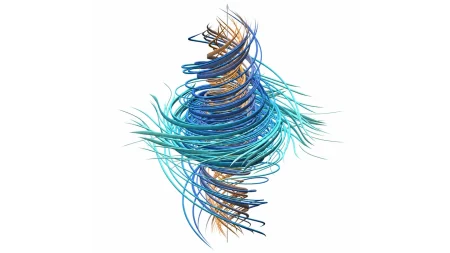
Imagine you’re a curious observer in the grand theater of the universe, where the laws of nature unfold like a never-ending symphony. At the heart of this cosmic concert are two virtuoso performers: particle physics, which dances with the tiny particles like electrons and quarks, and gravity, the gentle giant that orchestrates the motions of planets, stars, and galaxies. Traditionally, we’ve treated these as separate acts—particle physics dealing with the quantum world and gravity dominating the grand scales. But what if there’s a hidden duet, a secret harmony that connects them? Enter the “double copy,” a brilliant concept in theoretical physics that’s rewriting the score. Discovered relatively recently, this idea suggests that equations describing gravity can be derived by “squaring” those of particle physics, much like how a musical interval might be doubled to create a richer chord. It’s not just mathematical trickery; it’s a profound insight into the unity of forces. For instance, in particle physics, we have Yang-Mills theories, which govern how particles interact via forces like electromagnetism and the strong nuclear force. The double copy posits that if you take two copies of these interactions and combine them, you get gravity. This was first proposed in 2014 by eminent physicists like Stephen Weinberg and others, and it’s been a game-changer, yielding exact calculations for gravitational waves and other phenomena that were once intractable. Think of it as nature’s way of recycling the same blueprint in different guises: the elegant symmetries of quantum fields becoming the curved geometries of spacetime. As we explore this linkage, we begin to see gravity not as an alien force but as a close relative of the quantum realm. This connection has sparked excitement, offering shortcuts to solve complex problems without brute-force math, and it’s paving the way for deeper understanding in areas like superstring theory and loop quantum gravity. In essence, the double copy bridges what many thought were unbridgeable worlds, reminding us that the universe’s foundation might be simpler—and more interconnected—than we ever imagined.
Turning the spotlight to gravity, this force, famously articulated by Isaac Newton’s apple anecdote and later Einstein’s genius in general relativity, is what keeps our feet on the ground and the moon orbiting Earth. But in the quantum world, gravity becomes shy, hiding behind mathematical screens that make it hard to reconcile with the probabilistic antics of particles. The double copy shines a light here, revealing that gravitational equations aren’t orphans—they’re the squared descendants of particle physics formulas. Take, for example, how gluons in particle physics (mediators of the strong force) relate to gravitons (hypothetical particles for gravity). In the double copy framework, scattering amplitudes in gravity are built by multiplying those in Yang-Mills theory, then “squaring” them. This isn’t just poetic; it’s practical. Researchers have used it to compute black hole mergers in gravitational wave detections, matching real data from LIGO observatories. Emotionally, this linkage feels like reuniting long-lost family members: particle physics and gravity, once estranged by scale and complexity, now collaborate in a dance of equations. It humanizes our quest, too—no longer do we grapple with gravity as an abstract behemoth, but as something woven from familial threads. Imagine a sculptor chiseling marble; similarly, physicists sculpt gravity from quantum building blocks, adding color to our portraits of reality. Historical milestones, like the work of Zvi Bern and collaborators in the 2000s, laid the groundwork, showing that amplitudes (like recipes for particle interactions) follow this doubled pattern. This has implications for cosmology, where understanding gravity’s quantum side could explain the universe’s early moments, possibly even before the Big Bang. Paradoxically, while gravity bows to quantum disruptions at tiny scales (think Planck lengths about 10^-35 meters), the double copy offers a quantum-friendly approach, humanizing a force that once seemed coldly deterministic. In this way, the double copy whispers a universal truth: what appears dual might be singular in nature’s grand design.
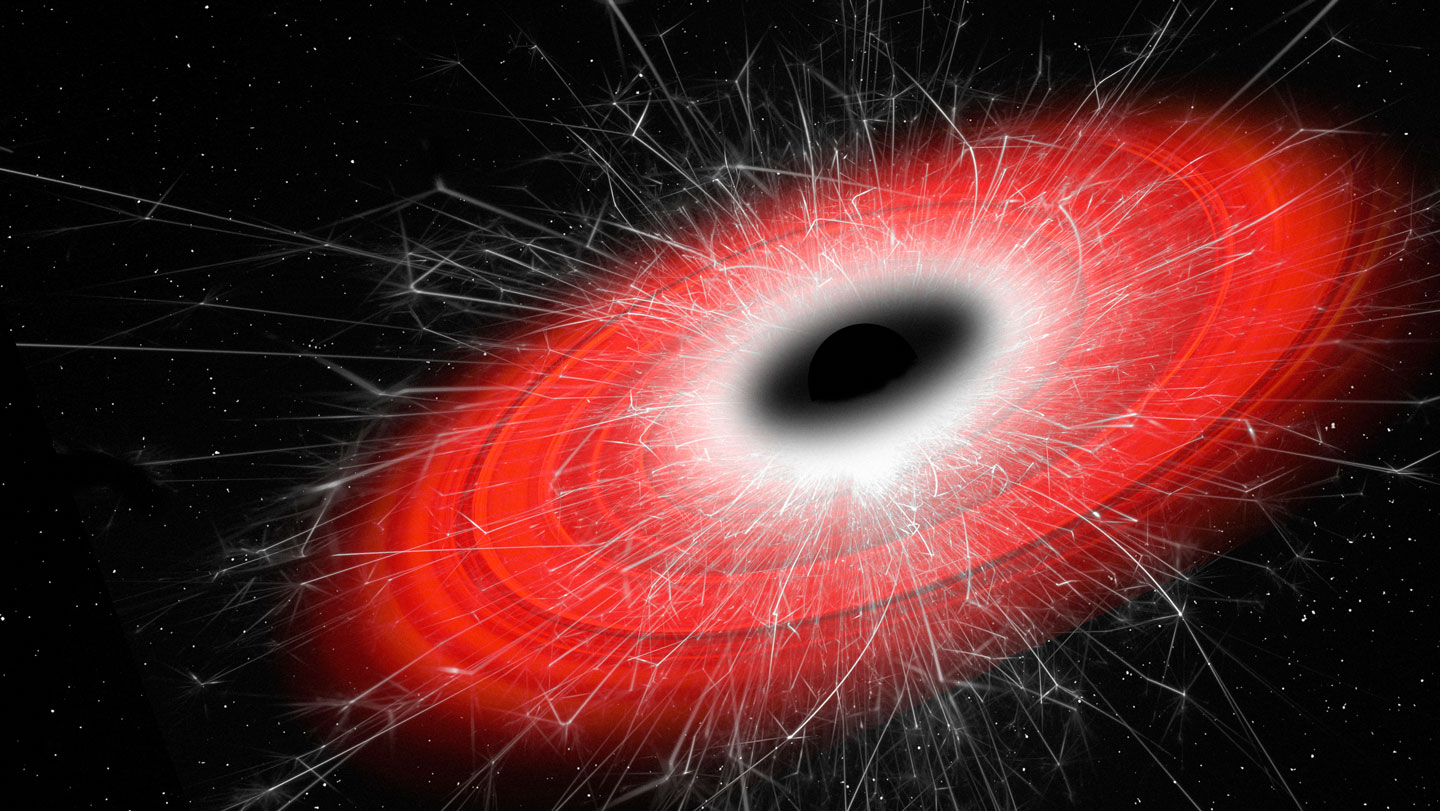
Now, let’s shift gears to one of the most mesmerizing phenomena in gravity’s repertoire: black holes, those enigmatic voids where matter collapses under its own weight, creating spacetime kinks so extreme that even light can’t escape. Pioneered by John Wheeler’s poetic term in the 20th century, black holes are cosmic puzzles, blending Einstein’s gravity with quantum curiosities. Enter Stephen Hawking, whose 1974 paper revealed that black holes aren’t entirely black—they emit radiation. Hawking radiation, named after him, is a quantum effect where particle-antiparticle pairs flicker into existence near the event horizon. Gravity’s pull might trap one while the other escapes, effectively letting the black hole “evaporate” over eons. This radiation links quantum mechanics to classical gravity, spawning riddles like the black hole information paradox: does information about swallowed matter vanish forever, defying quantum principles? Hawking’s discovery was revolutionary, a bridge over the chasm separating micro and macro worlds, and it earned him accolades, including the 2020 Nobel Prize (posthumously shared). Humanly, this phenomenon captivates us—like a black hole’s mystery, we’re drawn to the unknown, pondering if virtual particles are nature’s whispers from the abyss. Calculations show energy loss rates inversely proportional to mass squared, meaning small black holes radiate faster, potentially evaporating completely. Observations aren’t direct yet, but analogies abound: picture tectonic plates causing earthquakes; similarly, quantum fluctuations cause black hole quakes. This ties into thermodynamics, with black holes likened to giant heaters radiating energy. The emotional pull? It makes the cosmos personal—Hawking’s radiation suggests even monsters like black holes obey subtle rules, inviting us to question fate. In broader science, it fuels quests for quantum gravity, where double copy might play a hero’s role.
Black holes, however, harbor puzzles that have stumped physicists for decades. The singularity at their cores, where gravity crushes reality into infinities, challenges our math and intuition. Hawking’s evaporation raises dilemmas: does the black hole empower or erase quantum information? The firewall paradox imagines fiery horizons where gravity’s quantum face tears apart predictability. Then there’s the no-hair theorem, proposing black holes are featureless beyond mass, charge, and spin, yet quantum entropy suggests hidden details. These conundrums echo human struggles—perplexity in the face of the unknowable, much like gazing into an abyss. Physically, they demand reconciled theories: general relativity for large scales, quantum mechanics for small ones. Enter again the double copy, offering fresh perspectives. By treating gravity as particles’ squared interactions, we can compute black hole metrics from field theory analogs, sidestepping traditional approximations. For instance, applying double copy to amplitudes near horizons yields insights into radiation processes, potentially resolving paradoxes by embedding quantum corrections. Imagine a locksmith crafting keys for space’s locked doors; similarly, physicists use double copy to unlock black hole secrets. Historical breakthroughs, like those from Nima Arkani-Hamed, Juan Maldacena, and others, show classical gravity emerging from quantum rules via this linkage, hinting at string theory’s holographic screens. Emotionally, these puzzles humanize science—we tackle them with curiosity and creativity, much as explorers mapped uncharted lands. New detections from the Event Horizon Telescope in 2022, imaging M87’s black hole, fuel debates, while double copy provides calculable tools. Ultimately, these riddles remind us that physics isn’t a solved game but an evolving story, with black holes as quixotic characters urging us onward.
This leads us to the heart of the matter: how the double copy applies to Hawking radiation, forging a novel pathway into these black hole enigmas. The standard Hawking radiation calculation uses quantum field theory on curved spacetime, a feat of mind-bending algebra that mathematicians liken to ballet on a Möbius strip. But it’s approximate and struggles with strong gravity near the horizon. Enter the double copy, which reconstructs gravity from particle physics using color-kinematics duality: in field theories, interactions have color (charges) and kinematics (moments), and the duality reassigns kinematic rules to gravitational counterparts. For Hawking radiation, researchers like Yohai Uzan and collaborators have adapted this, treating radiation as emergent from squared amplitudes. Picture it as a recipe: take wave functions in flat spacetime, add double copy transformations, and bake gravity’s curved effects. This method has produced exact predictions for spectra and rates, matching Hawking’s originals while incorporating loop corrections absent in semiclassical approaches. Humanly, it’s empowering—like gaining a superpower to compute the uncomputable, reducing months of integrals to elegant formulas. Case in point: in 2020 papers, physicists used double copy to derive black hole thermodynamics directly from Yang-Mills, revealing radiation as a byproduct of particle scattering “squared.” This bypasses infinities, offering a quantum gravity view without full unification. Implications ripple outward: it hints at unifying theories like M-theory, where extra dimensions curl into particles. For black holes, it suggests Hawking radiation preserves quantum information via soft gravitons or memory effects, addressing the paradox head-on. Analogy-wise, if double copy is a bridge, it’s one built particle by particle. This application democratizes black hole physics, making it accessible to more researchers and potentially testable via future quantum gravity experiments. In sum, applying double copy to Hawking radiation isn’t mere extension—it’s revolution, presaging solved puzzles.
Finally, envision a new dawn for black hole mysteries, illuminated by this double copy lens on Hawking radiation. The puzzles—information loss, singularities, firewalls—once insurmountable, now yield to calculable scrutiny. By linking gravity’s riddles to particle physics’ symmetries, we glimpse unifying frameworks where black holes aren’t anomalies but predictable phenomena in a quantum tapestry. For instance, double copy computations might reveal “scrambling” or information retrieval mechanisms, aligning with eternal black holes in AdS/CFT correspondence (a holographic mapping linking gravity to particle theories). Human emotions soar here: triumph over intellectual Everest, much like Hawking’s own triumph over ALS, where he mused about black holes in his wheelchair. Future prospects excite—potentially explaining dark energy’s accelerated expansion or Big Bang origins through analogous dualities. Physicists anticipate experimental validations, like gravitational wave detections refining radiation models. Yet, humility prevails; these ideas challenge, refine, and expand our worldview. The double copy on Hawking radiation isn’t just a tool—it’s a beacon, guiding toward theories of everything. Black holes, those cosmic enigmas, become touchstones for human ingenuity, reminding us that in the universe’s puzzles lie the keys to its deepest secrets. As we apply this linkage, we honor pioneers like Hawking, whose visions evolve. Ultimately, it fosters wonder: if particle squarings birth gravity, what other hidden harmonics await discovery? This journey, from quantum flickers to stellar collapses, humanizes the cosmos, turning cold equations into stories of connection and discovery.