




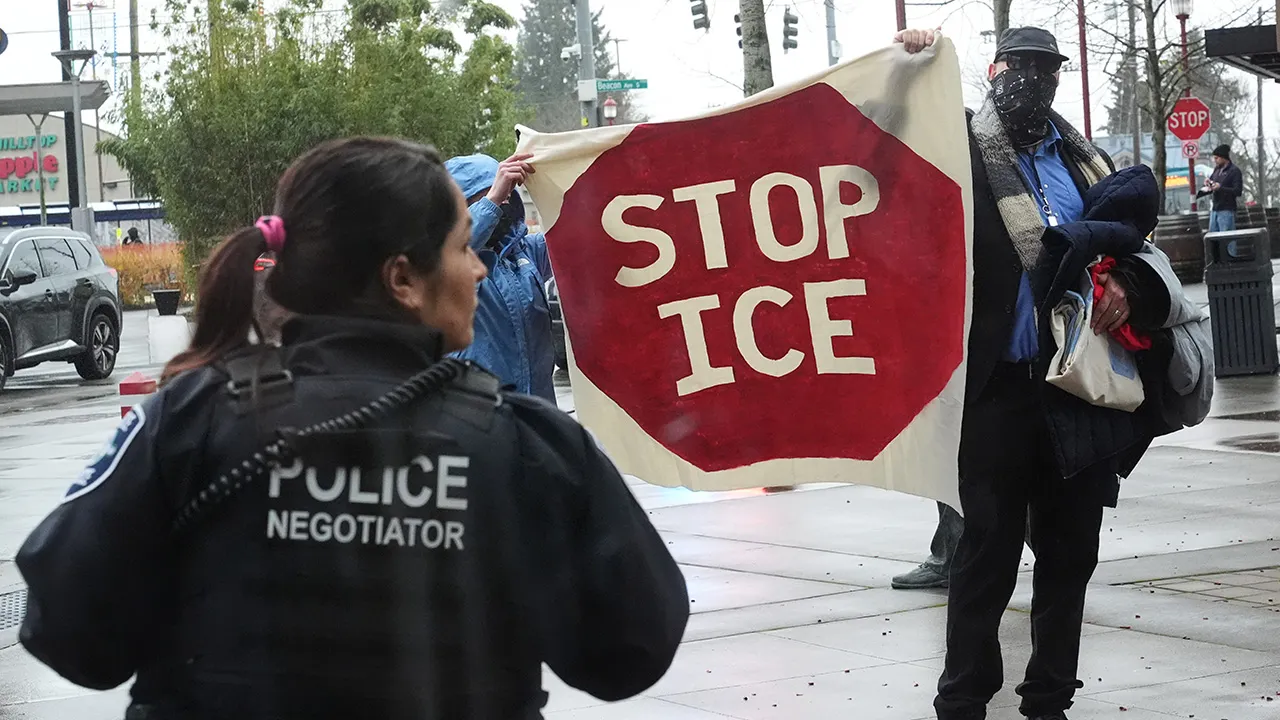
In the sweltering warmth of June 2025, the mid-sized city of Spokane, Washington, became the unlikely stage for a fierce national debate, transforming a local street into a legal and moral battleground. The spark was struck when Immigration and Customs Enforcement (ICE) agents prepared to transport two detained immigrants—asylum seekers who had fled violence and persecution in their home countries—from a local holding facility in Spokane to a large, notoriously isolated detention center in Tacoma. To their supporters, this transfer represented more than just a change of location; it was a cruel administrative maneuver designed to tear these vulnerable men away from their legal counsel, their community advocates, and their prospective sponsors, effectively burying their hopes for a fair legal process. Among those advocates was Ben Stuckart, a prominent figure in regional politics who had served as the President of the Spokane City Council and was actively serving as a formal sponsor for one of the asylum seekers. Recognizing the imminent threat of deportation, Stuckart posted an urgent call to action on social media, imploring the community to gather, mobilize, and physically block the transport bus from leaving. Uniting under a shared sense of moral outrage and raw humanitarian concern, hundreds of ordinary Spokane residents—grandparents, students, labor organizers, and neighbors—answered the call and flooded the pavement, transforming a routine federal transfer into a highly charged, emotional standoff that would ultimately shatter lives and trigger a sweeping federal prosecution.
Out of the mass of passionate demonstrators who linked arms that summer day, three local activists—Jac Archer, Justice Forral, and Bajun Mavalwalla II, later dubbed the “Spokane 3” by supporters—became the primary targets of the federal government’s legal retaliation. These were not career criminals or outside instigators, but deeply rooted community members who believed that direct, peaceful action was the only moral response to an unjust deportation apparatus. They stood at the front lines of the blockade, placing their bodies between the heavily armed federal vehicles and the vulnerable human beings locked inside. To the federal prosecutors, however, their act of principled civil disobedience was classified as a dangerous conspiracy to interfere with federal law enforcement operations. Following a tense, emotionally exhausting two-week trial in a federal courtroom, a jury convicted all three of federal conspiracy charges, a verdict that sent shockwaves through the Pacific Northwest’s activist community. This conviction carried the heavy weight of potential prison sentences and permanent felony records, stripping these young people of their normal lives and branding them as federal criminals for the simple act of standing up for their neighbors. The outcome illustrated the terrifyingly high stakes of modern human rights advocacy, revealing a federal justice system willing to wield its heaviest tools to suppress localized dissent.
The road to the courthouse was paved with difficult compromises and the heavy psychological toll of fighting a systemic legal war against the United States government. In the days following the protest, federal agents launched a sweeping investigation, arresting a total of ten individuals, including Ben Stuckart, and charging them all with conspiracy—a charge notoriously easy to prosecute and carrying devastating penalties. Faced with the overwhelming resources of the Department of Justice, the defendants were thrust into a crucible of fear and uncertainty, forced to weigh their commitment to the cause against their own survival. Under intense pressure, the fragile solidarity of the original group began to fracture: Stuckart and five other key organizers ultimately accepted plea agreements, pleading guilty to lesser charges in exchange for reduced sentences and avoiding the risk of decades in prison. This left the “Spokane 3” to carry the banner alone, refusing to yield to the system and choosing instead to present their case to a jury of their peers. The stark division between those who chose the pragmatism of a plea deal and those who risked everything at trial highlighted the coercive power of the modern judicial system, where the constitutional right to a trial is often discouraged by the threat of a punishing “trial penalty.”
The reading of the guilty verdict did not bring closure to Spokane; instead, it opened fresh wounds and exposed deep political fractures within the community’s progressive coalition. Immediately following the trial, Washington State Representative Natasha Hill, a Democrat from Spokane, stood outside the federal courthouse and delivered a scathing, highly publicized condemnation of Ben Stuckart. Hill accused him of political cowardice, arguing that he had instigated the high-risk protest using his public platform but had ultimately abandoned the younger, less-privileged activists to face the consequences alone while he remained absent from the courtroom. Stuckart, deeply stung by the criticism and the verdict, took to social media to explain the agonizing constraints of his situation, revealing that his federal parole conditions legally prohibited him from attending the trial of his co-conspirators. He expressed profound grief for Jac, Bajun, and Justice, stating that he supported both those who took deals and those who fought in court, while emphasizing that he was quietly doing his best to honor his original promise by caring for the asylum seekers whose detention started it all. This public exchange laid bare the painful reality of grassroots organizing, where the severe consequences of state crackdowns can turn allies against each other, leaving communities to navigate the complicated terrain of accountability, trauma, and leadership in the wake of a devastating defeat.
Central to the emotional landscape of this legal battle was Bajun Mavalwalla Sr., a congressional candidate and the father of one of the convicted young men, who spoke out with a mixture of parental anguish and revolutionary fervor. Mavalwalla Sr. did not view the prosecution as a neutral application of the law, but rather as a politically motivated show trial designed by federal authorities to terrify ordinary citizens into silence. He argued that the Department of Justice was trying to make a public example of his son and the other defendants, creating a chilling precedent that would discourage future generations from exercising their constitutional rights to speech, assembly, and dissent. From his perspective, the entire trial was marred by systemic bias, drawing a sharp contrast between this trial and other civil disobedience cases across the country where charges had been routinely dismissed or thrown out by impartial juries. His words resonated deeply with families nationwide who have watched their children face disproportionate prosecution for participating in social justice movements, framing the struggle of the Spokane 3 as a fundamental defense of American democracy itself.
Ultimately, the conviction of the Spokane 3 serves as a sobering testament to the immense, often tragic cost of standing on the side of human dignity against the machinery of the state. The story of these three young activists, their community, and the asylum seekers they fought to protect highlights a profound and ongoing crisis at the intersection of immigration, law, and morality. While the federal government may celebrate the verdict as a victory for the rule of law and a deterrent to future blockades, the community of Spokane is left to heal from the trauma of criminalization and division. As Jac, Justice, and Bajun II await their sentencing, and as the asylum seekers remain suspended in the cold limbo of the detention system, the wider public is left to ponder a deeply unsettling question: when the law itself conflicts with basic human compassion, what is the duty of a citizen? The legacy of the Spokane 3 will not be defined by the felony convictions stamped upon their records by a federal judge, but by the courage they showed in refusing to look away when human lives were on the line, leaving an enduring blueprint for resistance that will echo far beyond the borders of Washington state.