






For centuries, a simple sheet of paper has served as one of the most remarkable mediums for human imagination, waiting quietly on desks to be transformed by a stroke of a pen or the delicate crease of a finger. To most of us, paper represents a flat, two-dimensional plane, a humble material defined by its rigidity and its quiet resistance to stretching or tearing. Yet, in the hands of a curious mathematician, this ordinary object becomes a playground for exploring some of the most profound and mind-bending secrets of the universe. Recently, this playful curiosity culminated in an astonishing breakthrough: a mathematician has discovered the absolute most efficient way to fold a single, continuous sheet of paper into a perfect, three-dimensional, doughnutlike shape—known in scientific terms as a torus. This achievement is not merely a triumph of whimsical origami, but the resolution of a deeply complex geometrical puzzle that has baffled some of the greatest minds in history. At its heart, the challenge lies in the stubborn physical properties of paper itself; unlike clay or rubber, which can be effortlessly molded, stretched, and pulled into curved shapes, paper is inextensible, meaning its surface area cannot expand or shrink. Transforming a flat sheet into a three-dimensional object with double curvature—where the surface curves both inward and outward simultaneously—is a task that seems to defy the very laws of geometry. The mathematician’s journey to solve this riddle began not in a sterile, high-tech laboratory, but amidst the familiar, human clutter of a workspace filled with discarded prototypes, coffee cups, scissors, and a palpable sense of determined wonder. Here, paper was not just a recording surface, but an active participant in an intellectual dance, a physical substance that demanded respect for its boundaries while inviting the mind to transcend them. It is a story about the beauty of constraints, demonstrating how a simple, everyday medium can be coaxed into revealing exquisite geometric secrets if we only have the patience, creativity, and mathematical insight to listen.
To truly appreciate the magnitude of this modern breakthrough, one must step back into the mid-twentieth century, when the legendary mathematician John Nash, famous for his pioneering work in game theory, introduced a shocking concept known as the isometric embedding theorem. Nash suggested that mathematically, it was entirely possible to bend and fold a flat surface into any complex shape, including a torus, without stretching the material, provided the surface was allowed to be corrugated with an infinite series of microscopic, fractal-like ripples. A few years later, Nicolaas Kuiper expanded on this theory, leaving the mathematical community with a tantalizing, albeit monstrous, paradox: a “flat torus” could theoretically exist in three dimensions, but to actually construct or visualize it would require an infinite cascade of smaller and smaller folds, resulting in a shape so unimaginably complex that it seemed to mock the physical limitations of real-world materials. For decades, this remained a purely abstract, mathematical phantom, locked away in the sterile halls of academia as an unsolvable physical challenge. Mathematicians and artists alike stared at blank pieces of paper, trying to bridge the immense chasm between these flawless, abstract equations and the obstinate nature of physical paper, which creases, tears, and stubbornly refuses to bend to our will when pushed too far. The central conflict was the concept of Gaussian curvature; a flat sheet of paper has a curvature of zero, whereas a doughnut has positive curvature on its outer rim and negative curvature on its inner ring. Unifying these opposing geometric forces without introducing chaos or destroying the structural integrity of the paper became an obsession, a siren song for researchers who believed that nature must surely harbor a more elegant, simpler solution than an infinite labyrinth of microscopic fractal folds. For generations, the problem defied physical realization, standing as a monument to the frustrating divide between pure theory and tangible reality, waiting for someone to find a bridge.
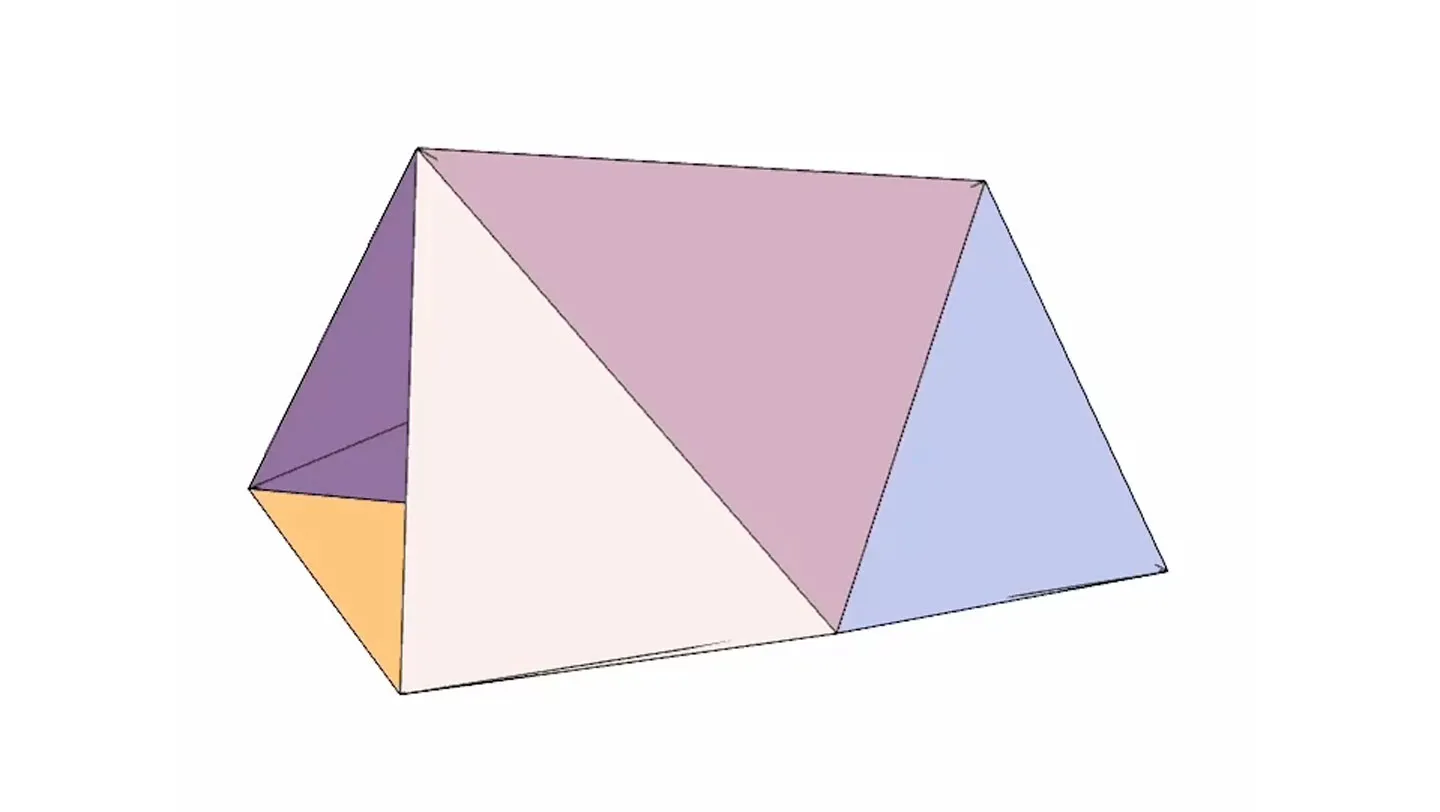
The breakthrough came when our modern protagonist decided to abandon the pursuit of infinite fractal complexity and instead search for the ultimate expression of simplicity, efficiency, and geometric elegance. Recognizing that previous computer-generated models of the flat torus were far too complex to ever be folded by human hands, the researcher embarked on a quest to find the absolute minimum number of creases required to coax a flat sheet of paper into a self-supporting, three-dimensional doughnut. This was not a cold, purely algorithmic endeavor, but a deeply human journey characterized by countless hours of physical trial and error, where the digital simulations on a computer screen were constantly tested, refined, and validated by the tactile feedback of folding real paper at a messy desk. The researcher spent countless sleepless nights surrounded by mountains of crumpled, failed prototypes, experiencing the deep frustration of paper tearing at the final fold, only to wake up the next morning with a slightly modified equation and a renewed sense of hope. The breakthrough occurred during a moment of profound creative synthesis, when the mathematician realized that by applying the principles of rigid origami—where the paper behaves as a collection of flat, unyielding facets connected by flexible hinges—they could bypass the need for infinite corrugations entirely. By utilizing a highly optimized, beautifully repeating geometric pattern, they discovered that a simple, flat rectangle of paper could be systematically folded in a way that allows it to gently curve around itself, eventually meeting at its ends to form a seamless, hollow ring. This moment of discovery, where chaotic and intimidating mathematical abstractions suddenly collapsed into a clean, tangible, and remarkably simple physical model, represents the very essence of human ingenuity, transforming a legendary, ninety-year-old mathematical mystery into a beautiful piece of art that anyone can hold in the palm of their hand.
The physical mechanics of this newly discovered folding pattern are a masterclass in geometric harmony, showcasing how paper can be guided to mimic complex curvatures through nothing more than the strategic distribution of tension and compression. When you look closely at this folded paper torus, you do not see a chaotic nest of random wrinkles, but a breathtakingly organized tessellation of pristine, triangular and diamond-shaped facets that fit together like the scales of a mythical creature. This specific arrangement of mountain and valley creases is engineered to solve the fundamental problem of the doughnut’s dual curvature: on the outer equator of the torus, where the shape needs to expand, the paper’s facets lay relatively flat, maximizing their surface area; conversely, as the pattern transitions toward the inner ring, where the shape must compress, the creases draw the facets closer together, collapsing the material inward in a highly controlled, elegant bunching effect. It is a silent, beautifully choreographed dance between physical forces, where every single fold plays a vital role in distributing structural stress evenly across the entire sheet, ensuring that the paper remains perfectly un-stretched and unstressed. To hold this completed paper doughnut is to experience a delightful sensory contradiction; it is incredibly light and delicate, yet possesses a surprising, resilient rigidity, demonstrating how the simple act of folding can fundamentally alter the structural properties of a material, turning a floppy sheet into a strong, self-supporting three-dimensional marvel. The absolute efficiency of this design means that not a single fold is wasted, and the entire structure locks into place with a satisfying, organic finality. This poetic transformation beautifully illustrates how mathematical rules, when applied with artistic intuition, can elevate a humble material beyond its natural limitations, turning a simple flat plane into a miniature monument of perfect architectural balance.
While the creation of a paper doughnut might initially seem like a delightful but ultimately impractical parlor trick, the broader scientific and engineering implications of this breakthrough are truly revolutionary, holding the potential to shape the future of human technology here on Earth and far beyond our atmosphere. In the high-stakes realm of aerospace engineering, one of the greatest challenges is finding efficient ways to pack massive structures—such as solar sails, communication antennas, habitat modules, and telescopes—into the highly restricted, cramped cargo bays of rockets, only to have them deploy flawlessly once they reach the vacuum of space. By utilizing this mathematically optimized, highly efficient folding pattern, engineers can design ultra-compact, flat-packed packages that can be launched into orbit and then unfolded autonomously into rigid, hollow, toroidal structures with minimal dependency on heavy, failure-prone mechanical hinges. Back on Earth, this research is poised to make a profound impact on the field of medicine, particularly in the design of next-generation cardiovascular stents and minimally invasive surgical tools that must travel compactly through the human body’s narrow pathways before expanding safely and precisely into supportive, tubular shapes. Additionally, in the rapidly growing field of soft robotics and advanced materials science, these folding principles allow scientists to engineer flexible, adaptive metamaterials that can dramatically change their physical properties, stiffness, and shape in response to external stimuli, proving once again that the playful, curiosity-driven exploration of pure mathematics is often the most powerful engine for solving humanity’s most complex, practical engineering challenges. It reveals that the simple act of play, when guided by rigorous geometry, can unlock solutions to some of our most formidable technical constraints, transforming the way we build, heal, and explore.
Ultimately, this exquisite mathematical breakthrough serves as a profound and heartwarming testament to the enduring power of human curiosity and our deep, intuitive connection to the physical world around us. Paper, an ancient medium invented thousands of years ago to preserve our words, histories, and dreams, continues to prove itself as an infinitely rich, cutting-edge laboratory for modern science, reminding us that the most profound universal truths are often waiting to be discovered in the most familiar and accessible places. This journey from an abstract, intimidating mathematical theorem to a simple, elegant paper model reminds us that science is not merely a collection of cold, mechanical equations, but a deeply creative, artistic pursuit driven by a very human desire to find harmony, beauty, and order amidst complexity. It challenges us to look at the world around us with a renewed sense of wonder, to realize that the boundaries of what we deem “impossible” are often just waiting for a fresh perspective, a playful mind, and a willing pair of hands to gently unfold them. As we gaze upon this delicate, beautifully faceted paper torus resting quietly on a table, we are looking at a physical manifestation of human thought made tangible, an inspiring symbol of our unique ability to bridge the gap between the infinite realm of mathematics and the warm, tactile reality of our everyday lives. It is a gentle, poetic reminder that with enough imagination, patience, and a willingness to play, even the flattest, most rigid assumptions of our world can be folded into beautiful, unexpectedly three-dimensional new dimensions, revealing that the universe itself might just be waiting to be unfolded.