





For anyone who has ever shared their life with a dog, there is a familiar, deeply comforting phenomenon that occurs during moments of personal distress. You might be sitting on the kitchen floor after a grueling day, head buried in your hands, or perhaps pacing the living room in a state of quiet anxiety, when suddenly you feel the warm press of a wet nose against your palm or see a pair of soulful eyes gazing up at you with unmistakable intensity. For generations, dog lovers have insisted that their canine companions possess an uncanny, almost psychic ability to read their minds and feel their pain. Skeptics, however, have historically dismissed these observations as mere anthropomorphism—the human tendency to project our own complex emotions and cognitive depth onto the animals around us. But a groundbreaking new brain-imaging study is turning the tide of this ancient debate, providing hard, neuroscientific evidence that our dogs are not just guessing how we feel based on a tone of voice or a sudden movement. Instead, this research suggests that dogs can actually distinguish between different subtle, negative human emotions, such as anger and fear, simply by decoding the complex landscapes of our facial expressions. By using state-of-the-art functional magnetic resonance imaging (fMRI) technology, scientists have peeked inside the canine mind to reveal a highly sophisticated emotional processing center that is intimately tuned to the human face. This discovery bridges a vast evolutionary gap, validating what millions of pet owners have intuitively known for centuries: that the bond between humans and dogs is rooted in a profound, shared language of silent understanding.
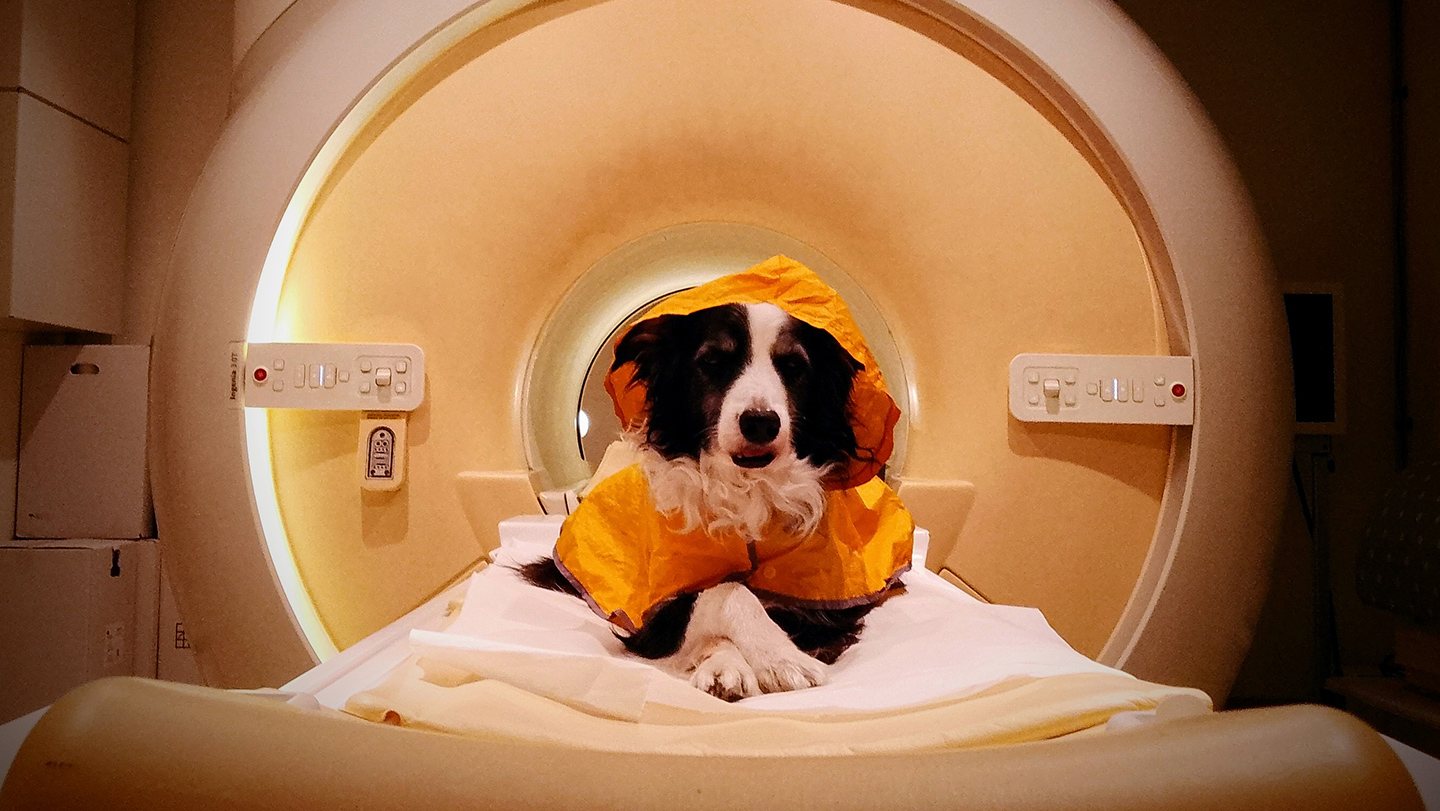
To truly appreciate the magnitude of this study, one must first understand the incredible feat of scientific patience and animal cooperation required to gather this data. Unlike human subjects, who can be easily instructed to lie perfectly still inside the loud, claustrophobic tube of an fMRI scanner, dogs cannot be easily told to remain motionless while their brains are being imaged. Researchers spent months working with dedicated dog owners, using positive reinforcement techniques to train a group of domestic dogs to willingly walk into the scanner, wear custom-designed, noise-canceling headphones, and rest their chins on a specialized cradle without moving a muscle for minutes at a time. This cooperative approach ensured that the dogs were entirely stress-free and awake, participating as active partners in the research. Once the dogs were comfortable and still, scientists projected a series of high-definition photographs onto a screen directly in front of them, showing human faces expressing various negative emotions, such as anger, fear, and sadness, as well as neutral expressions for comparison. The challenge was to see if the dogs’ brains would react differently to these distinct emotional states, or if their neurological response would simply be a generalized reaction to a “bad vibe.” By measuring the microscopic changes in blood flow to different regions of the canine brain—a metric known as the blood-oxygen-level-dependent (BOLD) signal—the researchers were able to map out exactly how a dog’s mind dissects the anatomy of a human scowl, a wide-eyed stare of terror, or a downward cast of sorrow.
The results of the fMRI scans were nothing short of extraordinary, revealing that a dog’s brain is a highly organized, nuanced decoder of human misery. When the dogs viewed different negative emotions, distinct patterns of neural activity lit up across their brains, particularly in the temporal cortex—an area heavily involved in processing visual information and recognizing faces—and the amygdala, which plays a pivotal role in emotional regulation and threat detection. Crucially, the scans showed that the canine brain does not process all negative human emotions in the same way. An angry human face triggered a completely different neurological signature than a fearful face, indicating that dogs do not merely lump all bad moods into a single, generic category of “unpleasantness.” Instead, their brains are capable of categorization, separating the active, externalized threat of human anger from the vulnerable, internalized distress of human fear. This level of visual discrimination is incredibly sophisticated, especially considering that dogs are processing the faces of a completely different species. The study suggests that when a dog looks at us, they are not just seeing a collection of facial features; they are actively reading the subtle shifts in our brow, the tension in our jaw, and the dilation of our eyes, translating these visual cues into a detailed map of our internal emotional landscape.
This remarkable cognitive ability did not develop overnight; rather, it is the beautiful byproduct of a shared evolutionary journey that began tens of thousands of years ago. As the ancestors of modern dogs first crept close to human campfires, a profound evolutionary pressure began to reshape their minds. To survive alongside humans, dogs had to become master decoders of our behavior and social structures. Those dogs that could accurately read human body language and facial expressions were far more likely to receive food, shelter, and protection, while avoiding the wrath of an angry hominid. Over millennia of intense domestication, natural selection favored dogs with a unique genetic predisposition for human-centric social intelligence, transforming them from wild competitors into intimate household companions. This co-evolutionary dance even altered the physical anatomy of the canine face; previous research has shown that dogs developed a specific facial muscle, the levator anguli oculi medialis, which allows them to raise their inner eyebrows to mimic human-like sadness and elicit nurturing responses from us. The current fMRI study takes our understanding of this evolutionary partnership a step further, demonstrating that the adaptation was not just physical, but deeply neurological. We did not just breed dogs to be obedient; we bred them to be emotional mirrors, sculpting their very brains to be uniquely sensitive to our vulnerabilities, joys, and fears.
By proving that dogs have dedicated neural pathways for deciphering the nuances of human emotion, this research forces us to confront a profound philosophical shift in how we view animal consciousness and empathy. For decades, traditional science has maintained a rigid boundary between human emotional complexity and the supposedly simplistic instinctual behaviors of animals. Dogs were often viewed as clever opportunists, reacting purely to the promise of treats or physical comfort. However, these fMRI scans challenge that cold perspective, suggesting that our dogs possess a form of cross-species empathy that is rare in the animal kingdom. When a dog recognizes that we are afraid rather than angry, they are engaging in a sophisticated form of perspective-taking, adjusting their own behavior to match our emotional needs. They understand that an angry human may require space or submission, while a fearful or sad human might need comfort and closeness. This level of emotional intelligence suggests that the bond we share with our dogs is not a projection of our own desires, but a genuine, two-way street of emotional communication. It reveals that dogs are quiet observers of the human condition, spending their lives studying our faces with a level of dedication and empathy that we often struggle to offer one another.
Looking to the future, the implications of this study stretch far beyond the walls of the laboratory, offering valuable insights that can transform how we live with, train, and care for our four-legged companions. For the field of animal therapy, these findings provide a scientific foundation for why dogs are so uniquely effective at comforting individuals suffering from PTSD, depression, or severe anxiety; their brains are literally wired to detect the silent signals of our distress, allowing them to provide targeted comfort when we need it most. Furthermore, this research serves as a gentle reminder to dog owners about the profound impact of our own emotional states on our pets. Because dogs are constantly reading our faces and absorbing our stress, our anger, and our fear, we have a responsibility to be mindful of the emotional environment we create in our homes. If our dogs are paying such close, loving attention to our faces, we owe it to them to look back with equal mindfulness, learning to read their subtle signals of stress, joy, and exhaustion. Ultimately, this beautiful intersection of modern neuroscience and ancient companionship validates the quiet magic of the human-canine bond. It reassures us that in a vast, complex, and often isolating world, we have a companion by our side who truly sees us, understands us, and shares in the silent language of our hearts.