






Imagine standing on the wind-swept citadel of Mycenae or within the labyrinthine corridors of the palace at Knossos over three thousand years ago, watching a Bronze Age ruler raise a hand to command their subjects. As the Mediterranean sun caught their fingers, it would not just glint off the familiar warmth of polished gold or the cool sheen of silver, but also off a dark, mysterious metal that had literally fallen from the heavens. This is the captivating reality revealed by a pioneering study published in the Journal of Archaeological Science, which suggests that ancient Greek nobles adorned themselves with what can only be described as prehistoric “space bling.” By analyzing a collection of ancient artifacts, researchers discovered that several elite signet rings from southern Greece and Crete were forged not from iron mined deep within the earth, but from metallic meteorites that had traveled through the cold vacuum of space before crashing onto our planet. These cosmic treasures, unearthed from the ruins of wealthy tombs, grand estates, and sacred temples, represent an extraordinary convergence of early human metallurgy, high-status fashion, and the timeless human awe of the night sky. For the rulers of the Mycenaean and Minoan civilizations, wearing these celestial rings was the ultimate expression of prestige, allowing them to symbolically bind the stars to their hands and project an aura of divine authority that elevated them far above ordinary mortals.
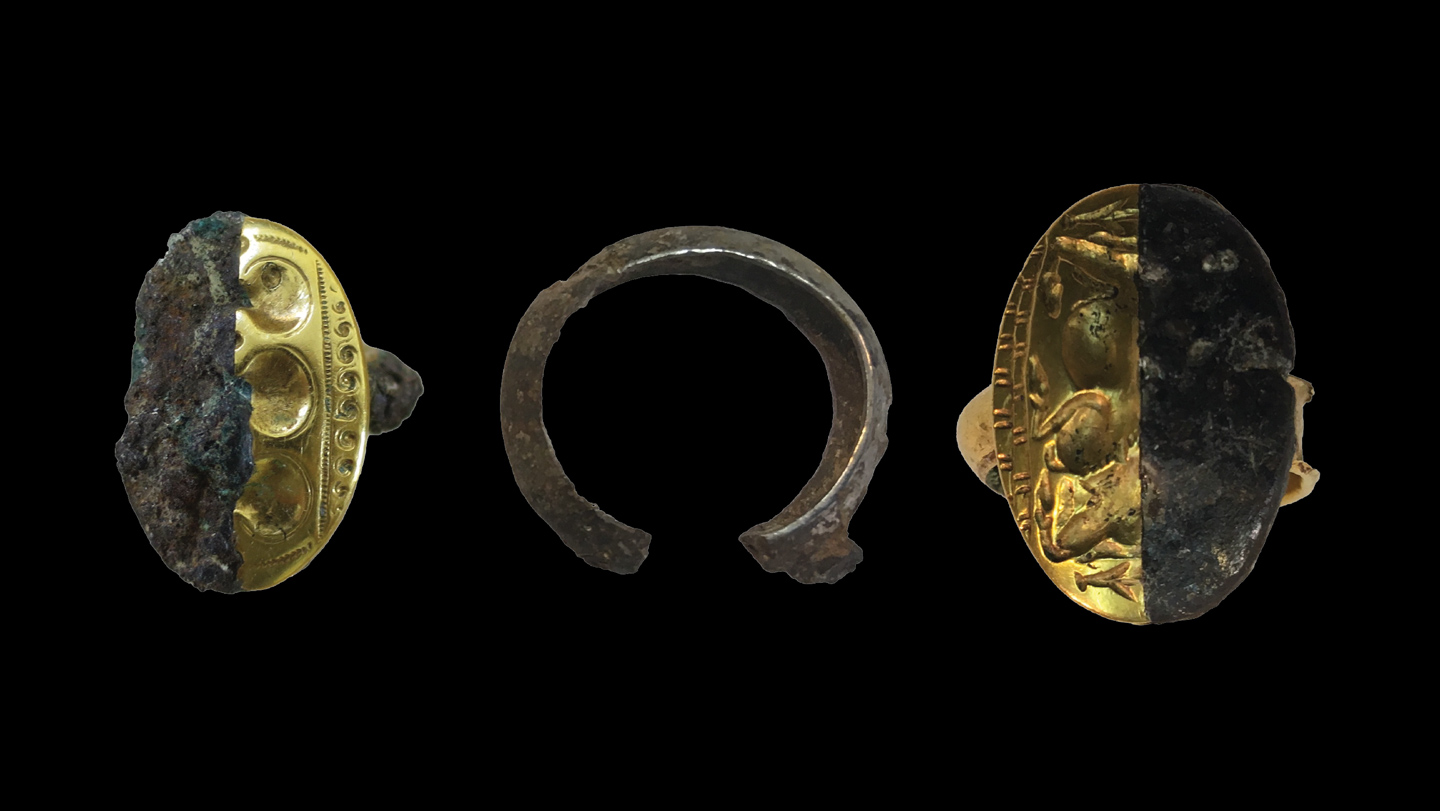
To uncover the celestial secrets of these ancient artifacts, prehistoric archaeologist Eleni Mantzourani from the University of Athens teamed up with Matthieu Gounelle, an astrophysicist and chemist at the French Natural History Museum in Paris. Together, they conducted a comprehensive chemical analysis of 91 ancient iron weapons and decorative items spanning a period of 3,000 to 4,000 years ago, utilizing a non-destructive analytical technique known as X-ray fluorescence. This advanced technology allowed the researchers to probe the elemental composition of the metal without damaging the priceless archaeological treasures. The key to identifying the cosmic origin of the iron lay in the presence of nickel; while terrestrial iron forged with the rudimentary, low-temperature smelting technologies of the Bronze Age contains virtually no nickel, iron from meteorites is a natural cosmic alloy characterized by exceptionally high nickel concentrations, sometimes making up to half of the metal’s total mass. When the scan results came in, the researchers discovered a striking division among the artifacts: while the vast majority of the weapons and tools showed no traces of nickel—proving they were made from early terrestrial iron—a select group of 13 objects stood out with unmistakable nickel signatures. Remarkably, every single one of these nickel-rich pieces was either a complete ring or a fragment of a ring, with ten of them highly likely to be of meteoric origin, pointing to a highly specific and deliberate choice to reserve this rare space metal exclusively for personal jewelry.
To fully appreciate the immense value of these meteoritic rings, one must understand the metallurgical landscape of the Bronze Age, an era when iron was not the common, utilitarian metal we know today, but rather an incredibly rare and precious luxury. Long before the dawn of the actual Iron Age, the technology required to extract iron from terrestrial ore was in its absolute infancy, as ancient kilns could rarely reach the extreme temperatures necessary to melt and refine the metal. Consequently, the only reliable source of high-quality, workable iron was the occasional meteorite that survived the fiery plunge through Earth’s atmosphere. To the peoples of the ancient Aegean, who lacked our modern understanding of astronomy, a falling meteorite was not merely a random rock, but a literal physical manifestation of the divine, a spectacular gift cast down by the gods themselves. Blacksmiths of the era, operating with immense skill and reverence, would work this “metal of heaven,” despite its stubborn hardness, shaping it into delicate objects of unparalleled value. In this context, iron was treated as an ultra-luxury material that was significantly more valuable than gold or silver, reserved strictly for the highest echelons of society, such as royal dynasties, high-ranking priests, and legendary warriors who wished to carry a tangible piece of the cosmos with them.
The discovery of these celestial rings also opens a fascinating window into the complex international trade networks that connected the ancient Mediterranean world. Because Greece and the island of Crete are characterized by rugged, mountainous terrains and extensive coastlines, finding fallen meteorites in this region is incredibly rare, as the surrounding seas would have swallowed the vast majority of space rocks. Faced with this local scarcity, how did the Mycenaean and Minoan elites acquire such highly prized materials? Mantzourani and Gounelle propose that the precious meteoric iron was not sourced locally but was instead imported through sophisticated diplomatic and trade channels, most likely from ancient Egypt. In the vast, arid deserts of Egypt, meteorites were much easier to locate and preserve, and the Egyptians had a long-established tradition of working with what they poetically termed “iron from the sky,” famously exemplified by the exquisite meteoric iron dagger buried alongside the young pharaoh Tutankhamun. The presence of these space-metal rings in Greece strongly suggests that Aegean elites were actively participating in a high-end luxury trade system, exchanging sought-after Aegean commodities like olive oil, perfumed ointments, and fine pottery for priceless fragments of celestial iron sourced from Egyptian markets, showcasing a vibrant cultural and economic exchange that spanned across the ancient seas.
Beyond their economic value, the design and function of these rings suggest they carried profound symbolic and administrative weight in Bronze Age society. Many of the identified meteoric iron bands were attached to large, flat, engraved metal bezels, identifying them as signet rings—vital instruments of statecraft used by rulers and officials to press unique seals into soft clay or wax, thereby authorizing laws, securing storehouses, and validating official decrees. The artisans who crafted these rings did not hide the iron’s dark, unusual appearance; instead, they deliberately layered the space metal with bands of gold and silver, creating a striking visual contrast that would have immediately captured the attention of anyone in the wearer’s presence. In the symbolic language of the ancient world, gold represented the eternal radiance of the sun, silver mirrored the cool, shifting light of the moon, and the dark, nickel-rich meteoric iron at the core embodied the mysterious, star-studded depths of the night sky itself. By using a seal forged from the very fabric of the heavens to stamp their official mark, a Bronze Age ruler was not merely performing a bureaucratic task, but executing a powerful piece of political theater, reinforcing the belief that their earthly authority was divinely sanctioned by the cosmic order.
Like many great fashions of the ancient world, however, this noble obsession with celestial jewelry did not endure forever, as the archaeological record reveals a sudden and dramatic halt to the production of meteoric iron rings around the 12th century B.C. This abrupt disappearance coincides perfectly with the Late Bronze Age collapse, a dark and turbulent epoch of systemic societal failure that swept across the eastern Mediterranean, leading to the violent destruction of the Mycenaean palaces, the disruption of global trade routes, and the ultimate disintegration of these highly organized economies. With the fall of the palace administrations, the elite networks that secured imported meteoric iron from Egypt vanished, and the specialized metallurgical knowledge required to work the stubborn cosmic metal was lost to time. In the centuries of hardship that followed, the secrets of smelting common terrestrial iron ore gradually spread throughout the region, democratizing the metal and transitioning humanity into the Iron Age, where iron was transformed from a divine luxury into a mundane material used for common plowshares, nails, and swords. Ultimately, these surviving space-metal rings offer us a poignant and deeply humanizing glimpse into a forgotten era of wonder, reminding us of a time when the jewelry of kings was forged from the debris of the stars, and the mysteries of the universe were worn close to the skin.