






On July 16, 2024, the daytime sky over the New York metropolitan area was suddenly pierced by a brilliant streak of light and a startling sonic boom. A massive space rock, weighing roughly 53 kilograms, hurtled into Earth’s atmosphere at a blazing 14 kilometers per second. It detonated with an explosive energy equivalent to 1.3 metric tons of TNT, disintegrating into smaller pieces. Shortly after this spectacular mid-air explosion, a 1.35-kilogram fragment of the cosmic visitor crashed directly through the roof of a home in Hillsborough, New Jersey. The impact instantly filled a bedroom with drywall dust and a sharp, metallic smell of sulfur, offering the homeowner an unexpected, sensory connection to the cosmos.
Planetary astronomer Peter Jenniskens of the SETI Institute, who was part of the scientific team that rushed to analyze the debris, remarked that the homeowner caught a brief, firsthand whiff of what the infant Earth itself would have smelled like billions of years ago. Fortuitously, no one was injured in the incident. Upon discovering the strange cosmic rubble, the homeowner acted with remarkable, intuitive precision. They carefully gathered the dark fragments using gloved hands and aluminum foil before placing them immediately into clean glass jars. This quick thinking effectively sealed the samples away from terrestrial oils, moisture, and microbes, preserving a pristine record of the deep solar system.
This rapid, clean recovery represents an extraordinary stroke of luck for the scientific community. The vast majority of meteorites discovered on our planet have lingered in the dirt, grass, or snow for weeks, years, or even centuries before being noticed. During that time on the ground, earthly moisture and local biological contaminants seep deep into the porous stone, making it incredibly difficult for geochemists to distinguish the rock’s original, space-born signature from ordinary terrestrial grime. Even meteorites recovered days after a fall are considered scientific goldmines, but this pristine New Jersey specimen, shielded from the elements almost instantly, represents the absolute gold standard for planetary research.
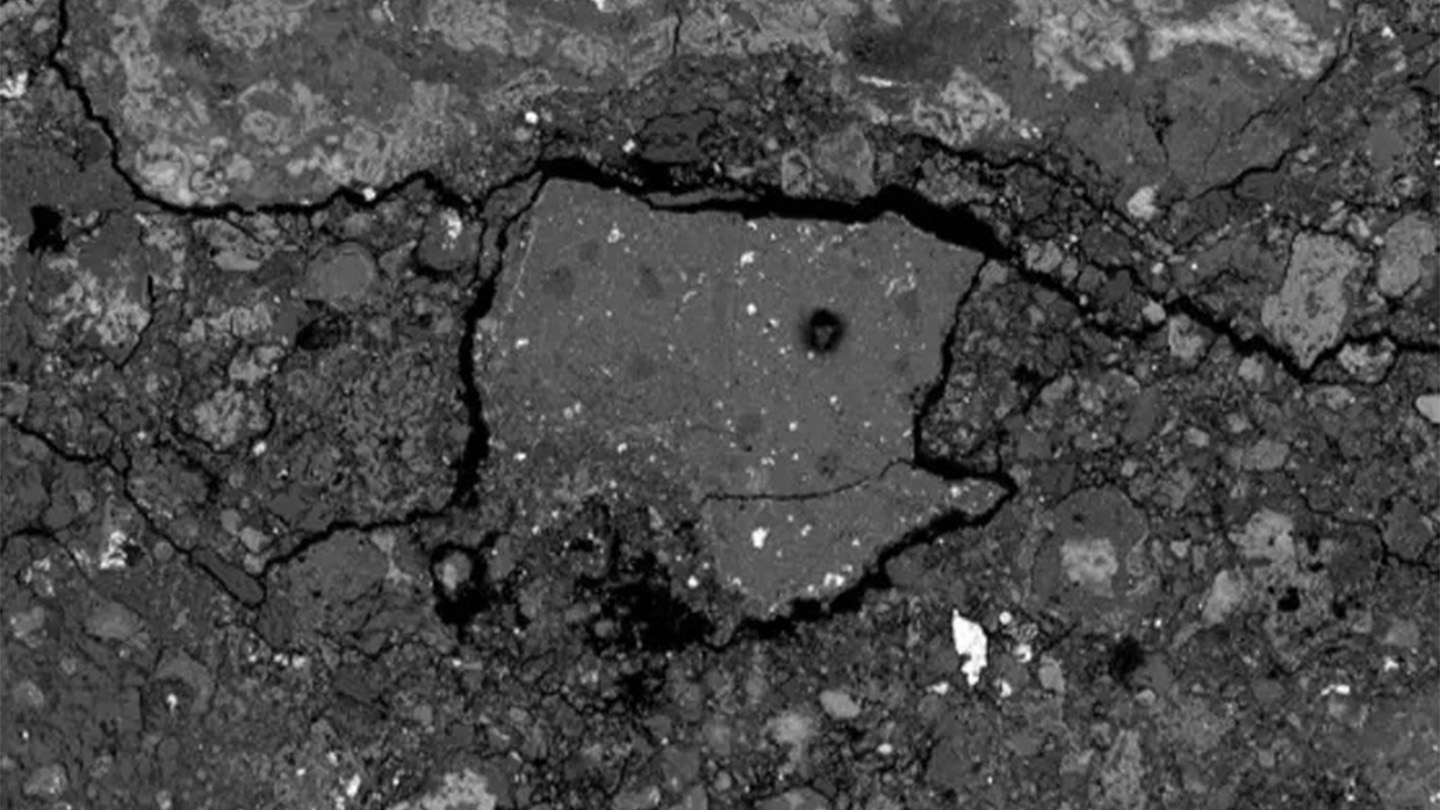
Upon detailed chemical analysis, researchers identified the rock as a CM carbonaceous chondrite, a highly prized and incredibly ancient class of meteorites. Scientists suspect that these specific organic-rich stones are representative of the primordial boulders that originally bombarded our young planet billions of years ago, delivering the essential water and complex carbon-based molecules that ultimately kindled the spark of life. Based on its trajectory and unique orbital path, this particular rock likely originated from a primitive protoplanet that formed in the freezing outer reaches of the early solar system, just beyond the heavy gravitational influence of Jupiter.
The laboratory investigations, published in the journal Science Advances, revealed fascinating clues about the meteorite’s alien history. The rock contains distinct microscopic fragments that are unusually rich in sodium compared to other carbonaceous chondrites. This chemical imbalance strongly suggests that liquid brines—salty, ancient water—once flowed through the parent asteroid, chemically altering the rock from the inside out. Furthermore, the specimen is packed with complex organic matter and rare forms of amino acids that are virtually non-existent in Earth’s natural environment, which likely synthesized during a warm, wet epoch when internal geological heat kept the asteroid’s briny waters liquid.
While the idea of a space rock suddenly smashing through a residential ceiling might sound terrifying, Jenniskens reassures the public that such direct hits are vanishingly rare. Instead of fearing a cosmetic disaster from above, he views the extraordinary alignment of events as a profound privilege. Experiencing a meteorite fall is the ultimate cosmic lottery, a rare moment where a pristine piece of our solar system’s ancient, water-bearing history literally drops on a doorstep. For the lucky few who witness it, these rare arrivals are not destructive disasters, but incredible scientific gifts that help us understand how life itself began on our home planet.