






For years, the quiet halls of the Pentagon operated under a comfortable, if dangerously flawed, assumption: that America’s technological supremacy would always deter its adversaries, and that any future conflict would be swift, precise, and light on resources. But reality has a brutal way of shattering complacency, and the relentless, fiery skies over the Middle East and the Red Sea have delivered a jarring wake-up call to American military planners. In a series of rapid, high-intensity engagements, U.S. air defense systems—the literal shields protecting American troops, naval vessels, and key allies like Israel—have been pushed to their absolute limits, intercepting waves of hostile drones, cruise missiles, and ballistic threats launched by Iran and its proxies. This sustained, high-stakes defense has forced the military to burn through its most sophisticated, expensive, and notoriously difficult-to-replace interceptors at a staggering, unsustainable rate. Reports indicating that the U.S. Army has depleted virtually its entire inventory of key tactical munitions, like ATACMS and the Precision Strike Missile, in just a five-month span have sent shockwaves through the defense establishment. What was once treated as a theoretical concern on a spreadsheet has transformed into a pressing, real-world crisis: the United States is rapidly running out of the very shields it needs to survive a modern war. For the sailors stationed on destroyers in the Red Sea scanning the horizon for incoming threats, and for the soldiers standing guard at remote outposts under constant threat of rocket attack, these interceptors are not merely defense acquisitions—they are the thin line between coming home safely and catastrophic disaster. The sudden realization that these critical stockpiles are desperately shallow has triggered an abrupt, dramatic course correction within the Department of Defense, laying bare a systemic vulnerability that has been quietly festering for a quarter-century.
To understand how the world’s most powerful military found itself staring into an empty magazine, one must look back at twenty-five years of deeply ingrained bureaucratic complacency and short-sighted budgetary choices. Following the end of the Cold War and the subsequent focus on counterinsurgency operations in Iraq and Afghanistan, successive administrations and Congresses operated under the belief that large-scale, industrial-era state warfare was a relic of history. In this environment, missile defense was often treated as a secondary luxury rather than an existential necessity, leading to decades of underfunding and meager procurement goals. Pentagon strategists and congressional appropriators routinely prioritized flashy, high-profile offensive programs, cutting-edge stealth jets, and immediate counter-terrorism needs while quietly starvation-dieting the tedious, unglamorous logistics of munition stockpiles. When defense experts and military planners warned that interceptor inventories were dangerously low, their concerns were repeatedly drowned out by the louder clamor for other budgetary priorities, leading to a series of fateful trade-offs that now look disastrously mistaken. The policymakers who slashed these budgets did so with the comfortable illusion that the U.S. would always dictate the tempo of conflict, forgetting that the enemy gets a vote. The result was a fragile, “just-in-time” supply chain designed for a tranquil world, not the unforgiving, industrial-scale consumption rates of peer-level warfare. This systemic neglect has left the defense industrial base brittle, hollowed out, and entirely unequipped to handle the sudden, massive surges in demand required by today’s volatile geopolitical landscape. By prioritizing short-term savings and immediate political wins over the long-term, unsexy work of building deep arsenals, decision-makers in Washington effectively gambled with the nation’s strategic security, betting that they would never have to fight an adversary capable of saturating American defenses with thousands of sophisticated missiles. Now, as those high-altitude shields are tested in real-time, the true cost of those past compromises is being tallied in depleted stockpiles and mounting strategic anxiety.
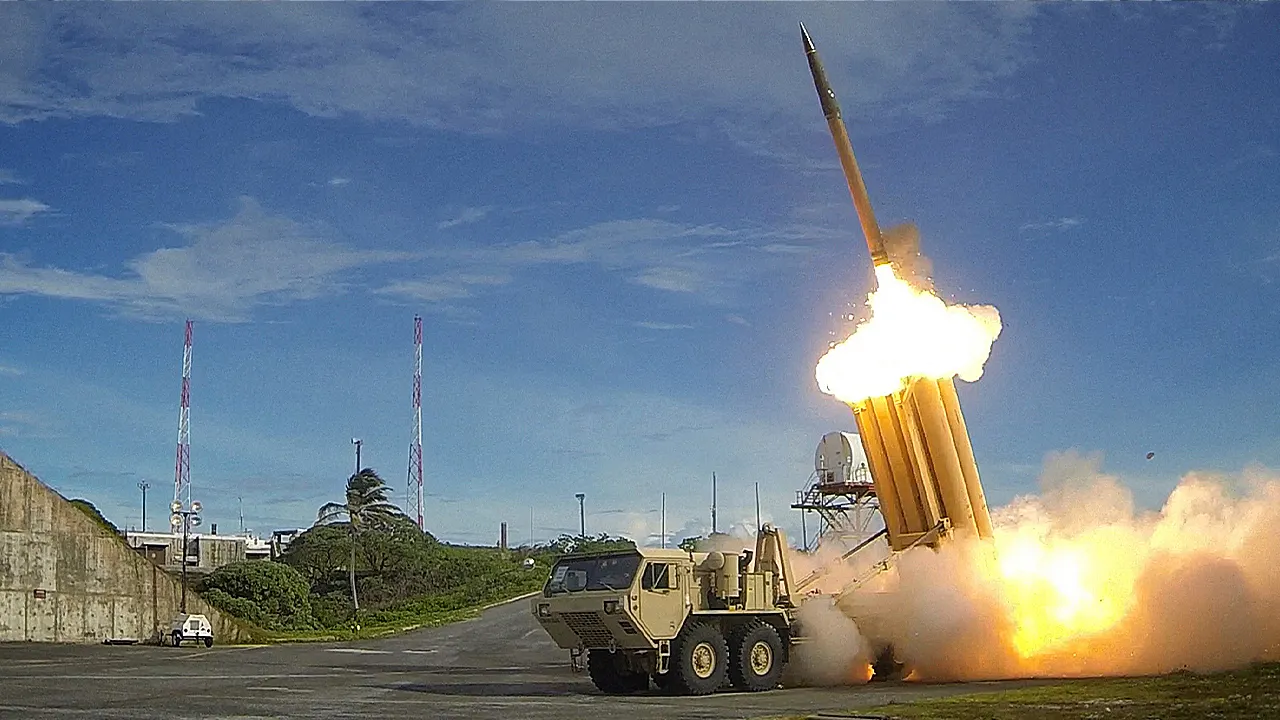
The Army’s newly revealed fiscal year 2027 budget request represents a stunning admission of this historic failure, laying out an incredibly ambitious, near-desperate roadmap to undo decades of neglect in a fraction of the time. The numbers detailed in the budget documents show a breathtaking pivot: where the military was previously purchasing key interceptors in hand-to-mouth quantities, it is now attempting to flood the production lines with unprecedented levels of funding. For instance, the military’s procurement of the Patriot Advanced Capability-3 Missile Segment Enhancement (PAC-3 MSE)—the premier short-to-medium-range shield against ballistic threats—had been steadily declining, dropping from a modest 328 missiles in fiscal year 2022 to a mere 214 in fiscal year 2025. However, recognizing the acute danger of this downward spiral, the Army Requirements Oversight Council took the extraordinary step of more than quadrupling its overall acquisition objective for the PAC-3 MSE, explosively vaulting the target from 3,376 to a massive 13,773 missiles. An even more dramatic, almost frantic escalation is visible in the procurement plans for the Terminal High Altitude Area Defense (THAAD) system, which intercepts high-altitude, long-range threats. In fiscal years 2024 and 2025, the Missile Defense Agency purchased just 11 and 12 THAAD interceptors respectively—numbers that seem almost laughably small given the global threat landscape. By the fiscal year 2027 budget, responsibility has shifted directly to the Army, which is now requesting a jaw-dropping 857 THAAD interceptors, relying on billions of dollars in specialized, mandatory Munitions Acceleration Council funding to force open the floodgates of production. This represents an astronomical leap that signals a total paradigm shift in the Pentagon’s thinking, moving away from a posture of managed scarcity to one of aggressive, industrial-scale mobilization. Yet, as defense analysts warn, writing massive numbers on a budget spreadsheet is easy; the true, grueling challenge lies in translating those paper requests into physical, functional steel and electronics on the factory floor.
Indeed, the transition from bureaucratic aspiration to physical reality is where the Pentagon’s ambitious plans collide with the harsh, cold realities of modern manufacturing. High-tech interceptors like the PAC-3 MSE and THAAD are not simple commodities that can be churned out on a traditional assembly line; they are incredibly complex machines of war, built from highly specialized components that require extreme precision, delicate chemistry, and rare materials. Each missile relies on a vast, fragile network of sub-tier suppliers that produce advanced solid-fuel rocket motors, highly sensitive infrared seekers, sophisticated guidance microelectronics, specialized energetics, and durable thermal shielding. Because the defense industry has operated under low-volume contracts for decades, many of these critical components are produced by sole-source suppliers—small, highly specialized companies with limited facilities, a shortage of highly skilled aerospace workers, and no spare capacity to scale up overnight. Expanding this industrial base requires massive, long-term capital investments to build new physical factories, purchase advanced diagnostic machinery, and train a specialized workforce of engineers, technicians, and precision machinists. This process cannot be bypassed or rushed; even with unlimited funding, it takes years to certify new manufacturing facilities and ensure that every microscopic component meets the rigorous quality standards required to intercept a missile traveling at hypersonic speeds. Furthermore, the defense industry must compete with the commercial sector for raw materials, rare earth elements, and highly sought-after engineering talent, adding further friction to these expansion efforts. Consequently, the sudden influx of government contracts is less of an immediate refill for America’s dangerously depleted magazines and more of a long-term, multi-year construction project designed to slowly rebuild the industrial muscle needed to sustain high-volume production far into the future. For the workers on the factory floors in places like Alabama and Texas, this pivot means transitioning from a slow, steady craft to a high-pressure, around-the-clock mobilization effort that will test the limits of American industrial ingenuity.
The urgency of this industrial race becomes terrifyingly clear when looking at the potential arena where these missiles might one day be used: the vast, contested expanse of the Indo-Pacific. While the United States has spent the last two decades focused on counter-terrorism and low-intensity conflicts, China has quietly and systematically built up the world’s largest and most formidable arsenal of conventional ballistic and cruise missiles, specifically designed to deny the U.S. military access to the region. In the event of a conflict over Taiwan or the South China Sea, Beijing would likely unleash massive, saturating salvos of missiles aimed at devastating American airbases, naval ports, aircraft carriers, and command centers scattered across the Pacific, from Japan to Guam. In such a high-intensity scenario, air defense interceptors are not merely supporting assets; they are the absolute key to survival, acting as the vital shield that allows American forces to withstand the initial onslaught and fight back. A recent, sobering analysis by the Heritage Foundation highlights the chilling scale of the deficit: to possess a minimum viable inventory capable of surviving a conflict with China, the United States would require a staggering 7,082 PAC-3 MSE interceptors and 1,394 THAAD interceptors. Currently, the U.S. is estimated to possess only a fraction of these numbers, with current annual production capacities sitting at a measly 620 PAC-3 MSEs and 96 THAADS—much of which is already promised to foreign allies through military sales. At these current rates, the report estimates it would take anywhere from nine to an astonishing eighty years to build the inventories necessary to deter or survive a Chinese offensive, a timeline that renders the current U.S. defense posture dangerously exposed. The window of opportunity to bridge this “interceptor gap” is closing rapidly, leaving American forces in the Pacific vulnerable to a crushing pre-emptive strike if a crisis were to erupt tomorrow.
Bridging this terrifying gap and securing America’s future will require far more than just writing checks; it demands an unprecedented, sustained partnership between Congress, the Pentagon, and the private sector that must endure for decades, transcending changing political administrations and election cycles. While the administration’s new framework agreements with major defense companies represent the most significant, concerted effort to address the munitions shortfall in generations, the real test will be securing the continuous, predictable funding needed to turn these paper plans into actual, roaring production lines. Industry leaders cannot and will not build expensive new factories, purchase specialized machinery, or hire hundreds of highly skilled workers on the volatile promise of a single year’s budget; they require long-term, multi-year procurement commitments from Congress to justify such massive capital investments. This means lawmakers must resist the temptation to treat defense spending as a political football, recognizing that national security in the 21st century is built on the unglamorous foundation of industrial capacity, robust supply chains, and deep munition magazines. Furthermore, the military bureaucracy must streamline its notoriously sluggish acquisition processes, cutting through paralyzing red tape to field these weapons faster while fostering innovation and resilience among sub-tier suppliers. Ultimately, the crisis we face today is entirely human—born of choices made by past leaders who chose short-term financial convenience over long-term strategic readiness, and solvable only by current leaders willing to make the hard, sustained commitments required to rebuild the “Arsenal of Democracy.” As global threats continue to multiply and the specter of a major peer conflict looms on the horizon, the choices made in the halls of Washington today will decide whether American service members are sent into battle with the shields they need to survive, or if they will be left empty-handed when the missiles begin to fly.