





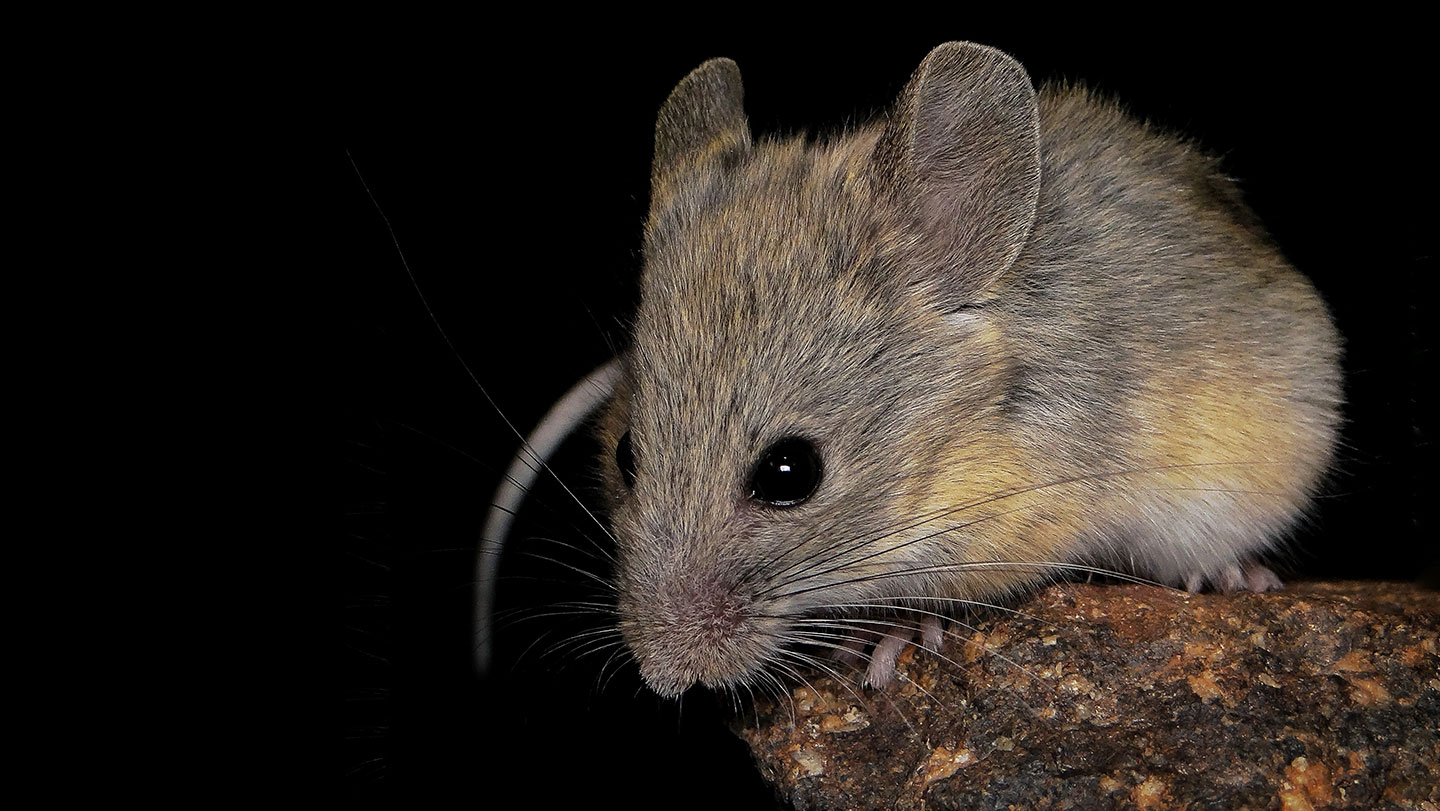
It turns out that living at the very top of the world is a challenge best met not by massive, thick-skinned beasts, but by a remarkably resilient little rodent. The Andean leaf-eared mouse (Phyllotis vaccarum) has officially claimed the title of Earth’s highest-dwelling mammal, proving that size has nothing to do with sheer endurance. These tiny creatures thrive in places where human mountaineers require oxygen tanks, specialized gear, and weeks of careful preparation just to survive a temporary visit.
According to a study published in Science, these mice live across an incredibly diverse geographical range, stretching from the sun-drenched, desert coasts of Chile all the way up to the wind-swept, frozen summits of Andean volcanoes. At elevations surpassing 6,700 meters, they face a brutal combination of sub-zero temperatures—sometimes plummeting to a bone-chilling -60º Celsius—and atmospheric oxygen levels that are a mere 44 percent of what we find at sea level. Without the luxury of heavy winter coats or high-tech gear, the mice rely entirely on their own biological ingenuity to stay alive.
To find out exactly how these tiny survivors withstand such a punishing environment, evolutionary biologist Jay Storz of the University of Nebraska–Lincoln and his dedicated research team spent weeks climbing the Andes. By slowly acclimating to the altitude alongside their wild subjects, the scientists were able to conduct thorough wildlife surveys and safely capture mice from various elevations. They then brought the rodents into specialized testing chambers designed to mimic the thin, freezing air of the mountaintops.
The experiments revealed a stark difference between the populations. The high-altitude mice consumed oxygen at a much higher rate than their coastal relatives, allowing them to remain energetic and active even in bitter cold. Deep within their cells, the mitochondria—the powerhouses responsible for energy production—had physically adapted to maximize every single molecule of oxygen available.
Additionally, genetic and metabolic analyses showed that these high-climbing mice rely heavily on rapid muscle shivering to generate a continuous supply of internal body heat. To prevent themselves from hyperventilating while breathing the thin mountain air, their blood cells appear to store extra carbon dioxide, stabilizing their internal chemistry. Jay Storz noted that the mice are essentially running all of their cellular machinery at full speed for the sole purpose of keeping their body temperatures steady.
Life is equally demanding for the mice at lower elevations, albeit for different reasons. Lowland populations often have to feed on toxic desert plants just to survive, forcing them to develop metabolic pathways to cleanse these poisons from their bodies. Whether dealing with a toxic menu at sea level or a freezing, oxygen-deprived wasteland on a volcanic peak, the Andean leaf-eared mouse proves that nature always finds a way forward.