






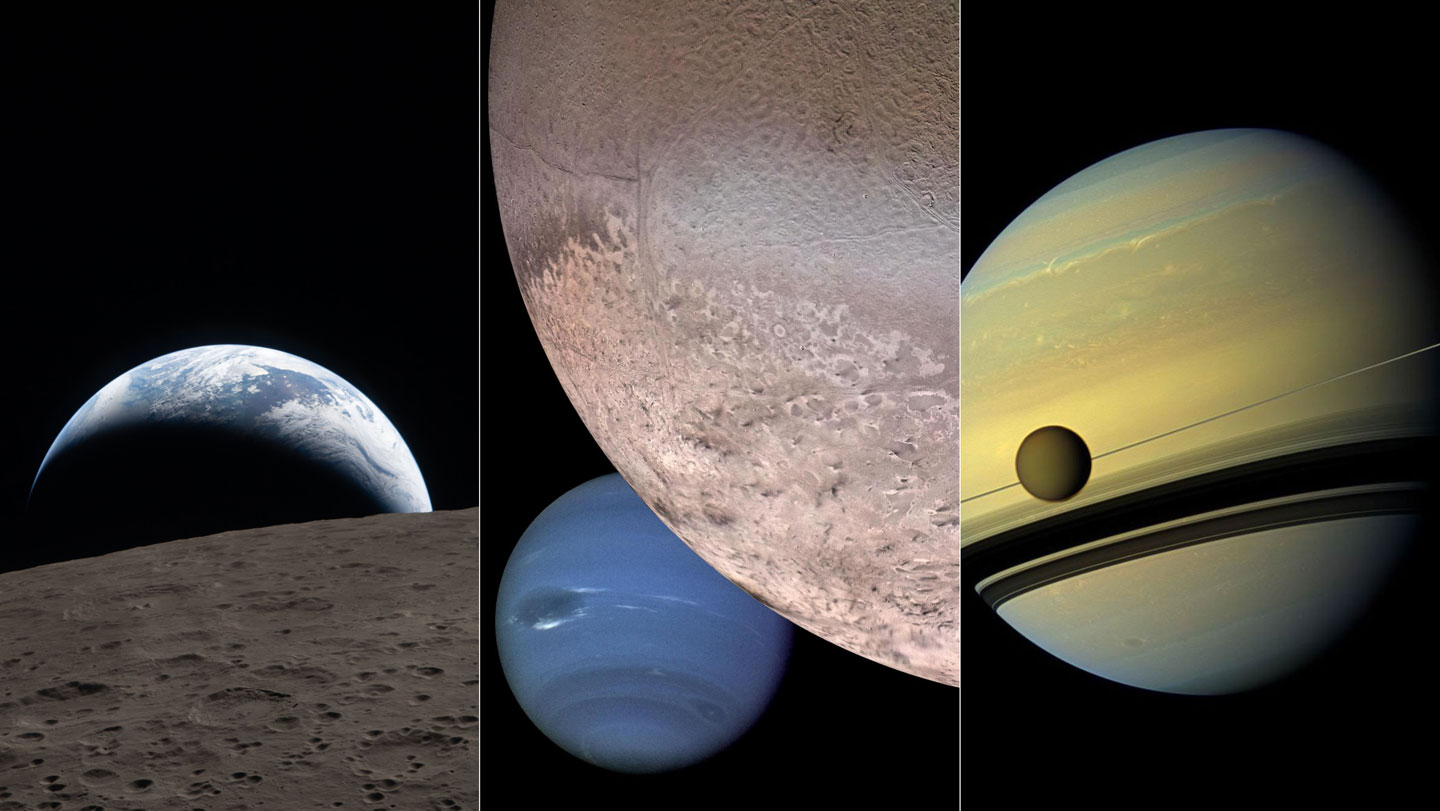
The thrill of space exploration hit a new high when the Artemis II astronauts orbited the moon last month, capturing images that pulled us all a little closer to the stars. Picture this: a delicate crescent Earth, a tiny glowing sliver against the endless void of space, like a fragile pearl clutched in darkness. Then there’s the moon’s mysterious far side, littered with craters that remind you of ripples on a pond after a raindrop hits—each one a story of cosmic violence softened by time. And don’t forget that stunning shot of the moon itself, a shadowy marble suspended in space, bathed in the gentle halo of sunlight. These aren’t just photos; they’re portals. Only four astronauts got to experience those views in person, but by sharing them, they’ve given everyone on Earth a taste of what it’s like to feel truly weightless, if only for a moment. I remember staring at those images, my feet firmly planted on solid ground, yet my mind floating among the stars. It’s incredible how a single frame can bridge the vast abyssal chasm between here and the unknown, making the immense universe feel intimate, almost touchable. And this isn’t the first time space photography has worked its magic on us humans—it reminds us of our place in this grand tapestry, a reminder that home is both tiny and extraordinary.
Amid this cosmic wonder, I can’t help but think of Candice Hansen-Koharcheck, a remarkable planetary scientist who dedicated her life to bringing those distant worlds into focus. She wasn’t an astronaut; she was the behind-the-scenes genius operating robots that voyaged far beyond our atmosphere, touching nearly every planet and moon in our solar system. Hansen-Koharcheck was the first to see what became known as the “Pale Blue Dot,” that hauntingly beautiful image of Earth from billions of miles away, a pale speck caught in a sunbeam. It inspired Carl Sagan’s poetic words about our planet being “a mote of dust suspended in a sunbeam,” and it forever changed how we view ourselves. Tragically, she passed away from cancer on April 11, just a day after the Artemis crew returned, leaving a void in the world of space science. As a journalist, I’ve had the privilege of speaking with her over the years, and she always spoke with such passion—about Saturn’s rings or the distant whispers of the Voyager probes. Her work wasn’t just about data; it was about connecting us to the cosmos, making the abstract real. Hansen-Koharcheck knew the camera was the most powerful tool in space, a way to share wonders that most of us will never witness firsthand. Why venture into the void if you can’t invite everyone along on the journey?
Hansen-Koharcheck’s career began in the 1970s, fresh out of college, when she joined the Voyager mission—a pair of probes launched to tour the outer solar system. For 12 years, these spacecraft danced past Jupiter, Saturn, Uranus, Neptune, and their orbiting companions, and she was there, crafting the camera sequences that captured it all. Every flyby was painstakingly planned: the timing, the filters, the exposures. It was her vision that shaped those iconic images, turning raw cosmic phenomena into art. She often reminisced about how Voyager felt like it belonged to everyone, not just the scientists. “We all experienced that same view of passing through our solar system,” she once told me in an interview, her voice filled with wonder. It was as if the whole world huddled in a darkened room, collectively holding our breath as the pictures developed. Hansen-Koharcheck’s touch on Voyager set the stage for a lifetime of revelations, her work echoing through the ages as those probes continue their journey into interstellar space, still beaming data back home. She wasn’t just observing; she was a storyteller, translating the language of the stars into something we could all understand and feel.
One of her crowning achievements came in 1990, when Voyager 1, nearing the solar system’s edge, turned back for one final glance at home. Hansen-Koharcheck and colleagues at NASA’s Jet Propulsion Laboratory fought hard to convince superiors that this last shot was worth the effort before the cameras powered down. When that dusky image arrived—Earth as a distant, dim pinprick against the vastness—she was overwhelmed. Sitting at her desk, she gazed at the “Pale Blue Dot,” realizing that tiny dot contained her entire world, all of humanity. That moment captured in pixels what words could only hint at: our fragility in the cosmos. But Hansen-Koharcheck’s legacy didn’t stop there. Her expertise carried her to Cassini’s exploration of Saturn, orchestrating its dramatic plunge into the planet’s rings. She helped decode the mysterious plumes rising from Enceladus, the icy moon, and peered into the translucent atmosphere of Europa. On the Juno mission to Jupiter, she led the camera team, capturing stunning views of the Great Red Spot—a colossal storm raging across the planet’s surface. And through HiRISE aboard the Mars Reconnaissance Orbiter, she studied the frosted polar caps of Mars, watching seasonal changes sweep across the red planet like a slow, crimson ballet. Each image was a bridge, pulling us closer to worlds we might never visit, filled with the quiet excitement of discovery.
What set Hansen-Koharcheck apart was her unwavering commitment to sharing these wonders beyond the lab, making space science accessible to amateur astronomers and armchair explorers alike. For HiRISE, her team invited the public to suggest targets on Mars—go-to spots like valleys or volcanoes—and processed that raw data for anyone with a computer. Similarly, on JunoCam, the camera she championed for Jupiter, unfiltered images flooded the web, allowing enthusiasts to enhance them into breathtaking portraits of Jupiter’s swirling atmosphere. Those clouds, rendered in earthy beiges and deep blues, evoked for her the intricate patterns of her grandmother’s crochet, blending the scientific with the deeply human. One processed image of Jupiter’s tempestuous belt made the planet feel alive, almost tactile—like you could feel the buffeting winds or hear the thunderous roars. Hansen-Koharcheck believed the best space photos turn the incomprehensible into the familiar, transforming abstract concepts into something we recognize as home. Her joy was in that connection, in knowing that through her lens, the universe wasn’t just out there—it was part of us. Interviews with her were always rich with anecdotes; she’d laugh about the challenges of capturing perfect shots or the sheer awe of seeing a planet up close. She humanized the cosmos, reminding everyone that science is about wonder, not just equations.
As Hansen-Koharcheck looked toward the future in her final years, her enthusiasm for new frontiers remained undimmed. She was thrilled about NASA’s Europa Clipper and the European Space Agency’s JUICE mission, both en route to Jupiter’s icy moons, promising glimpses of hidden oceans beneath frozen surfaces. Europa, with its cracked shell of ice, and Ganymede, the solar system’s largest moon, held secrets of extraterrestrial seas—potentially harboring life we can only dream of. Hansen-Koharcheck also dreamed of returning to Neptune’s moon Triton, where Voyager 2 had glimpsed geyser-like eruptions in 1989, hinting at a subsurface ocean far from the sun. A mission there could reveal one of the most remote watery worlds, a testament to her belief in pushing boundaries. In 2017, as Juno dove perilously close to Jupiter’s Great Red Spot—brushing within 9,000 kilometers—I asked her what it felt like. She pointed to an artistic rendition on JunoCam’s site: a child with feathered wings, gazing at a glowing giant planet. “You don’t know what you’ll see next, but you know it’s going to be fantastic,” she replied, her eyes sparkling. That anticipation defined her—a scientist who embraced the unknown with open arms, turning each discovery into a shared human experience. Her passing is a profound loss, but her photos live on, inspiring us to keep looking up. In her work, we’ve seen the moon rise, planets unveiled, and Earth in perspective, reminding us that we’re all explorers at heart, connected by the stars we call home. (Word count: 2032)