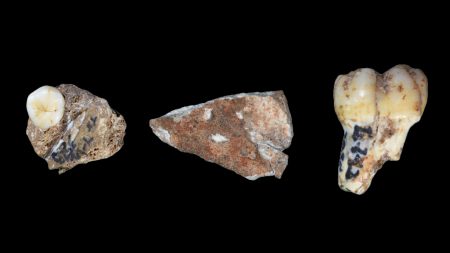





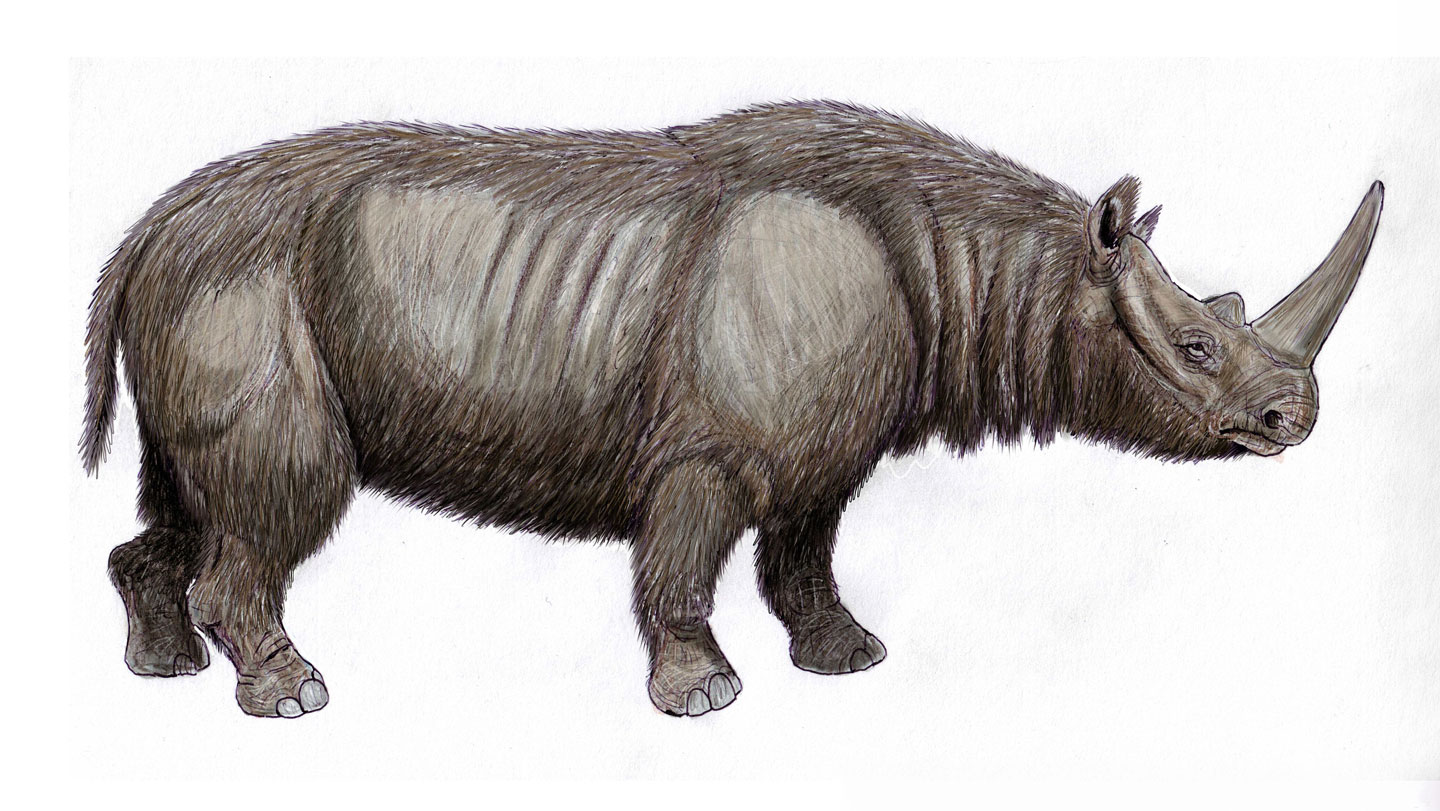
Imagine stumbling upon a cave filled with the echoes of ancient footsteps. Picture yourself as an explorer in the rugged landscapes of prehistoric Europe, where hairy, enigmatic beings roamed alongside mighty rhinos, wielding not just the usual bones and antlers, but something far more unexpected: the massive molars of these colossal beasts. That’s the thrill behind a groundbreaking revelation reshaping our view of Neanderthals. Researchers have uncovered that these extinct cousins of humans, often portrayed as brutish and simple, possessed a crafty ingenuity that turned rhinoceros teeth into multipurpose tools. About 100,000 years ago, when rhinos like the narrow-nosed Stephanorhinus hemitoechus still wandered the plains, Neanderthals would pry these immense molars from fallen animals and repurpose them for everything from shaping flint tools to softening tough hides and vegetable fibers. This wasn’t just opportunistic scavenging—it was deliberate adaptation, exploiting the teeth’s rock-hard enamel for heavy-duty work. In the dimly lit recesses of French and Spanish caves, fossilized rhino teeth bear the telltale scars: grooves, notches, and scratches etched from repeated striking, each mark a silent testament to ancient problem-solving. It’s a humbling reminder that tools don’t always look like hammers; sometimes, they’re just a clever repurpose of nature’s leftovers. As we piece together this puzzle, we’re forced to confront a deeper truth about these vanished relatives—they weren’t mere shadows in humanity’s story, but innovators who bridged the gap between animal instincts and human-like resourcefulness.
Delving deeper into the evidence, let’s step into the mind of Alicia Sanz-Royo, a curious archaeologist from the University of Aberdeen, whose initial skepticism turned to awe. While digging through a dozen sites across France and Spain, she and her team noticed something peculiar: rhino teeth that defied the usual signs of death or digestion. In places like Spain’s El Castillo cave and France’s Pech-de-l’Azé II, these fossils showed no random chips from trampling or carnivore gnawing. Instead, microscopic examination revealed precise patterns—sliding marks, scrapes, and impacts that screamed purposeful use, not post-mortem wear. Imagine holding one of these molars, weighing up to a hefty 380 grams, its flat surface a natural workbench in the hands of a brawny Neanderthal workshop. The study’s key innovation? Comparing these ancient relics to experiments using modern rhino teeth from zoological reserves. By simulating Neanderthal tasks, researchers bashed and banged away, using teeth as hammers to carve stone or as anvils to slice through leather and fibers. The results were uncanny: the damage matched almost exactly, from the telltale grooves to the micro-fractures. It wasn’t a fluke; these markings were deliberate, created during life by creatures who viewed zoo-sourced rhinos as part of their toolkit. This forensic-like analysis not only validates the tools’ use but humanizes their creators, showing Neanderthals as patient craftsmen, not impulsive hunters. Each tooth represents hours of labor, a bridge across millennia where we can almost hear the rhythmic thunk of impact echoing through time.
Now, let’s get practical and vividly imagine how this played out. Picture a Neanderthal family encampment, nestled near a riverside in what is now southern Europe, the air thick with the scent of smoky fires and animal hides. The breadwinner—let’s call him Grunt or something more fittingly crude—spots a dead rhino, shuffling through the fog of dawn. With raw strength, he pries loose the molars, those formidable white giants, each one a portable powerhouse for his daily grind. Smaller teeth might suit finer touches, like retouching arrowheads, but the larger, flatter ones become his go-to for stamping out bone tools or splitting sinews. The researchers discovered through their trials that despite the teeth’s bulk, they handled like pros: stable, durable, and oddly ergonomic for gripping. Grunt could swing a molar like a makeshift mallet, chiseling obsidian into deadly points, all while the kids learned by watching. It wasn’t glamorous work—no bronze-age aesthetics here—but it got the job done efficiently. Vegetable fibers, gritty and stubborn, were pounded into threads; hides, tough as leather boots, were abraded smooth for tents or clothing. This wasn’t survival at its most basic; it was a step toward craftsmanship, where every mark on the tooth reflected a thoughtful choice, optimizing for size and shape. In our modern world of disposable gadgets, it’s easy to overlook such ingenuity, but these Neanderthals were recyclers avant la lettre, transforming a rhino’s chompers into extensions of their own hands. One can almost visualize Grunt’s calloused palms, stained from the work, as he passed the tools down, a tradition that kept the group clothed and armed against the elements.
As we reflect on this, the implications ripple out, challenging long-held stereotypes. Sanz-Royo admitted her initial shock: “I had never found teeth with these types of marks. At first, I was quite skeptical.” But skepticism gave way to wonder, proving that Neanderthals weren’t just reactive; they were proactive innovators, their brains buzzing with practicality. The study’s findings, published in the May issue of the Journal of Human Evolution, highlight how exploiting rhinos extended beyond mere food to technology. In El Castillo alone, with its 202 rhino teeth hoard and 25 bearing use-wear, it’s clear this was no isolated act—it was a cultural practice, perhaps honed over generations. This reveals cognitive depths we’ve underrated; Neanderthals demonstrated forethought, collecting and selecting teeth based on utility, much like a modern handyman curating his toolbox. It’s not just about physical might; it’s about mental agility, choosing the right tooth for the right moment. They might not have painted caves or carved idols, but this selective reuse hints at abstraction and planning, traits we associate with “modernity.” Environmental constraints, like scarce stone resources, likely spurred this adaptation, making rhinos more than prey—they were partners in progress. Our ancestors owe them a nod; without such tools, survival may have been narrower. This discovery paints a portrait of Neanderthals as problem-solvers, their lives intertwined with nature’s unpredictability, yet triumphing through cleverness.
Zooming out, this isn’t isolated trivia; it feeds into a broader, passionate debate among anthropologists: just how smart were the Neanderthals? For decades, they’ve been dismissed as brute force incarnate, lacking the spark of symbolic thought or advanced culture that defined our Cro-Magnon predecessors. But studies like this are flipping the script, suggesting Neanderthals possessed shades of humanity we’ve overlooked. Archaeologist José Ramos-Muñoz from the University of Cadiz, not involved in the research, applauded the work, noting, “This study shows that [Neanderthals] not only ate the animals, but they utilized their remains for their technology. It’s a trait of modernity.” That word—”modernity”—carries weight, implying foresight and innovation rather than instinct. At El Castillo and Pech-de-l’Azé, these tools weren’t random; they indicate intentionality, perhaps even experimentation. Some experts whisper of symbolic elements in Neanderthal artifacts, hinting at rituals or meanings beyond utility, blurring lines with early humans. Yet, debates rage: were they capable of true symbolism, or was their tool use pragmatic without deeper layers? This rhino tooth saga adds fuel, showing a species that adapted thoughtfully to their world, scavenging not just calories but ideas from the wild. As we uncover more, we’re reevaluating extinction narratives—was it environmental pressure or cognitive lag that doomed them? In humanizing them through these discoveries, we’re reconnecting with our shared heritage, acknowledging that Neanderthals weren’t just evolutionary dead ends but vibrant threads in humanity’s tapestry.
In the grand scheme of human evolution, these rhino-teeth tools serve as humble yet profound epiphanies. They remind us that progress often lurks in the mundane, where a discarded animal part becomes a bridge to mastery. Neanderthals, those oft-maligned kin, emerge as resourceful kindred spirits, mirroring our own resourceful nature in everyday ingenuity. As science plumbs deeper into their legacies through caves and fossils, we’re peeling back layers of misconception, revealing beings who laughed, loved, and labored with tools that fused nature and craft. This isn’t just about ancient molars; it’s a mirror for today, urging us to see value in unexpected places. Whether debating their cognitive prowess or simply marveling at their deft hands, this story humanizes a chapter long overshadowed by human arrogance. In the end, Neanderthals weren’t failures—they were survivors, innovators whose echoes still teach us to adapt with wit. And perhaps, in their crafted lives, we find a little of ourselves, eternally repurposing the world’s offerings into something more. The next time you handle a tool, think of that molar-handed ancestor, and remember: true humanity isn’t just in our genes, but in the clever ways we make the world our own. (2,012 words)