




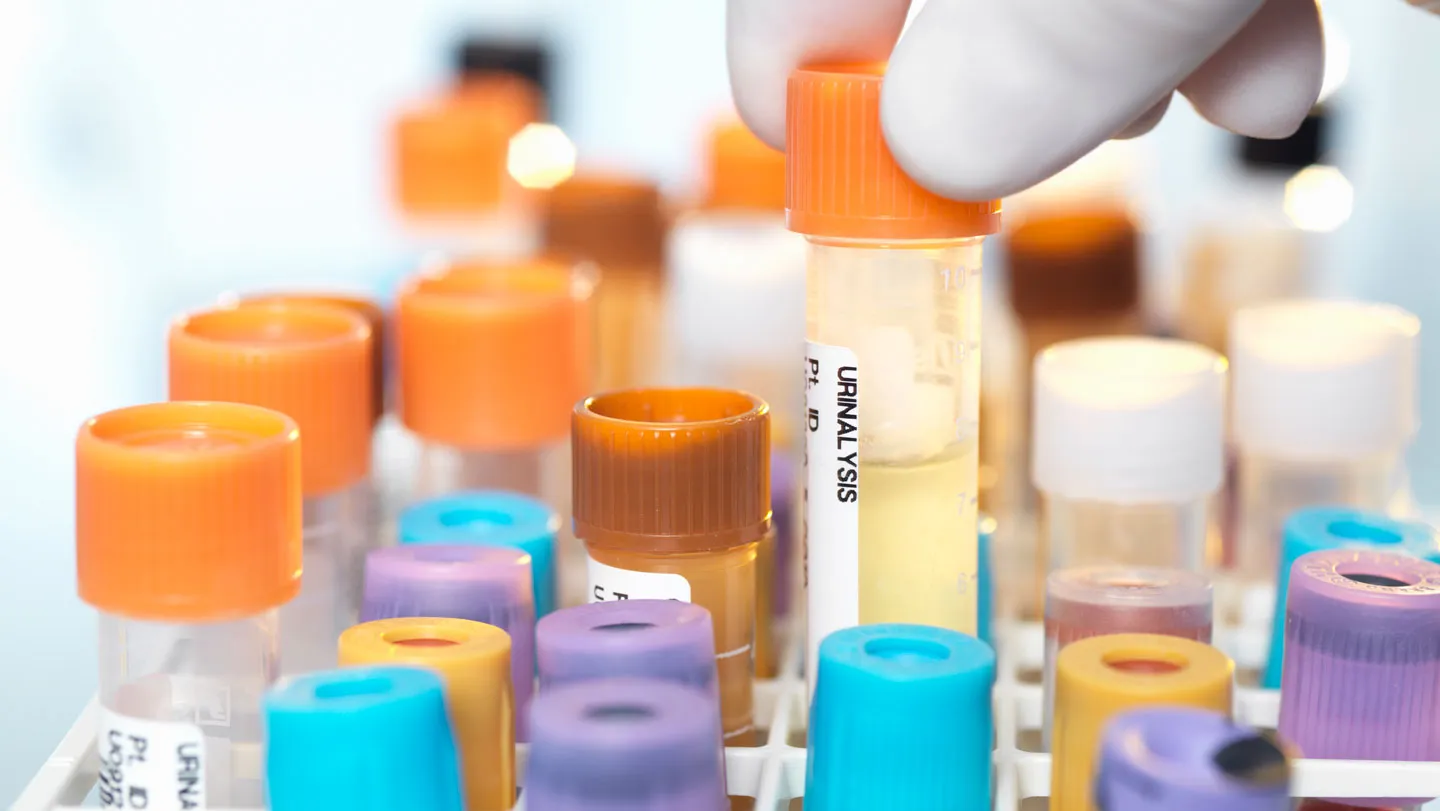
Paragraph 1: The Hidden Burden of the Bladder
Imagine a patient sitting in a doctor’s office, heart pounding, as a physician describes the standard procedure for evaluating a suspicious symptom like blood in the urine. For decades, the gold standard for detecting bladder cancer has involved inserting a thin, rigid camera—a cystoscope—through the urethra and into the bladder. It is, by all accounts, an invasive, uncomfortable, and often dreaded experience that requires anesthesia and carries a small risk of infection or injury. The psychological weight of this procedure, combined with the anxiety of waiting for the pathology report, creates a significant barrier to early detection. Bladder cancer is a formidable foe; it ranks among the most common cancers globally, and its insidious nature often means it recurs throughout a patient’s lifetime. Unlike other cancers that might offer a one-time “all clear,” bladder cancer survivors are locked into a relentless cycle of surveillance, requiring cystoscopies every few months or years to ensure the tumor has not come back. This constant, invasive monitoring takes a massive toll on quality of life, draining time, financial resources, and emotional resilience. The problem isn’t just the disease itself; it’s the brute-force, invasive nature of the primary diagnostic tool. There has long been a silent plea from patients and clinicians alike for something gentler, something smarter—a test that could be done with ease, that causes no pain, and that could perhaps even be done at home, lifting the burden of constant hospital visits and invasive procedures. The answer to this plea may be hiding in one of the most mundane, easily accessible waste products of the human body: our urine. A revolutionary proof-of-concept study has now emerged, suggesting that we might be able to catch bladder cancer simply by analyzing the microscopic fragments of genetic material floating in a urine sample, transforming a routine bodily function into a powerful window into our cellular health.
Paragraph 2: The Eloquent Language of RNA in a Liquid Biopsy
To understand this leap, we must step back and appreciate the biological miracle taking place within our cells. Every cell in our body, whether healthy or malignant, constantly communicates with its environment, shedding bits of its internal machinery into the bloodstream and other bodily fluids. While most people are familiar with DNA—the static blueprint of life—its cousin, RNA, is the dynamic messenger, the worker that translates those genetic blueprints into action. When a tumor forms, it experiences rapid, chaotic growth, and its cells become highly active, churning out massive amounts of RNA to drive that proliferation. Crucially, these cancer cells don’t keep all that RNA to themselves. They package some of it into tiny protective bubbles called exosomes, or they simply release free-floating fragments of RNA as they die and break apart. This creates a unique biological “smoke signal” that can be detected in bodily fluids. This is the principle of the liquid biopsy—a way to capture tumor-derived genetic material without invasive surgeries. For most cancers, liquid biopsies rely on drawing blood. But the bladder has a distinct advantage: it is a hollow organ that holds urine, and that urine is in constant, direct physical contact with the tumor tissue lining the bladder wall. Consequently, the urine acts as a concentrated reservoir of biological detritus directly sloughed off from the malignancy. By capturing and analyzing the specific fragments of RNA found in a urine sample, researchers can essentially eavesdrop on a conversation happening inside the bladder, listening for the specific genetic “accents” or signatures that indicate a cancer is present. This release of information is so rich that it can potentially tell us not just if cancer is present, but also what type, how aggressive it is, and even how it might respond to specific treatments, offering a non-invasive portal into the molecular soul of the tumor.
Paragraph 3: The Proof-of-Concept: Building the Laboratory Framework
The recent study spearheading this breakthrough is a classic proof-of-concept, designed not as a final clinical product but as a rigorous validation to prove that the idea is scientifically sound—that the precious signal is truly there, hidden within the noisy background of a typical urine sample. The researchers gathered urine samples from two distinct groups of participants: one group consisting of patients who had already been diagnosed with bladder cancer and were about to undergo treatment, and a control group of healthy individuals with no history of the disease. The process of isolating the RNA was delicate and meticulous. Urine is a hostile environment for genetic material; it contains salts, urea, and enzymes that degrade RNA very quickly—akin to trying to read a message written in disappearing ink on a damp piece of paper. However, modern molecular biology techniques allowed the scientists to stabilize the sample immediately, extracting the total RNA content, which includes the tiny fraction that had escaped from the tumor cells. They then employed sophisticated next-generation sequencing technology to analyze these fragments, cataloguing thousands of different RNA transcripts. The computational analysis was the real magic. Using advanced algorithms and machine learning models, the team sifted through the massive datasets, looking for patterns—specific RNA fragments that were consistently over-expressed in the cancer patients’ urine compared to the healthy controls. They were essentially looking for the needle in the haystack, seeking a unique fingerprint that could reliably distinguish between the two groups. Because this was a proof-of-concept, the sample sizes were relatively small, tailored to explore feasibility rather than to define absolute clinical boundaries. Yet, the findings were remarkably clear: specific RNA signatures were consistently associated with the presence of bladder cancer, serving as a brilliant beacon that separated the sick from the healthy with a striking degree of accuracy.
Paragraph 4: A Glimpse at the Results and a Superior Alternative
What makes these results so tantalizing is the stark contrast between this RNA-based test and the existing non-invasive alternative, urine cytology. Cytology is the long-standing method where a technician looks under a microscope at shed cells in the urine, trying to spot visual abnormalities that indicate cancer. While highly specific—if it says cancer, it is usually right—it suffers from terrible sensitivity, especially for low-grade or early-stage tumors. It can miss between 50% and 70% of these early cancers, leaving patients with a false sense of security. In the proof-of-concept RNA test, however, the sensitivity is vastly improved. The presence of the RNA signatures caught a much higher percentage of cancer cases, including those early-stage ones that routinely evade cytology. The researchers were able to identify distinct molecular subclasses of the disease, potentially distinguishing between the dangerous, muscle-invasive tumors that require aggressive chemotherapy and the non-invasive, slow-growing lesions that might only need watchful monitoring. This means the test is not just a binary yes/no switch. It provides a layer of intelligence that cytology simply cannot offer. This ability to detect subtle changes in gene expression opens the door to assessing the aggressiveness of the tumor. For a patient who has had a bladder tumor removed, a future urine test could monitor their risk of recurrence without the need for an immediate cystoscopy. If the RNA fingerprint appears, the doctor can intervene; if it stays quiet, the patient can breathe a sigh of relief and postpone an invasive procedure. The test moves diagnostic power away from a subjective visual guess and into the realm of objective, molecular precision, fundamentally altering how we approach the detection of this tricky malignancy.
Paragraph 5: Transforming the Clinical Encounter for Patients and Doctors
The human implications of this shift are immense. Consider the emotional arc experienced by a bladder cancer survivor. Every three months, the dread begins to build. They schedule a cystoscopy, undergo the anesthesia, and wake up to the terrifying wait for results. This process, repeated year after year, fosters a sense of chronic vulnerability and medical dependency. If this RNA test is eventually validated and approved for widespread use, the paradigm changes entirely. The patient could simply walk into a lab, provide a sterile cup of urine without any discomfort, and go about their day, receiving a secure message with the results on their phone. For the doctors, this isn’t about replacing their expertise but enhancing their arsenal. A urine test can serve as a powerful triage tool. If the test is negative, a low-risk patient might be able to skip a cystoscopy, saving them trauma and saving the healthcare system thousands of dollars. If the test is positive, the physician can fast-track the patient to the necessary imaging and invasive procedures, eliminating the dangerous period of diagnostic limbo. Furthermore, this test has the potential to democratize healthcare. Cystoscopies require expensive equipment and highly specialized urologists, which are often only available at major urban hospitals. A urine test can be processed in a standard diagnostic laboratory, meaning patients in rural areas or underserved communities—who often face significant delays in bladder cancer diagnosis due to travel distances—could get screened locally, catching the cancer at a earlier, more treatable stage. It turns a passive, painful waiting game into an active, painless, and proactive form of health surveillance.
Paragraph 6: The Road Ahead, Challenges, and a Vision of Hope
Of course, the journey from an exciting proof-of-concept to a routine clinical test is a long and rigorous one. The researchers are the first to acknowledge the hurdles that remain. The current study must be scaled up to massive, multi-center clinical trials involving thousands of diverse patients to confirm the initial accuracy and ensure the RNA signatures are not influenced by other variables like age, diet, or unrelated urinary tract infections. The test must also be standardized so that a urine sample from a clinic in one country can be analyzed with the same reliability as one from another. Cost is another significant barrier; while next-generation sequencing is becoming cheaper every year, it is still more expensive than a standard microscope slide. Yet, these are engineering and logistical problems, not fundamental scientific obstacles. The core premise—that we can robustly identify bladder cancer from urine-derived RNA—has been definitively proven. We are standing at the cusp of a new era in oncology where non-invasive diagnostics become the norm for many cancers. This research offers a beacon of hope that replaces the dreaded metal scope with the simple dignity of a plastic cup. It promises a future where patients are empowered by accessible data, where fear is replaced by vigilance, and where a cancer that has historically terrorized its survivors through invasive monitoring becomes a disease managed with a simple, painless, and frequent check-up. While we await the results of the larger trials, this discovery serves as a powerful reminder that sometimes the most profound answers to our most pressing medical problems are hiding in plain sight—in the simple, everyday fluid we so often take for granted. In the future of bladder cancer care, we may not need to look deeper to find the solution; we simply need to learn how to listen to what our own urine is trying to tell us.