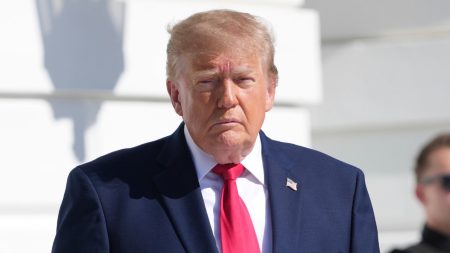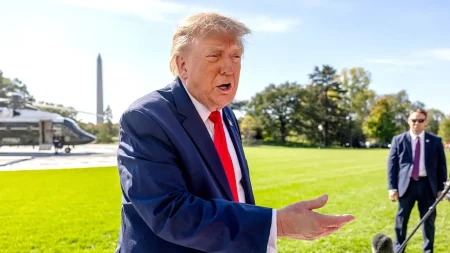
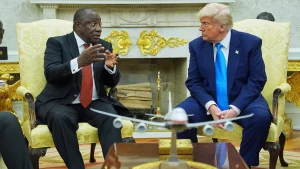



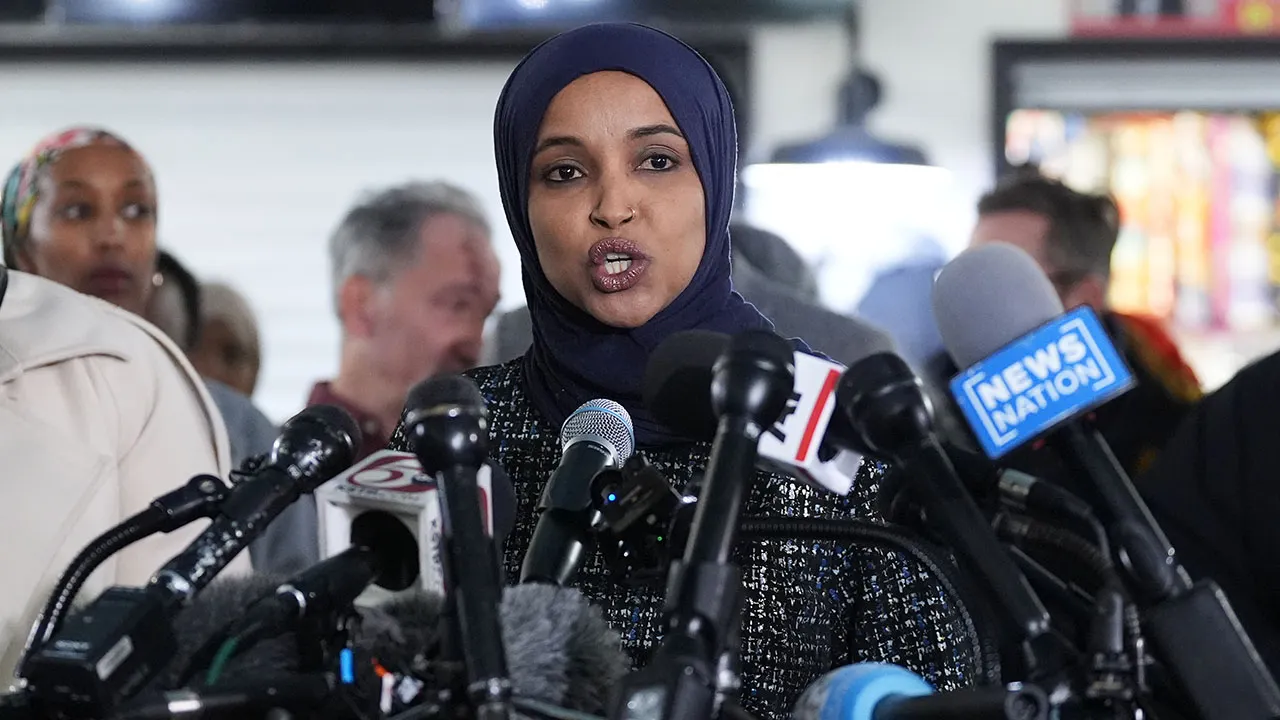
President Donald Trump has a way of turning a campaign rally into a greatest-hits concert of political grievances, and lately one of his favorite refrains has centered on Representative Ilhan Omar of Minnesota. With the crowd roaring, Trump has accused her of using a fake name, of lying to get sworn into Congress, of being a disgrace to the country, and even of potentially facing jail or deportation. It’s vintage Trump: blunt, dramatic, and delivered with the kind of certainty that makes it feel like a verdict rather than an accusation. But in the cold light of the Constitution, the reality is far more complicated. The president does not get to decide who serves in the House of Representatives. That authority belongs to the House itself. Article I, Section 5 of the Constitution gives each chamber the power to judge the elections, returns, and qualifications of its own members, and it also provides the ultimate punishment: expulsion, but only with the concurrence of two-thirds of the body. That is a high bar, and no amount of presidential commentary changes it. So while Trump may act as if this is his call to make, the actual decision would rest with lawmakers, not the commander-in-chief.
The investigation that has put Omar in the spotlight is not brand new, but it has suddenly resurfaced in the most dramatic possible way. Federal investigators from the Department of Homeland Security and the Department of Justice are looking into allegations of immigration fraud and questionable financial disclosures. The story stretches back years. In 2016, when Omar first ran for the Minnesota state legislature, there were already questions swirling about her past. The New York Times later reported that the Obama-era Justice Department had examined evidence suggesting she may have entered into a fraudulent marriage. That inquiry, which reportedly continued into the Biden administration, was ultimately closed in 2021 without formal charges. But then, in October, Trump administration officials raided Omar’s home, seizing electronics and documents, and the whole controversy came roaring back to life. Omar has denied the accusations fiercely, with a spokesperson calling the conspiracy theory baseless and disgusting. Omar herself, when asked by a livestreamer how her week was going, shrugged it off with a weary laugh: “It tracks for me. That’s kind of what I’m used to.” It was a moment of almost tragic familiarity, the sense of a woman who has spent years in the crosshairs and has developed a kind of armor against the storm. And when former President Barack Obama jumped to her defense, he framed the investigation not as a matter of justice, but as a political vendetta. The government, he argued, cannot selectively target individuals simply because of their political beliefs or what they say. That, he said, is exactly what the Trump administration was doing to Omar. It is a powerful counter-narrative, but the existence of an old federal inquiry makes it harder to dismiss the whole affair as pure right-wing fantasy.
At the heart of this legal and political knot is a question that goes far beyond Ilhan Omar: what does it actually take to remove a member of Congress? The Constitution gives the House the authority to judge the qualifications of its members, and those qualifications are relatively narrow. A House member must be at least twenty-five years old, a citizen of the United States for at least seven years, and an inhabitant of the state they represent. If Omar’s citizenship was fraudulently obtained through a sham marriage, then in theory she might not meet the constitutional citizenship requirement. But proving that would require evidence, due process, and a legal determination, not just a declaration from a president or a prosecutor. The House could potentially vote to expel her, but that requires a two-thirds majority, which is a steep mountain to climb in a chamber where party loyalty and political survival often collide. There is also the murky concept of “exclusion,” which would involve refusing to seat her at the start of a new Congress. That is a different mechanism, and it comes with its own legal pitfalls. Legal experts have noted that the Supreme Court has weighed in on similar questions before, most famously in the Powell v. McCormack case, which held that Congress cannot refuse to seat a member who meets the constitutional qualifications. But Omar’s situation, with its allegations of fraudulent naturalization and a possible lack of valid citizenship, is not exactly like any case that came before. It is, in the words of some experts, uncharted territory. This is not a simple matter of a routine ethics investigation; it is a constitutional crisis waiting to happen, wrapped in a political firestorm.
The reactions among Republicans reveal a party split between the urge to strike and the instinct to proceed with caution. Some are already calling for Omar’s head. Representative Randy Fine of Florida said that if the evidence shows she is not an American, she should be removed immediately and probably put in prison. He warned that the idea of a foreigner potentially serving in Congress should be terrifying to Americans. Others, like Representative Chris Smith of New Jersey, backed away from the fire and pushed for patience, saying that all the facts need to come out and that any investigation should be thorough, fair, and absolutely aboveboard. Representative Mike Lawler of New York took a more institutional approach, arguing that the House Ethics Committee should launch an investigation right away, but acknowledging that expulsion would require two-thirds support and that it was unlikely Democrats would agree without definitive findings. Meanwhile, Omar’s Republican opponent in the upcoming election, John Nagel, was even blunter, suggesting that Omar’s loyalty lies with Somalia, her birthplace, before America. In his view, the United States is nothing more than a piggy bank for her. It is the kind of rhetoric that fires up a base and makes for dramatic television, but it also highlights how deeply polarized the country has become. The investigation itself may be serious, but it is impossible to separate it from the political machinery that surrounds it. Every development is filtered through the partisan lens, with Republicans seeing a corrupt insider finally facing accountability and Democrats seeing a campaign of intimidation designed to silence a powerful Black Muslim woman in Congress.
If the House ends up having to decide Omar’s fate, it could become one of the most consequential votes in a generation. The timing matters enormously. The midterm elections are just days away, and the outcome will determine which party controls the chamber. If Republicans take the House, they will almost certainly use every tool available to pressure Omar, but even then, expelling a member is not easy. If Democrats manage to keep or gain control, the situation becomes even more awkward. Imagine a newly empowered Democratic majority, led by potential Speaker Hakeem Jeffries, being forced to confront a motion to exclude or punish one of their own. On one side, moderate Democrats from swing districts might be tempted to vote against Omar to prove their independence and protect their political futures. On the other side, progressives and democratic socialists would almost certainly erupt in fury at the very idea of abandoning a colleague under fire. That could tear the party apart in full view of the American people. It is not hard to imagine the cold calculus happening behind closed doors: party leaders pressuring new members to vote with the caucus, while vulnerable freshmen worry about the next election. A vote to seat Omar could be used against them in attack ads; a vote to exclude or expel her could make them pariahs within their own party. Either way, someone loses, and the fallout could define the entire next Congress.
In the end, this is not just about one congresswoman or one investigation. It is about how a democracy handles a scandal when the truth is tangled, the stakes are enormous, and both sides are convinced they are fighting for the soul of the country. Ilhan Omar has always been a lightning rod. She is a Muslim refugee, a woman of color, and one of the most progressive voices in Congress, which alone is enough to make her a target in today’s politics. But the allegations against her are serious, and they cannot simply be waved away. If the investigation finds real evidence of fraud, it would be a genuine blow to the integrity of Congress. If it does not, it would be a chilling example of how government power can be used to harass and intimidate political opponents. Unfortunately, the space between those two outcomes has been filled with noise, speculation, and political maneuvering. President Trump will keep repeating his favorite riffs, and Omar will keep insisting her innocence, and the American public will be left to sort through the wreckage of another bitter controversy. The system is designed to handle such questions with deliberation and due process, but it is being tested by an era of rage and distrust. What happens next is anyone’s guess. The only certainty is that this story will not simply disappear, and the decisions made in the coming weeks and months could echo far beyond the walls of the Capitol, shaping the way Americans see their government, their elections, and themselves.