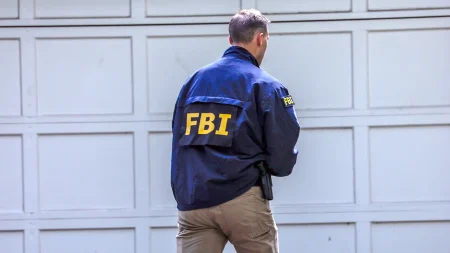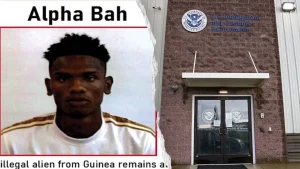



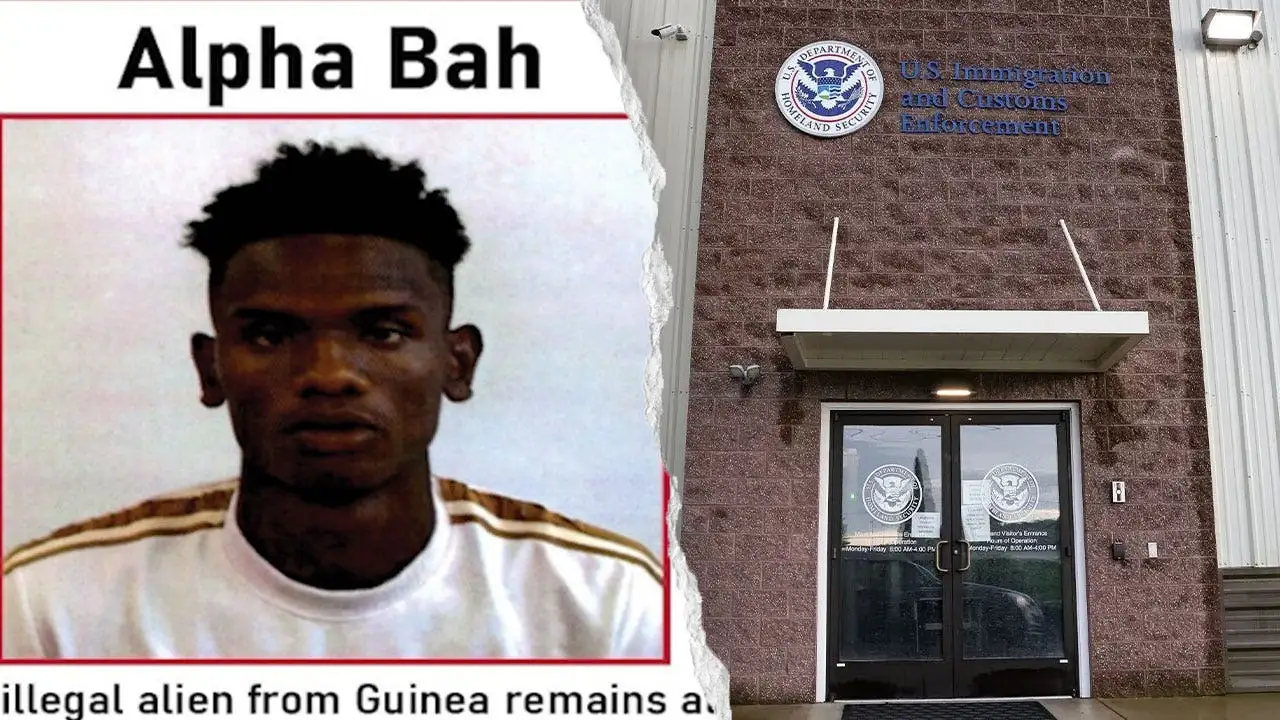
The sun hung low over the streets of New York City on that crisp Friday afternoon, and for the federal officers who had been tracking Alpha Bah for days, every passing minute felt like a ticking clock. At 2:22 p.m., a man matching the description of the fugitive—an illegal alien from Guinea wanted for a brutal attack on a police officer—emerged from a temporary residence and met with several unidentified individuals on a public street. The officers, part of ICE’s Enforcement and Removal Operations (ERO), held their position. They had eyes on him, but they also noticed school-aged children scattered nearby, laughing and walking home from their classrooms. A sudden, aggressive apprehension could have terrified those kids or sparked a chaotic scene. So they waited, patient and discreet, letting the man go about his brief interactions. About an hour later, they saw their moment: Bah was alone. Two officers approached, displaying their police and ICE credentials. They asked biographical questions, compared his face to a photograph, and confirmed his identity using Mobile Fortify, a handheld biometric device that left no room for doubt. Bah was informed of the administrative immigration arrest warrant, and without a struggle, he was handcuffed. At approximately 3:25 p.m., the manhunt was over. He was transported to 26 Federal Plaza in Manhattan for post-arrest processing—a quiet, professional end to a week that had exposed deep fractures in the city’s immigration policies.
But to understand the weight of that arrest, you have to rewind to the night of October 7th, when Bah’s life collided with that of a New York City police officer in the worst possible way. According to the Department of Homeland Security, Bah was initially arrested on charges of aggravated assault on a police officer with a deadly weapon, resisting arrest, obstructing governmental administration, and intent to obtain transportation without paying. The details of the incident are as alarming as the charges sound: a police officer doing their duty, perhaps responding to a call or confronting a suspect, suddenly facing a man willing to use a deadly weapon against law enforcement. The officer, whose identity has not been made public, likely suffered physical injuries and emotional trauma that will linger long after the bruises heal. The assault wasn’t a petty crime or a misunderstanding—it was a direct attack on the thin line of order that keeps society from chaos. In any other jurisdiction, an arrest like this would mean the suspect is held securely while awaiting trial, especially when federal immigration authorities have flagged him. But in New York City, a self-proclaimed sanctuary city, the law took a different, and for many, dangerous turn.
The DHS had lodged an ICE detainer with Queens Central Booking, requesting that Bah be held until federal agents could take him into custody. A detainer is not a request to convict or punish; it’s a simple, logical plea from federal authorities to local jails: “Please hold this person so we can enforce immigration law and protect the public.” But New York City’s sanctuary policies—designed to build trust between immigrant communities and local police—prevented the city from honoring the detainer. Bah was released, walking back onto the streets of Queens while federal officials were left frustrated and worse, unprepared. When Fox News Digital exclusively reported this release, the backlash was immediate and fierce. DHS Secretary Markwayne Mullin didn’t mince words, releasing a statement that thundered with anger: “This illegal alien from Guinea was arrested for assaulting a police officer with a deadly weapon. Despite these violent charges, New York City sanctuary politicians refused to honor ICE’s detainer and RELEASED him back onto the streets, and he remains at large.” His words carried a raw, personal edge—the sense that the system had failed, and that another American could get hurt because of a political ideology that put residency status above public safety. The frustration wasn’t just administrative; it was human. Officers had seen too many cases where a released suspect went on to commit more crimes. And now, they were lucky enough to find Bah again—but luck is not a strategy.
The week-long manhunt that followed was a testament to the dogged determination of ICE officers who refused to let Bah become a ghost. They compiled intelligence, tracked his movements, and zeroed in on his last known temporary residence in New York City. The surveillance operation was meticulous—not a frantic street chase, but a calculated, methodical approach. When they spotted him that Friday, they had a choice: rush in and risk a confrontation in a public space, or wait for the right moment. Their decision to wait until the children were gone and Bah was alone speaks volumes about their professionalism and their desire to avoid unnecessary harm. It’s easy to see immigration officers as faceless enforcers, but on that day, they were ordinary men and women doing a stressful job with calm precision. They knew that if they lost Bah now, he might vanish into the underground networks of illegal immigration, or, worse, commit another violent act. The moment of identification, using biometrics and a photo, was the culmination of hours of careful observation. When they finally took him into custody, there was no dramatic shootout or theatrical arrest—just a simple, firm “you’re coming with us.” The relief they must have felt, after days of wondering if their quarry would slip away, is something that doesn’t appear in official reports but is deeply human.
Now that Bah is back in federal custody, the focus shifts to the future. He will face the consequences of his alleged assault on a police officer, and he will also face immigration proceedings that could result in deportation back to Guinea. For the police officer he attacked, the arrest brings a measure of justice—a signal that the system, however flawed, still has the capacity to protect those who protect the public. But the story does not end with a simple victory lap. The larger controversy remains unresolved. New York City’s sanctuary policies, championed by politicians like Mayor Zohran Mamdani and tolerated by Governor Kathy Hochul, are now under intense scrutiny. Mullin’s statement condemned these policies as “evil,” a strong word that reflects the emotional weight of the issue. He called on both leaders to “knock it off” before another American is hurt. The debate is not just about one man; it’s about a fundamental principle: should local law enforcement be required to cooperate with federal immigration authorities? Proponents of sanctuary policies argue that they protect vulnerable communities and encourage undocumented immigrants to report crimes without fear of deportation. Opponents counter that these policies endanger public safety, especially when violent criminals are released back onto the streets.
But if we strip away the politics and the rhetoric, what remains is a deeply human story. There is the police officer who went to work that day expecting to serve and protect, only to be attacked with a deadly weapon—a person who probably has a family, worries about their safety, and now struggles with the memory of that night. There is Bah, a man who left his home country seeking a better life but squandered that chance through violence, forcing federal agents to hunt him down like a fugitive. There are the ICE officers who spent hours staking out a residence, balancing their duty to enforce the law with their awareness of the innocent children playing nearby. And there are the residents of New York City, who now must ask themselves whether they feel safer knowing that their city’s policies may have allowed a violent man to walk free for a week. The arrest on Friday resolved one crisis, but it did not resolve the underlying tension. Every day, in sanctuary cities across America, similar situations are playing out—men and women released despite ICE detainers, waiting for a second chance that may never come, or a third chance that puts others at risk. This story is not just about Alpha Bah; it is about the choices we make as a society, the values we prioritize, and the courage it takes to admit when our well-intentioned policies have failed to protect the very people they are supposed to serve. In the end, the arrest was a small victory, but the larger battle over immigration, safety, and compassion continues. And as the sun set over Manhattan, with Bah sitting in federal custody, one could only hope that his capture would serve as a reminder—not just that the law must be enforced, but that the human consequences of policy decisions are too often measured in fear, pain, and lost trust. The story, like the debate, is far from over.