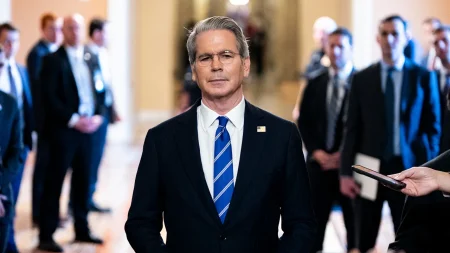



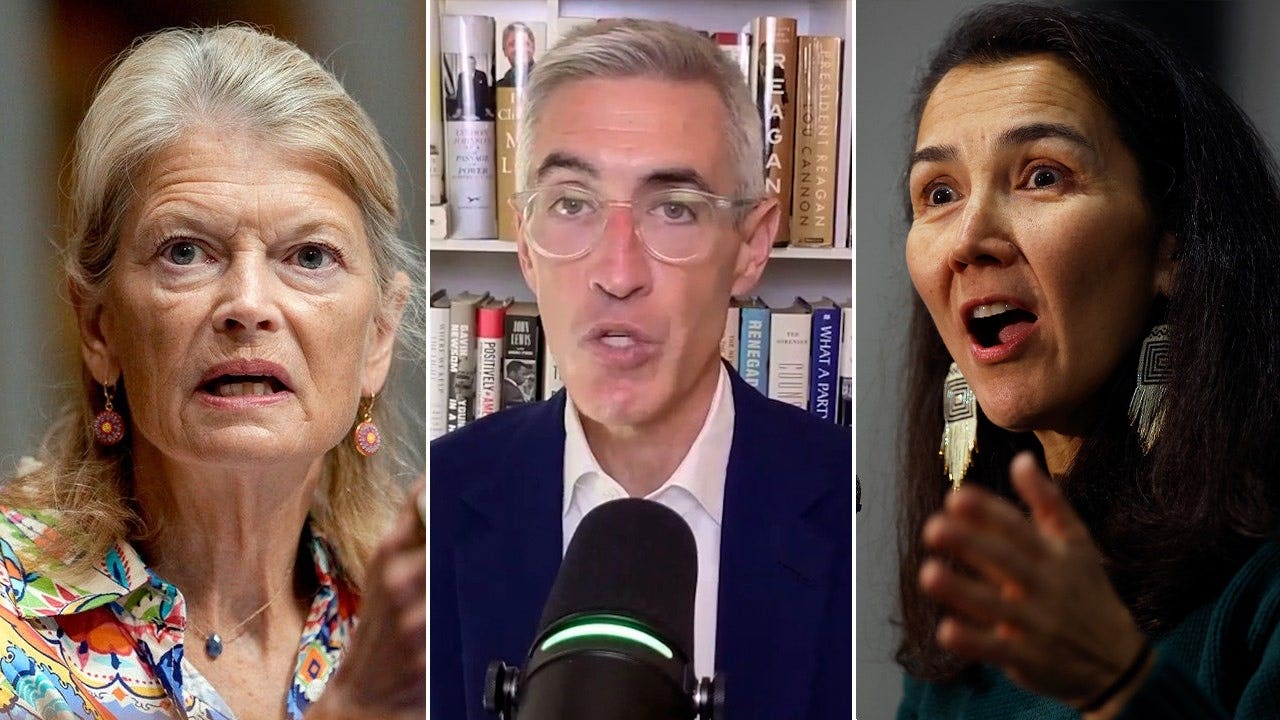
Politics is a game of inches, but every once in a while, it becomes a game of anxiety and hope, and that is exactly where Democrats believe they are standing five days before Election Day. Dan Turrentine, a veteran Democratic operative who once served as chief of staff to Colorado Governor Jared Polis when Polis was in Congress, says the party has a legitimate shot at something that seemed nearly impossible just a few months ago: retaking the United States Senate. “Five days out, Democrats have a pretty good chance to retake the Senate,” he told Fox News Digital. It is a striking assessment, not because Senate control was never in play, but because Republicans currently hold a comfortable 53-47 majority and have long been expected to defend their turf. Yet the map has shifted, and Turrentine argues that a combination of smarter Democratic campaigning, surprisingly tight races in unlikely places, and a string of weak Republican candidates has created an unexpected opening. The coming election is not a calm, predictable affair; it is one where operatives on both sides are sleeping poorly, refreshing polling averages, and trying to read tea leaves that seem to change every hour. For Democrats, the hope is real, but so is the fear that the polls are lying to them again.
The most tantalizing opportunities for Democrats are in states that ought to be safe Republican territory. North Carolina, long considered a red-leaning state with occasional Democratic breakthroughs, has become the center of the Democratic dream. Republican Senator Thom Tillis is retiring, and the seat has been held by Republicans for years, but former Governor Roy Cooper appears to have a commanding poll lead over Michael Whatley, the former chairman of the Republican National Committee. If a state like North Carolina falls, Turrentine says, the entire national map changes. But it is not just North Carolina. Democrats are also looking at surprisingly close races in Ohio and Michigan, two states that often feel like political weathervanes, and, more surprisingly, in deep red states like Texas, Kansas, and Missouri. These are places where Republicans have historically been able to sleepwalk to victory, and now they are having to fight for their political lives. For Turrentine, this is not a random accident. It is the result of disciplined, smart campaigning by Democrats who have found ways to speak to frustrated voters, including Republicans who are unhappy with the direction of their own party. In a polarized country, the path to power almost always runs through disaffected voters from the other side, and Turrentine believes Democrats have found that path in places where they were never supposed to be competitive.
Turrentine is not shy about placing a significant share of the blame on Republicans themselves. He says the GOP’s biggest problem is not just the national political environment, but the quality of the candidates it is offering in crucial races. “If Republicans lose the Senate,” he said, “it’s likely one of those four loses.” He pointed to a list of names that have become talking points among Democrats: Ken Paxton in Texas, Cindy Hyde-Smith in Mississippi, Roger Marshall in Kansas, and Darlene Graham Nordone, who is running for the seat of her late brother, former Senator Lindsey Graham. Each of these candidates, Turrentine argues, brings a different kind of baggage, whether it is scandal, extremism, or simple political awkwardness, and that baggage is weighing down the entire Republican ticket. While President Trump’s standing is part of the problem, he said, “that last mile comes down to weak candidate quality.” It is a harsh assessment, but one that many Republican strategists privately share. In an era where the national political environment is almost evenly divided, candidate quality matters more than ever. A flawed candidate can turn a winnable race into a long-shot struggle, and Turrentine believes the GOP has nominated too many flawed people in too many states. Democrats, meanwhile, have been happy to let those candidates speak, to air their own words, and to let voters make their own judgments.
But for all of his optimism, Turrentine is careful not to fall into the trap of trusting polls too much. He knows that recent elections have humbled Democrats and Republicans alike. “Campaigns are terrified about polling,” he admitted. Reaching voters has never been harder; people no longer answer unknown numbers, landlines are relics, and the electorate is changing so fast that traditional polling methods often miss the most important late-breaking dynamics. He pointed to the last several election cycles, 2016, 2022, and 2024, as examples of what he calls “consecutive change elections,” where polls struggled to capture the final movement of voters. It is entirely possible, he says, that frustrated Trump voters might stay home, or that early Democratic surges in places like Texas are simply the result of high-propensity voters casting their ballots early rather than evidence of an expanded electorate. “Nobody knows,” Turrentine said, “and people have a knot in their stomach about Tuesday.” That knot is real, and it reflects a broader anxiety that is gripping both parties. The polling data might look good for Democrats today, but the last decade has repeatedly shown that the numbers on a screen do not always match the numbers in a ballot box. Campaigns are haunted by the memory of watching leads vanish in the final hours, and Turrentine’s cautious tone suggests that even the most optimistic Democrat is holding their breath.
If there is one race that has complicated the Democratic math, it is Alaska. Until recently, Democrat Mary Peltola appeared to be leading in almost every poll in her Senate race against Republican incumbent Daniel S. Sullivan. But a bombshell New York Times report alleged that Peltola’s campaign helped recruit a man named Daniel J. Sullivan to run against the incumbent, an apparent effort to confuse voters by placing a nearly identical name on the ballot. Peltola has denied any involvement in the former Sullivan’s campaign, but the controversy has shaken the race. Turrentine acknowledged that Alaska may now be a toss-up, a painful development for Democrats who have been counting on holding a seat they believed was within their grasp. “Peltola has led almost every single poll until yesterday,” he said. As with so many of these states, he explained, Democrats win Alaska only when disgruntled Republicans become willing to vote for them, and it would not take much for those same voters to say they simply cannot stomach the Democrat after such a messy story. If Alaska slips away, the Democratic path to a majority becomes much narrower, possibly meaning that they would need to win Ohio, Texas, and one of Michigan, Maine, Kansas, or Mississippi. Maine, in particular, has long been a Democratic fantasy. “We’ve spent entire careers thinking we’re going to defeat Susan Collins,” Turrentine said. “It feels slightly different this time, but it also doesn’t; she’s within a point or two.” No Democrat wants the majority to come down to a state like Maine or Alaska, where the margin of error is razor-thin and one unexpected twist can change everything.
Even if Democrats do manage to win control of the Senate, Turrentine warns that their troubles will just be beginning. The party is deeply divided between the moderates who are winning these tough races and the increasingly popular far-left wing that wants to push the party in a more aggressively socialist direction. He calls this tension a fight between the “majority makers” and the base, and both sides believe they are indispensable. “A moderate can’t win if the base doesn’t turn out,” he observed, but at the same time, a base-driven candidate can lose the independent and Republican-leaning voters that Democrats need to capture these seats. This internal conflict is already shaping the party’s leadership debates. Turrentine relayed criticisms of House Minority Leader Hakeem Jeffries, who would likely become Speaker if Democrats also win back the House. “Nobody knows where Hakeem Jeffries comes down. And no one knows who Hakeem Jeffries is,” he said. Former Speaker Nancy Pelosi, for all the polarization she inspired, had the trust of both wings of the party. Jeffries, by contrast, still faces questions from the left and the center about where he truly stands. Senate Minority Leader Chuck Schumer is also watching his flank, aware that a primary challenge from his left could be waiting for him. A Democratic Senate majority would be a great victory, but it would also be a fragile one, built on a coalition of voters who do not fully trust each other and a leadership team that is still struggling to define itself. For Turrentine, that is the real story of this election: a party with a real chance to win, and a party that is still not entirely sure what it would do with the win if it got it.