

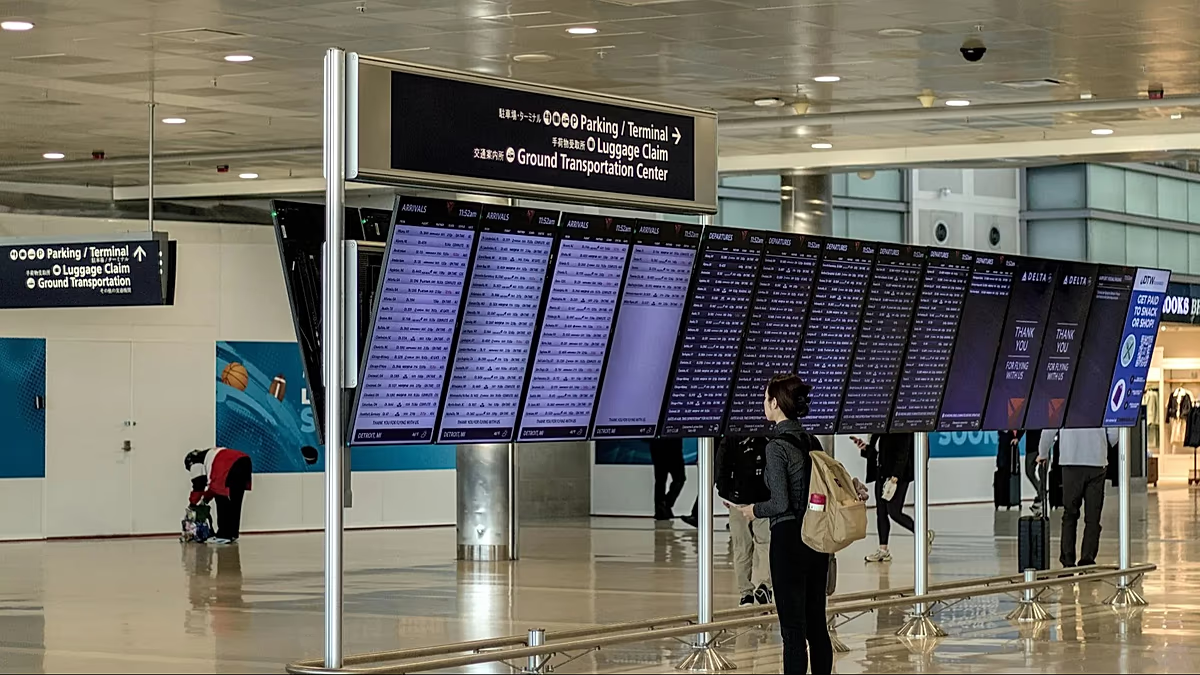


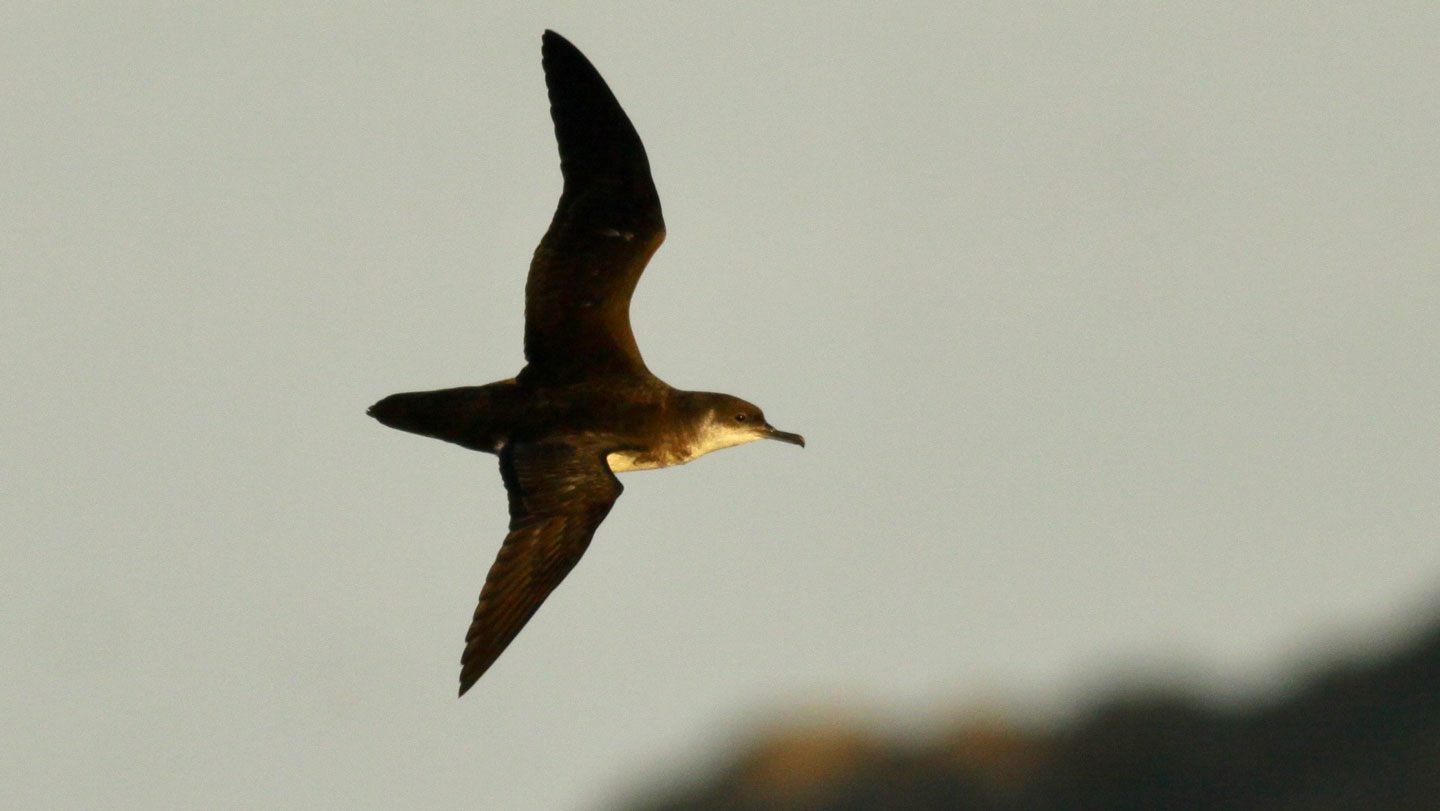
Jet lag is one of those deeply human, almost universal complaints. It’s the groggy, headachy, slightly unreal feeling after a red-eye flight, when your body insists it’s three in the morning but the world outside is serving breakfast. We tend to think of it as a side effect of modern travel, something only humans in pressurized metal tubes could ever suffer. But according to a fascinating new study, a small seabird called the Manx shearwater may experience something remarkably similar. Manx shearwaters, known scientifically as Puffinus puffinus, are born travelers, spending much of their lives gliding over the open ocean. They nest in burrows on islands and rocky coasts, but they range hundreds of miles across the sea to feed, returning to their nests with almost uncanny precision. For decades, researchers have tracked these birds, and what they’ve uncovered is startling: when shearwaters fly quickly east or west, their internal clocks fall out of sync with the local time around them. Their sense of direction goes slightly wrong, and they veer off course, as if suffering from a kind of avian jet lag that makes the world feel displaced and their own instincts unreliable.
The reason for this strange navigational stumble lies in how birds find their way across vast, featureless expanses of water. When there is no coastline, no islands, no landmarks to lean on, many birds use the sun as a compass. But using the sun is not as simple as looking up and flying toward it. The sun is always moving across the sky, sliding from east to west as the day wears on. If an animal simply locked onto the sun’s current position and held it, it would slowly drift in a curve rather than a straight line. To stay on course, a bird needs an internal clock—a circadian rhythm tuned to local time—that tells it where the sun should be at any given moment. The internal clock lets the bird correct for the sun’s movement and maintain a straight heading, even when the sun is low and slanting in the late afternoon or early morning. This system works beautifully when a bird stays within the same longitude. But when a shearwater races east or west across multiple degrees of longitude in a single day, local time shifts beneath it faster than its internal clock can adjust. The bird’s body is still working on the time it left behind, while the sun is telling a different story. That mismatch, scientists long suspected, could confuse the sun compass and send birds veering off course. But proving that idea in the wild, with free-flying birds over the open ocean, seemed almost impossible.
Then Tim Guilford, a biologist at the University of Oxford, and his colleagues pulled together an extraordinary dataset. Over twenty years, the team fitted more than a thousand breeding Manx shearwaters with miniature GPS trackers. These tiny devices recorded the birds’ movements in remarkable detail, logging thousands of trips from their breeding colonies in the United Kingdom to feeding grounds up to a thousand kilometers away. From that mountain of data, the researchers focused on the most revealing moments: the return flights home. They selected 1,837 continuous homeward journeys, clean and uninterrupted, to see whether the birds’ paths matched the predictions of a sun compass thrown off by jet lag. The logic was elegant. The researchers assumed that the birds’ internal clocks were synchronized with local time when they set off, most likely at sunrise. From there, they calculated how each bird’s long-distance east-west movement should have shifted the sun’s apparent position relative to the bird’s inner clock. Then they compared those calculations to the actual flight paths recorded by the GPS trackers. The match was striking. The shearwaters veered from their intended direction by up to fifteen degrees, almost exactly as the jet lag model predicted. For a bird that prides itself on precision navigation, fifteen degrees is a meaningful error—a subtle but undeniable wobble in the elegant geometry of its journey.
But the surprise didn’t end there. The most unexpected findings came when the birds were almost home. Guilford and his team noticed that the orientation errors persisted even when the shearwaters were in sight of familiar coastline. If a bird is flying along a shore it knows well, you would expect it to abandon its skewed sun compass and simply follow the land. The coastline is right there—a clear, reliable sign that doesn’t depend on time zones or internal clocks. Yet the birds did not fully correct their course. Instead, they continued to drift, sometimes veering closer to shore and sometimes farther out to sea, in line with the predicted sun compass errors. Even when a perfect guide was laid out before them, the shearwaters seemed to keep trusting their sun compass, integrating its flawed signal with the visual cues of the coast. Rather than rejecting the sun entirely, they blended both sources of information, even when those sources were pointing in different directions. This navigational tug-of-war is subtle; the errors only add a few extra kilometers to the journey. They are not enough to stop the shearwaters from finding their way home. But they reveal something profound about how animals make decisions: the inner clock is not easily overridden, and navigation is not a single, straightforward skill, but a messy, layered process of weighing imperfect information from many senses.
For scientists who study animal behavior, this is thrilling. Sangeeta Rani, a chronobiologist at the University of Lucknow in India, was not involved in the study but responded to it with excitement. What fascinates her is the suggestion that these birds are not simply slaves to one navigational system. They are flexible, adaptive creatures that can hold multiple sources of information in mind at once, compare them, and still push forward even when those sources conflict. This is no small thing. In a world where coastlines are being reshaped by rising seas, where familiar landscapes are altered by human development, where food sources shift because of climate change, a bird that relies on a single rigid map would be vulnerable. But a bird that can juggle different cues, that can notice when something is off and still keep going, has a better chance of adapting. The shearwaters’ small navigational errors are not a flaw; they are a window into a far more sophisticated resilience. Their internal clocks are resetting all the time, their sun compasses are always being recalibrated, and their brains are constantly weaving together astronomy, geography, memory, and instinct into a single, workable sense of direction.
There is something deeply human in that struggle to find your way when the world seems slightly out of place. Rani put it beautifully: “After all, if I have marked a path for myself in the woods, my innate ability is not to mindlessly follow the markings. It is to find out what’s missing and still find my way back.” The Manx shearwater, with its glossy black back and its long, graceful wings, is not just a master of the ocean sky. It is a living lesson in resilience, a reminder that getting lost is sometimes part of finding your way. Like a traveler stumbling off a long flight, disoriented and tired, the shearwater may misjudge the sun for a little while. It may drift a few degrees off course, skim too close to a cliff, or wander farther out to sea than it intended. But it keeps flying. It keeps adjusting. It keeps listening to the quiet voices of its internal world and the loud, shifting signals of the external one, blending them into a journey that still, eventually, leads home. That is not just a scientific discovery about a seabird. It is a story about how all living things—winged or not—navigate the unexpected, holding on to their inner compasses even when the sun seems to be in the wrong place.