


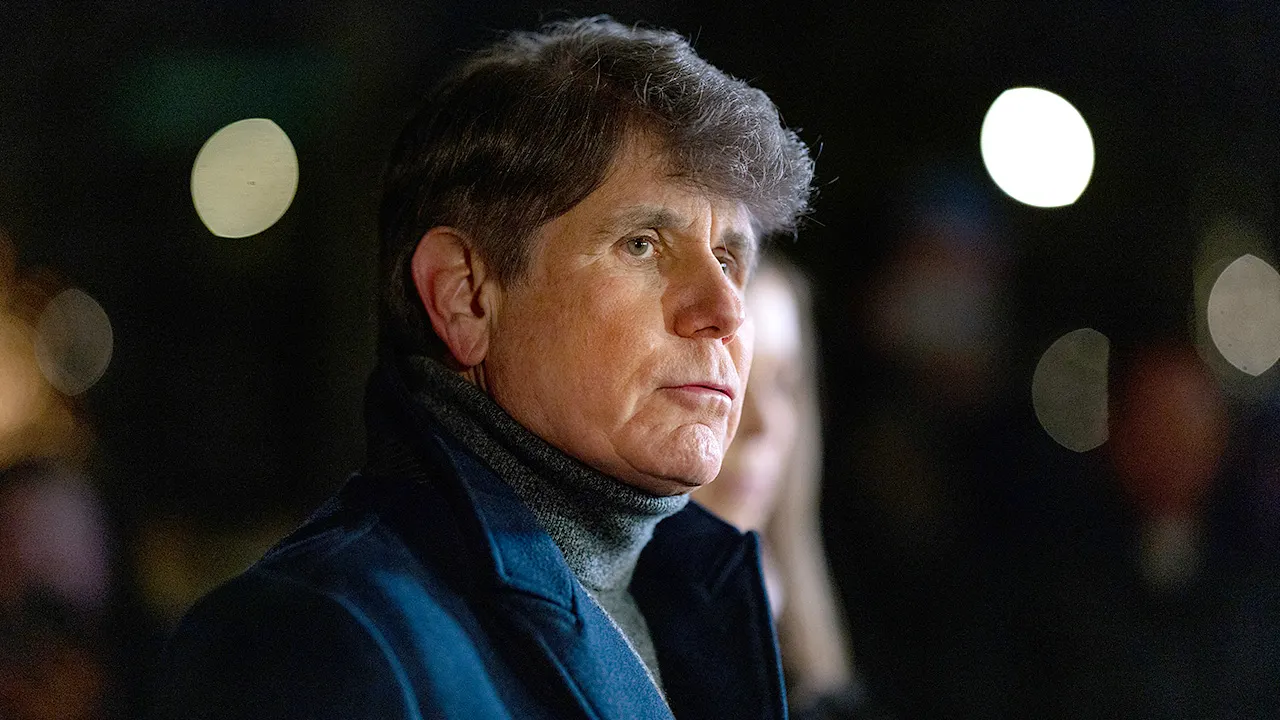
Anyone who has ever sat across from Rod Blagojevich, even for a short conversation, will likely hear the same story sooner or later. It is a story he has told for years, with the insistence of a man who believes history has wronged him. He was never going to sell the United States Senate seat left vacant by Barack Obama in 2008. He was not the corrupt governor that federal prosecutors made him out to be. He was, in his telling, a politician on the verge of a legitimate deal, one that would have appointed Lisa Madigan, then the Illinois attorney general, to the Senate in exchange for support from her father, Mike Madigan, the all-powerful Speaker of the Illinois House. That deal, Blagojevich claims, was for healthcare legislation and a budget that would help the people of Illinois. Instead, he was arrested before he could finish it. He ended up serving nearly eight years in federal prison, until President Donald Trump commuted his sentence in 2020 and then, in 2025, issued a full pardon. For years, Blagojevich’s version of events was dismissed as the self-serving talk of a convicted politician. But now, newly obtained FBI records have surfaced that add a fascinating, and somewhat awkward, layer to the story. Fox News has obtained partially redacted FBI FD-302 forms from interviews conducted with Barack Obama and Rahm Emanuel shortly after Blagojevich’s arrest, and those documents reveal just how close the Lisa Madigan appointment actually came to happening, while also offering a rare, behind-the-scenes look at how the Obama team maneuvered around a governor who was already under federal investigation.
The records come from a dramatic stretch of time in late 2008 and early 2009. Blagojevich was arrested on December 9, 2008, at his home in Chicago, just after six in the morning. It was a stunning scene, the kind of political theater that Illinois has somehow made routine. U.S. Attorney Patrick Fitzgerald later said the governor was arrested in the middle of what he called a “political corruption crime spree,” and that they acted to stop it. But before that arrest, there was a flurry of quiet conversations among the highest levels of national politics. Obama, then president-elect, was interviewed by the FBI on December 18, nine days after the governor was arrested. Emanuel, his incoming chief of staff, was interviewed two days later, on December 20. For years, those interview records were kept out of Blagojevich’s two criminal trials and hidden from the public. Now they are finally available, and they paint a complicated picture. According to Obama’s interview notes, he was asked whether he knew about Emanuel having a conversation with the Blagojevich administration about Lisa Madigan being considered for the Senate seat in exchange for legislation passing. The notes say that Emanuel would have been aware that Lisa Madigan was an acceptable candidate to Obama, and that Emanuel had an open line of conversation with the Blagojevich administration. The Emanuel interview goes even further, describing a December 8 meeting where David Axelrod and Emanuel went to see Senator Dick Durbin of Illinois. All three agreed that Lisa Madigan would be a good candidate. After that meeting, Emanuel contacted John Harris, Blagojevich’s chief of staff, and told him the merits of appointing Lisa Madigan to the Senate. The very next morning, Blagojevich was arrested. The timing is almost unbelievable, and it gives Blagojevich’s long-standing claim at least some supporting context.
Blagojevich, of course, was thrilled when he learned what the documents contained. He has spent years insisting that the Madigan deal was real and that he was about to complete it before federal agents shut everything down. In light of the newly unsealed information, he repeated his argument with even more confidence, saying that the documents prove the Madigan deal was very much at the center of his attention at the time. He also took a swipe at Fitzgerald, saying there never was a crime spree, and that the U.S. attorney’s description was simply an excuse to arrest a sitting governor in his own home. There is a certain tragic irony in all of this, because Mike Madigan, the powerful speaker whose support Blagojevich supposedly wanted, later went to prison himself in a separate corruption case. So the whole saga has become a sort of grim monument to Illinois politics, where power, influence, and self-dealing seem to go hand in hand. Blagojevich’s claim is that he wanted to appoint Lisa Madigan, the daughter of the speaker, in exchange for the father’s support on his healthcare package and budget. Whether that amounts to legitimate horse-trading or outright corruption depends on who you ask. In Blagojevich’s mind, it was just politics. In the minds of prosecutors, it was a crime, and they were able to convince a jury of that. But the newly released FBI notes show that Obama’s own people were deeply involved in weighing the same option, which makes the line between acceptable political maneuvering and criminal behavior seem more blurry than ever.
Beyond the Madigan question, the FBI interviews reveal other interesting details about how Obama and Emanuel handled the Senate vacancy. At first, Obama wanted Valerie Jarrett, his close friend and confidante, to succeed him in the Senate. But he changed his mind early in the process, deciding that he wanted Jarrett to join him at the White House as a senior advisor instead. Emanuel, however, was still interested in Jarrett taking the Senate seat rather than working in the White House. According to the Emanuel interview, he thought that having the president-elect’s best friend on the White House staff would be awkward. Blagojevich, never one to hold back, offered his own interpretation of Emanuel’s motives, calling him a crafty, political, cunning, and very effective operator who was interested in being closer to the king. Eventually, Obama became resolute. He told Emanuel that he had made a decision that Jarrett was going to the White House, and he was not going to reconsider it. After that, a handful of familiar names entered consideration, including Tammy Duckworth, who later became a senator, and Representatives Jan Schakowsky and Jesse Jackson Jr. Jackson also went to prison in a separate case. At that point, Obama said he did not want to put his thumb on the scale, even though he had already sent Emanuel to communicate with the governor’s office that he was interested in someone who would be a good senator for Illinois and could also hold the seat in the 2010 election. It was a delicate dance, caught between wanting to shape the outcome and not wanting to appear as though he was dictating it. In the end, Blagojevich appointed Roland Burris to the seat, a decision that was itself controversial and led to a trial where Burris was not convicted but was widely seen as damaged goods. Burris did not run for reelection, and Republican Mark Kirk won the seat in 2010, only to be defeated by Tammy Duckworth in 2016. So the entire affair reshaped Illinois politics in ways that neither side could have fully anticipated.
What makes these newly released documents so compelling is not just the political intrigue, but the human story underneath it. Here were some of the most powerful people in America, in the middle of a historic presidential transition, trying to manage a political crisis in their home state. Obama was preparing to become president of the United States, and yet he still had to deal with the awkward reality of Rod Blagojevich, a governor who could not be trusted and who had the power to choose a temporary replacement for one of the most important political positions in the country. The FBI interviews show that Obama was aware of conversations about the Senate seat, that his own chief of staff was talking directly to the governor’s office, and that Lisa Madigan’s name was circulating as a favorable option. This does not necessarily mean that Obama or Emanuel did anything illegal, but it does show that they were not bystanders. They were players, trying to influence an outcome in a way that would benefit their party and their agenda. Meanwhile, Blagojevich was doing what he always did, trying to extract as much political value as he could from his position. The fact that he was arrested just hours after a conversation in which Emanuel endorsed Lisa Madigan to his chief of staff suggests that the timing of the arrest may have cut off a deal that was already in motion. It also raises uncomfortable questions about whether federal prosecutors acted too hastily, or whether they simply saw enough evidence of corruption and decided to stop it before it could go further. Blagojevich’s supporters have long argued that the indictment was overblown, that he was a rough-edged politician who said things out loud that others only whispered.
In the end, the newly obtained FBI records do not resolve the mystery. They only add more texture to a story that has fascinated and horrified political observers for years. Blagojevich served his time, received a pardon, and now lives with a reputation that will forever be tied to the scandal. Mike Madigan, the father of the woman Blagojevich says he wanted to appoint, also ended up in prison, adding another layer of tragedy to an already dark political saga. Rahm Emanuel went on to become mayor of Chicago, and later served as ambassador to Japan, showing that political survival is possible even when your name appears in the middle of an FBI investigation. Obama, of course, went on to a second term as president, and his legacy was not significantly harmed by the Blagojevich mess. But these documents remind us that even the loftiest political figures are often engaged in the same messy, transactional business that they publicly condemn. The difference is often not in the actions, but in the timing of an arrest, the skill of a lawyer, or the simple luck of being in the right room. Blagojevich was a man who loved attention, who loved power, and who never seemed to understand where the line was until it was too late. Whether the new evidence proves his innocence or merely proves that he was not alone in his scheming will be debated for years. What is clear is that the story of Rod Blagojevich, Barack Obama, Rahm Emanuel, and Lisa Madigan is not a simple morality tale. It is a story about ambition, loyalty, and the often blurry boundaries between public service and self-preservation. For anyone who wants to understand how American politics really works, these FBI notes are a small but revealing window into a moment when the country was changing, and the old rules of power were being tested in real time.