


Paragraph 1: The News That Brought a Sigh of Relief to Factory Floors
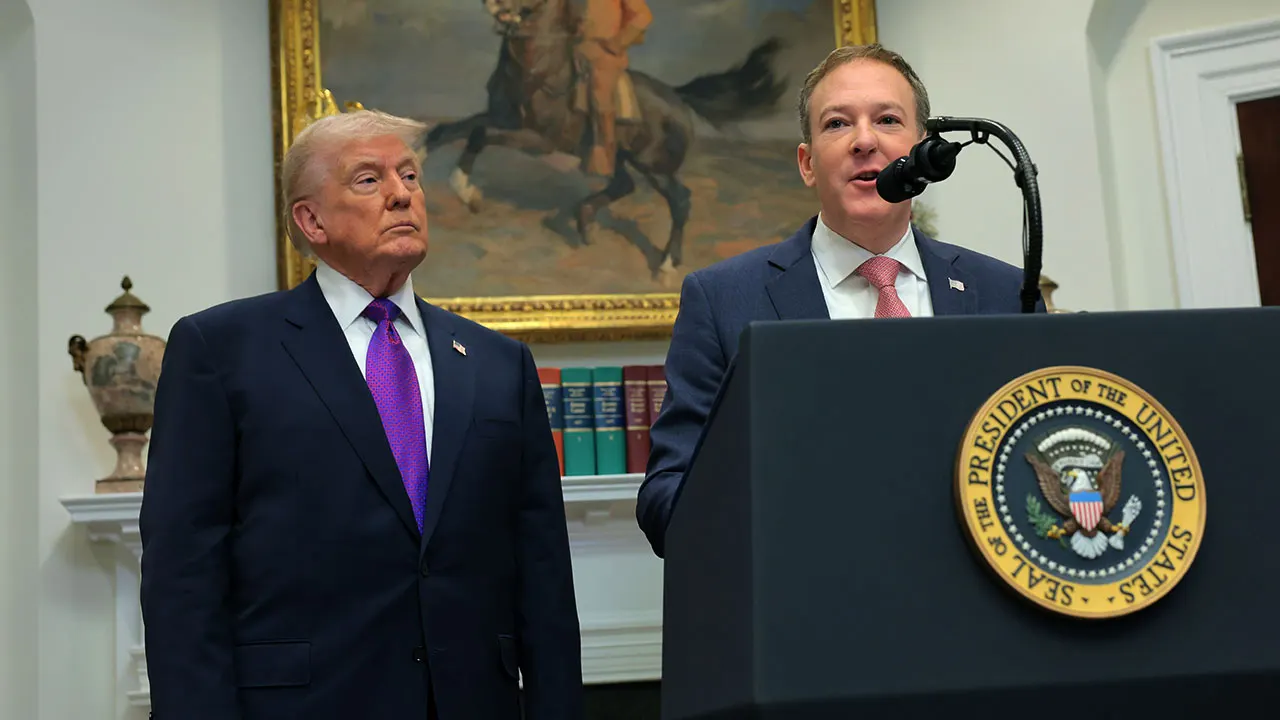
Imagine for a moment that you are a manufacturer in Ohio, in Texas, or in Pennsylvania. You have spent years pouring your heart, your savings, and your weekends into a factory that employs your neighbors, supplies local schools with tax revenue, and sends American-made goods across the globe. Then, one day, you are handed a thick binder of new federal regulations with a compliance deadline that seems to have been written by someone who has never actually run a production line. That has been the reality for countless manufacturers under the previous administration’s ambitious environmental agenda. But this week, a shift occurred that, according to the head of the nation’s largest manufacturing trade group, sent a jolt of hope through the industrial heartland. The Trump administration, through Environmental Protection Agency Administrator Lee Zeldin, announced the elimination of a swath of Biden-era power plant emissions standards. It was a move that, in the words of National Association of Manufacturers (NAM) CEO Jay Timmons, gave manufacturers the sense that the White House was finally listening to their concerns. It wasn’t just a policy change; it was a declaration that the people who build things—who weld steel, mix chemicals, and assemble semiconductors—might finally have a seat at the table when it comes to designing the rules that govern their livelihoods. The announcement didn’t capture the same headlines as a tariff war or a diplomatic summit, but in the hushed corridors of plant managers’ offices, it was nothing short of a game changer.
Paragraph 2: When Good Intentions Collide with Shop-Floor Reality
The Biden-era standards, finalized in 2024, were, in theory, noble in their aspirations. They aimed to force older coal-fired power plants to install expensive carbon capture technology or shut down, with a timeline that many experts considered extraordinarily aggressive. The goal was cleaner air and a healthier environment—something that no reasonable person opposes. But as Timmons pointed out in a conversation with Fox News Digital, the problem was never the destination; it was the roadmap. “The timeline that they had proposed was just, it wasn’t feasible,” he said. His voice carries the frustration of someone who has had to explain to union workers and shareholders why a federal deadline is mathematically impossible to hit without bankrupting the enterprise. The standards were “simply unworkable,” and NAM, along with dozens of other industry groups, had raised their objections “very, very clearly” at the time. They argued that the technology wasn’t ready, that the grid would become less reliable, and that the cost of compliance would force factories to lay off workers or move operations overseas—which would simply export the pollution and the jobs. The previous administration heard those concerns, Timmons noted, but “simply disagreed.” It was a classic Washington standoff: ideologues on one side, pragmatists on the other. Now, with the stroke of a pen, Zeldin has reset the clock, signaling that the new EPA will prioritize a path that doesn’t sacrifice the nation’s industrial base at the altar of a climate deadline. The relief is tangible, but as Timmons is quick to caution, the battle for regulatory sanity is far from over.
Paragraph 3: The Great Unraveling of Red Tape—and Why It’s Just a Start
Cutting the emissions standards is a critical first step, but it is only one vine in a dense jungle of red tape that has choked American manufacturing for decades. Timmons hailed Administrator Zeldin for making the move, which he described as a powerful signal, but he was equally quick to point out that there is much more work to be done. The executive action, while welcome, is fragile; it can be reversed by the next administration just as easily as it was issued. What manufacturers truly need, Timmons argued, is structural reform that transcends the political pendulum. “Uncertainty is the absolute worst enemy,” he said. And his reasoning is grounded in the everyday reality of running a business. A manufacturer does not decide to build a new plant in a month. It takes years of feasibility studies, site selection, environmental reviews, and capital raising. A factory built today will be operating in 2040, 2050, and beyond. So when federal regulations change hands every four or eight years, it become impossible to plan. One administration demands carbon capture; the next removes the requirement. One administration bans a chemical; the next reinstates it. This whiplash forces manufacturers to adopt a defensive posture, hoarding cash instead of investing in expansion, because the ground keeps shifting beneath their feet. Timmons believes that lasting change must come through Congress, not just the executive branch. Only legislation can create a stable, predictable regulatory environment that allows businesses to dream big again. It’s not about wanting a free pass on pollution; it’s about wanting a fair fight and a consistent set of rules for the long haul.
Paragraph 4: The Permitting Nightmare and the American Dream Deferred
If there is one area where nearly every manufacturer agrees that reform is urgently needed, it is the nation’s permitting process. Timmons cited NAM polling that found a staggering 80% of manufacturers say the length and complexity of permitting is harmful to increasing investment. Let that sink in. Four out of five factories are looking at new projects—expanding a line, building a warehouse, upgrading a boiler—and are being told to wait years, sometimes a decade, for government approval. The process involves multiple federal agencies, endless environmental reviews, and a web of overlapping regulations that can ensnare even the most straightforward project. The result? Dreams are postponed, expansions are shelved, and communities lose out on jobs. But the inverse is also true. The same NAM poll showed that 87% of manufacturers would expand their business, hire more workers, or increase wages and benefits if the permitting process were streamlined. Think about the human impact of that statistic. That’s not a number; that’s a father in Oklahoma getting a steady paycheck for the next twenty years. That’s a young engineer in Michigan finally being able to afford a home. That’s a small town diner staying in business because the factory down the road is growing. When a manufacturer has to wait seven years for a permit to build an air compressor, it’s not just an inconvenience—it’s a moral failure, because the people who would have been employed, the families who would have been fed, and the economic vitality that would have been generated all become collateral damage of bureaucratic inertia. The Trump administration has made permitting a talking point, but Timmons and his members want to see it become a tangible reality, not just a campaign promise.
Paragraph 5: The Art of the Possible—and Why Business Must Be in the Room
So what does Timmons actually want? He wants a seat at the table. Not just a symbolic seat, but a genuine opportunity for manufacturers to explain what is technically and economically feasible. “There needs to be more opportunities for business to be at the table,” he said, “to really explain what the art of the possible is.” He is careful to frame this not as a resistance to environmental progress, but as a demand for realism. “No one is saying that we should not be working hard to achieve cleaner air, cleaner water, healthier communities,” Timmons emphasized. “In fact, we’re saying exactly that. We should be part of the solution to make that happen.” This is the crux of his argument: industry wants to be a partner, not an adversary. Manufacturers live in the communities they serve. Their children breathe the same air and drink the same water. They have every incentive to be good stewards of the environment. But they also have to meet payrolls, compete with foreign rivals, and keep the lights on. When regulations are designed in an ideological bubble, with input from academics and activists but not from the people who actually operate furnaces and turbines, they are doomed to failure. Timmons envisions a future where environmental protection and industrial prosperity are not at odds, but are instead two sides of the same coin. That future begins with sitting down together, setting realistic goals, and crafting standards that push innovation without breaking the businesses that form the backbone of the American economy. It’s about common sense over symbolism, and progress over purity.
Paragraph 6: A New Dawn for American Manufacturing—or Just a Reprieve?
As the dust settles on the EPA’s announcement, the mood among manufacturers is cautiously optimistic. Timmons’ praise for Zeldin and the Trump administration was sincere, but it was also pragmatic. He knows that the rollback of the 2024 emissions standards is a necessary but insufficient step. The true test will come in the form of durable legislative action that prevents the next president from undoing all the progress. He also knows that the world is watching. In a global economy where China builds infrastructure at lightning speed and Europe rethinks its own industrial policies, America cannot afford to tie itself up in knots of its own making. The potential is enormous: the survey shows that 87% of manufacturers are ready to hire and expand if the shackles are loosened. But potential is not the same as reality. For every permit that is streamlined, for every redundant regulation that is repealed, for every honest conversation between federal officials and factory floor managers, the dream grows a little more tangible. Timmons remains hopeful. He sees an administration that is “listening,” and he sees an opportunity to reshape the relationship between government and industry from one of suspicion to one of cooperation. The path forward is not easy, but it is clear. It involves cutting red tape, creating stability, and remembering that behind every statistic is a human being—a welder, a machinist, a single parent looking for a second shift, a young graduate seeking a career that doesn’t require leaving home. The recent EPA action is a welcome beginning, but it is only the first mile of a long road. The question now is whether Washington has the wisdom and the will to keep walking it, hand in hand with the people who make things, until the American manufacturing renaissance is not just a slogan, but the very air we breathe.