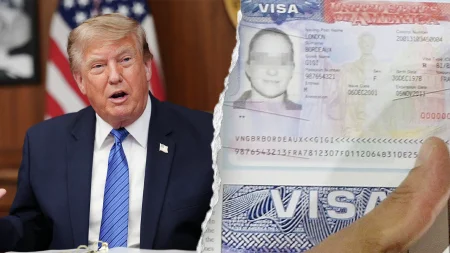



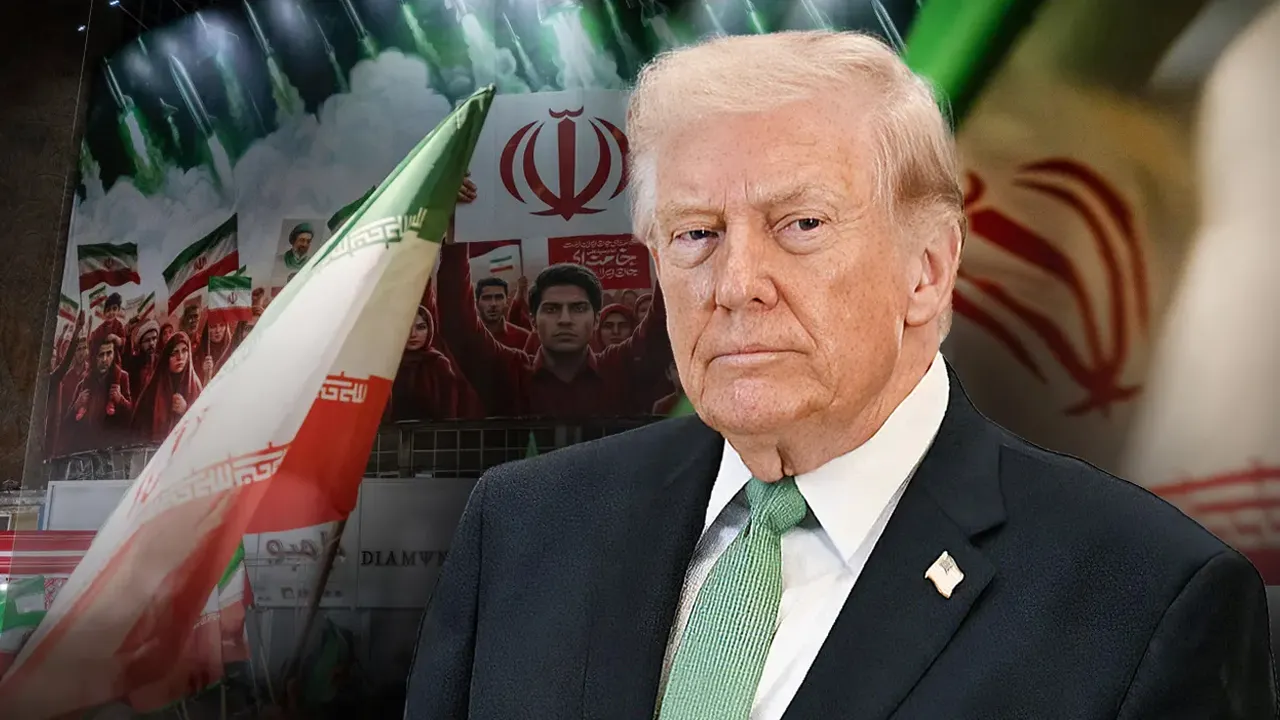
President Donald Trump issued a stark warning that felt more like a military proclamation than a diplomatic statement, declaring that the United States is now waging the most severe economic operation it has ever launched against another country. In a Truth Social post, he described it as an “economic D-Day” and made one thing exceptionally clear: any country that tries to help Iran survive this pressure campaign will no longer be viewed as neutral. He specifically named financial institutions, businesses, airports, government entities, and warned that anyone offering a “lifeline” to Iran would face what he called “tremendous economic consequences.” The post had an unusually personal and threatening tone, especially the line “You know who you are.” That phrase was directed at everyone who has been quietly processing money, moving oil, registering ships, or laundering transactions through front companies. This is not just another set of sanctions, not another file in a Treasury report. Trump is trying to create a worldwide ultimatum: either you stand with the United States to isolate Iran, or you become a target yourself. And by invoking the memory of D-Day, he was deliberately casting this as an invasion, certainly not with boats and soldiers on a beach, but with every platform available, dollar, data, and dark networks of trade.
The details of exactly what Trump wants to stop are less abstract. In his own words, he named oil smuggling, swap lines, cash transfers, exchange houses, ship registries and front companies, and said all of it must stop now. In plain terms, he is telling the world to stop moving oil around in the dark, stop swapping goods in ways that avoid money trails, stop using little money changers to transfer cash, stop hiding ships under flags of convenience, and stop setting up fake businesses to disguise who is buying and selling. These are the quiet arteries that have kept the Iranian economy alive despite years of sanctions, and the president believes that if he squeezes them, Iran will eventually have to beg for a ceasefire. He wrote that Iran’s navy and air force are effectively destroyed and that all production facilities have been reduced to rubble, and that the Iranian currency is now “worthless.” Those are deliberately strong, devastating words. They are aimed at reassuring Americans that the fight is nearly over and, at the same time, warning friends, enemies and governments not to miss their last chance to step aside or join. In his view, the “maniacs” in Iran are on the ropes, and this new historic push, as he calls it, will finally cripple their ability to spread terror anywhere in the world.
The broader military and diplomatic context is just as serious as that late-night, telegraphic post. Washington is already in the middle of a pressure campaign against Iran, and it includes a naval blockade that has made life along the coast very difficult for Iranian shipping and trade. The clock, as Fox News has put it, has hit zero, and the president is demanding an actual white flag, which is to say, an unconditional surrender. While Trump talks about economic destruction, military assets are likewise in the gunfight. Iranian leaders, for their partners, are warning neighboring Gulf states not to cooperate with the US military. That may sound like rhetoric, but it is a real and dangerous game. For months, Iran has been able to fight back through allied militias and proxy groups, but its actual ability to hatch a full-scale counterattack blocks as damaged infrastructure and a weakened fleet. This has created a sort of strange situation where the United States is trying to humiliate Iran without burning the entire area to the ground, and Iran’s leaders are trying to demonstrate to their own people and to the region, that they can still impose a terrible cost on everyone around them. The naval blockade, the economy and diplomacy are all now stacked together in one strategy.
Perhaps the most vivid sign of how fast this is shifting came from the United Arab Emirates, usually an important commercial and security partner to the United States. On Wednesday, the Emirates took the dramatic step of cutting all financial and economic ties with Iran, saying that enough is enough, after seeing the escalation and the incoming missile fire. For anyone who has spent time in the Gulf, UAE has always been a place where Iranian capital, merchants and traders could be found on every street, especially in Dubai. U.A.E. is not the small Channel that you sometimes see in old histories; it has become one of the world’s great trade chokepoints, and its relationship with Iran is deeply woven into the daily economy of that region. Seeing an identifiable severance, publicly and almost theatrically, is one of the clearest signals yet that the pressure is working. But it also has a very human dimension: Iranian residents, families, these shopholders, and trucking the market, especially with the Lebanese Diaspora, now face enormous uncertainty. In a region where ties are personal and generations old, making a government break is not easy. It shows how much fear and political calculation are driving the moment, and it also sends a message to the rest of the Gulf. If the UAE is going to apply this diplomatic coldness to Iran, other countries should hold the finger. But at what cost? A peaceful and open port suddenly becomes another line on a wartime map.
The strategy is not perfect, however, and the biggest weakness may not be in the Gulf but in the deeper relationship between Iran, Russia, and China. Iran is historically close with both powers, and China and Russia have no interest in taking orders from Washington about what they can and cannot do for their partners, especially because with cities, in Russia’s case, also under its own severe sanctions. There is a key China-Iran infrastructure link that some experts are already calling a critical hole in the Trump pressure campaign. It is not a about an old road or spending millions of dollars. It is about the new physical and digital links that allow raw materials, money, and perhaps even weapons to pass through with fewer human checkpoints. While the president was making his announcement in Washington, those routes were still being discussed in trading rooms, in ports, in Chinese and Russian offices, and in every place where, money can be moved around a control. Iran also has used its regional proxies as instruments of war, and those proxies are not controlled by Iran’s central bank. They run on their own because they have external sponsors and ideological motivation. An economic operation can make Iran poor, but can it make Hezbollah’s rockets disappear? It can make Iran’s government lose a bit of daily supplies, but does it stop a drone from crossing into Saudi Arabia or the Strait? That is precisely why preserve and China-Russia relationship will be so serious. This is and not done by American sanctions alone because Iran can still find a friend in an alliance that does not share Washington’s goals, whether it was in the east or somewhere between.
At the end of the day, you have to remember that behind all the board level, the toughest words, the navy ships, the money transferred, the real story and the daily life. For ordinary Iranians, who have never all have the avengers, the economic D-Day has meant something less dramatic but also more cruel: long lines for bread, medicine that kept running out, as currency, falling piece by piece, and no safe way to save money for a child’s future. For Americans and many people around the world, it means watching gas prices and grocery store prices, waiting for the next wave of inflation, and wondering whether this war will be the one that tilts the global economy. The nation’s announced announcement is not just about Iran; it is about the global system that moves things, goods, and money. When Trump says that any country that provides a lifeline will face consequences, he is saying that no one can be neutral. But neutral is exactly what many countries want to be. With the stakes this high, the war turns into the weird gray zone of geopolitics: officially they might say, “Yes, we are cutting trade,” but trade never fully stops. There will always be a front company, one more vessel, one more stop, one more bank that is willing to look the other way and you get. It is a developing story, as the Fox article says, though perhaps it is more than just a routine update. It is the unfolding texture of a global crisis. President Trump’s economic D-Day may have been launched, but whether it will end with a white flag or with more suffering is still unclear. The White House says Iran is ready to break, but the reality is more complex. And as the world watches, the region’s leaders, financial figures, and ordinary citizens all holding their breath, waiting to see if this is the beginning of the end or a new storm that is just beginning.