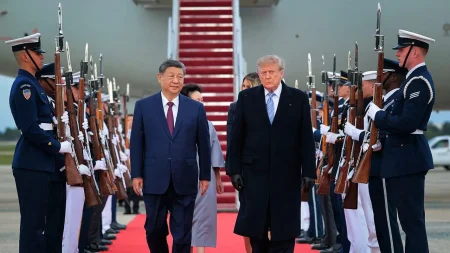






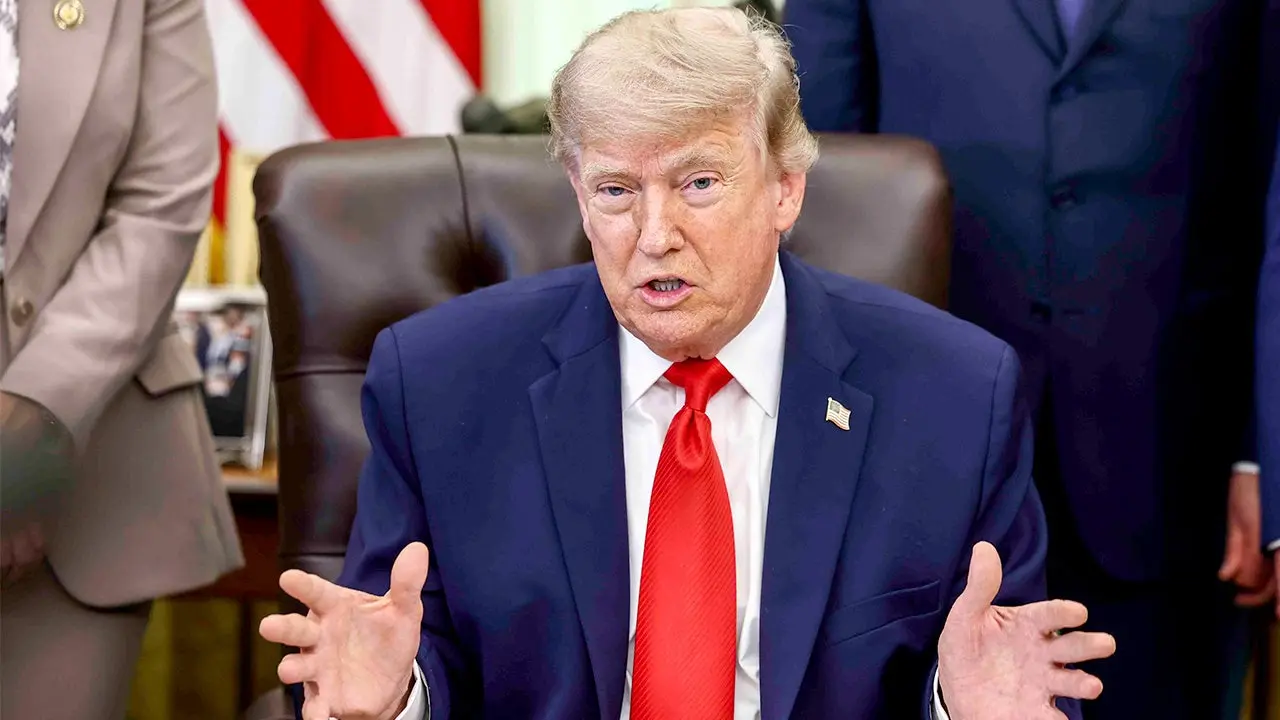
The delicate theater of international high diplomacy has always been highly prone to intense personal friction, but the escalating public feud between United States President Donald Trump and Italian Prime Minister Giorgia Meloni has transformed what was once a highly touted conservative alliance into a raw, unpredictable, and remarkably petty public drama. The latest spark in this rapidly deteriorating relationship was ignited when Trump took to his social media platform, Truth Social, to mock the Italian leader, claiming she had repeatedly and desperately pestered him for a photograph during their interactions at the G7 Summit in France. According to Trump’s weekend postings, Meloni begged “over and over” for a joint photo opportunity, a narrative he first floated to an Italian media outlet before amplifying it online to his global audience. The reaction from Rome was swift and laced with profound disbelief. Meloni, speaking frankly to reporters, flatly rejected the claim as an outright fabrication, expressing her deep astonishment at the American president’s behavior. She openly questioned why the leader of the world’s foremost superpower would engage in such hostile, manufactured personal attacks against a key historical ally, noting with a sense of weariness that this was far from the first time Trump had exhibited such erratic hostility toward America’s traditional partners on the global stage. This public bickering highlights a larger, more human truth about contemporary global politics: the lines between high-stakes statecraft and fragile personal egos have become practically nonexistent. What should be a strategic partnership between two powerful Western democracies has instead devolved into a highly public debate over social status, personal honesty, and the awkward social dynamics of international summits, leaving diplomatic corps on both sides of the Atlantic rushing to manage the fallout of a deeply personal rift that threatens to disrupt vital security interests.
Beneath the superficial insults and disputed photo-ops lies a much deeper, far more consequential geopolitical grievance that has been festering within the Trump administration for months. At the very heart of Trump’s bitter resentment is Italy’s refusal to actively assist the United States during the peak of its military campaign against Iran, a high-stakes conflict that brought the Middle East to the absolute brink of total war. Specifically, the Italian government made the independent, sovereign decision to deny American military forces the use of a key strategic airbase in Sicily, preventing U.S. warplanes laden with heavy weaponry and tactical supplies from utilizing Italian runways for offensive combat operations targeting Iranian assets. For Trump, who has consistently viewed international alliances through a fundamentally transactional and corporate lens, this refusal was not just a diplomatic disappointment; it was a profound betrayal and what he termed “a great logistical inconvenience” that directly hampered American military efficiency in the region. Trump used his weekend social media platform to loudly complain that the United States continues to spend hundreds of billions of dollars annually to defend Italy and other “so-called” NATO allies, only to be denied basic physical and logistical support when American forces are actively engaged in dangerous combat operations. He bitterly concluded that now that the United States has successfully forced the Iranian regime to halt through overwhelming military pressure, Meloni is suddenly seeking to mend fences solely to bolster her own flagging domestic approval ratings. This clash underscores a fundamental, human disconnection between the American expectation of total compliance from its global partners and the European commitment to national sovereignty, where alliances are defined by negotiated treaties rather than coercive transactional demands.
Refusing to be publicly sidelined or intimidated by her American counterpart, Giorgia Meloni took to Instagram to deliver a remarkably sharp, dignified, and highly personal counterattack that defended both her personal honor and Italy’s national pride. In her lengthy, carefully worded social media post, Meloni labeled Trump’s persistent verbal onslaughts as entirely “senseless,” making it clear to her global audience that she would not stand idly by while her leadership was minimized or her strategic motives were questioned by an erstwhile ally. Addressing Trump’s pointed jab about her supposedly declining domestic popularity, Meloni pointed out with sharp irony that being the American president’s friend had certainly done nothing to help her political standing in Italy, nor did her legitimacy as a leader depend on the changing whims of a foreign head of state. Instead, she proudly asserted that her domestic popularity is rooted entirely in her unwavering, lifelong commitment to defending Italy’s national interests—which is precisely the constitutional duty she was performing when her administration restricted the offensive use of Italian airbases in Sicily. She forcefully reminded Trump that Italy remains an independent, sovereign nation and that the utilization of American military bases on Italian soil is strictly governed by pre-existing bilateral agreements that must be respected, rather than violated whenever Washington demands unilaterally. By telling Trump that her popularity was absolutely “none of his concern” and bluntly suggesting that he focus on his own domestic political challenges, Meloni effectively drew a firm line in the sand, humanizing the exhausting struggle of a leader from an allied but smaller nation standing up to the world’s most powerful man to preserve her country’s dignity and independence.
To fully appreciate the sheer scale and dramatic nature of this falling out, it is essential to look back and understand just how close Meloni and Trump once seemed to be on the global stage. Not long ago, Meloni was widely regarded as the darling of the American conservative movement and a primary ideological bridge between the European Union and the Trump orbit. She held the unique and highly prestigious distinction of being the only European Union leader invited to Trump’s high-profile inauguration in January 2025, a gesture that signaled what many believed would be an era of deep, unbreakable policy alignment between Washington and Rome. Both leaders had risen to power by successfully tapping into populist discontent, championing traditional family values, advocating for strict border controls, and waging high-profile cultural campaigns against progressive ideologies. However, the fragile bonds of ideological solidarity quickly began to fracture under the heavy weight of pragmatic economic policies and aggressive American protectionism. The first real, irreversible cracks in their relationship emerged when the Trump administration deployed sweeping global trade tariffs, hitting Italian manufacturing and agricultural exports with a painful 15% tariff on most European Union goods. Despite Meloni’s persistent, high-level diplomatic efforts to negotiate directly with the White House to obtain trade relief and secure vital economic exemptions for Italy’s crucial export-driven economy, the United States refused to budge. This trade dispute highlighted a painful, deeply human truth in modern politics: that shared cultural rhetoric and mutual admiration are rarely strong enough to survive the cold, unyielding reality of national economic self-interest, leaving Meloni to realize that ideological kinship would never protect Italy from the collateral damage of Trump’s protectionist agenda.
The wedge between the two leaders grew even wider due to deep-seated cultural and ethical differences, most notably manifested in their sharply contrasting views on religion, diplomatic engagement, and the path to global peace. A major moral flashpoint occurred when Trump launched a series of highly aggressive public attacks against Pope Leo, criticizing the Pontiff’s moderate, peacekeeping foreign policy views regarding the escalating conflict with Iran. For Meloni, the leader of a profoundly Catholic nation where the physical presence and cultural authority of the Vatican hold immense historical significance, Trump’s disparaging remarks about the Pope were a bridge too far. In response, she issued a rare, highly public rebuke of the American president, labeling his comments as entirely “unacceptable” and standing firmly in defense of the head of the Catholic Church. This spiritual clash was mirrored by a fundamental strategic disagreement over how to manage Iran’s nuclear ambitions. While Trump’s administration pursued an aggressive strategy of maximum pressure, economic sanctions, and kinetic military escalation, Meloni consistently advocated for a nuanced, diplomatic approach, aligning her country with European partners who argued that the only sustainable path to preventing Iran from acquiring nuclear capabilities was through structured multilateral negotiations. Meloni repeatedly assured the Italian Senate that Italy would absolutely not participate in unilateral military campaigns, choosing to prioritize international law and diplomatic mediation over combat. This deep division highlights the human element of international statecraft, showing how a leader’s religious respect, national identity, and historical responsibilities can create an insurmountable gulf with an ally who favors a militaristic and hostile approach to complex foreign policy issues.
As the dust slowly settles on this latest round of bitter public bickering, the broader geopolitical landscape remains incredibly fragile, with both Meloni and Trump forced to navigate a highly volatile and fast-moving global security environment. The timing of their personal dispute is particularly striking, occurring just as the United States and Iran finalized a landmark memorandum of understanding designed to temporarily halt active military hostilities for a period of sixty days. This fragile diplomatic breakthrough, which required an end to military operations across all fronts, was almost immediately thrown into jeopardy by renewed, intense fighting in Lebanon between Israeli forces and Hezbollah, the heavily armed, Iran-backed militant group. While a subsequent ceasefire in Lebanon has since allowed delicate diplomatic negotiations between the U.S. and Iranian delegations to resume in Switzerland, the entire chaotic episode illustrates just how precarious global peace remains, and how easily personal animosities can disrupt sensitive international operations. For Meloni and Trump, the future of their bilateral relationship—and the broader transatlantic alliance—now enters a cold, highly transactional phase. The public breakdown of their once-promising political friendship serves as a sobering, humanizing reminder that in the twenty-first century, traditional international alliances are no longer guaranteed by historical sentimentality or shared conservative frameworks. Instead, they are constantly renegotiated, strained by the individual personalities of leaders, shifting trade policies, and the ongoing struggle of sovereign nations to balance national dignity with superpower pressure. Ultimately, this intense feud reveals that behind the grand, polished stages of international G7 summits and official communiqués, the course of global stability often hinges on the volatile, deeply personal relationships of the flawed human beings who hold the levers of global power.