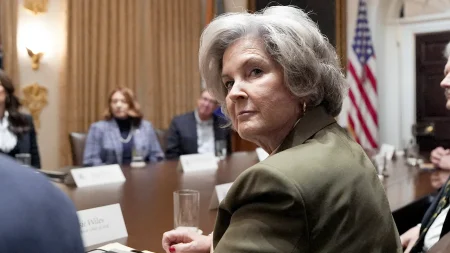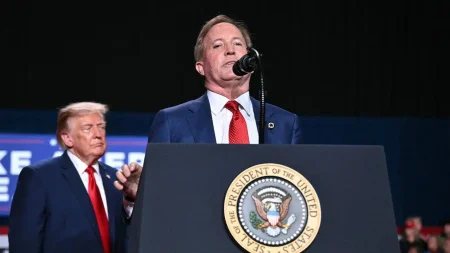






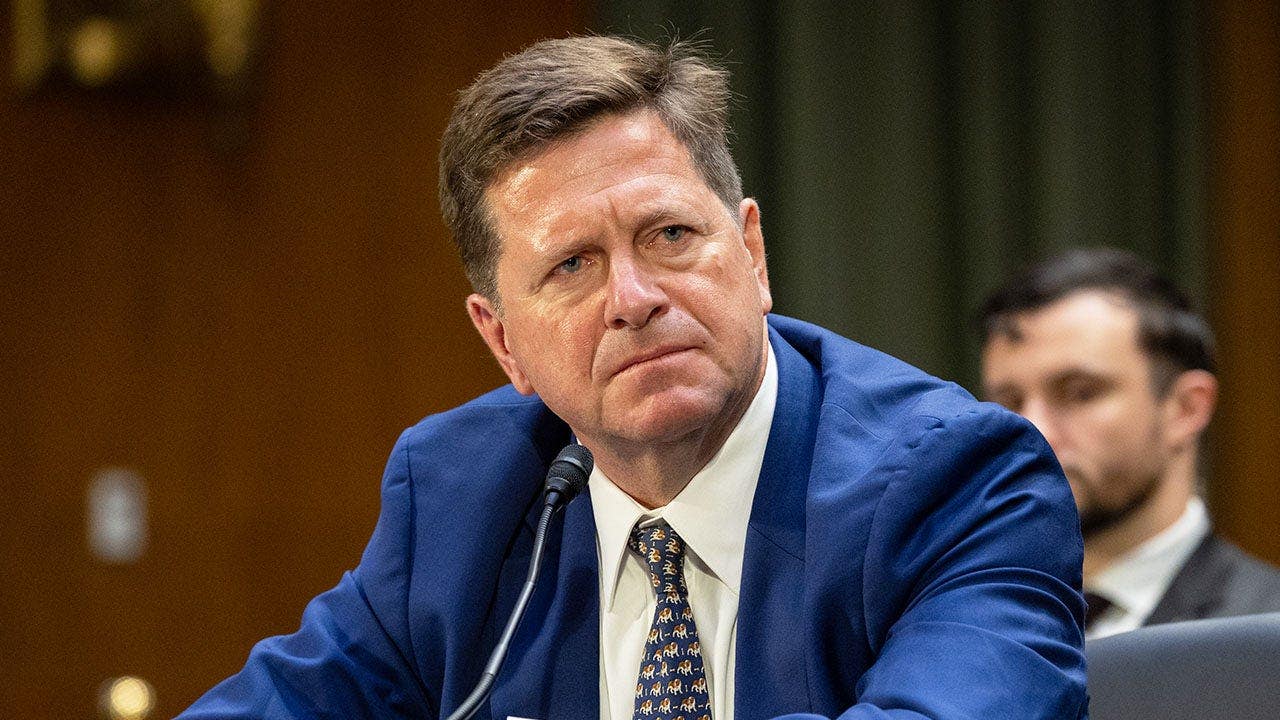
At its heart, the battle currently raging in the halls of the United States Senate is not merely a dry conflict over executive appointments; it is a deeply human drama defined by personal tragedy, intense political theater, and the terrifying, real-world stakes of global security. The narrative began with an unexpected and painful turn of events when former Director of National Intelligence (DNI) nominee Tulsi Gabbard was forced to abruptly step aside from her long-awaited confirmation path, choosing instead to focus entirely on caring for her husband during his challenging battle with cancer. This sudden vacuum at the pinnacle of the nation’s vast intelligence apparatus left a gaping hole in American leadership, throwing eighteen separate intelligence agencies into a state of profound uncertainty. Enter Jay Clayton, the pragmatically minded former Chairman of the Securities and Exchange Commission under President Donald Trump’s first administration, who was hastily tapped to steady the ship and steer the intelligence community through one of its most turbulent transitions in modern memory. Clayton’s nomination instantly thrust him into a glaring national spotlight, transforming him from a targeted financial regulator into the focal point of a massive, high-stakes debate over who should wield the ultimate authority over America’s secrets, surveillance networks, and defensive capabilities in an increasingly hostile and unpredictable global landscape.
The deep polarization currently paralyzing Washington was on full display Monday night as the Senate narrowly advanced Clayton’s nomination past a critical procedural hurdle, setting the stage for a final confirmation vote that has split the legislative body entirely along party lines. This crucial 51-43 procedural vote followed an incredibly tight, razor-thin 9 to 8 victory within the Senate Intelligence Committee, highlighting the immense skepticism and partisan friction Clayton faces from lawmakers. Senate Majority Leader John Thune, a Republican from South Dakota, did not mince words as he stood on the Senate floor, passionately challenging his Democratic colleagues to lay aside their political grievances and support a nominee he characterized as exceptionally qualified. Thune lamented what he viewed as persistent obstructionism, accusing the opposition of playing dangerous partisan games with vital national security roles at a time when the country can ill afford delay. The Majority Leader pointed out the irony of the situation, noting that while Democrats have vociferously criticized the temporary, acting leadership currently running the Office of the Director of National Intelligence (ODNI), their refusal to compromise has gridlocked the confirmation process and directly contributed to the temporary suspension of some of the nation’s most robust counter-terrorism surveillance tools.
The immediate casualty of this legislative stalemate is the devastating loss of Section 702 of the Foreign Intelligence Surveillance Act (FISA), a highly controversial yet undeniably powerful spying mechanism that has now begun to steadily go dark across the globe. This critical program, which allows American intelligence agencies to target foreign communications without a warrant, has historically served as the first line of defense against complex, coordinate international terror plots, famously playing a pivotal role in thwarting a planned mass-casualty terrorist attack targeting a packed Taylor Swift concert in Vienna, Austria. With the program now legally frozen in a state of suspended animation because Congress failed to secure a reauthorization deal before leaving town, the safety of millions of ordinary citizens hangs in the balance as major global events, such as the upcoming World Cup, draw closer. For the intelligence officers working tirelessly in the shadows, the lapse of Section 702 represents a terrifying blind spot, leaving them unable to track active threats or initiate new electronic surveillance authorizations. The tragedy of the current political standoff is that both sides of the aisle recognize the vital importance of this surveillance net, yet the program’s survival has been held hostage by a proxy war over who controls the agencies that administer it, illustrating the dangerous consequences when domestic political maneuvering overrides fundamental human safety.
Adding fuel to the political fire was the tumultuous interim tenure of Bill Pulte, the Federal Housing Finance Agency (FHFA) Director who was suddenly installed by the White House to lead the intelligence community in an acting capacity following Gabbard’s sudden exit. Pulte’s brief and aggressive occupancy of the acting DNI role sent shockwaves through the Washington establishment, particularly among Democrats who viewed him as an unqualified loyalist installed to systematically dismantle the intelligence community from within and weaponize it against political adversaries. These fears were only amplified when Pulte took to social media to proudly announce that he had just executed a fourth consecutive round of sweeping, “thoughtful and measured” layoffs within the ODNI, claiming his objective was to streamline the agency and refocus its mission strictly on the letter of the law. This restructuring, managed via public posts on X, was perceived by critics as a direct assault on the institutional knowledge of the deep state, alarming veteran intelligence officials and prompting Democrats to completely walk away from a previously negotiated bipartisan deal to save the FISA spy program. The resulting chaos created an climate of fear and confusion within the halls of the ODNI, underscoring the urgent need for a permanent, Senate-confirmed leader like Clayton who could restore a sense of professional normalcy and institutional dignity to the heavily demoralized workforce.
Before Clayton could reach this point of near-confirmation, however, he had to endure a grueling gauntlet of questioning from hostile Senate Democrats during his committee hearings, where his past record as both a corporate regulator and a federal prosecutor was heavily scrutinized. Lawmakers drilled down on highly sensitive topics, pushing Clayton to state clearly his positions on the legitimacy of the 2020 presidential election and questioning his awareness of highly controversial actions taken by his predecessor nominee, Tulsi Gabbard, regarding an alleged raid on election offices in Fulton County, Georgia. Perhaps the most contentious line of questioning centered on Clayton’s tenure as the top federal prosecutor for the Southern District of New York, during which his office issued controversial subpoenas targeting journalists at the New York Times, an action that critics blasted as a dangerous infringement on press freedom and a harbinger of potential future abuses of power under his watch. While the Department of Justice quietly withdrew those subpoenas just days after Clayton narrowly cleared the committee vote, the intense grilling revealed the deep anxieties held by many in Congress regarding the potential for the intelligence community to be used to suppress dissent or target journalists, leaving Clayton with the monumental task of proving that he will act as an independent, principled guardian of the law rather than a political instrument of the executive branch.
As the Senate prepares for the final, decisive vote on Clayton’s confirmation, the path forward for American national security remains fraught with both promise and peril. If confirmed, Clayton will immediately step into a role that demands not just analytical brilliance and administrative competence, but also a rare degree of moral courage and bipartisan diplomacy. He must successfully rebuild the frayed relationships between the White House, a deeply divided Congress, and an anxious intelligence workforce that has spent months in administrative limbo. More urgently, Clayton must immediately use his new authority to breathe life back into the lapsed FISA Section 702 program, navigating the delicate balance between protecting the civil liberties of American citizens and ensuring that the nation’s defensive shield against global terrorism is fully restored before another tragedy occurs. Ultimately, the story of Jay Clayton’s journey to the helm of the DNI is a powerful reminder that behind the dry policy debates and partisan bickering of Washington lie real human lives—from the families of leaders dealing with devastating personal crises, to the quiet professionals working to keep the country safe, to the millions of everyday citizens who sleep peacefully at night, completely unaware of the silent, invisible battles being fought to protect them.