





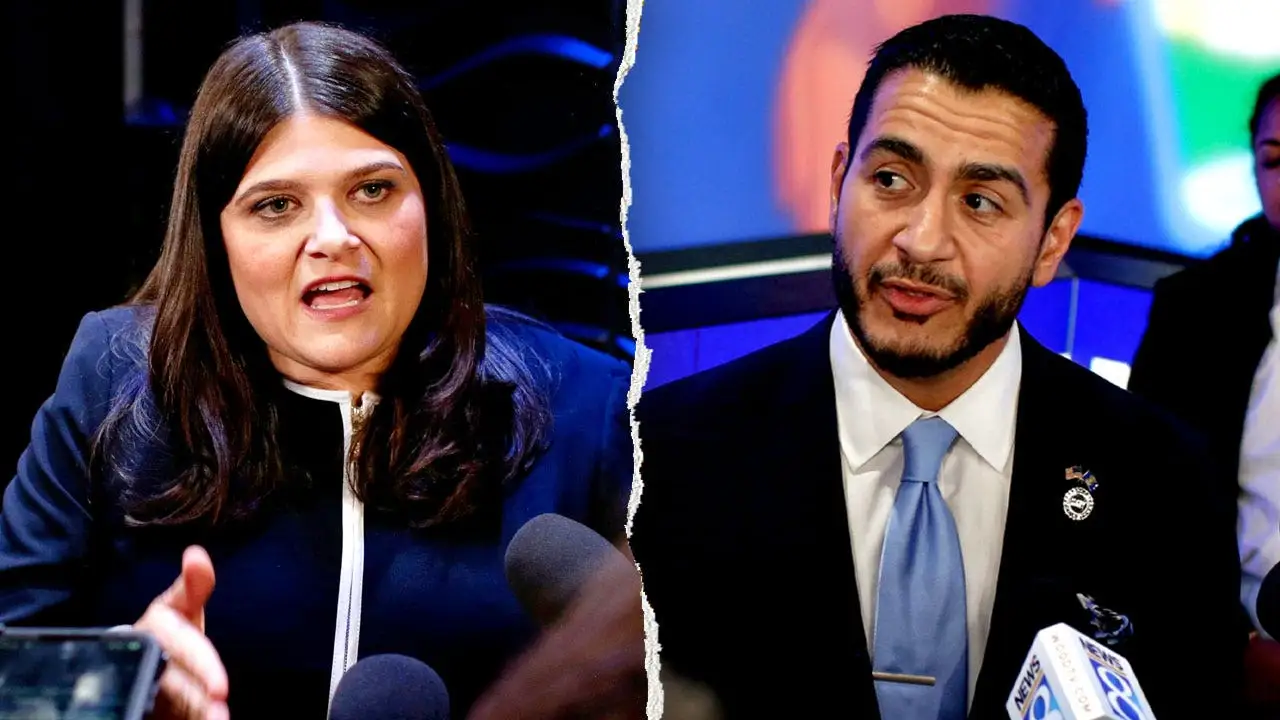
The air inside the debate hall was thick with the visceral, quiet tension of an ideological crossroads, capturing a political moment that felt much larger than a single Senate primary race. As Democrats prepare to head to the ballot box on August 4, the battleground state of Michigan has transformed into the ultimate crucible for the very identity of the modern Democratic Party. Representative Haley Stevens, a champion of the party’s pragmatic, establishment-backed wing, stood on one side of the stage, brandishing her legislative accolades like armor built through years of quiet congressional service. On the other stood Abdul El-Sayed, a progressive firebrand and socialist-supported activist, representing a rising, rebellious tide of left-wing organizing that seeks to fundamentally dismantle and reshape existing institutional systems. This primary matchup is far from a polite disagreement over policy; it is a raw, high-stakes collision between two profoundly different theories of societal change and leadership in a state that could easily decide which party controls Washington. As the television cameras rolled, the debate quickly evolved into a captivating microcosm of a national Democratic civil war, pitting the reliable, calculated strategies of the political moderate against the passionate, system-shaking ambition of the democratic socialist left.
From her very opening remarks, Representative Haley Stevens launched a highly calculated offensive, choosing to frame the entire primary contest not as a traditional policy debate, but as a clear-cut choice between serious governance and superficial performance. She repeatedly labeled El-Sayed as the “celebrity” candidate, arguing that his prominent media platform—fueled by multiple books and his popular public health podcast, America Dissected—was merely a performance that paled in comparison to the grueling, unglamorous day-to-day work of passing legislation on Capitol Hill. Stevens painted herself as the ultimate workhorse, pointing proudly to her history-making victory in 2018 when she successfully flipped a crucial suburban Detroit congressional district from red to blue, as well as her official designation as Michigan’s most effective Democratic lawmaker by the nonpartisan Center for Effective Lawmaking. Carrying the powerful endorsement of Michigan’s popular Governor Gretchen Whitmer, Stevens argued that she possessed the proven electoral grit to withstand the brutal general election ahead. To drive her point home, she revealed a quiet strategic calculation circulating within Republican circles, citing a leaked phone call where GOP challenger Mike Rogers privately conceded to supporters that his campaign would be in “good shape” if the Democrats nominated El-Sayed, whom he viewed as an easier, far-left target to defeat in a swing state.
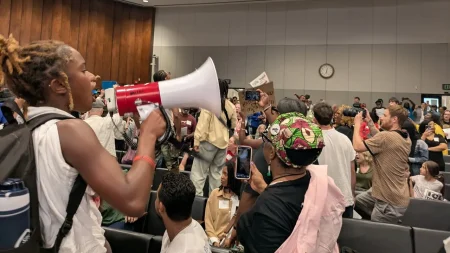
However, Abdul El-Sayed refused to be defensive, turning Stevens’ accusations of “celebrity” and media focus back onto her as a badge of honor for his grassroots, anti-establishment movement. The former Wayne County Director of Health and Human Services, a trained physician and epidemiologist who has built his career examining systemic healthcare inequalities, did not flinch when Stevens criticized his use of media platforms to reach voters. Instead, he passionately embraced his public role, arguing that a bullhorn is a necessary and righteous tool when confronting powerful institutions and what he bluntly characterized as political “cowardice” from moderate Democrats. El-Sayed sharply criticized Stevens’ congressional voting record, specifically highlighting her past support for increasing budget funding for Immigration and Customs Enforcement (ICE)—an agency he firmly believes should be completely abolished in favor of humanitarian immigration reform. For El-Sayed, this race is not about maintaining a polite, quiet presence in Capitol Hill committee rooms; it is about standing up for vulnerable communities who feel utterly abandoned by the Washington establishment. He mocked Stevens’ intense preoccupation with his media ventures, dryly welcoming her to tune into his public health podcast, while reminding the audience that working-class Michiganders are not worried about media platforms, but are instead drowning under the crushing, visceral weights of everyday inflation, unable to pay for their basic groceries and gasoline.
Underneath the sharp rhetorical arrows exchanged on the debate stage lay a massive, undeniable financial disparity that highlights the ongoing national debate over the corrupting role of money in modern American elections. This open Michigan Senate seat has drawn an astronomical wave of outside funding, with various political groups pouring over $52 million into the primary campaigns by mid-July alone, with an analysis of Federal Election Commission reports revealing that the vast majority of these funds were deployed to bolster and protect Stevens’ candidacy. El-Sayed seized on this stark financial divide, positioning himself as a modern-day David fighting a corporate-backed political establishment bankrolled by massive, powerful super PACs, including the American Israel Public Affairs Committee (AIPAC). He proudly reminded the audience that he has not accepted a single penny from corporate interests or political action committees, portraying his campaign as an untainted, bottom-up movement funded entirely by ordinary citizens. Stevens, conversely, defended her broad coalition of support, viewing her heavy financial backing and high-profile institutional endorsements not as a compromise of her values, but as a necessary reflection of her broad appeal, viability, and strength to keep the seat blue. This financial dynamic presents voters with a difficult, human dilemma: do they trust a candidate who can marshal the massive financial resources required to win a brutal statewide election, or do they put their faith in an underdog who promises absolute independence from the wealthy donors and powerful political machines that dominate Washington?
The debate also exposed deeply personal grievances, shedding light on the human ambitions, vulnerabilities, and skepticism of the two candidates who both seek the ultimate honor of representing their home state. Stevens attempted to frame El-Sayed’s entire political trajectory as a series of calculated career steps rather than a genuine devotion to public service, pointing out that after his failed 2018 gubernatorial bid, he quickly pivoted to hosting podcasts, writing books, and was now already looking beyond the Senate, having reportedly purchased a presidential campaign website. She warned the audience that Michigan voters were being treated as just another “rung on the ladder” for an ambitious public figure seeking a national spotlight. El-Sayed countered this by focusing on what he characterized as Stevens’ quiet complacency, painting her as a career politician too comfortable with the status quo and too fearful of taking courageous, controversial stands that might alienate her wealthy donors. This personal friction elevated the debate from an abstract policy discussion to a direct confrontation over personal character, authenticity, and intent, forcing voters to question what truly motivates the leaders they choose to represent them in times of deep national division, and whether performance on the national stage is a sign of vanity or a vital tool for advocating for the marginalized.
Ultimately, the primary contest in Michigan forces a profound, existential choice upon a swing state that has long been a bellwether for the nation’s political soul. Democratic voters must decide whether their best defense against a formidable Republican challenge is a battle-tested, pragmatic insider who plays by the established rules of the legislative game, or a progressive idealist who wants to rewrite the rulebook entirely in pursuit of systemic justice. With the Republican Party eyeing Michigan as one of its absolute best opportunities to secure control of the U.S. Senate, the stakes for this primary could not possibly be any higher. The decision made in the voting booths on August 4 will reverberate far beyond the borders of Michigan, sending a clear national message about what the Democratic Party stands for, who it fights for, and how it intends to win in an era of deep economic uncertainty and intense cultural division. When the dust from the debate floor finally triumphs and the campaign ads fade, the election will come down to a fundamental human question for the ordinary people of Michigan: do they want a senator who works quietly within the halls of institutional power, or a bold voice willing to shout through a bullhorn to demand a fundamentally different future?