






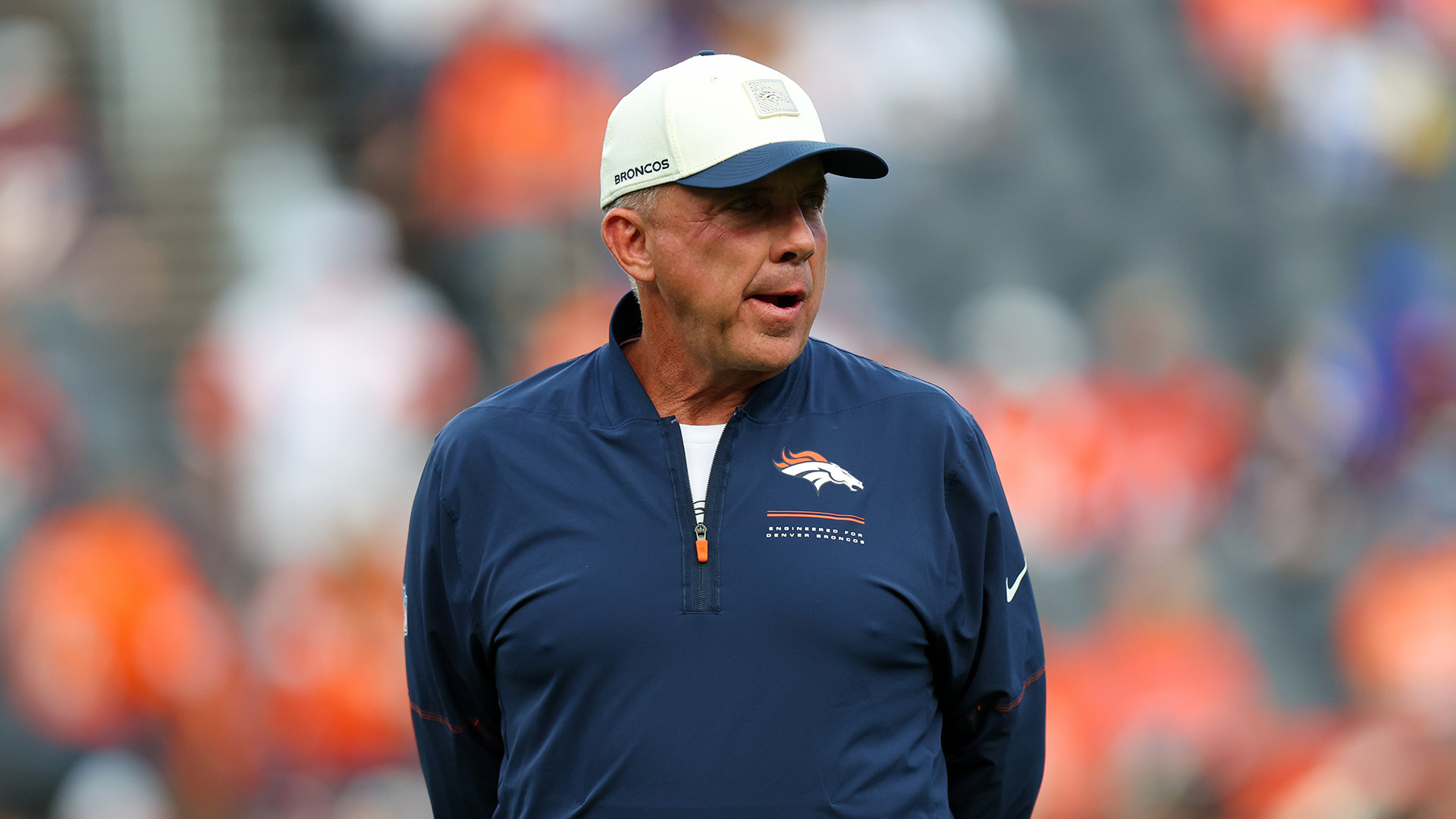
The Denver Broncos entered the 2024 season with a sense of renewed hope, a feeling that had been carefully cultivated over an offseason of bold acquisitions and internal belief. Bo Nix, the talented rookie quarterback out of Oregon, was handed the keys to the franchise, and the front office made a splash by bringing in a new wide receiver to bolster the passing attack. The pieces seemed to be in place, at least on paper. Yet, four weeks into the season, the offense has become a frustrating puzzle, one that has left fans scratching their heads and head coach Sean Payton searching for answers. The numbers are sobering, the rhythm is off, and the explosive plays that were supposed to define this new-look unit have been few and far between. So, in a move that signals both urgency and accountability, Payton has decided to take matters into his own hands. He is assuming the play-calling duties effective immediately, starting with the team’s Week 5 matchup against the Los Angeles Chargers. It is a decision that carries significant weight, not just for the immediate future, but for the entire trajectory of the season.
The shift in play-calling responsibilities is not a sudden impulse, but rather the culmination of a process that began last offseason. When offensive coordinator Davis Webb was promoted and given the keys to the offense, it was seen as a natural progression, a way to bring fresh ideas into a system that had grown stale under Payton’s watchful eye. Payton, ever the control freak, was still very much involved, offering input and guidance from the sideline. But the final call on each play belonged to Webb. That arrangement, however, has not produced the desired results. The offense has looked disjointed, predictable, and at times, completely out of sync. Payton, never one to shy away from a challenge, explained his decision to the media with a blend of disappointment and determination. He spoke about the need for “specifics” and “detail” in every play, and emphasized that his primary responsibility is evaluating the “whys” behind each decision. It is a coach’s way of saying that the execution, or lack thereof, is not just a player problem—it is a collective issue that starts with the play design and the calls being made. By stepping in, Payton is signaling that he is not willing to let the season slip away while waiting for things to magically click.
A closer look at the Broncos’ offensive statistics reveals just how dire the situation has become. After four games, Denver ranks 29th in the league in rushing yards per game, averaging a paltry 81 yards on the ground. That lack of a running game has put immense pressure on Nix and the passing attack, which has also struggled to find consistency. The team ranks 27th in total offense, averaging just 280 yards per game. These are not just bad numbers; they are numbers that reflect a systemic failure to move the football. The two losses on the season are particularly telling. In a 31-10 season-opening loss to the Kansas City Chiefs, the offense managed just 10 points, failing to generate any sustained drives. The second loss, a road defeat to the San Francisco 49ers, was more of the same, with the offense once again failing to reach the end zone with any regularity. In both losses, the offense scored 14 points or fewer, a damning statistic in a league where points are at a premium. The wins over Jacksonville and Los Angeles provided temporary relief, but even those performances were far from convincing. The offense has shown flashes, but those flashes have been too brief and too inconsistent to build any real momentum.
Payton’s comments after the latest loss were telling. He acknowledged that the team is not playing “championship football,” a blunt assessment that cuts to the core of his competitive nature. He has never been a coach who accepts mediocrity, and he knows that the margin for error in the NFL is razor thin. “How quickly can we correct those things?” he asked, a rhetorical question that underscores the urgency of the moment. With a 2-2 record, the Broncos are not in panic mode, but they are dangerously close to falling into a hole that would be difficult to climb out of. The AFC West is a gauntlet, and every game matters. Payton’s decision to take over play-calling is not just about fixing the X’s and O’s; it’s about sending a message to the locker room that mediocrity will not be tolerated. It is a call for accountability, a demand for precision, and a reminder that the standard in Denver is to compete for championships, not to settle for moral victories.
Looking ahead, the schedule does not get any easier. This Sunday’s game against the Chargers will be the immediate test of Payton’s new role, but the real challenge comes the following week when the Broncos host the Seattle Seahawks. Seattle currently sits atop the league in yards allowed per game, a staggering 246, and their defense has been a nightmare for opposing quarterbacks. For a Denver offense that is still searching for its identity, facing the Seahawks after a short week feels almost cruel. But there is a silver lining in the timing. The upcoming game against the Chargers serves as a dress rehearsal, a chance for Payton to install his rhythm and call the game with the authority that made him a Super Bowl-winning coach in New Orleans. Then, with a home crowd behind them, the Broncos will face their stiffest test yet against a Seahawks defense that has been suffocating opponents all season. Payton’s decision to take over now, rather than later, gives the team its best chance to develop some momentum and find an offensive identity before the schedule turns brutal.
Payton’s comments to the press after the Week 4 loss to the San Francisco 49ers were telling. He acknowledged that the team is not playing “championship football” and that a four-game sample size is enough to identify the glaring issues. But more importantly, he stressed the urgency of correcting those issues quickly. “How quickly can we correct those things?” he mused, a rhetorical question that hangs over the entire organization. This is not a rebuilding team in the traditional sense; the Broncos are trying to win now, and Payton’s track record suggests he does not have the patience for a slow burn. His decision to reclaim play-calling duties is a direct reflection of that mentality. He understands that the AFC West is a gauntlet, and with the Kansas City Chiefs already looking like the class of the division, every game is a must-win. The margin for error is razor-thin, and Payton is not willing to gamble it away on the hope that the offense will find its footing on its own. He is doubling down on his own expertise, trusting the system that once made Drew Brees a superstar and the New Orleans Saints a perennial contender.
Looking ahead, the immediate schedule does not offer any reprieves. This Sunday, the Broncos face a division rival in the Los Angeles Chargers, a team that always seems to play them tough. But the real test comes the following week, when the Seattle Seahawks roll into Denver. The Seahawks currently boast the NFL’s stingiest defense, allowing a mere 246 yards per game. That matchup, coming right after the Chargers game, will be a brutal trial for a rookie quarterback and an offense still trying to find its identity. Payton’s decision to step in as the play-caller is designed to address these challenges head-on. He knows that the margin for error in this league is razor-thin, and with a home game against Seattle looming after a divisional battle with the Chargers, every offensive possession will be critical. The coach’s message to the team has been clear: they cannot afford to waste time, and the fix needs to happen now, not later. He mentioned the “four-game sample size” and the fact that this is not “championship football” yet, but he also stressed the urgency of correcting the mistakes quickly.
Payton’s comments after the team’s Week 4 loss to the San Francisco 49ers resonated with a sense of urgency that has been palpable all week. He acknowledged that the team is not playing well enough on offense, and he knows that the margin for error in the competitive AFC is razor-thin. The two losses—both on the road, both decided by a touchdown or more, and both featuring an offense that scored 14 points or fewer—painted a clear picture. The defense has done its part, keeping the team within striking distance, but the offense simply cannot keep up. Payton’s decision to take over play-calling is not just about fixing the X’s and O’s; it’s about changing the energy, the mentality, and the standard. He wants his offense to be aggressive, physical, and fundamentally sound. He wants to establish the run, protect the quarterback, and take shots downfield when the defense dares them. Most importantly, he wants to send a message to the entire locker room: the status quo is not acceptable.
Payton’s comments after the team’s latest loss to the San Francisco 49ers were telling. He acknowledged that the team’s performance over the first four games is “not championship football,” and he challenged everyone in the building to look inward. “How quickly can we correct those things?” he asked rhetorically. This is vintage Payton—he is not interested in moral victories or close losses. He is a coach who demands excellence, and he knows that in the brutal AFC West, every week is a battle. The decision to take over play-calling is not an indictment of Webb, whom Payton praised for being “very fast, very quick” and someone who “understands what we’re doing.” Rather, it is a strategic move to inject a new voice, a more experienced hand, into a critical moment. Payton has been here before, of course. He built a Hall of Fame career in New Orleans by masterminding one of the most potent offenses in NFL history. He knows what it takes to win, and he understands that the window for a young quarterback to develop is often defined by the structure and clarity of the system around him.
The problems for the Broncos are not just limited to the run game, though that is certainly a major concern. The entire offense has struggled to sustain drives, convert on third downs, and find the end zone in critical moments. In the team’s two losses, the offense has managed to score just 14 points combined—a shockingly low number for a team that invested heavily in its offensive weapons. The Week 1 loss to the Kansas City Chiefs, where the offense managed only 10 points, was a stark reminder of the gap between where this team is and where it needs to be. The subsequent wins against the Jaguars and Rams provided a glimmer of hope, but the loss to the 49ers in Week 4 exposed the same old issues: an inability to protect the quarterback, a lack of separation from receivers, and a general feeling of being out-coached. Payton, who has always prided himself on being an offensive mastermind, knows that the status quo is not acceptable. He acknowledged the team’s flaws with a sense of urgency, noting that a four-game sample size is enough to know that this is not “championship football.” The question now is whether his intervention will be enough to turn things around.
Payton’s comments after the 49ers loss were telling. He spoke about the need for the entire team, himself included, to take ownership of the mistakes. “I think, collectively, we all after a game, and after a four-game sample size, certainly this isn’t championship football, what we see,” he said. “How quickly can we correct those things?” That question—how quickly—is the crux of the matter. The NFL season is a grind, and the margin for error is incredibly thin. The Broncos are sitting at 2-2, a record that could easily be 4-0 or 0-4, depending on how you look at the games. They beat the Jaguars and the Rams at home, but were blown out by the Chiefs on the road and lost a close one to the 49ers. In both losses, the offense scored 14 points or fewer, which is simply not going to cut it in a league where scoring is at a premium. Payton knows this, and his decision to step in is a direct acknowledgment that the status quo is not acceptable. He is betting on himself, on his proven track record, and on his ability to design plays that put his players in positions to succeed.
The upcoming schedule does not get any easier, which makes the timing of this change all the more critical. First up is a divisional clash against the Los Angeles Chargers, a team that knows Payton well from his years in the AFC West. Then, in Week 6, the Broncos face the Seattle Seahawks, a team that currently sits atop the league in yards allowed per game, surrendering just 246 yards. That is a daunting challenge for any offense, let alone one that is still searching for its identity. Payton, ever the pragmatist, is aware of the gravity of the situation. He noted that after a four-game sample size, it is clear that what they are doing is “not championship football.” The urgency in his voice was palpable. He knows that the AFC West is a gauntlet, and every loss matters. The Chargers, with their stifling defense, are not a team you want to face when you are trying to work out the kinks. And then there is the Seattle Seahawks, who currently boast the league’s best defense in terms of yards allowed per game, surrendering just 246 yards. Payton’s expanded role in play-calling is not a panacea; it is a catalyst for a much-needed correction. The next two games will be a stern test, but they also present an opportunity for Payton to prove that his offensive genius is still intact.
Payton’s comments to the media after the Week 4 loss to the 49ers were telling. He did not mince words, nor did he try to sugarcoat the team’s performance. He acknowledged that after a four-game sample size, the product on the field is “not championship football.” It was a sobering admission from a coach who has won a Super Bowl and is accustomed to competing at the highest level. But Payton is not one to dwell on the negative. He immediately pivoted to the solutions, emphasizing the importance of correcting the mistakes quickly. His tone was not one of panic, but of focused urgency. He knows that the AFC is a gauntlet, and every loss matters. The window for a turnaround is not infinite; it requires immediate action. That sense of urgency is what drives his decision to step back into the play-calling role. It is a role he knows well, having built his reputation on the back of a Super Bowl-winning offense in New Orleans, and one that he has always used as his primary lever for controlling the game.
Looking ahead, the schedule does not get any easier. The upcoming Week 6 showdown against the Seattle Seahawks looms large, a team that currently leads the league in fewest yards allowed per game, surrendering just 246 yards. That defense, led by a ferocious front and a ball-hawking secondary, will pose a significant challenge to a Broncos offense that is still searching for its identity. But before that, Payton will have his first test as the play-caller against the Chargers, a division rival that knows him well. The decision to step in now, rather than later, is a clear signal that Payton believes the season is still salvageable, but only if the offense begins to show signs of life immediately. He is not just tweaking the system; he is challenging the entire offensive unit to rise to the occasion. The players, for their part, have expressed confidence in their head coach’s ability to right the ship, but they also know that words mean little without results. The next few weeks will be a true test of character, and the focus will be squarely on Payton and his revamped play-calling.
Looking ahead, the schedule does not get any easier. This Sunday’s game against the Chargers is a divisional showdown that will have significant implications in the AFC West. A loss would drop Denver to 2-3, and with a brutal matchup against the Seattle Seahawks looming in Week 6, the pressure is mounting. The Seahawks have been a defensive juggernaut, leading the league in yards allowed per game at just 246. They are exactly the kind of disciplined, physical defense that can expose a struggling offense. For Payton, the upcoming stretch is more than just a test of X’s and O’s; it is a test of his ability to connect with his players, to instill confidence in a young quarterback, and to prove that his formula for success can still work in today’s NFL. The decision to take over play-calling is not a demotion for Webb, but rather a strategic move by a coach who knows that the margin for error in the AFC is razor-thin. Every game matters, and with a gauntlet of tough defenses ahead, the Broncos cannot afford to wait for gradual improvement.
In the end, Payton’s move to reclaim the play-calling duties is a high-stakes gamble that could define the rest of the Broncos’ season. It is a testament to his competitive fire and his refusal to accept mediocrity. He knows that the offense has the talent to be explosive, but that talent needs to be put in better positions to succeed. The upcoming stretch, starting with a division matchup against the Chargers and followed by a showdown with a dominant Seattle Seahawks defense, will be a true test of whether this change can spark the necessary turnaround. The players will look to Nix for leadership, and Nix will look to his coach for the perfect play. It is a delicate dance, one that requires trust, communication, and an unwavering commitment to the details. Payton’s decision to step in is a gamble, but it is a gamble born of conviction. He knows that in the NFL, the margin between success and failure is razor-thin, and he is determined to find that edge, even if it means taking on more responsibility. The next few weeks will be a defining stretch for the Broncos, and all eyes will be on the sideline, watching to see if the man with the Super Bowl ring can once again work his magic. For Broncos fans, there is reason to be cautiously optimistic—not because the offense is suddenly fixed, but because they have a coach who refuses to accept mediocrity, and that, in itself, is a reason to believe.