





The American democratic process, in all its sprawling diversity, rarely presents a more striking study in contrasts than when two vastly different regions head to the ballot box on the very same day. On Tuesday, voters in the humid, rapidly growing suburbs of Atlanta, Georgia, and those across the windswept, sun-drenched plains of South Dakota participation in a unique split-screen political drama that captured the essence of local identity and national transformation. In Georgia’s 13th congressional district—stretching through the bustling, politically blue communities of Stockbridge, Conyers, and Snellville—voters lined up at suburban libraries and schools to resolve a vacancy left by the passing of a legendary, decades-long political titan. Simultaneously, thousands of miles away in the rugged landscape of South Dakota, a deeply conservative electorate engaged in an unprecedented exercise: the state’s first-ever Republican gubernatorial runoff. Together, these two contests, unfolding in entirely different cultural, geographic, and ideological ecosystems, served as a powerful reminder of how intensely personal local politics remains, reflecting the deeply human motivations of legacy, ambition, and the relentless desire for change.
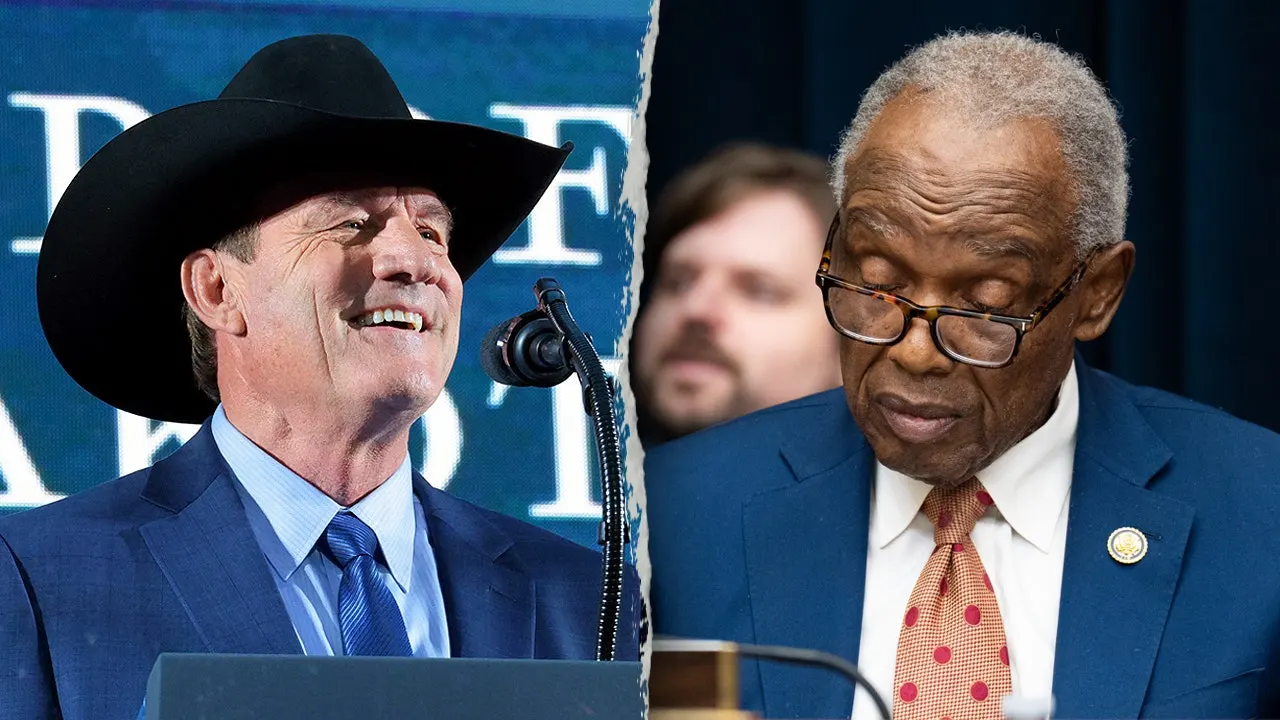
In South Dakota, the political landscape shifted suddenly when President Donald Trump selected former Governor Kristi Noem to serve as his Homeland Security secretary in Washington, leaving the state’s executive mansion in Pierre to her low-key lieutenant, Larry Rhoden. Taking the reins of a state known for its fierce independence and agrarian roots, Governor Rhoden was thrust into the spotlight, but his transition from supporting partner to primary leader proved more complex than the establishment had anticipated. Despite his incumbent advantage, Rhoden found himself unable to secure the outright majority needed in the June primary, setting the stage for a historic, high-stakes runoff against Toby Doeden, a self-made multimillionaire and bitcoin investor who represents a more assertive, populist wing of the Republican party. This classic outsider-versus-establishment narrative has transformed into a referendum on the state’s political soul, with Doeden leveraging his financial independence and business acumen to challenge the traditional political order, particularly in urban and western strongholds. The outcome rests heavily on key battlegrounds like Minnehaha County, home to the booming city of Sioux Falls, and Pennington County in the west, both of which previously acted as crucial springboards for Doeden’s primary surge and continue to serve as the critical battlegrounds where voters must decide between quiet continuity and a disruptive new vision.
The intense focus on this Republican runoff highlights a unique reality of South Dakota politics, where the primary process is often the only contest that truly matters. Deeply rooted in conservative tradition, the state has not elected a Democratic governor since the mid-1970s, a distant era when Richard Kneip served nearly two terms before being nominated as ambassador to Singapore by President Jimmy Carter, leaving Harvey Wollman to serve out the final six months of his term as the last Democrat to hold the governor’s office. Decades of undisputed Republican leadership have created a political environment where internal party debates carry the weight of general elections, demanding that candidates prove their conservative credentials not against ideological opponents, but against each other. For the voters of South Dakota, the choice on Tuesday is not about shifting the state’s partisan direction, but about choosing the specific style of leadership that will guide their communities—whether it is the familiar, steady hand of Rhoden’s agricultural establishment or the energetic, modern business-oriented populism championed by Doeden.
Meanwhile, in the Deep South, Georgia’s 13th congressional district offered a starkly different setting, where the vacancy created by the death of Representative David Scott in April at the age of 80 set off a mad dash to temporarily fill his seat. Scott, a 12-term veteran of Congress who was famously related by marriage to the legendary baseball icon Hank Aaron, was a towering figure in Georgia politics, but his final years were increasingly marked by physical vulnerability and rising tension with a younger generation of progressive reformers. The physical and cognitive demands of long-term governance became a central point of quiet conversation and, occasionally, public confrontation, such as a widely reported incident in late 2025 when a frustrated Scott used heated language toward a press photographer as he was wheeled through the United States Capitol. This dramatic clash between a proud, long-serving statesman and the relentless demands of modern political scrutiny highlighted a broader, national phenomenon that political observers have dubbed the “Biden effect”—a growing pressure from younger, millennial candidates who argue that the party’s aging leadership must make way for a new generation of energetic, forward-thinking voices.
The struggle to temporarily success Scott has brought forward three distinct candidates, each carrying their own deeply personal motivations, struggles, and visions for the district’s remaining term. Seeking to preserve her family’s legacy, David Scott’s daughter entered the race with a campaign focused on honoring her father’s memory, ensuring that vital federal funds continue to reach local communities, and maintaining stability by keeping her father’s dedicated congressional staff in place both in Washington and at home. Her deeply personal mission stands in sharp contrast to the campaign of Everton Blair, a passionate millennial progressive who was inspired to run after a tense town-hall encounter with Scott over federal funding strategy, where he felt the congressman’s dismissive response highlighted a profound gap between the district’s needs and its aging representation. Adding another layer of complexity to the race is Carlos Moore, a former Mississippi judge who entered the contest with a call for more visible, active leadership, despite having recently faced professional difficulties of his own, including a suspension from the bench in 2024 over the handling of a wrongful death settlement—an issue he dismissed by drawing comparisons to the high-profile legal challenges of national political figures.
While Tuesday’s special election in Georgia will decide who occupies the seat for only a few short months until January, the long-term political future of the 13th district has already been largely determined for the fall. State Representative Jasmine Clark, a progressive educator from Tucker, secured the Democratic nomination for the full term earlier this year and is heavily favored to win the general election against Republican Air Force veteran Jonathan Chavez, in a suburban district where Donald Trump fell behind by over 40 percentage points. As both Georgia and South Dakota voters cast their ballots in these highly localized contests, the separate paths of these two states reflect a shared national journey of transition, inheritance, and identity. Whether through the fiercely contested Republican runoff on the quiet plains of Pierre or the generational passing of the torch in the bustling suburbs of Atlanta, these elections remind us that the heart of self-governance is shaped not just by party platforms, but by the complex, deeply human stories of the individuals who step forward to lead.