






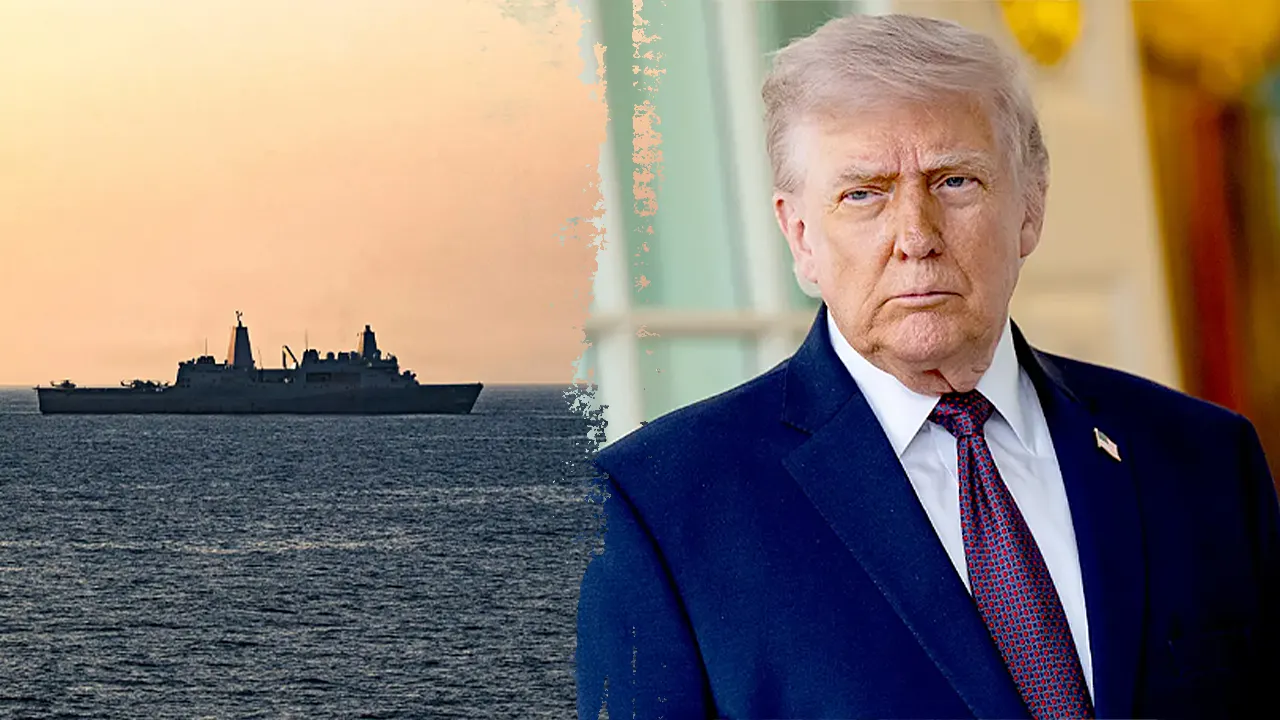
For months, the dark cloud of an impending global conflict loomed heavily over the Persian Gulf, keeping international financial markets on edge, disrupting crucial supply chains, and fueling a pervasive sense of dread among ordinary citizens worldwide who feared the outbreak of an uncontrollable war. This suffocating tension was suddenly broken on a quiet Sunday when President Donald Trump caught the political establishment and the global public entirely by surprise by announcing that the United States and the Islamic Republic of Iran had officially forged a comprehensive peace agreement. Utilizing his characteristically direct and unvarnished communication style on Truth Social, Trump proclaimed to a stunned world that “The Deal with the Islamic Republic of Iran is now complete,” signaling an abrupt and dramatic pivot from severe military confrontation to historic diplomatic engagement. The announcement felt like a seismic shift under the feet of seasoned diplomats and anxious onlookers alike, as the American president went on to authorize the immediate lifting of the U.S. naval blockade on Iranian ports and the reopening of the highly strategic Strait of Hormuz to international shipping. For families worldwide struggling under the weight of inflation and skyrocketing fuel costs, the news was not just a headline about geopolitical maneuvering; it represented a direct lifeline that promised economic relief and a blessed pause to the drums of war. Trump’s enthusiastic rallying cry, “Ships of the World, start your engines. Let the oil flow!” captured the immediate sense of kinetic energy and renewed hope, transforming what could have been a dry bureaucratic press release into a vibrant, human-centered narrative of global awakening, where long-stalled merchant vessels could finally prepare to cross previously forbidden waters and usher in a peaceful era of commerce.
Behind the curtain of this historic breakthrough lay an intricate, exhausting, and highly sensitive diplomatic effort spearheaded by Pakistan, whose Prime Minister, Shehbaz Sharif, emerged as the central mediator who successfully bridged the vast chasm of distrust between Washington and Tehran. In his official statement, Sharif was the very first to break the news of the finalized agreement to the international press, revealing that the culmination of these tireless diplomatic efforts would be formalized at a highly anticipated, high-profile signing ceremony scheduled for the upcoming Friday in the neutral, historic territory of Switzerland. This choice of venue carries immense symbolic weight, evoking memories of past eras where Switzerland’s alpine serenity served as the quiet sanctuary where bitter enemies laid down their weapons and chose the path of reasoned dialogue over mutual destruction. Sharif did not take sole credit for this monumental achievement; instead, he extended deep gratitude to the leadership in both Washington and Tehran for displaying the political courage necessary to pursue diplomacy over bloodshed, while also acknowledging the vital, behind-the-scenes contributions of regional powerhouses including Qatar, Saudi Arabia, and Turkey. The collaborative nature of this mediation underscores a profound human truth: that regional stability is not the intellectual property of any single nation, but rather the hard-won result of a collective, community-led effort where neighboring countries recognize that their own economic and social prosperities are inextricably linked to the peace of their neighbors. Throughout the week, Swiss hotels and government halls are expected to hum with the quiet, intense energy of international envoys, technical experts, and security details arriving to finalize the logistical details, transforming the scenic European nation into a global capital of hope where a fragile truce might finally be cast into stone.
At the core of this peace agreement is a profound commitment to the immediate and permanent cessation of military operations across multiple volatile fronts, a provision that promises to bring a long-awaited silence to regions that have known only the deafening roar of artillery and the constant terror of airstrikes. Prime Minister Sharif emphasized that this comprehensive ceasefire extends far beyond the direct borders of the United States and Iran, specifically mandating the termination of hostilities in Lebanon, where the Iran-supported militant group Hezbollah has been locked in a devastating, high-stakes military conflict with neighboring Israel. For the civilians living along these war-torn borders—parents who have spent months ushering their children into bomb shelters, farmers unable to tend to their fields due to the threat of falling rockets, and displacement victims yearning to return to their shattered homes—this clause is not a mere line of legalese, but a miraculous opportunity to reclaim their lives and rebuild their communities in safety. The human cost of modern warfare is measured not just in casualties, but in the psychological terror of uncertainty, and the promise of a permanent end to these regional military engagements offers millions of people the chance to sleep through the night without fearing the skies. By silencing the guns in Lebanon and dismantling the active combat operations across the region, this deal seeks to address the root causes of systemic regional trauma, aiming to replace proxy battlegrounds with avenues of diplomatic dialogue, and demonstrating that even the most deeply entrenched, multi-generational conflicts can be de-escalated when political leaders prioritize human survival over ideological dominance.
The logistical and economic implications of this agreement are staggering in scope, centered primarily on the resuscitation of the Strait of Hormuz, a narrow, vital marine artery through which roughly twenty percent of the entire world’s petroleum shipments must pass daily. The U.S. naval blockade, combined with the real threat of naval skirmishes and sea mines, had effectively choked this crucial waterway, sending shockwaves through the global supply chain, driving up energy costs in distant supermarkets, and leaving maritime transport workers in constant danger of being caught in the crossfire of international warfare. Under the newly announced terms, the formal signing of the peace agreement on Friday will initiate an immediate, highly coordinated effort to clear naval mines from these international waters, ensuring that commercial transport ships can once again navigate the channel safely and without fear of destruction. This operational shift represents an extraordinary triumph for maritime logistics, but more importantly, it offers safety and peace of mind to thousands of merchant mariners who brave the high seas to power the modern world, transforming their dangerous daily transit into a routine journey. As naval vessels on both sides stand down and prepare to make way for commercial fleets, the economic relief will begin to trickle down from corporate shipping giants to everyday consumers, illustrating how closely the domestic stability of families worldwide is tied to the physical security of a singular, narrow strip of water in the Middle East.
While the immediate cessation of violence and the reopening of shipping lanes have brought immense relief, the long-term viability of this historic peace deal hinges on a delicate, 60-day ceasefire window designated for intense negotiations regarding Iran’s controversial nuclear program. Iran’s deputy foreign minister confirmed that while this initial treaty halts active hostilities, the highly complex task of constructing a comprehensive, permanent framework will take place during this two-month period of quiet diplomacy, with reports confirming that the future of Iran’s nuclear development remains the central focus of the upcoming sessions. This upcoming phase of negotiations represents a high-stakes tightrope walk, as President Trump has consistently maintained an unyielding, non-negotiable policy that Iran must never be permitted to develop, acquire, or purchase a functional nuclear weapon. The human challenge of these negotiations cannot be overstated; it requires diplomats to translate deeply entrenched national pride, security fears, and sovereign rights into a verifiable, transparent agreement that satisfies international security standards without humiliating any participating party. The next sixty days will serve as the ultimate test of modern statesmanship, demanding a level of patience, precision, and mutual compromise that can withstand the inevitable political static from domestic hardliners in both countries who view any form of compromise as an act of weakness, but who must be overcome if a lasting, nuclear-free peace is to be secured.
To fully appreciate the gravity of this sudden peace breakthrough, one must look back at the terrifying events of the past year, when the Middle East stood on the precipice of a total war following Israel’s massive airstrikes on Iran during Operation Rising Lion, which ignited a fierce twelve-day clash that culminated in President Trump ordering direct military strikes against three separate Iranian nuclear facilities. The memory of those dark days, when the world watched in horror as military superpowers engaged in direct, retaliatory violence, underscores just how close humanity came to a broader catastrophic conflict. In reflecting on this remarkable transition from the brink of devastation to the signing tables of Switzerland, President Trump praised his administration’s unique diplomatic approach, asserting that where previous leaders had met only with failure, his team had successfully found a path to “real Peace” by offering regional leaders a unique partner willing to break traditional diplomatic molds. As the global community turns its collective gaze toward Switzerland this Friday, there is a cautious but palpable sense of optimism that this agreement will not merely be a temporary pause in hostilities, but the foundation of an enduring era of cooperation, reminding the world that even the deepest of animosities can be bridged when the courage to talk outlasts the impulse to fight.