

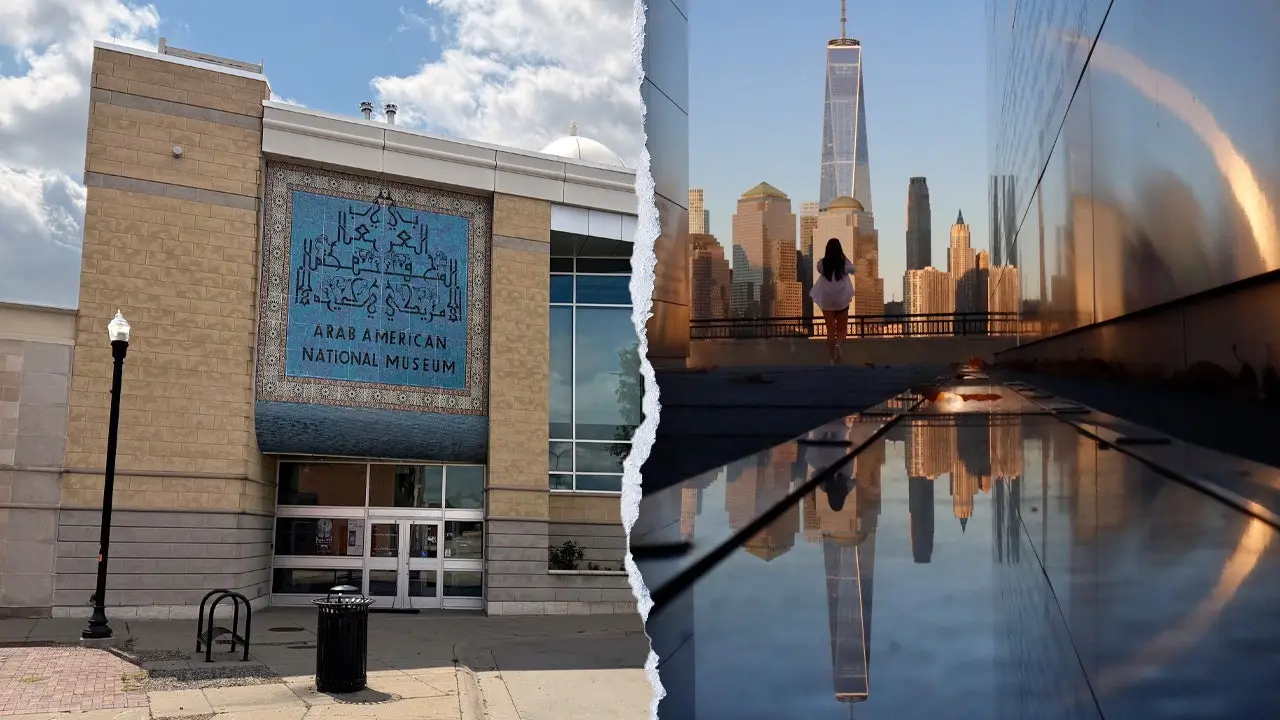
In Dearborn, Michigan, a city with deep roots in the Arab American community, the Arab American National Museum stands as a unique cultural institution. It is a place where history, identity, and memory intertwine, offering visitors a distinctive perspective on the American experience. As the nation has been marking the passage of nearly a quarter-century since that fateful September morning, this museum, with its formal ties to the Smithsonian Institution, has chosen to use its permanent exhibits and its annual commemorative programming to cast a searching spotlight not on the events of the attacks themselves, but rather on their complex and often painful aftermath for Arab and Muslim Americans. The museum’s narrative focuses on a story of community grief and sorrow that evolved into what they describe as an experience of being unfairly targeted, profiled, and treated as suspects by their own government. Weaving together personal stories and historical analyses, the exhibits and the programming year after year explore the legacy of that day, arguing that, for this community, the consequences were indeed two-fold, bringing not only the shared horror of the attacks, but also a subsequent and ongoing struggle for civil liberties and fair treatment.
This focus is made explicit in the museum’s permanent displays, where placards present a critical view of the American government’s actions in the aftermath of the attacks. One compelling piece of text describes how the community suffered both the shock and loss of the event alongside all Americans, yet was nonetheless “unfairly held responsible,” while no member of the community was ever found guilty of any connection to the actual attacks. The exhibits detail the stricter enforcement of identity and the implementation of immigration policies that disproportionately affected people from Arab countries. They tell the stories of individuals deported for technical violations that, prior to 2001, might have been overlooked. These narratives are presented as evidence of an overzealous national security response that cast a wide net, ensnaring innocent people in its sweep. The museum gives weight to the experiences of hundreds of noncitizens who were detained in the months following the attacks, emphasizing that very few were ever charged with any terror-related activity. The anger towards this experience is not the sole story of the period, which purposefully educated communities and leaders, yet the museum’s choice to center this discrimination reveals a fundamental interpretation of the 9/11 legacy: not simply a day of terror, but the beginning of a civic struggle.
The museum’s commitment to this theme extends far beyond its static exhibits, deeply weaving it into the fabric of its annual rites. Every year, around the anniversary of the attacks, the museum hosts programming that does not center on remembering the lives of the nearly three thousand people lost in the attacks, but instead hosts events that have become platforms for both national reflection and critique. An annual event described as a “tempered dialogue” and town hall is held, and its digital presence describes the day not as a space to memorialize the dead, but to offer a central location for communities to reflect not only on individual prejudice but the unjust legal landscape that the national-security apparatus created. Past anniversary events have delved into how communities of color have been specifically targeted through the framework of national security and systemically profiled as potential threats. Another program, supported by the National Endowment for the Arts, criticized the intelligence community for what it argued was the unjust infiltration of institutions and the systematic surveillance of leaders who were simply advocating for their communities in the post-911 world. The museum thus seems less a place for a quiet reflection on the day of the attack, and more a gathering point for a political movement and a living archive of documented grievance against certain state actions.
The museum’s status as a federal affiliate and its reliance on government grants have given this narrative not just a physical home but also an institutional endorsement, and this has drawn increasing political attention. Since its inception, the museum has received substantial federal support, including hundreds of thousands of dollars from the National Endowment for the Humanities, which is a public agency that funds the study of these topics. Grants from the Department of Housing and Urban Development have helped fund the bricks and mortar of the museum, while funding from the State Department has also been received over the years. Just as notable is the museum’s affiliation with the Smithsonian, a prestigious title that lends a stamp of institutional authority to its work. This association is occurring during a moment of intense political vulnerability for the Smithsonian itself, which has started to be often under fire from conservative lawmakers and the current presidential administration for what they see as an inappropriate amount of bias to bake into educational exhibits. This scrutiny highlights a tension over what the role of a museum should be: to reflect a neutral or celebratory national history or to engage in a critical, witnessing, and inclusive reflection of communities that might have been marginalized or sheared from that original story.
The museum’s lens goes beyond all of the events, policies that came out of 9/9/11, and even before the decade is out, the space squarely into new global conflict and identity politics. A recent visit revealed a significant amount of the museum’s content being dedicated to the Palestinian experience, which contextualized the Oct. 7 terrorist attacks by Hamas not just as a moment of terror in the exact sense described by the institutional state, but link to a larger, systemic Palestinian narrative of resistance to what is described as an oppressive occupation. Artwork is positioned to criticize the Israeli state, portraying a history of apartheid and systematically targeting civilians and denying basic human necessities to Palestinians. These are broad claims of oppression presented as fact, with placards citing organizations that have, for instance, been designated as terror-prone or have been otherwise mired in their own accusations of extremism (for example, citing sources that plead the use of child casualties in an old conflict or believing in, a notoriously antisemitic and terrorist-affiliated data source). The gift shop is a fast promotion of that cause: Palestinian themed keychains, maps-shaped trinkets, keffiyehs (political and cultural garments), and coloring books that guarantee to help children “explore Palestinian heritage” create a consumer connection as well. This move extends the museum’s initial mission from being a caretaker of American-Arab heritage into being a maybe even more overtly politically engaged mouthpiece for a certain geopolitical point of view.
The tone of this entire focus, however, is not universally accepted, nor is the museum itself without its intentions and justifications. For the population in Dearborn, where many people do trace roots to the Middle East, this museum holds the story of a history that should be spoken of based on the real experience of its locale, never as the strongest force of reciprocal tragedy. The museum’s curators could bend over backward, at best, to explain their aims not as to memorialize for the deaths of 9/11, which are universal and everywhere, but to memorialize the specific composite consequences on their literal and cultural lineages, and to tell the story that government actions. They argue that the museum is not making a will erase all other victims, but aiming to highlight a symbolically freighted violation of the civil contract and identity in order to hold power accountable in this manner—keeping memory so people aren’t allowed to forget their own profiling. Yet arguably the resulting effect of this pointed focus is a strong, one-sided account into the annals of the museum, creating the kind of interpretation that political opponents complain means it’s not an institution simply serving a “diverse, national memory” but keeping a political, singular one alive.
The deepening of this tension finds life, not just in Washington but more local and local, in the competitive electoral tissues. And because of the demographics of 54.5 percent of its residents being from Middle Eastern or North African descent, Dearborn’s institutional voice carries a lot of weight in a swing state with a crucial Senate election on the line. In one July primary that was near, without stating it, the museum was part of that discourse and identity. That this year, the museum is scheduled to mark the eve of the 25th anniversary it’s not by holding a memorial service that attends to the man and woman who died, but by hosting a film, “Seeds for Liberation,” that maintains and depicts the October 7th, attack on Israel by Hamas as a national struggle and contextualizes it as a mere thing in a broad anti-imperialistic chain. As such, the museum acts less as an archive of the past but as a living fluid stage for political activism, with each anniversary becoming not a time for closing or commemorating but for a re-remember and a repurposing. The historical memory of the tragedy is bending toward the current struggles and crisis. The institution uses its authority and taxpayer funding to not only solidifies this narrative but elevates to an annual-anniversary, forming a cultural continuity and a platform for political voices.
This emphasis has put the AANM, in autumn of 2025, directly at the center of a deepening culture wars over how history is remembered across the country. The federal politicians that provided these grants are seeing new scrutiny and threats, not just to granting bodies like NEH or NEA, but finally to the entire Smithsonian umbrella, with a clarifying “if you don’t act, we will cut your funding” from the administration. The representation of History within the museum’s walls is a testimony to its affiliation, with the institution respected by the Smithsonian but physically separate. The core question it raises is a difficult one: What is the role of a federalized nationally honored museum? Are people far away meant to use their grants to function like historical courts, that hold a state in the dock, discretion on a system or policy what are those outsiders see as broken? Or are they a true archive that will champion pluralism and the recognition of an “unfinished nation” with all of its fallacies, in which their responsibility is not to agree but to be the memory holder’s gatekeeper? The End of this domestic anniversary of 9-11, 25 years on, AANM continues to choose public confrontation and a refusal to see their experience history outside of policy, while other kinds of memory remain conspicuously (at least, within these walls) in the background. For this model, their identity is not an accessory add-on, but politically and historically the canon’s foundation, and it demands a platform for what he calls the other unbearable, truthful experiences. In doing so, the museum’ chosen a position, and a subject––and it’s hard to say, the battle for what the attack’s story means, and for whom it belongs, might be the new very last struggle of the one.