



Paragraph 1
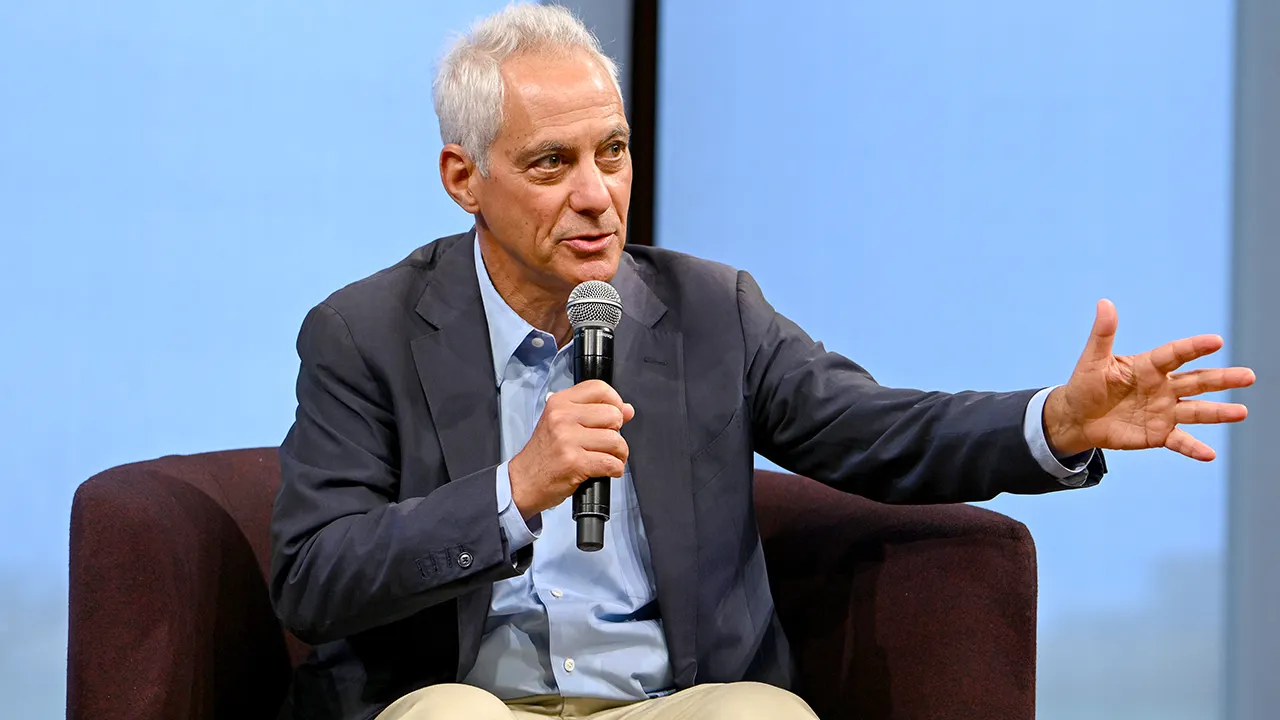
Rahm Emanuel, the former Chicago mayor and White House chief of staff under Barack Obama, has never been known for mincing words. So when he sat down for an interview on NBC’s “Meet the Press” and was asked whether Democrats should impeach President Donald Trump if they take back the House in the upcoming midterms, his answer was characteristically blunt: no. But Emanuel didn’t just stop at a simple rejection of the idea. He framed the entire notion as a political dead end, a “food fight” that would drag the party back into the kind of scorched-earth warfare that voters are exhausted by. His message was less about defending Trump and more about protecting the Democratic Party from itself. In his view, a House majority won on the promise of lowering costs and fixing government would be squandered the moment Democrats made impeachment the centerpiece of their agenda. He warned that such a move would only confirm the worst suspicions of Americans who already see Washington as a self-serving circus. “It’s Disneyland on the Potomac,” he said. “Deliver the change. Deliver a comprehensive ethics package that uses the investigations to then deliver change.” It was a revealing moment from a man who has been at the center of American political warfare for decades, and it offered a glimpse into the strategic anxiety that many establishment Democrats are feeling as they eye a fragile majority.
Paragraph 2
Emanuel’s full answer on impeachment was layered with both political calculation and genuine frustration. When asked directly if Democrats should move to impeach Trump, he answered, “Short answer: No, because it’s not going anywhere, and it’s going to be a food fight, and it’s just going to be we return to the politics of fighting.” He went on to say that impeachment would never pass, and even if it did, it would be a distraction from the bread-and-butter issues that won elections. “You’re never going to get an impeachment,” he added. “Then if you do that, you just basically prove all Washington is what the American people think.” The subtext here is important. Emanuel is not telling Democrats to ignore Trump’s misconduct or abandon oversight. He’s telling them to be strategic. Instead of chasing the impossible dream of removal from office, he urged Democrats to pivot toward ethics reform — a message that would resonate with independent voters tired of both parties playing political games. His point was that investigations should be a means to an end, not an end in themselves. They should expose corruption, yes, but they should also lead to tangible legislative change. That’s how you build a lasting majority. That’s how you turn outrage into action. And that’s how you avoid the trap that has swallowed so many previous political waves, where the excitement of the moment gives way to gridlock and disappointment.
Paragraph 3
The context for Emanuel’s warning is a midterm landscape that looks increasingly favorable for Democrats. According to projections, Democrats are poised to win around 215 seats in the House compared to 201 for Republicans, meaning they need only three more victories out of the 19 toss-up races to reclaim the majority. Republicans, by contrast, would need to win at least 17 of those races to take control. That kind of math has Democrats feeling cautiously optimistic, but it also carries a warning. A slim majority is a fragile majority, and it can be lost just as quickly as it was gained. House Minority Leader Hakeem Jeffries, a New York Democrat who would likely become speaker if the party wins, has been careful not to commit one way or another on impeachment. In June, he told NBC that “we haven’t ruled anything in or ruled anything out in terms of accountability,” but he quickly pivoted to the party’s core message: making life more affordable. “What we have said is that our focus is going to be to make life more affordable for the American people. We have to drive down the high cost of living,” Jeffries said. That’s exactly the kind of language Emanuel wants to hear. He believes that Democrats win when they talk about the cost of groceries, housing, and healthcare — not when they talk about constitutional remedies that most Americans have already made up their minds about.
Paragraph 4
Emanuel’s positioning is hardly a surprise to anyone who has followed his career. He has styled himself as a pragmatic moderate who is willing to take on the progressive wing of his own party when he thinks it’s hurting Democrats electorally. He has warned repeatedly that left-wing slogans like “defund the police” and “open borders” are poison for swing voters, and he has called on his party to distance itself from those positions. In his view, the Democratic Party is a coalition, and coalitions only survive when different factions learn to live with each other. “You think people wanna support defunding the police? You think they wanna support open borders, open prisons? Run on it. I don’t, and that’s not the party’s position,” he told Fox News Digital in an interview last week. “Now, we will have healthy debate among progressive and pragmatic wing of the party. That’s what a coalition party looks like. But that is it. You had a party convention!” That last line is telling. Emanuel is frustrated with the idea that a small but vocal fringe can hijack the party’s message and force moderate candidates to defend positions they never asked for. He wants the Democratic Party to be a big tent, but he also wants that tent to be anchored in common sense. He’s not asking for ideological purity; he’s asking for electoral viability.
Paragraph 5
Nowhere is Emanuel’s pragmatism more evident than in his recent comments about Democratic candidates in Michigan. While speaking at the Texas Tribune Festival, he praised Democratic Texas Senate nominee James Talarico, calling him “strong” and admiring his comfort in discussing his faith. But when Fox News Digital asked him whether he supported Abdul El-Sayed, a progressive candidate running in a critical Michigan race, Emanuel initially hedged, saying, “It doesn’t matter what I do… it matters what the Michigan voters think.” When pressed again, he finally acknowledged, “I support the Democrats winning the Senate.” And then, when asked if that meant he hoped El-Sayed won, he answered simply, “Yeah.” It was a classic Emanuel moment — careful, strategic, and ultimately supportive, but not without a little bit of political theater. He understands that some progressive candidates are going to win, and he’s not going to sabotage them. But he also wants to make clear that his loyalty is to the party’s success as a whole, not to any one faction. This balancing act is likely to define his future in Democratic politics. There have long been rumors that Emanuel is eyeing a run for president in 2028, and he seems to be positioning himself as the adult in the room who can bridge the gap between the party’s progressive energy and its more moderate instincts.
Paragraph 6
Ultimately, Emanuel’s advice on impeachment is about more than just one issue. It’s a statement about what kind of party Democrats want to be. He is urging his fellow Democrats to learn from the mistakes of the past, when the politics of outrage often led to voter backlash and lost opportunities. He is also reminding them that elections are not won in the echo chamber of social media or on the editorial pages of liberal publications. They are won in the living rooms of working-class families in Michigan, Pennsylvania, and Wisconsin, people who are far more worried about paying their bills than they are about the latest constitutional crisis. Emanuel’s message is simple: Don’t give the other side a reason to call you hypocrites. Don’t let your first act in the majority be a partisan stunt that alienates the very voters who just handed you the gavel. Instead, show Americans that you can govern. Pass an ethics package that cleans up Washington. Use your investigative power to expose wrongdoing, but do it in a way that feels like justice, not revenge. It’s a high-wire act, and there are no guarantees it will work. But if anyone knows how to navigate the brutal realities of American politics, it’s Rahm Emanuel. He has been in the room where it happens, and he has seen what happens when the pendulum swings too far in one direction. His warning is worth heeding — not just for the sake of the Democratic Party, but for the sake of a country that is desperately looking for someone to put the chaos aside and actually get things done.