






In the lead-up to last week’s high-stakes primary elections across the nation, a new name began appearing in political headlines, offering data that seemed to clarify the otherwise murky waters of voter sentiment. This organization, calling itself Median Strategies, released a series of polls that showed specific candidates with surprisingly commanding leads over their rivals. The data was picked up by local news broadcasts, shared across social media platforms, and cited by online political commentators as evidence of shifting tides within the Democratic Party. However, the entire operation was a fiction. The company that produced these seemingly insightful snapshots of the electorate has now admitted that its surveys were completely fabricated, a deliberate hoax designed to test the integrity of a news ecosystem that is increasingly reliant on information that is, at best, unverified. In the wake of this admission, the company has announced it is permanently closing its doors, leaving behind a glaring example of how easily misinformation can masquerade as legitimate data in modern politics.
The admission came in a terse statement posted on the company’s now-defunct website, followed by a confirmation to Fox News. In its message, Median Strategies described itself not as a rogue pollster, but as the architect of a “short-term social experiment” aimed at demonstrating how purported polling information could infiltrate the political landscape without any independent scrutiny. The statement further clarified that the phantom organization was not affiliated with any candidate, political action committee, or party, and that its sole purpose was to observe how quickly a lie can travel when no one stops to check the facts. By rejecting interviews and seeking no publicity for the individuals behind the operation, the group has chosen to vanish as quietly as it appeared, leaving the political world to grapple with the practical implications of its elaborate ruse. The closing of the company serves as an unequivocal acknowledgment that the entire exercise was a success in its stated goal, albeit a troubling one for the health of public discourse.
The fabricated data from Median Strategies manifested in two prominent races that serve as case studies for its disruptive influence. In the highly contested Los Angeles mayoral primary, a poll released by the group indicated that Democratic Representative Karen Bass held a formidable 12-point lead over her challenger, Los Angeles City Council member Nithya Raman. The survey, which cited a sample of 560 Angelenos and a margin of error of 4.1%, painted a picture of a consolidated base behind Bass that made her path to victory seem like a foregone conclusion. While Bass did ultimately win the primary, her actual margin of victory over Raman was a far more modest 5 points, suggesting that the phony poll overstated her support. The misinformation did not stop at the local level; it also bled into the Wisconsin gubernatorial primary. There, Median Strategies released a survey showing state Representative Francesca Hong leading her opponent, Milwaukee County Executive David Crowley, by a staggering 20 points. This fabricated data seemed to corroborate other legitimate polls suggesting Hong had a significant advantage, yet the real-world results told a much different story, with Crowley narrowly edging out Hong by a razor-thin margin.
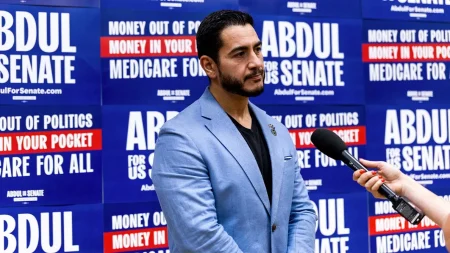
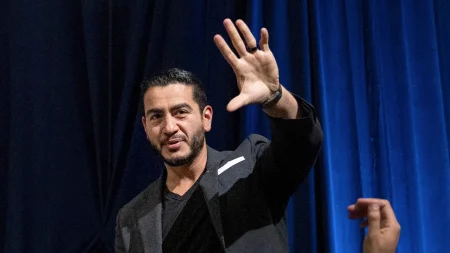
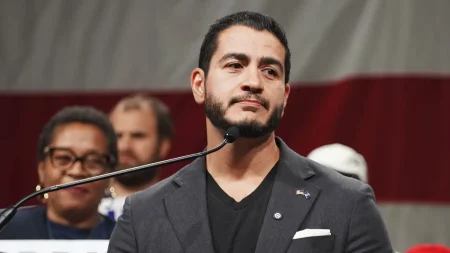
The exposure of these fake polls has sent a shockwave through the political information ecosystem, prompting a fresh wave of criticism directed at the broader public opinion polling industry. The incidents in Los Angeles and Wisconsin are not isolated curiosities but part of a disturbing trend that has eroded public trust in survey data on both sides of the aisle. In recent weeks, the credibility of pollsters has been further strained by a series of significant misses in other high-profile races. In Michigan, polls significantly inflated the lead of progressive candidate Abdul El-Sayed over his more moderate rival, Representative Haley Stevens, only for El-Sayed to win by a much narrower margin than anticipated. Conversely, in Minnesota’s Democratic Senate primary, the same pollsters underestimated the strength of progressive Lieutenant Governor Peggy Flanagan, who ultimately captured her nomination by a substantial 20-point margin. This inconsistent track record, oscillating between overestimating and underestimating certain candidates, underscores a fundamental instability within the industry’s surveying methodologies.
The fact that the Median Strategies hoax was able to penetrate the news cycle with such relative ease speaks to a crisis of verification in modern journalism and public discourse. The organization’s polls were not published in obscure corners of the internet; they were reported on by local television newscasts and aggregated by online outlets, just as they would be if they had come from a reputable firm like Gallup or YouGov. The initial willingness of newsrooms to report the data without demanding transparent methodology or historical track records highlights a dangerous vulnerability: a systemic reliance on outsourced data that is rarely cross-checked. While reputable polling operations are bound by professional standards and transparency regarding their sampling methods, the rapid clip of the 24-hour news cycle often incentivizes speed over scrutiny. This creates a fertile ground for bad actors—whether they are foreign agents, partisan operatives, or, in this case, academic hoaxers—to weaponize public confusion by injecting false data into the bloodstream of political coverage.
The confusion sown by the phantom pollster also provided fodder for partisan critiques of the left, given that the fabricated data seemed to disproportionately favor progressive, Democratic Socialists of America-affiliated candidates over more centrist rivals. By creating the illusion that the party’s base was overwhelmingly rejecting moderate incumbents in favor of the far-left, the hoax may have contributed to a family of narratives that portray the Democratic Party as being in the throes of a radical transformation. Even after the hoax was exposed, opponents of these progressive candidates could point to the initial coverage as evidence of a media conspiracy or an institutional bias, further muddying the waters of legitimate political analysis. The ripple effect of such disinformation extends far beyond a single election night, forcing candidates to spend time and resources debunking false narratives rather than communicating their actual policies to voters amid a sea of scepticism about what is real and what is manufactured.
Ultimately, the saga of Median Strategies serves as a potent and cautionary tale about the fragility of our information ecosystem in the digital age. What began as a cynical “social experiment” by anonymous individuals has culminated in a stark indictment of how political information is procured, published, and consumed. For the industry of public opinion polling, the incident may act as a catalyst for introspection, prompting editors, political analysts, and members of the public to demand far higher standards of proof and methodological disclosure before accepting any survey at face value. The closure of the company does not erase the consequences of its actions; the seeds of doubt it planted have already taken root. As the nation looks toward the general election, this episode stands as a reminder that in the absence of rigorous verification and a healthy dose of public skepticism, the line between data-driven analysis and outright fiction can become dangerously thin, with the very foundation of informed democratic choice at stake.