





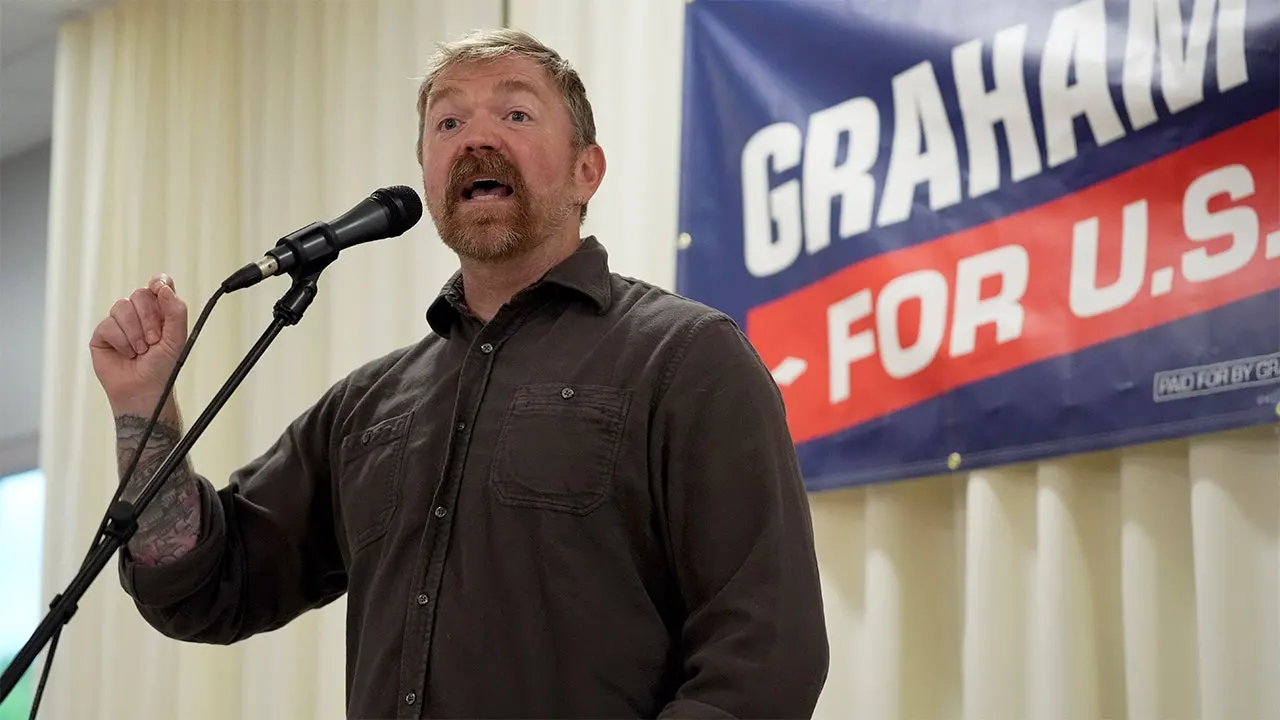
The misty, rugged coastline of Down East Maine has long been a place of quiet resilience, but as primary day arrives, it has transformed into the epicenter of a fierce national political storm. Graham Platner, an unconventional Democratic Senate candidate who spends his mornings working as an oyster farmer and his afternoons campaigning to unseat veteran Republican Senator Susan Collins, faces a decisive moment that could reshape the balance of power in Washington. Backed by Vermont’s progressive icon Senator Bernie Sanders, Platner’s populist campaign was designed to mobilize working-class voters with a raw, authentic message of economic populism. Yet, the high-stakes battle for Maine’s Senate seat—a race crucial to determining which party controls the chamber—has shifted from a debate over policy to a deeply personal trial of character. As voters head to the ballot boxes on Tuesday, Platner’s candidacy represents a high-wire act where the promise of a progressive revival clashes directly with a series of intensely personal controversies, turning what was once expected to be a straightforward primary victory into a complex, nationalized referendum on forgiveness, accountability, and the limits of political redemption.
The controversies surrounding Platner have forced voters to grapple with the painful realities of human frailty, military trauma, and the permanency of digital footprints. Over the past month, the candidate has been on the defensive, addressing a series of damaging revelations that include insensitive comments posted on Reddit a decade ago, a controversial chest tattoo acquired during his military service that resembled a Nazi symbol, and recent reports of sexually explicit digital exchanges. The situation grew even more volatile with late-breaking allegations from former partners who described patterns of volatile behavior, heavy drinking, and dark fantasies—claims that Platner has vehemently denied as politically motivated fabrications. Instead of retreating, Platner has leaned into his biography as a combat veteran of both the Iraq and Afghanistan wars, openly discussing his severe struggles with post-traumatic stress disorder (PTSD) and his long, messy journey toward psychological recovery. At a recent rally, progressive champion Representative Ro Khanna of California stood beside Platner, arguing that while the candidate’s past behavior was deeply troubling, his transition from the darkness of wartime trauma to the peaceful life of a Maine oyster farmer represents a journey of accountability and personal growth that deserves grace rather than cancellation.
This narrative of redemption is being tested against a backdrop of establishment anxiety and aggressive opposition in Maine’s political arena. Even though two-term Democratic Governor Janet Mills formally exited the primary race earlier this spring after falling behind Platner in grassroots enthusiasm, her name remains on the ballot, serving as a silent alternative for voters uneasy with Platner’s mounting baggage. Behind the scenes, nervous party insiders have reportedly reached out to Mills, hoping to coax her back into active contention, though no formal campaign has materialized. Meanwhile, Republican groups have seized on the scandals to portray Platner not as a working-class hero, but as a fraudulent, privileged elitist who attended a prestigious out-of-state boarding school. Susan Collins, fresh from casting her milestone 10,000th consecutive vote in the Senate, has maintained a disciplined distance, dryly noting that the troubling allegations require serious answers. The political drama in Maine is further complicated by competitive down-ticket races, including a crowded Democratic field vying to succeed Governor Mills and a crucial battle in the state’s rural 2nd Congressional District, where Republicans hope to flip a seat left vacant by retiring moderate Democrat Jared Golden in a region that has repeatedly favored Donald Trump.
Far to the south, the humid air of South Carolina plays host to another major test of political influence, as the Republican gubernatorial primary turns into a battleground for former President Donald Trump’s kingmaking authority. A week after his endorsement streak suffered a rare setback in Iowa, Trump has cast a long shadow over the Palmetto State by delivering a late-stage endorsement to Lieutenant Governor Pamela Evette. Seeking to succeed the term-limited Henry McMaster, a staunch Trump ally, Evette finds herself locked in a fierce five-way Republican primary against high-profile contenders including Attorney General Alan Wilson, Representative Nancy Mace, Representative Ralph Norman, and businessman Rom Reddy. This highly competitive race is unlikely to produce a single candidate with a clear majority, meaning the top two finishers will have to fight through a grueling runoff election later in June. The contest has highlighted the immense value—and the potential unpredictability—of the former president’s endorsement, especially after his recent preferred candidate in Iowa, Representative Randy Feenstra, was narrowly defeated by a challenger aligned with the anti-establishment “Make America Healthy Again” movement, proving that conservative voters do not always follow endorsements blindly.
The South Carolina primary has also unleashed its own brand of localized political intrigue, exposing deep ideological and personal rivalries within the state’s conservative coalition. Representative Nancy Mace, known for her independent streak and frequent media presence, suggested that Trump’s decision to endorse her rival was a direct consequence of her vocal demands for transparency regarding the Department of Justice’s sealed files on convicted sex offender Jeffrey Epstein. Mace’s defiance illustrates the high-wire act of navigating modern Republican politics, where loyalty to the former president often collides with a lawmaker’s desire to project independence to a broader electorate. Adding to the drama is a controversy surrounding Trump’s suggestion that Evette should choose the current governor’s son, Henry McMaster Jr., as her running mate for lieutenant governor. Outcry over perceived dynastic nepotism quickly rippled through local political circles, leading the younger McMaster to publicize his decision to withdraw from consideration, while Evette insisted that no pre-arranged political deals had been made. Meanwhile, South Carolina Democrats are preparing for their own primary to select a gubernatorial nominee, and veteran Republican Senator Lindsey Graham is facing a feisty, mudslinging challenge from businessman Mark Lynch, demonstrating that political friction is present at every level of the ballot.
As primary day unfolds from the Atlantic coast of Maine to the southern hills of South Carolina, and extending westward to Nevada and North Dakota, these elections reveal a deeply humanized portrait of American democracy in transition. In Nevada, Republican Governor Joe Lombardo is working to secure his flank against primary challengers, while state Attorney General Aaron Ford leads the Democratic ticket, and North Dakota Republicans are fighting a contested battle for the state’s valuable single congressional seat. Across all of these states, the recurring themes are not merely policy disagreements over taxes, healthcare, or foreign relations, but rather profound questions of human character, trust, and the social contracts that bind leaders to their communities. Whether it is Maine voters deciding if an oyster farmer’s battle with wartime PTSD justifies a second chance, or South Carolina conservatives weighing the value of a presidential endorsement against local independence, the modern American electorate is increasingly asked to judge candidates as flawed, complex human beings. These primary battles serve as a poignant reminder that underneath the cold statistics of polling data and the polished veneer of campaign advertising, politics remains an intensely personal, ongoing story of human struggle, ambition, and the collective search for representation.